Acetylcysteine
JFDA label: Brunac Eye Drops 5%
Mechanism of Action
— Glutathione precursor; — Mycolytic
Indications
Approved
- Acetaminophen overdose
- Mucolytic
Off-label
- Distal intestinal obstruction syndrome (DIOS, previously referred to as meconium ileus equivalent)
Contraindications
Source: Lexicomp
- Hypersensitivity to acetylcysteine or any component of the formulation. Effervescent tablet (Cetylev): There are no contraindications listed in the manufacturer's labeling Absolute
Adverse Reactions
Cardiac disorders (5)
Common Chest tightness · edema · Flushing · hypotension (Bebarta 2010; Sandilands 2008) · tachycardia
Immune system disorders (2)
Very Common Autoimmune disease
Common Hypersensitivity reaction
Gastrointestinal disorders (3)
Common Gastrointestinal symptoms · nausea · Vomiting
Skin and subcutaneous tissue disorders (4)
Common pruritus · rash · Rash (with or without fever) · Urticaria
General disorders and administration site conditions (1)
Very Common Anaphylactoid reaction
Respiratory, thoracic and mediastinal disorders (6)
Common bronchitis · Bronchospasm · Pharyngitis · rhinorrhea · rhonchi · throat tightness
Other (1)
Common Frequency not defined
Dosing
Source: Lexicomp
Warnings & Precautions
Source: Lexicomp
Anaphylactoid reactions
Acute flushing and erythema have been reported; usually occurs within 30 to 60 minutes and may resolve spontaneously. Serious anaphylactoid reactions (some fatal) have also been reported and are more commonly associated with IV administration, but also occur with oral administration (Mroz 1997). When used for acetaminophen overdose, the incidence is reduced when the initial intravenous loading dose is administered over 60 minutes. The acetylcysteine infusion may be interrupted until the treatment of allergic symptoms is initiated; the infusion can then be carefully restarted. Treatment for anaphylactoid reactions should be immediately available. Conversely, patients with high acetaminophen concentrations (>150 mg/L) may be at a reduced risk for anaphylactoid reactions (Pakravan 2008; Sandilands 2009; Waring 2008).
Fluid overload
IV administration can cause fluid overload, potentially resulting in hyponatremia, seizure and death. To avoid fluid overload in patients ≤40 kg and those requiring fluid restriction, decrease volume of diluent proportionally (see table in dosing section). Disease-related concerns:
Asthma/bronchospasm
Use caution in patients with asthma or history of bronchospasm; these patients may be at increased risk of hypersensitivity reactions. Other warnings/precautions:
Acute acetaminophen overdose
Appropriate use: Acetylcysteine is indicated in patients with a serum acetaminophen concentration that indicates they are at "possible" risk or greater for hepatotoxicity when plotted on the Rumack-Matthew nomogram. There are several situations where the nomogram is of limited use. Serum acetaminophen concentrations obtained 24 hours after an acute ingestion or patients who present following an acute ingestion at an unknown time may be candidates for acetylcysteine therapy; consultation with a poison control center or clinical toxicologist is highly recommended.
Repeated supratherapeutic ingestion (RSTI) of acetaminophen
Appropriate use: The Rumack-Matthew nomogram is not designed to be used following RSTIs. In general, an accurate past medical history, including a comprehensive acetaminophen ingestion history, in conjunction with AST concentrations and serum acetaminophen concentrations, may give the clinician insight as to the patient's risk of acetaminophen toxicity. Some experts recommend that acetylcysteine be administered to any patient with "higher than expected" serum acetaminophen concentrations or serum acetaminophen concentration >10 mcg/mL, even in the absence of hepatic injury; others recommend treatment for patients with laboratory evidence and/or signs and symptoms of hepatotoxicity (Hendrickson 2006; Jones 2000). Consultation with a poison control center or a clinical toxicologist is highly recommended. Dosage form specific issues:
Effervescent tablets (Cetylev)
Contains sodium; consider acetylcysteine treatment as a source of sodium in patients who may be sensitive to excess sodium intake (eg, heart failure, hypertension, renal impairment).
Oral administration
Gastrointestinal hemorrhage: Oral administration of acetylcysteine may result in nausea and vomiting, which may exacerbate vomiting associated with acetaminophen overdose. Therefore, patients at risk of gastrointestinal hemorrhage (eg, esophageal varices, peptic ulcer) may experience an even higher risk of gastrointestinal hemorrhage during therapy.
Inhalation
Since increased bronchial secretions may develop after inhalation, percussion, postural drainage, and suctioning should follow. If bronchospasm occurs, administer a bronchodilator; discontinue acetylcysteine if bronchospasm progresses.
Pregnancy & Lactation
Pregnancy
Adverse events have not been observed in animal reproduction studies. Based on limited reports using acetylcysteine to treat acetaminophen overdose in pregnant women, acetylcysteine has been shown to cross the placenta and may provide protective concentrations in the fetus. Acetylcysteine may be used to treat acetaminophen overdose in during pregnancy (Wilkes 2005). In general, medications used as antidotes should take into consideration the health and prognosis of the mother; antidotes should be administered to pregnant women if there is a clear indication for use and should not be withheld because of fears of teratogenicity (Bailey 2003).
Lactation
It is not known if acetylcysteine is excreted in breast milk. According to the manufacturer, the decision to continue or discontinue breast-feeding during therapy should take into account the risk of infant exposure, the benefits of breast-feeding to the infant, and benefits of treatment to the mother. Based on pharmacokinetics, acetylcysteine should be nearly completely cleared 30 hours after administration; breast-feeding women may consider pumping and discarding breast milk for 30 hours after
Monitoring
| Clinical pearl | Acetaminophen overdose: Monitor patient for the development of anaphylaxis or anaphylactoid reactions; monitor serum acetaminophen concentrations, AST, ALT, bilirubin, PT, INR, serum creatinine, BUN, serum glucose, hemoglobin, hematocrit, and electrolytes. Assess patient for nausea, vomiting, and skin rash following oral administration. Reassess LFTs for possible hepatotoxicity every 4 to 6 hours. An early elevation in the INR may be related to acetylcysteine therapy (Schmidt 2002). Acute ingestion: Obtain the first acetaminophen concentration 4 hours postingestion (or as soon as possible thereafter); plot on the Rumack-Matthew nomogram. In patients who have ingested an extended release formulation of acetaminophen or have coingested an agent known to delay gastric emptying, obtain a repeat serum acetaminophen measurement 4 to 6 hours following the first measurement if the original concentration (taken at 4 to 8 hours postingestion) when plotted on the Rumack-Matthew nomogram indicated that treatment was not necessary. |
|---|
Chemistry & Properties
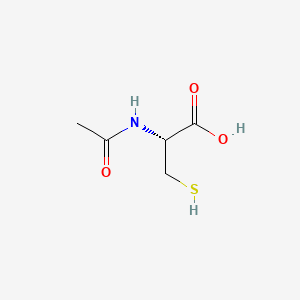
| Formula | C5H9NO3S |
|---|---|
| Molecular weight | 163.2 g/mol |
| IUPAC name | (2R)-2-acetamido-3-sulfanylpropanoic acid |
| CAS | 616-91-1 |
| PubChem CID | 12035 |
| InChIKey | PWKSKIMOESPYIA-BYPYZUCNSA-N |
| logP | -0.49 (XLogP 0.4) |
| Polar surface area | 66.4 Ų |
| H-bond acceptors / donors | 3 / 3 |
| Drug-likeness (QED) | 0.49 |
| Lipinski violations | 0 |
SMILES
CC(=O)N[C@@H](CS)C(=O)OBiology & Pharmacokinetics
Pharmacokinetics
| BBB penetrant | No |
|---|
Transporters
BCRP (Inhibitor)BSEP (Inhibitor)MRP1 (Inhibitor)OATP1B1 (Inhibitor)OATP1B1 (Inhibitor)OATP1B3 (Inhibitor)OATP1B3 (Inhibitor)OCT1 (Inhibitor)P-gp (Inhibitor)P-gp (Substrate)
Drug–drug interactions (3, DDInter)
| Interacting drug | Severity | Management |
|---|---|---|
| Insulin human (inhalation, rapid acting) | moderate | |
| Activated charcoal | minor | |
| Ifosfamide | minor |
Registered Products (5)
| Brand | Form / strength | Pack | Agent | Citizen (JOD) |
|---|---|---|---|---|
| ACC Junior Cough Syrup | Syrup 20 mg/ml | 100 ml | The Jordan Drugstore Co | 2.440 |
| Brunac Eye Drops | Ophthalmic Solution 5 % | 5 ml | Wefaq Drug Store | 3.620 |
| Rinofluimucil 1 % & | Solution 10 mg, 5 mg | 10 ml | مستودع ادوية مسروجي | 3.740 |
| Qatar Acetylcysteine | Injection 200 mg/ml | 30 ml | شركة مستودع ادوية جرينلاند | — |
| Sunnycysteine | Ampoule 2 g/10 ml | 5 amp | Mohamad Zreiqat Drug Store | — |