Benzocaine
JFDA label: Neosol Aerosol 150gm
Mechanism of Action
— Unknown
Indications
Approved
- Dermal irritation
- Gel 10% and 20%, lozenge, spray 5%, liquid 10% and 20%
- Mouth and gum irritation
- Ointment 20%
- Poison ivy/sumac
- Sore throat/mouth, gag reflex suppression
- Topical anesthetic
- Topical, external
- Topical, oral
Contraindications
Source: Lexicomp
- Hypersensitivity to benzocaine, para-aminobenzoic acid (PABA), or any component of the formulation OTC labeling: When used for self-medication, do not use if you have allergy to local anesthetics (procaine, butacaine, benzocaine, or other "caine" anesthetics). Do not use over deep or puncture wounds, infections, serious burns, or lacerations Absolute
Adverse Reactions
Nervous system disorders (2)
Not Known Localized burning · stinging sensation
Blood and lymphatic system disorders (1)
Not Known Methemoglobinemia
Immune system disorders (1)
Not Known Hypersensitivity
Skin and subcutaneous tissue disorders (4)
Not Known Contact dermatitis · localized erythema · localized rash · urticaria
General disorders and administration site conditions (3)
Not Known Local pruritus · localized edema · localized tenderness
Dosing
Source: Lexicomp
Warnings & Precautions
Source: Lexicomp
Methemoglobinemia
Has been reported following topical use, particularly with higher concentration (14% to 20%) spray formulations applied to the mouth or mucous membranes. When applied as a spray to the mouth or throat, multiple sprays (or sprays of longer than indicated duration) are not recommended. Use caution with breathing problems (asthma, bronchitis, emphysema, in smokers), inflamed/damaged mucosa, heart disease, children Special populations:
Pediatric
Due to the heightened risk of methemoglobinemia, not recommended for use in patients Dosage form specific issues:
Benzyl alcohol and derivatives
Some dosage forms may contain benzyl alcohol; large amounts of benzyl alcohol (≥99 mg/kg/day) have been associated with a potentially fatal toxicity (“gasping syndrome”) in neonates; the “gasping syndrome” consists of metabolic acidosis, respiratory distress, gasping respirations, CNS dysfunction (including convulsions, intracranial hemorrhage), hypotension and cardiovascular collapse (AAP ["Inactive" 1997]; CDC 1982); some data suggests that benzoate displaces bilirubin from protein binding sites (Ahlfors 2001); avoid or use dosage forms containing benzyl alcohol with caution in neonates. See manufacturer’s labeling.
Propylene glycol
Some dosage forms may contain propylene glycol; large amounts are potentially toxic and have been associated hyperosmolality, lactic acidosis, seizures and respiratory depression; use caution (AAP 1997; Zar 2007). See manufacturer’s labeling. Other warnings/precautions:
Self-medication (OTC use)
When used for self-medication, notify healthcare provider if condition worsens, or does not improve within 7 days; clears up and occurs again within a few days; or if accompanied by additional symptoms (eg, swelling, rash, headache, nausea, vomiting, or fever). Do not use topical products on open wounds; avoid contact with the eyes. Do not use for a prolonged time and/or on large portions of the body.
Topical application
When topical anesthetics are used prior to cosmetic or medical procedures, the lowest amount of anesthetic necessary for pain relief should be applied. High systemic levels and toxic effects (eg, methemoglobinemia, irregular heartbeats, respiratory depression, seizures, death) have been reported in patients who (without supervision of a trained professional) have applied topical anesthetics in large amounts (or to large areas of the skin), left these products on for prolonged periods of time, or have used wraps/dressings to cover the skin following application.
Pregnancy & Lactation
Pregnancy
Lactation
Benzocaine should not be applied to the breast or nipple, because the infant may ingest the drug during nursing and it has been associated with severe methemoglobinemia in children under 2 years of age.
Monitoring
| Clinical pearl | Monitor patients for signs and symptoms of methemoglobinemia such as pallor, fatigue, cyanosis, nausea, muscle weakness, dizziness, confusion, agitation, dyspnea and tachycardia. The classical clinical finding of methemoglobinemia is chocolate brown-colored arterial blood. However, suspected cases should be confirmed by co-oximetry, which yields a direct and accurate measure of methemoglobin levels. Standard pulse oximetry readings or arterial blood gas values are not reliable. Clinically significant methemoglobinemia requires immediate treatment. |
|---|
Chemistry & Properties
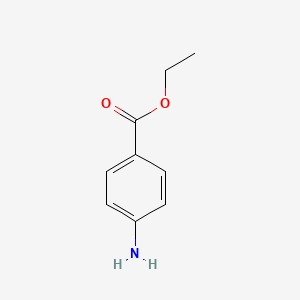
| Formula | C9H11NO2 |
|---|---|
| Molecular weight | 165.19 g/mol |
| IUPAC name | ethyl 4-aminobenzoate |
| CAS | 94-09-7 |
| PubChem CID | 2337 |
| InChIKey | BLFLLBZGZJTVJG-UHFFFAOYSA-N |
| logP | 1.45 (XLogP 1.9) |
| Polar surface area | 52.32 Ų |
| H-bond acceptors / donors | 3 / 1 |
| Drug-likeness (QED) | 0.53 |
| Lipinski violations | 0 |
SMILES
CCOC(=O)c1ccc(N)cc1Biology & Pharmacokinetics
Pharmacokinetics
| BBB penetrant | Yes (logBB 0.27) |
|---|
Enzyme interactions
| Enzyme | Role | Detail |
|---|---|---|
| CYP1A2 | Inhibitor | — |
| CYP2B6 | Inhibitor | — |
| CYP2C8 | Inhibitor | — |
| CYP3A4 | Inhibitor | — |
Transporters
BCRP (Inhibitor)BSEP (Inhibitor)BSEP (Inhibitor)MDR1 (Inhibitor)MRP1 (Inhibitor)MRP2 (Inhibitor)MRP3 (Inhibitor)MRP4 (Inhibitor)OATP1B1 (Inhibitor)OATP1B1 (Inhibitor)OATP1B3 (Inhibitor)P-gp (Inhibitor)P-gp (Substrate)
Registered Products (4)
| Brand | Form / strength | Pack | Agent | Citizen (JOD) |
|---|---|---|---|---|
| Otogesic Ear Drops | Eye/Ear Drops 14 mg, 54 mg | 15 ml | Dar Al Dawa Development and Investment Co Ltd/Jordan | 1.250 |
| Otocol ear drops | Eye/Ear Drops 50 mg, 50 mg | 10 ml | Amman Pharmaceutical Indusries | 1.430 |
| Benzisol | Cream 6.75 g, 0.15 g | 150 g tube | MIDDLE EAST PHARMA&CHEMICAL IND/JORDAN | 3.440 |
| Neosol Aerosol 150gm | Cream 1.00 g, 0.090 g | 150 g tube | MIDDLE EAST PHARMA&CHEMICAL IND/JORDAN | 4.410 |