Benzoyl Peroxide
JFDA label: Benoxyphil Gel
Mechanism of Action
— Releases active oxygen
Indications
Approved
- Acne vulgaris, acne rosacea
Contraindications
Source: Lexicomp
- Hypersensitivity to benzoyl peroxide or any other component of the formulation Absolute
Adverse Reactions
Other (6)
Common Dermatologic: Contact dermatitis · desquamation · erythema · skin irritation · stinging of the skin · xeroderma
Dosing
Source: Lexicomp
Warnings & Precautions
Source: Lexicomp
Bleaching effects
May bleach hair, colored fabric, or carpet.
Hypersensitivity reaction
Rare but serious and potentially life-threatening allergic reactions or severe irritation have been reported with use of topical OTC benzoyl peroxide or salicylic acid containing products; it has not been determined if the reactions are due to the active ingredients (benzoyl peroxide or salicylic acid), the inactive ingredients, or a combination of both. Hypersensitivity reactions may occur within minutes to a day or longer after product use and differ from local skin irritation (redness, burning, dryness, itching, peeling or slight swelling) that may occur at the site of product application. Treatment should be discontinued if hives or itching develop; patients should seek emergency medical attention if reactions such as throat tightness, difficulty breathing, feeling faint, or swelling of the eyes, face, lips, or tongue develop. Before using a topical OTC acne product for the first time, consumers should apply a small amount to 1 or 2 small affected areas for 3 days to make sure hypersensitivity symptoms do not develop. (FDA Drug Safety Communication 2014).
Skin irritation
Skin irritation (eg, burning, itching, peeling, redness, swelling) may occur; discontinue use if severe irritation develops. Dosage form specific issues:
Benzyl alcohol and derivatives
Some dosage forms may contain benzyl alcohol; large amounts of benzyl alcohol (≥99 mg/kg/day) have been associated with a potentially fatal toxicity (“gasping syndrome”) in neonates; the “gasping syndrome” consists of metabolic acidosis, respiratory distress, gasping respirations, CNS dysfunction (including convulsions, intracranial hemorrhage), hypotension and cardiovascular collapse (AAP 1997; CDC 1982); some data suggests that benzoate displaces bilirubin from protein binding sites (Ahlfors 2001); avoid or use dosage forms containing benzyl alcohol with caution in neonates. See manufacturer’s labeling. Concurrent drug therapy issues:
Sulfone products
Concomitant use of benzoyl peroxide with sulfone products (eg, dapsone, sulfacetamide) may cause temporary discoloration (yellow/orange) of facial hair and skin. Application of products at separate times during the day or washing off benzoyl peroxide prior to application of other products may avoid skin discoloration (Dubina 2009). Other warnings/precautions:
Appropriate use
For external use only; avoid contact with eye, eyelids, lips, mouth, and mucous membranes. Inform patients to use skin protection (eg, sunscreen) and minimize prolonged exposure to sun or tanning beds.
Pregnancy & Lactation
Pregnancy
Animal reproduction studies have not been conducted; ~2% of the applied dose is expected to be absorbed systemically (Akhavan, 2003).
Lactation
It is not known if benzoyl peroxide is excreted in breast milk. The manufacturer recommends that caution be exercised when administering benzoyl peroxide to nursing women.
Chemistry & Properties
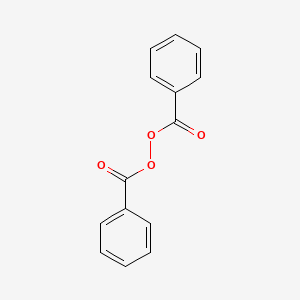
| Formula | C14H10O4 |
|---|---|
| Molecular weight | 242.23 g/mol |
| IUPAC name | benzoyl benzenecarboperoxoate |
| CAS | 94-36-0 |
| PubChem CID | 7187 |
| InChIKey | OMPJBNCRMGITSC-UHFFFAOYSA-N |
| logP | 2.62 (XLogP 3.5) |
| Polar surface area | 52.6 Ų |
| H-bond acceptors / donors | 4 / 0 |
| Drug-likeness (QED) | 0.60 |
| Lipinski violations | 0 |
SMILES
O=C(OOC(=O)c1ccccc1)c1ccccc1Biology & Pharmacokinetics
Pharmacokinetics
| BBB penetrant | No |
|---|
Enzyme interactions
| Enzyme | Role | Detail |
|---|---|---|
| CYP1A2 | Inhibitor | — |
| CYP2C8 | Inhibitor | — |
Transporters
BCRP (Inhibitor)BSEP (Inhibitor)MRP1 (Inhibitor)OATP1B1 (Inhibitor)OATP1B3 (Inhibitor)P-gp (Inhibitor)P-gp (Substrate)
Registered Products (6)
| Brand | Form / strength | Pack | Agent | Citizen (JOD) |
|---|---|---|---|---|
| Benoxyphil Gel | Gel 5 % | 40 g tube | PHILADELPHIA PHAEMACEUTICALS.COMP/JORDAN | 1.700 |
| Benoxyphil Gel | Gel 10 % | 40 g tube | PHILADELPHIA PHAEMACEUTICALS.COMP/JORDAN | 1.970 |
| Panoxyl Cream | Cream 5 % | 40 g tube | Suleiman Tannous & Sons Co. Ltd | 2.170 |
| Benzac AC | Gel 5 % | 60 g tube | IBN CINA DRUG STORE | 3.260 |
| Adacline Gel | Gel 0.75 g, 0.03 g | 30 GM/1 UNT | PELLA PHARMACEUTICALS CO.LTD/JORDAN | 6.550 |
| Epiduo Gel | Gel 2.5 %, 0.1 % | 30 GM | IBN CINA DRUG STORE | 12.780 |