Clodronic Acid
JFDA label: Moticlod Inj. Sol
Mechanism of Action
A bisphosphonate that lowers serum calcium by inhibition of bone resorption via actions on osteoclasts or on osteoclast precursors; may also have indirect inhibitory effects through osteoblastic cells, which control recruitment and activity of osteoclasts.
Indications
Approved
- Hypercalcemia of malignancy
- Osteolytic bone metastases
Off-label
- Breast cancer (adjuvant therapy)
Contraindications
Source: Lexicomp
- Hypersensitivity to clodronate, other bisphosphonates, or any component of the formulation Absolute
- concomitant use with other bisphosphonates Absolute
- pregnancy or breast-feeding Absolute
- renal impairment (serum creatinine >5 mg/dL, SI 440 micromole/L) Absolute
- severe GI tract inflammation Absolute
Adverse Reactions
Cardiac disorders (1)
Common Cardiac failure
Renal and urinary disorders (1)
Common Increased serum creatinine
Metabolism and nutrition disorders (1)
Common Hypocalcemia
Gastrointestinal disorders (4)
Common anorexia · diarrhea · Gastrointestinal disease · nausea
Musculoskeletal and connective tissue disorders (1)
Common Bone fracture
Other (1)
Very Common Hepatic: Increased serum transaminases
Respiratory, thoracic and mediastinal disorders (1)
Common Pneumonia
Dosing
Source: Lexicomp
Warnings & Precautions
Source: Lexicomp
Bone fractures
Atypical femur fractures have been reported in patients receiving bisphosphonates for treatment/prevention of osteoporosis. The fractures include subtrochanteric femur (bone just below the hip joint) and diaphyseal femur (long segment of the thigh bone). Some patients experience prodromal pain weeks or months before the fracture occurs. It is unclear if bisphosphonate therapy is the cause for these fractures, although the majority of cases have been reported in patients taking bisphosphonates. Patients receiving long-term (>3 to 5 years) therapy may be at an increased risk. Patients with thigh or groin pain should be assessed for atypical fracture. Discontinue bisphosphonate therapy in patients who develop a femoral shaft fracture.
Bone/joint/muscle pain
Infrequently, severe (and occasionally debilitating) bone, joint, and/or muscle pain have been reported during bisphosphonate treatment. The onset of pain ranged from a single day to several months. Consider discontinuing therapy in patients who experience severe symptoms; symptoms usually resolve upon discontinuation. Some patients experienced recurrence when rechallenged with same drug or another bisphosphonate; avoid use in patients with a history of these symptoms in association with bisphosphonate therapy.
Gastrointestinal mucosa irritation
May cause irritation to upper gastrointestinal mucosa. Esophagitis, dysphagia, esophageal ulcers, esophageal erosions, and esophageal stricture (rare) have been reported with oral bisphosphonates; risk increases in patients unable to comply with dosing instructions. Strict adherence to dosing instructions is advised. Use with caution in patients unable to remain upright for ≥30 minutes after ingestion and/or with dysphagia, esophageal disease, gastritis, duodenitis, or ulcers (may worsen underlying condition). Discontinue use and evaluate patient if new or worsening symptoms (eg, dyspepsia, dysphagia, retrosternal pain), develop.
Hypocalcemia
Risk of hypocalcemia (often asymptomatic) may be associated with both oral and intravenous use, however chelation of serum calcium observed with intravenous administration can further increase this risk. Interrupting the infusion or reducing the oral dose may be necessary. Correction of severe or symptomatic hypocalcemia may require calcium supplementation.
Hypersensitivity
Hypersensitivity reactions including dyspnea or other respiratory disorders have been observed; use caution in patients with "aspirin triad" (bronchial asthma, aspirin intolerance, rhinitis).
Ocular effects
Conjunctivitis, uveitis, scleritis, and episcleritis have been observed with bisphosphonates; patients with complicated or severe infection may require therapy discontinuation and should be referred for ophthalmic evaluation.
Osteonecrosis of the jaw
Osteonecrosis of the jaw (ONJ), also referred to as medication-related osteonecrosis of the jaw (MRONJ), has been reported in patients receiving bisphosphonates. Known risk factors for MRONJ include dental surgery, cancer diagnosis, concomitant therapy (eg, chemotherapy, corticosteroids), poor oral hygiene, and comorbid disorders (anemia, coagulopathy, infection, preexisting oral disease). According to a position paper by the American Association of Maxillofacial Surgeons (AAOMS), MRONJ has been associated with bisphosphonates and other antiresorptive agents (denosumab), and antiangiogenic agents (eg, bevacizumab, sunitinib) used for the treatment of osteoporosis or malignancy. Other risk factors for MRONJ include dentoalveolar surgery (eg, tooth extraction, dental implants), and preexisting inflammatory dental disease. Risk of MRONJ is significantly higher in cancer patients receiving antiresorptive therapy compared to patients receiving osteoporosis treatment (regardless of medication used or dosing schedule). MRONJ risk is also increased with intravenous antiresorptive use compared to the minimal risk associated with oral bisphosphonate use, although risk appears to increase with oral bisphosphonates when duration of therapy exceeds 4 years (AAOMS [Ruggiero 2014]). The manufacturer’s labeling states that during therapy, invasive dental procedures and dental surgery should be avoided if possible; for patients requiring dental procedures, there are no data suggesting whether
Renal impairment
Use with caution in renal impairment; may aggravate renal function particularly with IV doses exceeding maximum recommended doses and/or too rapid infusion. Close monitoring of serum creatinine and BUN and adequate hydration are required with renal impairment. Interrupt infusion in patients experiencing deteriorating renal function during therapy. Dose reductions are required for moderate or severe impairment. Use is contraindicated when serum creatinine >5 mg/dL (SI 440 micromole/L). Concurrent drug therapy issues:
Drug-drug interactions
Potentially significant interactions may exist, requiring dose or frequency adjustment, additional monitoring, and/or selection of alternative therapy. Consult drug interactions database for more detailed information. Other warnings:
Appropriate use
[Canadian Boxed Warning]: Clasteon injection should not be administered as a bolus injection; may precipitate acute renal failure as well as severe local reactions and thrombophlebitis. Dilute prior to use; ensure adequate hydration prior to and during infusion. Avoid infiltration/extravasation.
Pregnancy & Lactation
Pregnancy
Use is contraindicated during pregnancy. Adverse events have been observed in animal reproduction studies. It is not known if bisphosphonates cross the placenta, but fetal exposure is expected (Djokanovic 2008; Stathopoulos 2011). Available data have not shown that exposure to bisphosphonates during pregnancy significantly increases the risk of adverse fetal events (Djokanovic 2008; Levy 2009; Stathopoulos 2011). However until additional data is available, most sources recommend discontinuing bisphosphonate therapy in women of reproductive potential as early as possible prior to a planned pregnancy; use in premenopausal women should be reserved for special circumstances when rapid bone loss is occurring (Bhalla 2010; Pereira 2012; Stathopoulos 2011). Because hypocalcemia has been described following in utero bisphosphonate exposure, exposed infants should be monitored for hypocalcemia after birth (Djokanovic 2008; Stathopoulos 2011).
Lactation
Breastfeeding is contraindicated by the manufacturer. It is not known if clodronate is present in breast milk.
Monitoring
| Clinical pearl | Serum electrolytes including calcium (daily during IV therapy), phosphorous, magnesium, and potassium; monitor for hypocalcemia for at least 2 weeks after therapy; serum creatinine, BUN, CBC with differential, hepatic function |
|---|
Chemistry & Properties
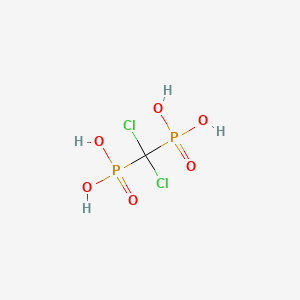
| Formula | CH4Cl2O6P2 |
|---|---|
| Molecular weight | 244.89 g/mol |
| IUPAC name | [dichloro(phosphono)methyl]phosphonic acid |
| CAS | 10596-23-3 |
| PubChem CID | 25419 |
| InChIKey | ACSIXWWBWUQEHA-UHFFFAOYSA-N |
| logP | 0.43 (XLogP -2.1) |
| Polar surface area | 115.06 Ų |
| H-bond acceptors / donors | 2 / 4 |
| Drug-likeness (QED) | 0.41 |
| Lipinski violations | 0 |
SMILES
O=P(O)(O)C(Cl)(Cl)P(=O)(O)OBiology & Pharmacokinetics
Pharmacokinetics
| BBB penetrant | No |
|---|
Enzyme interactions
| Enzyme | Role | Detail |
|---|---|---|
| CYP2C9 | Substrate | — |
Receptor binding (top 1)
| Target | Action | Affinity |
|---|---|---|
| Vesicular nucleotide transporter (SLC17A9) | Inhibitor | pIC50 7.8 |
Transporters
BCRP (Inhibitor)BSEP (Inhibitor)MRP1 (Inhibitor)OATP1B1 (Inhibitor)OATP1B3 (Inhibitor)OCT1 (Inhibitor)P-gp (Inhibitor)P-gp (Substrate)
Registered Products (1)
| Brand | Form / strength | Pack | Agent | Citizen (JOD) |
|---|---|---|---|---|
| Moticlod Inj. Sol | Powder for Injection 100 mg/3.3 ml | 6 amp | AL Rahma Drug Store | — |