Clomifene
JFDA label: Clomifert Tablet
Mechanism of Action
Clomiphene is a racemic mixture consisting of zuclomiphene (~38%) and enclomiphene (~62%), each with distinct pharmacologic properties. Clomiphene acts at the level of the hypothalamus, occupying cell surface and intracellular estrogen receptors (ERs) for longer durations than estrogen. This interferes with receptor recycling, effectively depleting hypothalamic ERs and inhibiting normal estrogenic negative feedback. Impairment of the feedback signal results in increased pulsatile GnRH secretion from the hypothalamus and subsequent pituitary gonadotropin (FSH, LH) release, causing growth of the ovarian follicle, followed by follicular rupture (ASRM 2013; Dickey 1996).
Indications
Approved
- Treatment of ovulatory dysfunction
Contraindications
Source: Lexicomp
- Additional contraindications (not in the US labeling): Hormone-dependent tumors (Clomid) Absolute
- Hypersensitivity to clomiphene citrate or any of its components Absolute
- abnormal uterine bleeding Absolute
- enlargement or development of ovarian cyst (not due to polycystic ovarian syndrome) Absolute
- liver disease or history of liver disease Absolute
- presence of an organic intracranial lesion such as pituitary tumor Absolute
- thrombophlebitis, uterine fibroids, mental depression (Serophene) Absolute
- uncontrolled thyroid or adrenal dysfunction Absolute
Adverse Reactions
Nervous system disorders (1)
Common Headache
Renal and urinary disorders (2)
Common abnormal uterine bleeding · Breast disease
Metabolism and nutrition disorders (1)
Common Hot flash
Gastrointestinal disorders (5)
Common Abdominal distention · abdominal distress · bloating · nausea · vomiting
Eye disorders (1)
Common Visual disturbance
Other (1)
Very Common Endocrine & metabolic: Ovary enlargement
Dosing
Source: Lexicomp
Warnings & Precautions
Source: Lexicomp
Hyperlipidemia
Women with, or a family history of, hyperlipidemia may be at increased risk of hypertriglyceridemia. High doses of clomiphene or long durations of therapy may increase risk this risk. Pancreatitis has been reported. Pretreatment screening of triglycerides is recommended.
Ovarian enlargement
May be accompanied by abdominal distention or abdominal pain and generally regresses without treatment within a few days or weeks after therapy discontinuation. If ovaries are abnormally enlarged, withhold therapy until ovaries return to pretreatment size; reduce clomiphene dose and duration of future cycles.
Ovarian hyperstimulation syndrome (OHSS)
OHSS is a rare exaggerated response to ovulation induction therapy (Corbett 2014; Fiedler 2012). This syndrome may begin within 24 hours of treatment but may become most severe 7 to 10 days after therapy (Corbett 2014). Symptoms of mild/moderate OHSS may include abdominal distention/discomfort, diarrhea, nausea, and/or vomiting. Severe OHSS symptoms may include severe abdominal pain, anuria/oliguria, ascites, severe dyspnea, hypotension, or nausea/vomiting (intractable). Decreased creatinine clearance, hemoconcentration, hypoproteinemia, elevated liver enzymes, elevated WBC, and electrolyte imbalances may also be present (ASRM 2016; Corbett 2014; Fiedler 2012). Treatment is primarily symptomatic and includes fluid and electrolyte management, analgesics, and prevention of thromboembolic complications (ASRM 2016; SOGC-CFAS 2011).
Visual disturbances
Blurring or other visual symptoms can occur; symptoms may increase with higher doses or duration of therapy and in some cases may be irreversible. These visual disturbances may render some activities to be more hazardous than normal (eg, operating machinery or driving). Patients with visual disturbances should discontinue therapy and receive prompt ophthalmic evaluation. Disease-related concerns:
Ovarian cancer
Prolonged use may increase the risk of borderline or invasive ovarian cancer.
Polycystic ovarian syndrome (PCOS)
Use with caution in patients unusually sensitive to pituitary gonadotropins (eg, PCOS); a lower dose may be necessary.
Uterine fibroids
Use caution in patients with uterine fibroids, may cause further enlargement. Other warnings/precautions:
Appropriate use
To minimize risks, use only at the lowest effective dose for the shortest duration of therapy (especially for the first course of therapy). Women with PCOS, amenorrhea-galactorrhea syndrome, psychogenic amenorrhea, post oral contraceptive amenorrhea, and some cases of secondary amenorrhea of undetermined cause may most likely benefit from clomiphene therapy.
Experienced physician
Use should be supervised by physicians who are thoroughly familiar with infertility problems and their management.
Multiple births
May result from the use of this medication; advise patient of the potential risk of multiple births before starting the treatment.
Pregnancy & Lactation
Pregnancy
Use is contraindicated in females who are already pregnant. The incidence of adverse fetal effects following maternal use of clomiphene for ovulation induction is similar to those seen in the general population.
Lactation
It is not known if clomiphene is present in breast milk. The manufacturer recommends that caution be used if administered to breastfeeding women. Clomiphene may decrease lactation.
Monitoring
| Clinical pearl | Prior to therapy: serum estrogen. Rule out primary pituitary or ovarian failure, endometriosis/endometrial carcinoma, adrenal disorders, thyroid disorders, hyperprolactinemia, and male infertility. Serum triglycerides. Pelvic exam prior to each course of therapy; pregnancy test prior to repeat courses; ovulation (may include serum estradiol, progesterone, urinary luteinizing hormone; ultrasound) (ASRM 2013). OHSS: Monitoring of hospitalized patients should include abdominal circumference, albumin, cardiorespiratory status, electrolytes, fluid balance, hematocrit, hemoglobin, serum creatinine, urine output, urine specific gravity, vital signs, weight (daily or as necessary) and liver enzymes (weekly) (SOGC-CFAS 2011). |
|---|
Chemistry & Properties
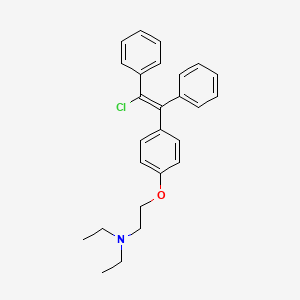
| Formula | C26H28ClNO |
|---|---|
| Molecular weight | 405.97 g/mol |
| IUPAC name | 2-[4-[(Z)-2-chloro-1,2-diphenylethenyl]phenoxy]-N,N-diethylethanamine |
| CAS | 15690-55-8 |
| PubChem CID | 1548955 |
| InChIKey | GKIRPKYJQBWNGO-UHFFFAOYSA-N |
| logP | 6.56 (XLogP 7.2) |
| Polar surface area | 12.47 Ų |
| H-bond acceptors / donors | 2 / 0 |
| Drug-likeness (QED) | 0.37 |
| Lipinski violations | 1 |
SMILES
CCN(CC)CCOc1ccc(C(=C(Cl)c2ccccc2)c2ccccc2)cc1Biology & Pharmacokinetics
Pharmacokinetics predicted
| Bioavailability | 10.0% |
|---|---|
| Half-life | 0.537 h |
| Volume of distribution | 2.356 L/kg |
| Protein binding | 93.7% |
| BBB penetrant | No |
Enzyme interactions
| Enzyme | Role | Detail |
|---|---|---|
| CYP1A2 | Substrate | — |
| CYP2B6 | Inhibitor | — |
| CYP2C8 | Inhibitor | — |
| CYP2D6 | Inhibitor | — |
| CYP2D6 | Substrate | — |
| CYP3A4 | Substrate | — |
Transporters
BCRP (Inhibitor)BSEP (Inhibitor)BSEP (Inhibitor)MRP1 (Inhibitor)MRP4 (Inhibitor)OATP1B1 (Inhibitor)OATP1B3 (Inhibitor)P-gp (Inhibitor)MDR1 (Substrate)P-gp (Substrate)
Drug–drug interactions (1, DDInter)
| Interacting drug | Severity | Management |
|---|---|---|
| Bexarotene | major |
Registered Products (8)
| Brand | Form / strength | Pack | Agent | Citizen (JOD) |
|---|---|---|---|---|
| OVA-MIT TABS | Tablet 50 mg | 10 tab pack varies | JAWEDA INT. DRUD STORE | 3.260 |
| DUINUM TAB | Tablet 50 mg | 10 tab | Al Hilal Drug Store | 3.340 |
| Clomifert Tablet | Tablet 50 mg | 10 tab pack varies | Dar Al Dawa Development and Investment Co Ltd/Jordan | 3.770 |
| Fertiline 50 Tablets | Tablet 50 mg | 10 tab | Hikma Pharmaceuticals Co.Ltd/Jordan | 3.770 |
| Clomid Tabs | Tablet 50 mg | 10 tab | Ulfa Pharma Co. | 4.170 |
| Clomifert Tablet | Tablet 50 mg | 400 tab pack varies | Dar Al Dawa Development and Investment Co Ltd/Jordan | 135.000 |
| Clomifert Tablet | Tablet 50 mg | 500 tab pack varies | Dar Al Dawa Development and Investment Co Ltd/Jordan | 145.160 |
| OVA-MIT TABS | Tablet 50 mg | 1000 tab pack varies | JAWEDA INT. DRUD STORE | 204.230 |