Eflornithine
JFDA label: Florexa Cream
Mechanism of Action
Cream: Eflornithine inhibits the enzyme ornithine decarboxylase (ODC) which inhibits cell division and synthetic functions and thereby affects the rate of hair growth. Injection: Eflornithine exerts antitumor and antiprotozoal effects through specific, irreversible (“suicide”) inhibition of the enzyme ornithine decarboxylase (ODC). ODC is the rate-limiting enzyme in the biosynthesis of putrescine, spermine, and spermidine, the major polyamines in nucleated cells. Polyamines are necessary for the synthesis of DNA, RNA, and proteins and are, therefore, necessary for cell growth and differentiation. Although many microorganisms and higher plants are able to produce polyamines from alternate biochemical pathways, all mammalian cells depend on ornithine decarboxylase to produce polyamines. Ef
Indications
Approved
- Facial hair reduction
Off-label
- Meningoencephalitic stage of Trypanosoma brucei gambiense infection (sleeping sickness)
Contraindications
Source: Lexicomp
- Hypersensitivity to eflornithine or any component of the formulation Absolute
Adverse Reactions
Cardiac disorders (6)
Very Common Cardiac arrhythmia · chest pain · hypertension
Common Edema · hypotension · shock
Nervous system disorders (14)
Very Common dizziness · Headache
Common amnesia · anxiety · ataxia · coma · confusion · depression · hallucination · Insomnia · lethargy · peripheral neuropathy · seizure · tingling of skin
Hepatobiliary disorders (2)
Common Abnormal bilirubin levels · increased serum transaminases
Renal and urinary disorders (4)
Common change in creatinine · Urinary frequency · urinary incontinence · urinary urgency
Blood and lymphatic system disorders (4)
Very Common Neutropenia
Common Anemia · leukopenia · thrombocytopenia
Metabolism and nutrition disorders (1)
Common Dehydration
Gastrointestinal disorders (11)
Very Common Abdominal pain · anorexia · diarrhea · nausea · vomiting
Common constipation · dysgeusia · Dyspepsia · Dysphagia · hiccups · xerostomia
Skin and subcutaneous tissue disorders (10)
Very Common Pruritus · skin rash
Common alopecia · burning sensation of skin · erythema · folliculitis · ingrown hair · skin irritation · Stinging of the skin · xeroderma
Musculoskeletal and connective tissue disorders (4)
Very Common Arthralgia · myalgia · weakness
Common Tremor
Ear and labyrinth disorders (1)
Common Inner ear disturbance
Infections and infestations (1)
Very Common Infection
General disorders and administration site conditions (3)
Very Common Fever · Injection site reaction
Common Extravasation
Respiratory, thoracic and mediastinal disorders (4)
Common Cough · dyspnea · epistaxis · respiratory distress
Other (2)
Very Common Dermatologic: Acne vulgaris · pseudofolliculitis barbae
Dosing
Source: Lexicomp
Warnings & Precautions
Source: Lexicomp
Cream
Appropriate use: For topical use by females only; discontinue if hypersensitivity occurs.
Injection
For IV use only; not for IM administration. Must be diluted before use; frequent monitoring for myelosuppression should be done; use with caution in patients with a history of seizures and in patients with renal impairment; serial audiograms should be obtained; due to the potential for relapse, patients should be followed up for at least 24 months.
Pregnancy & Lactation
Pregnancy
When administered topically, teratogenic effects were not observed in animal reproduction studies. Discontinuation or not initiating therapy should be considered since information related to topical use in pregnancy is limited.
Lactation
It is not known if eflornithine is excreted in breast milk. The manufacturer recommends that caution be exercised when administering eflornithine to nursing women.
Monitoring
| Clinical pearl | CBC with platelet counts |
|---|
Chemistry & Properties
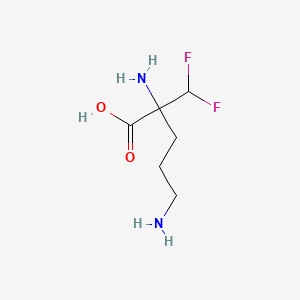
| Formula | C6H12F2N2O2 |
|---|---|
| Molecular weight | 182.17 g/mol |
| IUPAC name | 2,5-diamino-2-(difluoromethyl)pentanoic acid |
| CAS | 70052-12-9 |
| PubChem CID | 3009 |
| InChIKey | VLCYCQAOQCDTCN-UHFFFAOYSA-N |
| logP | -0.23 (XLogP -2.9) |
| Polar surface area | 89.34 Ų |
| H-bond acceptors / donors | 3 / 3 |
| Drug-likeness (QED) | 0.55 |
| Lipinski violations | 0 |
SMILES
NCCCC(N)(C(=O)O)C(F)FBiology & Pharmacokinetics
Pharmacokinetics predicted
| Bioavailability | 10.0% |
|---|---|
| Half-life | 1.916 h |
| Volume of distribution | 0.693 L/kg |
| Protein binding | 7.7% |
| BBB penetrant | No |
Transporters
BCRP (Inhibitor)BSEP (Inhibitor)BSEP (Inhibitor)MRP1 (Inhibitor)MRP3 (Inhibitor)MRP4 (Inhibitor)OATP1B1 (Inhibitor)OATP1B3 (Inhibitor)OCT1 (Inhibitor)P-gp (Inhibitor)P-gp (Substrate)
Registered Products (1)
| Brand | Form / strength | Pack | Agent | Citizen (JOD) |
|---|---|---|---|---|
| Florexa Cream | Cream 13.9 % | 30 g tube | PELLA PHARMACEUTICALS CO.LTD/JORDAN | 24.500 |