Glutamic Acid
Mechanism of Action
— Nutritional support
Indications
Off-label
- Sleep Wake Disorders
Contraindications
Source: openFDA
- The use of PROSOL is contraindicated in: • Patients with known hypersensitivity to one or more amino acids [see Warnings and Precautions (5.2) ]. • Patients with inborn errors of amino acid metabolism due to risk of severe metabolic or neurologic complications. • Patients with pulmonary edema or acidosis due to low cardiac output. • Known hypersensitivity to one or more amino acids ( 4 ) • Inborn errors of amino acid metabolism ( 4 ) • Patients with pulmonary edema or acidosis due to low cardiac output ( 4 ) Absolute
Adverse Reactions
General disorders and administration site conditions (4)
Not Known Discontinue The Infusion · Evaluate The Patient · Inline Filters · Such As Antibiotics
Dosing
Source: openFDA
Warnings & Precautions
Source: openFDA
Warnings & Precautions
• Pulmonary Embolism due to Pulmonary Vascular Precipitates: if signs of pulmonary distress occur, stop the infusion and initiate a medical evaluation. ( 5.1 ) • Hypersensitivity Reactions: monitor for signs and symptoms and discontinue infusion if reactions occur. ( 5.2 ) • Risk of Infections, Refeeding Complications, and Hyperglycemia or Hyperosmolar Hyperglycemic State: monitor for signs and symptoms; monitor laboratory parameters. ( 5.3 , 5.4 , 5.5 ) • Vein Damage and Thrombosis: solutions with osmolarity of 900 mOsmol/L or more must be infused through a central catheter. ( 2.2 , 5.6 ) • Hepatobiliary Disorders: monitor liver function parameters and ammonia levels. ( 5.7 ) • Aluminum Toxicity: increased risk in patients with renal impairment, including preterm infants. ( 5.8 , 8.4 ) • Parenteral Nutrition Associated Liver Disease: increased risk in patients who receive parenteral nutrition for extended periods of time, especially preterm infants; monitor liver function tests, if abnormalities occur consider discontinuation or dosage reduction. ( 5.9 , 8.4 ) • Electrolyte Imbalance and Fluid Overload: patients with cardiac insufficiency or renal impairment may require adjustment of fluid, protein and electrolyte content. ( 5.10 , 8.4 )
Pulmonary Embolism due to Pulmonary Vascular Precipitates Pulmonary va
Pulmonary Embolism due to Pulmonary Vascular Precipitates Pulmonary vascular precipitates causing pulmonary vascular emboli and pulmonary distress have been reported in patients receiving parenteral nutrition. In some cases, fatal outcomes due to pulmonary embolism have occurred. PROSOL contains no added phosphorus. Patients, especially those with hypophosphatemia, may require the addition of phosphate. To prevent hypocalcemia, calcium supplementation should always accompany phosphate administration. Excessive addition of calcium and phosphate increases the risk of the formation of calcium phosphate precipitates. Precipitates have been reported even in the absence of phosphate salt in the solution. Precipitation following passage through an in-line filter and suspected in vivo precipitate formation has also been reported. If signs of pulmonary distress occur, stop the infusion and initiate a medical evaluation. In addition to inspection of the solution [see Dosage and Administration (2.1 , 2.2 , 2.3 , 2.4 )] , the infusion set and catheter should also periodically be checked for precipitates.
Hypersensitivity Reactions Hypersensitivity reactions including anaphy
Hypersensitivity Reactions Hypersensitivity reactions including anaphylaxis have been reported with parenteral nutrition solutions containing PROSOL. Stop the infusion immediately and treat patient accordingly if any signs or symptoms of a hypersensitivity reaction develop. Signs or symptoms may include: hypotension, hypertension, peripheral cyanosis, tachycardia, dyspnea, vomiting, nausea, urticaria, rash, pruritus, erythema, hyperhidrosis, pyrexia, and chills.
Risk of Infections Patients who require parenteral nutrition are at hi
Risk of Infections Patients who require parenteral nutrition are at high risk of infections because the nutritional components of these solutions can support microbial growth. Infection and sepsis may also occur as a result of the use of intravenous catheters to administer parenteral nutrition. The risk of infection is increased in patients with malnutrition-associated immunosuppression, hyperglycemia exacerbated by dextrose infusion, long-term use and poor maintenance of intravenous catheters, or immunosuppressive effects of other concomitant conditions, drugs, or other components of the parenteral formulation (e.g., lipid emulsion). To decrease the risk of infection, ensure aseptic technique in catheter placement and maintenance, as well as aseptic technique in the preparation and administration of the nutritional formula. Monitor for signs and symptoms (including fever and chills) of early infections, including laboratory test results (including leukocytosis and hyperglycemia) and frequent checks of the parenteral access device and insertion site for edema, redness and discharge.
Refeeding Syndrome Refeeding severely undernourished patients may resu
Refeeding Syndrome Refeeding severely undernourished patients may result in refeeding syndrome, characterized by the intracellular shift of potassium, phosphorus, and magnesium as the patient becomes anabolic. Thiamine deficiency and fluid retention may also develop. To prevent these complications, monitor severely undernourished patients and slowly increase nutrient intakes.
Hyperglycemia or Hyperosmolar Hyperglycemic State Administration of pa
Hyperglycemia or Hyperosmolar Hyperglycemic State Administration of parenteral nutrition solutions containing dextrose in patients with diabetes mellitus, impaired glucose tolerance may worsen hyperglycemia. Administration of dextrose at a rate exceeding the patient’s utilization rate may lead to hyperglycemia, coma, and death. Patients with underlying confusion and renal impairment who receive dextrose infusions, may be at greater risk of developing hyperosmolar hyperglycemic state. Monitor blood glucose levels and treat hyperglycemia to maintain optimum levels while administering parenteral nutrition solutions containing dextrose. Insulin may be administered or adjusted to maintain optimal blood glucose levels during administration of parenteral nutrition solutions containing dextrose.
Vein Damage and Thrombosis PROSOL must be diluted and used as an admix
Vein Damage and Thrombosis PROSOL must be diluted and used as an admixture with or without dextrose, electrolytes and/or lipid emulsion. It is not for direct intravenous infusion. Solutions containing more than 5% dextrose or with an osmolarity of 900 mOsmol/L or greater must be infused through a central catheter [see Dosage and Administration (2.2) ]. The infusion of hypertonic nutrient injections into a peripheral vein may result in vein irritation, vein damage, and/or thrombosis. The primary complication of peripheral access is venous thrombophlebitis, which manifests as pain, erythema, tenderness or a palpable cord. Remove the catheter as soon as possible, if thrombophlebitis develops.
Hepatobiliary Disorders Hepatobiliary disorders are known to develop i
Hepatobiliary Disorders Hepatobiliary disorders are known to develop in some patients without preexisting liver disease who receive parenteral nutrition, including cholecystitis, cholelithiasis, cholestasis, hepatic steatosis, fibrosis and cirrhosis, possibly leading to hepatic failure. The etiology of these disorders is thought to be multifactorial and may differ between patients. Increase in blood ammonia levels and hyperammonemia may occur in patients receiving amino acid solutions, including PROSOL. In some patients, this may indicate hepatic insufficiency or the presence of an inborn error of amino acid metabolism [see Contraindications (4) , Use in Specific Populations (8.4) ]. Monitor liver function parameters and ammonia levels. Patients developing signs of hepatobiliary disorders should be assessed early by a clinician knowledgeable in liver diseases in order to identify possible causative and contributory factors, and possible therapeutic and prophylactic interventions.
Aluminum Toxicity PROSOL contains no more than 25 mcg/L of aluminum
Aluminum Toxicity PROSOL contains no more than 25 mcg/L of aluminum. However, with prolonged parenteral administration in patients with renal impairment, the aluminum contained in PROSOL may reach toxic levels. Preterm infants are at a greater risk because their kidneys are immature, and they require large amounts of calcium and phosphate solutions, which contain aluminum. Patients with renal impairment, including preterm infants, who receive parenteral levels of aluminum at greater than 4 to 5 mcg/kg/day, accumulate aluminum at levels associated with central nervous system and bone toxicity. Tissue loading may occur at even lower rates of administration.
Risk of Parenteral Nutrition Associated Liver Disease Parenteral Nutri
Risk of Parenteral Nutrition Associated Liver Disease Parenteral Nutrition Associated Liver Disease (PNALD) has been reported in patients who receive parenteral nutrition for extended periods of time, especially preterm infants, and can present as cholestasis or steatohepatitis. The exact etiology is unknown and is likely multifactorial. If patients treated with parenteral nutrition solutions containing PROSOL develop liver test abnormalities, consider discontinuation or dosage reduction.
Electrolyte Imbalance and Fluid Overload Patients with renal impairmen
Electrolyte Imbalance and Fluid Overload Patients with renal impairment, such as pre-renal azotemia, renal obstruction, and protein-losing nephropathy may be at increased risk of electrolyte and fluid volume imbalance. Patients with cardiac insufficiency and pulmonary congestion are susceptible to excess fluid accumulation. Use parenteral nutrition solutions containing PROSOL with caution in patients with cardiac insufficiency or renal impairment. The dosage of parenteral nutrition may require adjustment with specific attention to fluid, protein, and electrolyte content in these patients. Monitor renal function parameters. Patients developing signs of renal impairment should be assessed early by a clinician knowledgeable in renal disease in order to determine the appropriate parenteral nutrition dosage and other treatment options.
Monitoring/Laboratory Tests Monitor fluid and electrolyte status, seru
Monitoring/Laboratory Tests Monitor fluid and electrolyte status, serum osmolarity, blood glucose, liver and kidney function, blood count and coagulation parameters throughout treatment. If electrolyte levels are severely elevated, stop parenteral nutrition containing PROSOL until levels have been corrected.
Chemistry & Properties
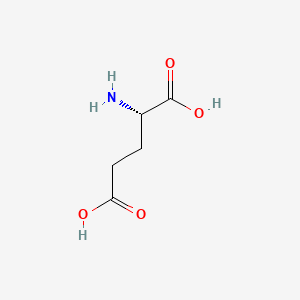
| Formula | C5H9NO4 |
|---|---|
| Molecular weight | 147.13 g/mol |
| IUPAC name | (2S)-2-aminopentanedioic acid |
| CAS | 56-86-0 |
| PubChem CID | 33032 |
| InChIKey | WHUUTDBJXJRKMK-VKHMYHEASA-N |
| logP | -0.74 (XLogP -3.7) |
| Polar surface area | 100.62 Ų |
| H-bond acceptors / donors | 3 / 3 |
| Drug-likeness (QED) | 0.49 |
| Lipinski violations | 0 |
SMILES
N[C@@H](CCC(=O)O)C(=O)OBiology & Pharmacokinetics
Pharmacokinetics predicted
| Bioavailability | 10.0% |
|---|---|
| Half-life | 1.96 h |
| Volume of distribution | 0.222 L/kg |
| Protein binding | 7.4% |
| BBB penetrant | No |
Enzyme interactions
| Enzyme | Role | Detail |
|---|---|---|
| CYP2C9 | Substrate | — |
| CYP2D6 | Substrate | — |
Receptor binding (top 9)
| Target | Action | Affinity |
|---|---|---|
| Glutamate-Kainate EAA1 (GRIK4) | Binding | pKi 7.7 |
| metabotropic glutamate 8 (GRM8) | Binding | pKi 7.7 |
| metabotropic glutamate 5 (GRM5) | Binding | pKi 7.6 |
| Glutamate-AMPA (GRIA3) | Binding | pKi 6.6 |
| metabotropic glutamate 5a | Binding | pKi 5.8 |
| Metabotropic Glutamate 1a | Binding | pKi 5.8 |
| metabotropic glutamate 4a | Binding | pKi 5.5 |
| metabotropic glutamate 2 (GRM2) | Binding | pKi 5.4 |
| metabotropic glutamate 3 (GRM3) | Binding | pKi 5.4 |
Transporters
BCRP (Inhibitor)BCRP (Inhibitor)BSEP (Inhibitor)BSEP (Inhibitor)MCT1 (Inhibitor)MRP1 (Inhibitor)OATP1B1 (Inhibitor)OATP1B3 (Inhibitor)OCT(unspecified) (Inhibitor)P-gp (Inhibitor)OCT(unspecified) (Substrate)P-gp (Substrate)
Drug–drug interactions (5, DDInter)
| Interacting drug | Severity | Management |
|---|---|---|
| Amphetamine | moderate | |
| Benzphetamine | moderate | |
| Dextroamphetamine | moderate | |
| Lisdexamfetamine | moderate | |
| Metamfetamine | moderate |
Registered Products (3)
| Brand | Form / strength | Pack | Agent | Citizen (JOD) |
|---|---|---|---|---|
| Olimel N12E | Solution Alanine 10.99 g/1000 ml, Arginine 7.44 g/1000 ml, L-Aspartic acid 2.20 g/1000 ml, Glutamic acid 3.79 g/1000 ml, Glycine 5.26 g/1000 ml, HISTIDINE 4.53 g/1000 ml, isoleucine 3.79 g/1000 ml, Leucine 5.26 g/1000 ml, Lysine acetate 8.43 g/1000 ml, methionine 3.79 g/1000 ml, phenylalanine 5.26 g/1000 ml, proline 4.53 g/1000 ml, Serine 3 g/1000 ml, threonine 3.79 g/1000 ml, Tryptophan 1.26 g/1000 ml, Tyrosine 0.2 g/1000 ml, valine 4.86 g/1000 ml, Sodium Acetate Trihydrate 1.5 g/1000 ml, Sodium Glycerophosphate (Liq 50 %) 3.67 g/1000 ml, Potassium Chloride 2.24 g/1000 ml, Magnesium Chloride Hexahydrate 0.81 g/1000 ml, Calcium Chloride Dihydrated 0.52 g/1000 ml, Glucose Monohydrate 80.67 g/1000 ml, Olive Oil 28 g/1000 ml, Soyabean Oil 7 g/1000 ml | 1000 ml | Khoury Drug Store | — |
| Olimel N12E | Solution Alanine 7.14 g/650 ml, Arginine 4.84 g/650 ml, L-Aspartic acid 1.43 g/650 ml, Glutamic acid 2.46 g/650 ml, Glycine 3.42 g/650 ml, HISTIDINE 2.94 g/650 ml, isoleucine 2.46 g/650 ml, Leucine 3.42 g/650 ml, Lysine acetate 5.48 g/650 ml, methionine 2.46 g/650 ml, phenylalanine 3.42 g/650 ml, proline 2.94 g/650 ml, Serine 1.95 g/650 ml, threonine 2.46 g/650 ml, Tryptophan 0.82 g/650 ml, Tyrosine 0.13 g/650 ml, valine 3.16 g/650 ml, Sodium Acetate Trihydrate 0.97 g/650 ml, Sodium Glycerophosphate (Liq 50 %) 2.39 g/650 ml, Potassium Chloride 1.45 g/650 ml, Magnesium Chloride Hexahydrate 0.53 g/650 ml, Calcium Chloride Dihydrated 0.34 g/650 ml, Glucose Monohydrate 52.43 g/650 ml, Olive Oil 18.2 g/650 ml, Soyabean Oil 4.55 g/650 ml | 650 ml | Khoury Drug Store | — |
| PeriOlimel N4E | Solution Arginine 3.72 g/1500 ml, L-Aspartic acid 1.1 g/1500 ml, Glutamic acid 1.90 g/1500 ml, Glycine 2.63 g/1500 ml, HISTIDINE 2.26 g/1500 ml, isoleucine 1.90 g/1500 ml, Leucine 2.63 g/1500 ml, Lysine acetate 4.21 g/1500 ml, methionine 1.90 g/1500 ml, phenylalanine 2.63 g/1500 ml, proline 2.26 g/1500 ml, Serine 1.5 g/1500 ml, threonine 1.9 g/1500 ml, Tryptophan 0.64 g/1500 ml, Tyrosine 0.1 g/1500 ml, valine 2.43 g/1500 ml, Sodium Acetate Trihydrate 1.73 g/1500 ml, Sodium Glycerophosphate (Liq 50 %) 2.87 g/1500 ml, Potassium Chloride 1.79 g/1500 ml, Magnesium Chloride Hexahydrate 0.67 g/1500 ml, Calcium Chloride Dihydrated 0.440 g/1500 ml, Glucose Monohydrate 123.75 g/1500 ml, Olive Oil 45 g/1500 ml, Soyabean Oil 45 g/1500 ml, Alanine 5.5 g/1500 ml | 1500 ml | Khoury Drug Store | — |