Leuprorelin
JFDA label: Eligard 7.5mg
Mechanism of Action
Leuprolide, is an agonist of gonadotropin releasing hormone (GnRH) receptors. Acting as a potent inhibitor of gonadotropin secretion, leuprolide produces an initial increase in luteinizing hormone (LH) and follicle stimulating hormone (FSH), which leads to a transient increase (5 to 12 days [Cook 2000]) in testosterone and dihydrotestosterone (in males) and estrone and estradione (in premenopausal females). Continuous leuprolide administration then results in suppression of ovarian and testicular steroidogenesis due to decreased levels of LH and FSH with subsequent decrease in testosterone (male) and estrogen (female) levels. In males, testosterone levels are reduced to below castrate levels. Leuprolide may also have a direct inhibitory effect on the testes, and act by a different mechanis
Indications
Approved
- Central precocious puberty
- Endometriosis
- Prostate cancer, advanced
- Uterine leiomyomata (fibroids)
Off-label
- Breast cancer, premenopausal ovarian suppression
- Paraphilia/hypersexuality
Contraindications
Source: Lexicomp
- Hypersensitivity to leuprolide, GnRH, GnRH-agonist analogs, or any component of the formulation Absolute
- breastfeeding (Lupron Depot 3.75 mg [monthly] and Lupron Depot 11.25 mg [3-month]) Absolute
- undiagnosed abnormal vaginal bleeding (Lupron Depot 3.75 mg [monthly] and Lupron Depot 11.25 mg [3-month]). Lupron Depot 22.5 mg, 30 mg, and 45 mg and Eligard (all strengths) are also not indicated for use in women Absolute
- women who are or may become pregnant Absolute
Adverse Reactions
Cardiac disorders (14)
Very Common ECG changes · Edema · peripheral edema
Common angina pectoris · Angina pectoris, paresthesia, anxiety, agitation, alopecia, diaphoresis, cellulitis, gynecomastia, decreased serum bicarbonate, hypercholesterolemia, hyperglycemia, hyperphosphatemia, hyperuricemia, h · cardiac arrhythmia · cardiac failure · heart murmur · Hypertension · myocardial infarction · pulmonary embolism · syncope · thrombophlebitis · Vasodilatation
Nervous system disorders (13)
Common anxiety · depression · dizziness · Emotional lability · fatigue · fever · headache · insomnia · mood changes · nervousness · ostealgia · pain · peripheral neuropathy
Renal and urinary disorders (17)
Very Common genitourinary complaint · testicular atrophy
Common bladder spasm · Decreased testicular size · dysuria · impotence · incontinence · Increased blood urea nitrogen · increased serum creatinine · mastalgia · testicular pain · urinary frequency · urinary tract infection · urinary tract obstruction · Vaginal discharge · vaginal hemorrhage · vaginitis
Blood and lymphatic system disorders (2)
Common Anemia · bruise
Metabolism and nutrition disorders (10)
Very Common decreased libido · Hot flash · hyperlipidemia · weight changes
Common diabetes mellitus · goiter · gynecomastia · hypercalcemia · hypoglycemia · Weight gain
Gastrointestinal disorders (10)
Very Common change in bowel habits · gastrointestinal disease · Nausea and vomiting
Common anorexia · Constipation · diarrhea · dysphagia · gastrointestinal hemorrhage · peptic ulcer · rectal polyps
Skin and subcutaneous tissue disorders (8)
Common Acne vulgaris · alopecia · Dermatitis · hyperpigmentation · pruritus · seborrhea · skin lesion · skin rash
Musculoskeletal and connective tissue disorders (2)
Very Common arthropathy · Weakness
Eye disorders (1)
Common Blurred vision
Infections and infestations (1)
Common Infection
General disorders and administration site conditions (5)
Very Common Burning sensation at injection site burning
Common inflammation · Injection site reaction · injection site reaction, neuromuscular disease, increased blood urea nitrogen, increased serum creatinine, increased urine specific gravity, polyuria · Pain at injection site
Other (47)
Very Common Local: Pain at injection site
Common abscess at injection site · an initial increase in estradiol levels · an initial rise in serum testosterone concentrations may cause “tumor flare” or worsening of symptoms · anaphylactoid reaction · anaphylaxis · Any formulations: Postmarketing and/or case reports: Abdominal pain · asthma · bone fracture (spine) · cerebrovascular accident · convulsions · coronary artery disease · decreased white blood cell count · fibromyalgia syndrome (arthralgia/myalgia, headaches, GI distress) · flushing · For prostate cancer treatment · hematuria · hemoptysis · hepatic injury · hepatic insufficiency · hepatotoxicity · hyperuricemia · hypokalemia · hypoproteinemia · including bone pain · induration at injection site · interstitial pulmonary disease · leukocytosis · may occur in women treated with leuprolide · neuropathy · or ureteral or bladder outlet obstruction during the first 2 weeks. Similarly · osteopenia · paralysis · penile swelling · pituitary apoplexy (cardiovascular collapse, mental status altered, ophthalmoplegia, sudden headache, visual changes, vomiting) · prolonged QT interval on ECG · prostate pain · pulmonary infiltrates · retroperitoneal fibrosis (pelvic) · seizure · skin photosensitivity · suicidal ideation (rare) · tenosynovitis (symptoms) · thrombocytopenia · transient ischemic attacks · urticaria · with a temporary worsening of symptoms
Respiratory, thoracic and mediastinal disorders (7)
Very Common Flu-like symptoms · respiratory tract disease
Common cough · Dyspnea · Emphysema (Miscellaneous: Fever ( · pneumonia · pulmonary fibrosis
Dosing
Source: Lexicomp
Warnings & Precautions
Source: Lexicomp
Abnormal menses
Females treated for precocious puberty may experience menses or spotting during the first 2 months of treatment; notify health care provider if bleeding continues after the second month.
Cardiovascular effects
Androgen-deprivation therapy (ADT) may increase the risk for cardiovascular disease (Levine 2010). Sudden cardiac death and stroke have been reported in men receiving GnRH agonists. ADT may prolong the QT/QTc interval; consider the benefits of ADT versus the risk for QT prolongation in patients with a history of QTc prolongation, congenital long QT syndrome, heart failure, frequent electrolyte abnormalities, and in patients with medications known to prolong the QT interval, or with preexisting cardiac disease. Consider periodic monitoring of electrocardiograms and electrolytes in at-risk patients.
Decreased bone density
Has been reported when used for ≥6 months. Use caution in patients with additional risk factors for bone loss (eg, chronic alcohol use, corticosteroid therapy).
Endometriosis
Exacerbation of endometriosis or uterine leiomyomata may occur initially.
Hyperglycemia
Diabetes and/or worsening of glycemic control have been reported in men receiving GnRH agonists. Monitor blood glucose and/or glycosylated hemoglobin (HbA1c) as clinically necessary.
Pituitary apoplexy
Rare cases of pituitary apoplexy (frequently secondary to pituitary adenoma) have been observed with GnRH agonist administration (onset from 1 hour to usually • Psychiatric events: Psychiatric events have been described with GnRH agonists, including leuprolide; symptoms of emotional lability, irritability, impatience, anger, and aggression have been reported in postmarketing accounts. Monitor for development or worsening of psychiatric symptoms. Use with caution in patients with a history of psychiatric illness.
Seizures
Convulsions have been observed in postmarketing reports in patients receiving GnRH agonists, including leuprolide; patients affected included both those with and without a history of cerebrovascular disorders, CNS anomalies or tumors, epilepsy, seizures, and those on concomitant medications which may lower the seizure threshold (eg, bupropion, SSRIs). If seizures occur, manage accordingly.
Spinal cord compression
Has been reported when used for prostate cancer; closely observe patients for weakness and paresthesias in first few weeks of therapy. Observe patients with metastatic vertebral lesions closely.
Tumor flare
Transient increases in testosterone (~50% above baseline) can lead to tumor flare, bone pain, hematuria, bladder outlet obstruction and neuropathy in prostate cancer patients during the first few weeks of therapy.
Urinary tract obstruction
Has been reported when used for prostate cancer; closely observe patients for urinary tract obstruction and hematuria in first few weeks of therapy. Observe patients with urinary obstruction closely. Disease-related concerns:
Prostate cancer
Androgen deprivation therapy may increase the risk for cardiovascular disease, diabetes, insulin resistance, obesity, alterations in lipids, and fractures. Concomitant drug therapy issues:
Drug-drug interactions
Potentially significant interactions may exist, requiring dose or frequency adjustment, additional monitoring, and/or selection of alternative therapy. Consult drug interactions database for more detailed information. Dosage form specific issues:
Benzyl alcohol and derivatives
Some dosage forms may contain benzyl alcohol; large amounts of benzyl alcohol (≥99 mg/kg/day) have been associated with a potentially fatal toxicity (“gasping syndrome”) in neonates; the “gasping syndrome” consists of metabolic acidosis, respiratory distress, gasping respirations, CNS dysfunction (including convulsions, intracranial hemorrhage), hypotension, and cardiovascular collapse (AAP ["Inactive" 1997]; CDC 1982); some data suggests that benzoate displaces bilirubin from protein binding sites (Ahlfors 2001); avoid or use dosage forms containing benzyl alcohol with caution in neonates. See manufacturer’s labeling.
Depot formulations
Vehicle used in injectable (polylactide-co-glycolide microspheres) has rarely been associated with retinal artery occlusion in patients with abnormal arteriovenous anastomosis (eg, patent foramen ovale). Due to different release properties, combinations of dosage forms or fractions of dosage forms should not be interchanged.
Eligard Atrigel delivery system
The Atrigel delivery system is a nongelatin-based, biodegradable, polymer matrix.
Polysorbate 80
Some dosage forms may contain polysorbate 80 (also known as Tweens). Hypersensitivity reactions, usually a delayed reaction, have been reported following exposure to pharmaceutical products containing polysorbate 80 in certain individuals (Isaksson 2002; Lucente 2000; Shelley 1995). Thrombocytopenia, ascites, pulmonary deterioration, and renal and hepatic failure have been reported in premature neonates after receiving parenteral products containing polysorbate 80 (Alade 1986; CDC 1984). See manufacturer’s labeling. Other warnings/precautions:
Appropriate use
Breast cancer: The American Society of Clinical Oncology (ASCO) Guideline Update on Ovarian Suppression for Adjuvant Endocrine Therapy for Women With Hormone Receptor-Positive Breast Cancer (Burstein 2016) recommends that premenopausal women with higher-risk disease receive ovarian suppression (in addition to adjuvant endocrine therapy), although lower-risk patients should not; premenopausal women with stage II or stage III breast cancers who would ordinarily be advised to receive adjuvant chemotherapy should also receive ovarian suppression (in addition to endocrine therapy). Additionally, women with stage I or II breast cancers at higher risk of recurrence who might consider chemotherapy may be offered ovarian suppression (in addition to endocrine therapy). Women with stage 1 disease which does not require chemotherapy should receive endocrine therapy, but not ovarian suppression. Likewise, women with node-negative cancers 1 cm or less (T1a, T1b) should receive endocrine therapy, but not ovarian suppression. Guidelines from ASCO for Endocrine Therapy in Hormone Receptor-Positive Metastatic Breast Cancer (Rugo 2016) recommend that premenopausal women with ER-positive metastatic breast cancer start ovarian suppression, preferably in combination with hormonal therapy. While premenopausal patients without prior hormone therapy exposure can be treated with tamoxifen, or ovarian suppression, or ablation alone, combination therapy is preferred. In metastatic breast cancer, ovarian
Appropriate use
Prostate cancer: Guidelines from the American Society of Clinical Oncology (ASCO) for hormonal management of advanced prostate cancer which is androgen-sensitive (Loblaw 2007) recommend either orchiectomy or luteinizing hormone-releasing hormone (LHRH) agonists as initial treatment for androgen deprivation.
Pregnancy & Lactation
Pregnancy
Use is contraindicated in pregnant women. Adverse events were observed in animal reproduction studies. Pregnancy must be excluded prior to the start of treatment. Although leuprolide usually inhibits ovulation and stops menstruation, contraception is not ensured and a nonhormonal contraceptive should be used.
Lactation
It is not known if leuprolide is present in breast milk; use is contraindicated in breastfeeding women.
Monitoring
| Clinical pearl | Bone mineral density; monitor for development or worsening of psychiatric symptoms Precocious puberty: GnRH testing (blood LH and FSH levels), measurement of height and bone age every 6 to 12 months, testosterone in males and estradiol in females (IM [monthly] and SubQ formulations: 1 to 2 months after initiation of therapy or with dosage change; IM [3 month] formulation: 2 to 3 months after initiation of therapy, month 6, and as clinically indicated thereafter); Tanner staging Prostatic cancer: LH and FSH levels, serum testosterone (~4 weeks after initiation of therapy), PSA; weakness, paresthesias, and urinary tract obstruction in first few weeks of therapy. Screen for diabetes (blood glucose and HbA1c) and cardiovascular risk prior to initiating and periodically during treatment. Consider periodic monitoring of electrocardiograms and electrolytes. Treatment of paraphilia/hypersexuality (off-label use; Reilly 2000): CBC (baseline, monthly for 4 months then every 6 months); serum testosterone (baseline, monthly for 4 months then every 6 months); serum LH (baseline and every 6 months), FSH (baseline), serum BUN and creatinine (baseline and every 6 months); bone density (baseline and yearly); ECG (baseline) |
|---|
Chemistry & Properties
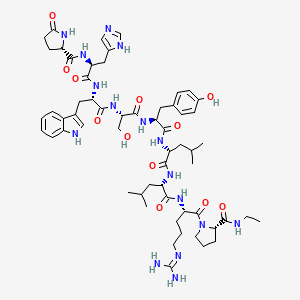
| Formula | C59H84N16O12 |
|---|---|
| Molecular weight | 1209.42 g/mol |
| IUPAC name | (2S)-N-[(2S)-1-[[(2S)-1-[[(2S)-1-[[(2S)-1-[[(2R)-1-[[(2S)-1-[[(2S)-5-(diaminomethylideneamino)-1-[(2S)-2-(ethylcarbamoyl)pyrrolidin-1-yl]-1-oxopentan-2-yl]amino]-4-methyl-1-oxopentan-2-yl]amino]-4-methyl-1-oxopentan-2-yl]amino]-3-(4-hydroxyphenyl)-1-oxopropan-2-yl]amino]-3-hydroxy-1-oxopropan-2-yl]amino]-3-(1H-indol-3-yl)-1-oxopropan-2-yl]amino]-3-(1H-imidazol-5-yl)-1-oxopropan-2-yl]-5-oxopyrrolidine-2-carboxamide |
| CAS | 53714-56-0 |
| PubChem CID | 657181 |
| InChIKey | GFIJNRVAKGFPGQ-LIJARHBVSA-N |
SMILES
CCNC(=O)[C@@H]1CCCN1C(=O)[C@H](CCCNC(=N)N)NC(=O)[C@H](CC(C)C)NC(=O)[C@@H](CC(C)C)NC(=O)[C@H](Cc1ccc(O)cc1)NC(=O)[C@H](CO)NC(=O)[C@H](Cc1c[nH]c2ccccc12)NC(=O)[C@H](Cc1c[nH]cn1)NC(=O)[C@@H]1CCC(=O)N1Biology & Pharmacokinetics
Pharmacokinetics
| BBB penetrant | No |
|---|
Transporters
BCRP (Inhibitor)BSEP (Inhibitor)MRP1 (Inhibitor)OATP1B1 (Inhibitor)OATP1B3 (Inhibitor)P-gp (Inhibitor)P-gp (Substrate)
Registered Products (5)
| Brand | Form / strength | Pack | Agent | Citizen (JOD) |
|---|---|---|---|---|
| Eligard | Pre-filled Syringe 7.5 mg | 1 PFS | Ibn Rushd Drug Store | 58.410 |
| Eligard | Pre-filled Syringe 22.5 mg | 1 PFS | Ibn Rushd Drug Store | 148.260 |
| Eligard | Pre-filled Syringe 45 mg | 1 PFS | Ibn Rushd Drug Store | — |
| Lutrate Depot | Vial 3.75 mg | 1 PFS | Hikma Pharmaceuticals Co.Ltd/Jordan | — |
| Lutrate Depot | Vial 22.5 mg | 1 vial | Hikma Pharmaceuticals Co.Ltd/Jordan | — |