Paliperidone Palmitate
Active form: Paliperidone.
JFDA label: Trevicta Prolonged Release Suspension For Inj 175 mg
- Increased mortality in elderly patients with dementia-related psychosis:
Mechanism of Action
Antagonist of D(2) dopamine receptor — Dopamine D2 receptor antagonist; Antagonist of 5-hydroxytryptamine receptor 2A — Serotonin 2a (5-HT2a) receptor antagonist
| Target | Action | Gene / class |
|---|---|---|
| 5-hydroxytryptamine receptor 2A efficacy | ANTAGONIST | HTR2A |
| D(2) dopamine receptor efficacy | ANTAGONIST | DRD2 |
Indications
Approved
- Schizoaffective disorder (oral and monthly IM paliperidone)
- Schizophrenia
Off-label
- Delusional infestation (also called delusional parasitosis)
- Psychosis/agitation associated with dementia
Contraindications
Source: Lexicomp
- Hypersensitivity to paliperidone, risperidone, or any component of the formulation Absolute
Adverse Reactions
Cardiac disorders (14)
Very Common Tachycardia
Common bradycardia, anxiety, dizziness, dysarthria, fatigue, lethargy, sleep disorder, nightmares, insomnia, galactorrhea, gynecomastia · bundle branch block · Cerebrovascular accident · first degree atrioventricular block · hypertension · hypotension · ischemia · Orthostatic hypotension · peripheral edema · postural orthostatic tachycardia · prolonged Q-T interval on ECG · sinus arrhythmia · transient ischemic attacks
Nervous system disorders (12)
Very Common akathisia · drowsiness · dystonia · Extrapyramidal reaction · headache · parkinsonian-like syndrome
Common Drooling · hypertonia · psychomotor agitation · restlessness · seizure · vertigo
Renal and urinary disorders (3)
Common Breast disease (includes discharge, engorgement, pain, tenderness) · erectile dysfunction · sexual disorder
Blood and lymphatic system disorders (1)
Very Common Change in LDL
Metabolism and nutrition disorders (6)
Very Common abnormal triglycerides · altered serum glucose · blood cholesterol abnormal · Decreased HDL cholesterol · weight gain
Common Menstrual disease
Gastrointestinal disorders (15)
Very Common Vomiting
Common abdominal pain · constipation · decreased appetite · diarrhea · dyspepsia · flatulence, retrograde ejaculation, erythema at injection site, swelling at injection site · increased appetite · Intestinal obstruction · Nausea · sialorrhea · stomach discomfort · swollen tongue · toothache · xerostomia
Skin and subcutaneous tissue disorders (1)
Common Papular rash
Musculoskeletal and connective tissue disorders (4)
Very Common Hyperkinesia · tremor
Common Dyskinesia, abnormal eye movements, nasopharyngitis, cough, rhinitis, pharyngolaryngeal pain, epistaxis, nasal congestion (adolescents and adults: Frequency not defined: · Neck stiffness
Eye disorders (1)
Common Oculogyric crisis
Respiratory, thoracic and mediastinal disorders (1)
Common Aspiration pneumonia
Dosing
Source: Lexicomp
Warnings & Precautions
Source: Lexicomp
Altered cardiac conduction
May alter cardiac conduction and prolong the QTc interval; life-threatening arrhythmias have occurred with therapeutic doses of antipsychotics (Ray 2009). Risk may be increased by conditions or concomitant medications which cause bradycardia, hypokalemia, and/or hypomagnesemia. Avoid use in combination with QTc-prolonging drugs. Avoid use in patients with congenital long QT syndrome and in patients with history of cardiac arrhythmia.
Antiemetic effects
May mask toxicity of other drugs or conditions (eg, intestinal obstruction, Reye's syndrome, brain tumor) due to antiemetic effects.
Blood dyscrasias
Leukopenia, neutropenia, and agranulocytosis (sometimes fatal) have been reported in clinical trials and postmarketing reports with antipsychotic use; presence of risk factors (eg, preexisting low WBC or ANC or history of drug-induced leuko-/neutropenia) should prompt periodic blood count assessment. Monitor patients with clinically significant neutropenia for a fever or other signs of infection, and discontinue therapy if absolute neutrophil count 3.
Cerebrovascular effects
An increased incidence of cerebrovascular adverse effects (eg, transient ischemic attack, stroke), including fatalities, has been reported in placebo-controlled trials of risperidone (paliperidone is the primary active metabolite of risperidone) for the unapproved use in elderly patients with dementia-related psychosis.
CNS depression
May cause CNS depression, which may impair physical or mental abilities; patients must be cautioned about performing tasks that require mental alertness (eg, operating machinery or driving).
Dyslipidemia
Increased cholesterol and triglycerides and decreased HDL have been noted. Use with caution in patients with a pre-existing abnormal lipid profile.
Esophageal dysmotility/aspiration
Antipsychotic use has been associated with esophageal dysmotility and aspiration; use with caution in patients at risk of aspiration pneumonia (eg, Alzheimer disease). Do not use in patients unable to swallow the tablet whole.
Extrapyramidal symptoms
May cause extrapyramidal symptoms (EPS), including pseudoparkinsonism, acute dystonic reactions, akathisia, and tardive dyskinesia (risk of these reactions is generally much lower relative to typical/conventional antipsychotics; frequencies reported are similar to placebo). Risk of dystonia (and probably other EPS) may be greater with increased doses, use of conventional antipsychotics, males, and younger patients. Factors associated with greater vulnerability to tardive dyskinesia include older in age, female gender combined with postmenopausal status, Parkinson disease, pseudoparkinsonism symptoms, affective disorders (particularly major depressive disorder), concurrent medical diseases such as diabetes, previous brain damage, alcoholism, poor treatment response, and use of high doses of antipsychotics (APA [Lehman 2004]; Soares-Weiser 2007). Consider therapy discontinuation with signs/symptoms of tardive dyskinesia.
Falls
May increase the risk for falls due to somnolence, orthostatic hypotension, and motor or sensory instability. Complete fall risk assessments at baseline and periodically during treatment in patients with diseases or on medications that may also increase fall risk.
Hyperglycemia
Atypical antipsychotics have been associated with development of hyperglycemia; in some cases, may be extreme and associated with ketoacidosis, hyperosmolar coma, or death. All patients should be monitored for symptoms of hyperglycemia (eg, polydipsia, polyuria, polyphagia, weakness). Use with caution in patients with diabetes (or risk factors) or other disorders of glucose regulation; monitor for worsening of glucose control. Patients with risk factors for diabetes (eg, obesity or family history) should have a baseline fasting blood sugar (FBS) and periodically during treatment.
Hyperprolactinemia
Use is associated with increased prolactin levels; clinical significance of hyperprolactinemia in patients with breast cancer or other prolactin-dependent tumors is unknown.
Hypersensitivity
Hypersensitivity reactions, including anaphylactic reactions and angioedema, have been reported.
Intraoperative floppy iris syndrome (IFIS)
Few case reports describe IFIS in patients receiving risperidone and undergoing cataract surgery (Ford, 2011). IFIS has not been reported with paliperidone but caution is advised since it is the active metabolite of risperidone. Prior to cataract surgery, evaluate for prior or current paliperidone or risperidone use. The benefits or risks of interrupting paliperidone or risperidone prior to surgery have not been established; clinicians are advised to proceed with surgery cautiously.
Neuroleptic malignant syndrome (NMS)
Use may be associated with NMS; monitor for mental status changes, fever, muscle rigidity, and/or autonomic instability (risk may be increased in patients with Parkinson disease or Lewy body dementia).
Orthostatic hypotension
May cause orthostatic hypotension and syncope; use with caution in patients with known cardiovascular disease (heart failure, history of myocardial infarction or ischemia, conduction abnormalities), cerebrovascular disease, or conditions that predispose the patient to hypotension (dehydration, hypovolemia, and treatment with antihypertensive medications).
Priapism
Rare cases of priapism have been reported.
Suicidal ideation
The possibility of a suicide attempt is inherent in psychotic illness or bipolar disorder; use with caution in high-risk patients during initiation of therapy. Prescriptions should be written for the smallest quantity consistent with good patient care.
Temperature regulation
Impaired core body temperature regulation may occur; caution with strenuous exercise, heat exposure, dehydration, and concomitant medication possessing anticholinergic effects.
Weight gain
Significant weight gain has been observed with antipsychotic therapy; incidence varies with product. Monitor waist circumference and BMI. Disease-related concerns:
Dementia
Elderly patients with dementia-related psychosis treated with antipsychotics are at an increased risk of death compared to placebo. Most deaths appeared to be either cardiovascular (eg, heart failure, sudden death) or infectious (eg, pneumonia) in nature. Use with caution in patients with Lewy body dementia or Parkinson disease dementia due to greater risk of adverse effects, increased sensitivity to extrapyramidal effects, and association with irreversible cognitive decompensation or death. (APA [Reus 2016]). Paliperidone is not approved for the treatment of dementia-related psychosis.
Parkinson disease
Use with caution in patients with Parkinson disease; may be more sensitive to CNS-related and extrapyramidal effects. Antipsychotics may aggravate motor disturbances in patients with Parkinson disease (APA [Lehman 2004]; APA [Reus 2016]).
Renal impairment
Use with caution in patients with mild renal disease; dosage reduction is recommended. Not recommended in patients with moderate to severe impairment.
Seizures
Use with caution in patients at risk of seizures, including those with a history of seizures, head trauma, brain damage, alcoholism, or concurrent therapy with medications which may lower seizure threshold. Elderly patients may be at increased risk of seizures due to an increased prevalence of predisposing factors. Concurrent drug therapy issues:
Drug-drug interactions
Potentially significant interactions may exist, requiring dose or frequency adjustment, additional monitoring, and/or selection of alternative therapy. Consult drug interactions database for more detailed information. Dosage form specific issues:
Extended-release tablet
Use is not recommended in patients with preexisting severe gastrointestinal narrowing disorders (nondeformable controlled release formulation). Patients with upper GI tract alterations in transit time may have increased or decreased bioavailability of paliperidone. Formulation consists of drug within a nonabsorbable shell; following drug release/absorption, the shell is expelled in the stool. Other warnings/precautions:
Discontinuation of therapy
When discontinuing antipsychotic therapy, the American Psychiatric Association (APA), Canadian Psychiatric Association (CPA), and World Federation of Societies of Biological Psychiatry (WFSBP) guidelines recommend gradually tapering antipsychotics to avoid physical withdrawal symptoms, including anorexia, anxiety, diaphoresis, diarrhea, dizziness, dyskinesia, headache, myalgia, nausea, paresthesia, restlessness, tremulousness, and vomiting (APA [Lehman 2004]; CPA [Addington 2005]; Lambert 2007; WFSBP [Hasan 2012]). The risk of withdrawal symptoms is highest following abrupt discontinuation of highly anti-cholinergic or dopaminergic antipsychotics (Cerovecki 2013). Additional factors such as duration of antipsychotic exposure, the indication for use, medication half-life, and risk for relapse should be considered. In schizophrenia, there is no reliable indicator to differentiate the minority who will not from the majority who will relapse with drug discontinuation. However, studies in which the medication of well-stabilized patients were discontinued indicate that 75% of patients relapse within 6 to 24 months. Indefinite maintenance antipsychotic medication is generally recommended, and especially for patients who have had multiple prior episodes or 2 episodes within 5 years (APA [Lehman 2004]).
Pregnancy & Lactation
Pregnancy
Adverse events have not been observed in animal reproduction studies. Antipsychotic use during the third trimester of pregnancy has a risk for extrapyramidal symptoms (EPS) and/or withdrawal symptoms in newborns following delivery. Symptoms in the newborn may include agitation, feeding disorder, hypertonia, hypotonia, respiratory distress, somnolence, and tremor. These effects may be self-limiting and allow recovery within hours or days with no specific treatment, or they may be severe requiring prolonged hospitalization. Paliperidone may cause hyperprolactinemia, which may decrease reproductive function in both males and females. Paliperidone is the active metabolite of risperidone; refer to Risperidone monograph for additional information. The ACOG recommends that therapy during pregnancy be individualized; treatment with psychiatric medications during pregnancy should incorporate the clinical expertise of the mental health clinician, obstetrician, primary healthcare provider, an
Lactation
Paliperidone is excreted in breast milk. According to the manufacturer, the decision to continue or discontinue breastfeeding during therapy should take into account the risk of exposure to the infant and the benefits of treatment to the mother.
Monitoring
| Clinical pearl | Mental status; vital signs (as clinically indicated); blood pressure (baseline; repeat 3 months after antipsychotic initiation, then yearly); weight, height, BMI, waist circumference (baseline; repeat at 4, 8, and 12 weeks after initiating or changing therapy, then quarterly; consider switching to a different antipsychotic for a weight gain ≥5% of initial weight); CBC (as clinically indicated; monitor frequently during the first few months of therapy in patients with preexisting low WBC or history of drug-induced leukopenia/neutropenia); electrolytes, renal and liver function (annually and as clinically indicated); personal and family history of obesity, diabetes, dyslipidemia, hypertension, or cardiovascular disease (baseline; repeat annually); fasting plasma glucose level/HbA1c (baseline; repeat 3 months after starting antipsychotic, then yearly); fasting lipid panel (baseline; repeat 3 months after initiation of antipsychotic; if LDL level is normal repeat at 2- to 5-year intervals or more frequently if clinical indicated); changes in menstruation, libido, development of galactorrhea, erectile and ejaculatory function (at each visit for the first 12 weeks after the antipsychotic is initiated or until the dose is stable, then yearly); abnormal involuntary movements or parkinsonian signs (baseline; repeat weekly until dose stabilized for at least 2 weeks after introduction and for 2 weeks after any significant dose increase); tardive dyskinesia (every 12 months; high-risk pa |
|---|
Chemistry & Properties
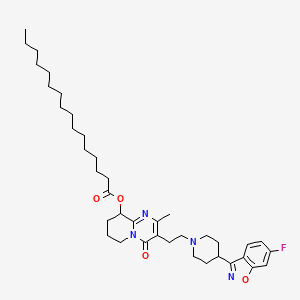
| Formula | C39H57FN4O4 |
|---|---|
| Molecular weight | 664.91 g/mol |
| IUPAC name | [3-[2-[4-(6-fluoro-1,2-benzoxazol-3-yl)piperidin-1-yl]ethyl]-2-methyl-4-oxo-6,7,8,9-tetrahydropyrido[1,2-a]pyrimidin-9-yl] hexadecanoate |
| CAS | 199739-10-1 |
| PubChem CID | 9852746 |
| InChIKey | VOMKSBFLAZZBOW-UHFFFAOYSA-N |
| logP | 9.11 (XLogP 10.1) |
| Polar surface area | 90.46 Ų |
| H-bond acceptors / donors | 8 / 0 |
| Drug-likeness (QED) | 0.09 |
| Lipinski violations | 2 |
SMILES
CCCCCCCCCCCCCCCC(=O)OC1CCCn2c1nc(C)c(CCN1CCC(c3noc4cc(F)ccc34)CC1)c2=OBiology & Pharmacokinetics
Pharmacokinetics predicted
| Bioavailability | 70.0% |
|---|---|
| Half-life | 1.709 h |
| Volume of distribution | 3.188 L/kg |
| Protein binding | 98.6% |
| BBB penetrant | Yes |
Enzyme interactions
| Enzyme | Role | Detail |
|---|---|---|
| CYP2C19 | Substrate | — |
| CYP2C8 | Inhibitor | — |
| CYP2D6 | Inhibitor | — |
| CYP2D6 | Substrate | — |
| CYP3A4 | Substrate | — |
Transporters
BCRP (Inhibitor)BSEP (Inhibitor)MDR1 (Inhibitor)MRP1 (Inhibitor)OATP1B1 (Inhibitor)OATP1B3 (Inhibitor)P-gp (Inhibitor)MDR1 (Substrate)P-gp (Substrate)
Registered Products (1)
| Brand | Form / strength | Pack | Agent | Citizen (JOD) |
|---|---|---|---|---|
| Trevicta Prolonged Release Suspension For Inj | Suspension 175 mg | 1 PFS | Adatco Drug Store | — |