Pizotifen
JFDA label: Pizofen 1mg tablet
Mechanism of Action
Pizotifen is a strong serotonin and tryptamine antagonist with weak antihistamine, anticholinergic and antikinin effects; also has appetite-stimulating and sedative properties. The mechanism of action in migraine prophylaxis has not been fully elucidated; may alter pain thresholds by inhibiting the permeability increasing effect of serotonin and histamine to control movement of plasmakinin across cranial vessel membranes. Inhibits serotonin reuptake by platelets, affecting tonicity and reducing passive distension of extracranial arteries.
Indications
Approved
- Migraine prophylaxis
Contraindications
Source: Lexicomp
- Hypersensitivity to pizotifen or any component of the formulation Absolute
- concurrent use of MAO inhibitors Absolute
- gastric outlet obstruction (pyloroduodenal obstruction, stenosing pyloric ulcer) Absolute
- use in children Absolute
Adverse Reactions
Metabolism and nutrition disorders (1)
Very Common Weight gain
Gastrointestinal disorders (3)
Very Common Increased appetite
Common Nausea · xerostomia
Other (2)
Common Dizziness · drowsiness (including fatigue)
Dosing
Source: Lexicomp
Warnings & Precautions
Source: Lexicomp
Anticholinergic effects
Although anticholinergic effects (constipation, xerostomia, blurred vision, urinary retention) are limited, use with caution in patients with decreased gastrointestinal motility, myasthenia gravis, paralytic ileus, urinary retention, BPH, xerostomia, narrow-angle glaucoma, or other vision problems. Ophthalmic screening is recommended.
CNS depression
May cause CNS depression, which may impair physical or mental abilities; patients must be cautioned about performing tasks which require mental alertness (eg, operating machinery or driving). Gradual titration of dose may help minimize sedative effects (eg, drowsiness).
Hepatotoxicity
Hepatotoxic effects may occur with prolonged used; periodic evaluation of liver function is recommended during therapy. Discontinue use for signs/symptoms of hepatic dysfunction and do not resume therapy until etiology of hepatic dysfunction is identified.
Visual disturbances
Use has been associated with increased intraocular pressure, diplopia, and pupil dilation; limited number of patients experienced lens opacities but effect was not considered drug-related. Instruct patients to report visual disturbances during therapy.
Weight gain/loss
Increased appetite and weight gain are common adverse effects; patients may experience rapid weight loss upon discontinuation. Use with caution in obese or other patients who may be vulnerable to these effects. Disease-related concerns:
Cardiovascular disease
Use with caution in patients with cardiovascular disease.
Diabetes
Use with caution in patients with diabetes mellitus.
Epilepsy
Use with caution in patients with epilepsy; seizures have been reported very rarely with use.
Hepatic impairment
Use with caution in patients with hepatic impairment. Dose adjustment may be necessary.
Renal impairment
Use with caution in patients with renal impairment. Dose adjustment may be necessary. Concurrent drug therapy issues:
Drug-drug interactions
Potentially significant interactions may exist, requiring dose or frequency adjustment, additional monitoring, and/or selection of alternative therapy. Consult drug interactions database for more detailed information. Dosage forms specific issues:
Lactose
May contain lactose; avoid use in patients with galactose or fructose intolerance, lactase deficiency, sucrose-isomaltase insufficiency, or glucose-galactose malabsorption. Other warnings/precautions:
Abrupt discontinuation
Avoid abrupt discontinuation which may cause acute withdrawal reactions (eg, depression, tremor, nausea, malaise, sleep disorder, dizziness, anxiety, loss of consciousness, anorexia and rapid weight loss); taper dosage over 2 weeks prior to discontinuation.
Appropriate use
Not for use in acute treatment of migraine attacks or of tension headaches. Not considered first-line agent for migraine prophylaxis but may be considered when other therapies have failed (Pringsheim, 2012).
Response to therapy
Therapeutic response may require several weeks of therapy. Some patients may experience a decrease in therapeutic response over time.
Tolerance
May develop in some patients; effect may be overcome by dose increases (not to exceed maximum dosage). Consider drug-free period after several months of treatment.
Pregnancy & Lactation
Pregnancy
Adverse events were not observed in animal reproduction studies. If possible, drug therapy for migraine prophylaxis should be avoided during pregnancy. If therapy is needed, other agents are preferred (Pringsheim, 2012).
Lactation
The concentration of pizotifen measured in the milk of nursing mothers is unlikely to affect a nursing infant; however, the manufacturer does not recommend use in nursing mothers. If possible, drug therapy for migraine prophylaxis should be avoided in nursing women. If therapy is needed, other agents are preferred (Pringsheim, 2012).
Monitoring
| Clinical pearl | Hepatic function tests (prolonged use); renal function tests, weight gain; blood pressure |
|---|
Chemistry & Properties
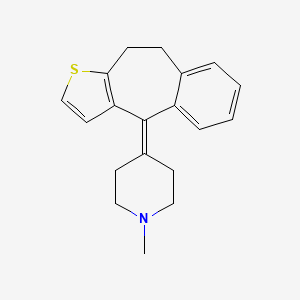
| Formula | C19H21NS |
|---|---|
| Molecular weight | 295.45 g/mol |
| IUPAC name | 1-methyl-4-(6-thiatricyclo[8.4.0.03,7]tetradeca-1(14),3(7),4,10,12-pentaen-2-ylidene)piperidine |
| CAS | 15574-96-6 |
| PubChem CID | 27400 |
| InChIKey | FIADGNVRKBPQEU-UHFFFAOYSA-N |
| logP | 4.37 (XLogP 3.8) |
| Polar surface area | 3.24 Ų |
| H-bond acceptors / donors | 2 / 0 |
| Drug-likeness (QED) | 0.70 |
| Lipinski violations | 0 |
SMILES
CN1CCC(=C2c3ccccc3CCc3sccc32)CC1Biology & Pharmacokinetics
Pharmacokinetics
| BBB penetrant | Yes |
|---|
Enzyme interactions
| Enzyme | Role | Detail |
|---|---|---|
| CYP2B6 | Inhibitor | — |
| CYP2B6 | Substrate | — |
| CYP2C19 | Substrate | — |
| CYP2D6 | Inhibitor | — |
| CYP3A4 | Substrate | — |
Receptor binding (top 2)
| Target | Action | Affinity |
|---|---|---|
| 5-HT1A receptor (HTR1A) | Antagonist | pKi 7.4 |
| 5-HT1A (HTR1A) | Binding | pKi 6.7 |
Transporters
BCRP (Inhibitor)BSEP (Inhibitor)MRP1 (Inhibitor)OATP1B1 (Inhibitor)OATP1B3 (Inhibitor)P-gp (Inhibitor)P-gp (Substrate)
Registered Products (4)
| Brand | Form / strength | Pack | Agent | Citizen (JOD) |
|---|---|---|---|---|
| Pizofen syrup | Syrup 0.25 mg/5 ml | 100 ml | THE JORDANIAN PHARMACEUTICAL MANUFACTURING COMPANY/JORDAN | 1.500 |
| Pizofen | Tablet 0.5 mg | 30 tab pack varies | THE JORDANIAN PHARMACEUTICAL MANUFACTURING COMPANY/JORDAN | 3.400 |
| Pizofen | Tablet 1 mg | 30 tab | THE JORDANIAN PHARMACEUTICAL MANUFACTURING COMPANY/JORDAN | 4.430 |
| Pizofen | Tablet 0.5 mg | 1000 tab pack varies | THE JORDANIAN PHARMACEUTICAL MANUFACTURING COMPANY/JORDAN | 90.670 |