Suxamethonium
JFDA label: Midarine Inj.
- Risk of Cardiac Arrest from Hyperkalemic Rhabdomyolysis:
Mechanism of Action
Acts similar to acetylcholine, produces depolarization of the motor endplate at the myoneural junction which causes sustained flaccid skeletal muscle paralysis produced by state of accommodation that develops in adjacent excitable muscle membranes
Indications
Approved
- Neuromuscular blockade
Off-label
- Muscle contractions of electroconvulsive therapy (ECT) (reduce intensity)
Contraindications
Source: Lexicomp
- Hypersensitivity to succinylcholine or any component of the formulation Absolute
- personal or familial history of malignant hyperthermia Absolute
- skeletal muscle myopathies Absolute
- use after the acute phase of injury following major burns, multiple trauma, extensive denervation of skeletal muscle, or upper motor neuron injury. Documentation of allergenic cross-reactivity for neuromuscular blockers is limited. However, because of similarities in chemical structure and/or pharmacologic actions, the possibility of cross-sensitivity cannot be ruled out with certainty Absolute
Adverse Reactions
Cardiac disorders (6)
Not Known Bradycardia (higher with second dose; more frequent in children) · cardiac arrhythmia · hypertension · hypotension · malignant hyperthermia · tachycardia
Immune system disorders (1)
Not Known Anaphylaxis
Metabolism and nutrition disorders (1)
Not Known Hyperkalemia
Gastrointestinal disorders (1)
Not Known Sialorrhea
Skin and subcutaneous tissue disorders (1)
Not Known Skin rash
Musculoskeletal and connective tissue disorders (4)
Not Known Fasciculations · jaw tightness · myalgia (postoperative) · rhabdomyolysis (with possible myoglobinuric acute renal failure)
Eye disorders (1)
Not Known Increased intraocular pressure
Respiratory, thoracic and mediastinal disorders (2)
Not Known Apnea · respiratory depression (prolonged)
Dosing
Source: Lexicomp
Warnings & Precautions
Source: Lexicomp
Anaphylaxis
Severe anaphylactic reactions (some life-threatening and fatal) have been reported. Cross-sensitivity with other neuromuscular-blocking agents may occur; use extreme caution in patients with previous anaphylactic reactions.
Bradycardia
Risk of bradycardia may be increased with second dose and may occur more in children. Occurrence may be reduced by pretreating with anticholinergic agents (eg, atropine).
Increased intraocular pressure (IOP)
May increase IOP; avoid use in patients in which an increase in IOP is undesirable (eg, narrow-angle glaucoma, penetrating eye injuries).
Intracranial pressure
May cause a transient increase in intracranial pressure (adequate anesthetic induction prior to administration of succinylcholine will minimize this effect).
Intragastric pressure
May increase intragastric pressure, which could result in regurgitation and possible aspiration of stomach contents.
Malignant hyperthermia
Use may be associated with acute onset of malignant hyperthermia; risk may be increased with concomitant administration of volatile anesthetics.
Vagal tone
May increase vagal tone. Disease-related concerns:
Burn injury
Use with caution in patients with extensive or severe burns; risk of hyperkalemia is increased following injury. Onset of time and duration of risk are variable, but risk is generally greatest 7 to 10 days after injury. Resistance may occur in burn patients (≥20% of total body surface area), usually several days after the injury, and may persist for several months after wound healing (Han 2009).
Conditions which may antagonize neuromuscular blockade
Respiratory alkalosis, hypercalcemia, demyelinating lesions, peripheral neuropathies, denervation, muscle trauma, and diabetes mellitus may result in antagonism of neuromuscular blockade (Greenberg 2013; Miller 2010; Murray 2002; Naguib, 2002).
Conditions which may potentiate neuromuscular blockade
Electrolyte abnormalities (eg, severe hypocalcemia, severe hypokalemia, hypermagnesemia), neuromuscular diseases, metabolic acidosis, respiratory acidosis, Eaton-Lambert syndrome, and myasthenia gravis may result in potentiation of neuromuscular blockade (Greenberg 2013; Miller 2010; Naguib 2002).
Fractures/muscle spasm
Use with caution in patients with fractures or muscle spasm; initial muscle fasciculations may cause additional trauma.
Hyperkalemia
Use with extreme caution in patients with pre-existing hyperkalemia. Severe hyperkalemia may develop in patients with chronic abdominal infections, burn injuries, multiple trauma, extensive denervation of skeletal muscle, upper motor neuron injury, subarachnoid hemorrhage, or conditions which cause degeneration of the central and peripheral nervous system.
Plasma pseudocholinesterase disorders
Metabolized by plasma cholinesterase; use with caution (if at all) in patients suspected of being homozygous for the atypical plasma cholinesterase gene. Plasma cholinesterase activity may also be reduced by burns, anemia, decompensated heart disease, infections, malignant tumors, myxedema, pregnancy, severe hepatic or renal dysfunction, peptic ulcer, and certain medications and chemicals. Concurrent drug therapy issues:
Drug-drug interactions
Potentially significant interactions may exist, requiring dose or frequency adjustment, additional monitoring, and/or selection of alternative therapy. Consult drug interactions database for more detailed information. Special populations:
Elderly
Use with caution in the elderly, effects and duration are more variable.
Pediatric
Use caution in children and adolescents. Acute rhabdomyolysis with hyperkalemia, ventricular arrhythmias and cardiac arrest have been reported (rarely) in children with undiagnosed skeletal muscle myopathy (eg, Duchenne muscular dystrophy); occurs soon after administration and requires immediate treatment of hyperkalemia. Prolonged resuscitation may be required. Use in children should be reserved for emergency intubation when immediate airway control is necessary (eg, laryngospasm, difficult airway, full stomach), or IM use when a suitable vein is inaccessible. Other warnings/precautions:
Appropriate use
Maintenance of an adequate airway and respiratory support is critical. If possible, to avoid distress to the patient, do not administer before unconsciousness has been induced.
Experienced personnel
Should be administered by adequately trained individuals familiar with its use.
Pregnancy & Lactation
Pregnancy
Animal reproduction studies have not been conducted. Small amounts cross the placenta. Sensitivity to succinylcholine may be increased due to a ~24% decrease in plasma cholinesterase activity during pregnancy and several days postpartum.
Lactation
It is not known if succinylcholine is excreted in breast milk. The manufacturer recommends that caution be exercised when administering succinylcholine to nursing women.
Monitoring
| Clinical pearl | Monitor cardiac, blood pressure, and oxygenation during administration; temperature, serum potassium and calcium, assisted ventilator status; neuromuscular function with a peripheral nerve stimulator |
|---|
Chemistry & Properties
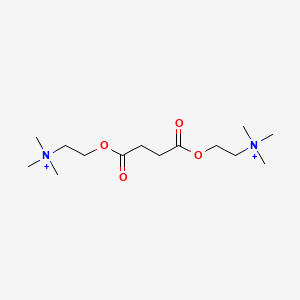
| Formula | C14H30N2O4+2 |
|---|---|
| Molecular weight | 290.4 g/mol |
| IUPAC name | trimethyl-[2-[4-oxo-4-[2-(trimethylazaniumyl)ethoxy]butanoyl]oxyethyl]azanium |
| CAS | 306-40-1 |
| PubChem CID | 5314 |
| InChIKey | AXOIZCJOOAYSMI-UHFFFAOYSA-N |
| logP | 0.27 (XLogP 0.6) |
| Polar surface area | 52.6 Ų |
| H-bond acceptors / donors | 4 / 0 |
| Drug-likeness (QED) | 0.45 |
| Lipinski violations | 0 |
SMILES
C[N+](C)(C)CCOC(=O)CCC(=O)OCC[N+](C)(C)CBiology & Pharmacokinetics
Pharmacokinetics
| BBB penetrant | No |
|---|
Enzyme interactions
| Enzyme | Role | Detail |
|---|---|---|
| CYP1A2 | Substrate | — |
| CYP2D6 | Substrate | — |
Transporters
BCRP (Inhibitor)BSEP (Inhibitor)MRP1 (Inhibitor)OATP1B1 (Inhibitor)OATP1B3 (Inhibitor)P-gp (Inhibitor)P-gp (Substrate)
Registered Products (2)
| Brand | Form / strength | Pack | Agent | Citizen (JOD) |
|---|---|---|---|---|
| Midarine Inj. | Injection 100 mg/2 ml | 100 amp | Suleiman Tannous & Sons Co. Ltd | — |
| Suxacure | Ampoule 50 mg/1 ml | 2 ml | Oasis of Hope | — |