Vitamin C
JFDA label: Ultimate DHEA 50 mg Capsule
Indications
Approved
- Ascorbic acid deficiency
- Dietary supplement
- Scurvy
Contraindications
Source: Lexicomp
- There are no contraindications listed in the manufacturer's labeling Absolute
Adverse Reactions
Other (1)
Common Endocrine & metabolic: Hyperoxaluria (with large doses)
Dosing
Source: Lexicomp
Warnings & Precautions
Source: Lexicomp
Oxalate nephropathy/nephrolithiasis
Acidification of the urine by ascorbic acid may cause precipitation of cysteine, urate or oxalate stones. Acute and chronic oxalate nephropathy has been reported with prolonged administration of high IV doses. Patients with renal disease including renal impairment, history of oxalate kidney stones, elderly patients and pediatric patients Disease-related concerns:
Diabetes
Patients with diabetes mellitus should not take excessive doses for extended periods of time.
Glucose-6-phosphatase dehydrogenase deficiency
Hemolysis has been reported in patients with glucose-6-phosphatase dehydrogenase (G6PD) deficiency and the risk for severe hemolysis may be increased during ascorbic acid therapy. Dose reductions may be necessary along with appropriate monitoring (eg, hemoglobin, blood counts). Discontinue treatment if hemolysis is suspected.
Hemochromatosis
Use with caution in patients with hemochromatosis; excess ascorbic acid intake may increase the risk of adverse events (IOM 2000).
Renal impairment
Use with caution in patients with renal impairment or patients prone to recurrent renal calculi; may have increased risk of developing acute or chronic oxalate nephropathy. Special populations:
Elderly
Use with caution in the elderly; may be at increased risk for oxalate nephropathy.
Pediatric
Use with caution in the children Dosage form specific issues:
Aluminum
The parenteral product may contain aluminum; toxic aluminum concentrations may be seen with high doses, prolonged use, or renal dysfunction. Premature neonates are at higher risk due to immature renal function and aluminum intake from other parenteral sources. Parenteral aluminum exposure of >4 to 5 mcg/kg/day is associated with CNS and bone toxicity; tissue loading may occur at lower doses (Federal Register 2002). See manufacturer's labeling.
Benzyl alcohol and derivatives
Some dosage forms may contain sodium benzoate/benzoic acid; benzoic acid (benzoate) is a metabolite of benzyl alcohol; large amounts of benzyl alcohol (≥99 mg/kg/day) have been associated with a potentially fatal toxicity (“gasping syndrome”) in neonates; the “gasping syndrome” consists of metabolic acidosis, respiratory distress, gasping respirations, CNS dysfunction (including convulsions, intracranial hemorrhage), hypotension, and cardiovascular collapse (AAP ["Inactive" 1997]; CDC 1982); some data suggests that benzoate displaces bilirubin from protein binding sites (Ahlfors 2001); avoid or use dosage forms containing benzyl alcohol derivative with caution in neonates. See manufacturer's labeling.
Injection
Avoid rapid IV injection; may cause temporary faintness or dizziness.
Sodium
Some products may contain sodium; use with caution in sodium restricted patients.
Pregnancy & Lactation
Pregnancy
Animal reproduction studies have not been conducted. Maternal plasma concentrations of ascorbic acid decrease as pregnancy progresses due to hemodilution and increased transfer to the fetus. Some pregnant women (eg, smokers) may require supplementation greater than the RDA (IOM 2000).
Lactation
Ascorbic acid is present in breast milk; regulatory mechanisms prevent concentrations from exceeding a required amount (IOM 2000). According to the manufacturer, the decision to breastfeed during therapy should take into account the risk of infant exposure, the benefits of breastfeeding to the infant, and benefits of treatment to the mother.
Monitoring
| Clinical pearl | Renal function (patients at risk for developing oxalate nephropathy/nephrolithiasis); hemoglobin and blood counts (patients with G6PD deficiency). |
|---|
Chemistry & Properties
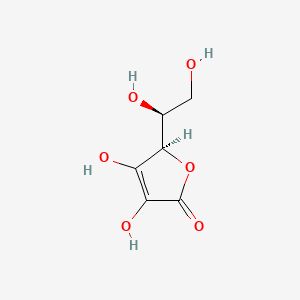
| Formula | C6H8O6 |
|---|---|
| Molecular weight | 176.12 g/mol |
| IUPAC name | (2R)-2-[(1S)-1,2-dihydroxyethyl]-3,4-dihydroxy-2H-furan-5-one |
| CAS | 50-81-7 |
| PubChem CID | 54670067 |
| InChIKey | CIWBSHSKHKDKBQ-JLAZNSOCSA-N |
| logP | -1.6 (XLogP -1.6) |
| Polar surface area | 107.0 Ų |
| H-bond acceptors / donors | 6 / 4 |
SMILES
C(C(C1C(=C(C(=O)O1)O)O)O)OBiology & Pharmacokinetics
Pharmacokinetics
| BBB penetrant | Yes |
|---|
Enzyme interactions
| Enzyme | Role | Detail |
|---|---|---|
| CYP2C9 | Substrate | — |
Transporters
BCRP (Inhibitor)BSEP (Inhibitor)MRP1 (Inhibitor)OATP1B1 (Inhibitor)OATP1B3 (Inhibitor)P-gp (Inhibitor)P-gp (Substrate)
Registered Products (7)
| Brand | Form / strength | Pack | Agent | Citizen (JOD) |
|---|---|---|---|---|
| Mamera Caplet | Tablet 1 mg, 30 mcg, 100 mg, 30 IU, 3000 IU, 200 IU, 3 mg, 3.4 mg, 20 mg, 20 mcg, 10 mg, 12 mcg, 200 mg, 25 mcg, 150 mcg, 25 mcg, 22.5 mg, 27 mg, 2 mg, 10 mg, 25 mg, 2.3 mg | 30 tab | Jordan Sweden Medical & Sterilization Co. | 2.420 |
| Stresstab With Zinc | Tablet 0.5 mg, 25 ng, 600 mg, 45 IU, 30 mg, 10 mg, 100 mg, 10 mg, 25 mcg, 23.9 mg, 0.9 mg, 25 mg | 30 tab | Sukhtian Group | 2.930 |
| Cal-C-Vita | Tablet 1 g, 300 IU, 15 mg, 250 mg | 15 tab | The Jordan Drugstore Co | 3.860 |
| Pronatal | Tablet 0.6 mg, 2.6 mcg, 18 mg, 0.03 mg, 2 mg, 85 mg, 15 mg, 0.06 mg, 150 mg, 0.03 mg, 0.2 mg, 0.05 mg, 11 mg, 1.9 mg, 27 mg, 1 mg, 53 mg, 1.4 mg, 200 IU, 1.4 mg | 30 tab | THE ARAB DRUG STORE P.S.C | 5.570 |
| Pharmaton Capsules | Capsule 20 mg, 15 mg, 10 mg, 60 mg, 400 IU, 2 mg, 4000 IU, 1 mcg, 90.3 mg, 1 mg, 10 mg, 1 mg, 10 mg, 40 mg, 10 mg, 1 mg, 2 mg, 8 mg, 66 mg, 1 mg, 26 mg, 70 mg, 0.2 mg | 30 cap | THE ARAB DRUG STORE P.S.C | 6.700 |
| Elevit Pronatal film-coated tablets | Film-Coated Tablet 0.80 mg, 4.00 mcg, 19.00 mg, 10.00 mg, 200 mcg, 100.00 mg, 1080 mcg, 12.5 mcg, 125.00 mg, 7.50 mg, 2.60 mg, 60.00 mg, 1.00 mg, 125 mg, 1.00 mg, 1.80 mg, 100.00 mg, 1.60 mg, 15.00 mg | 30 tab | The Jordan Drugstore Co | 8.330 |
| Ultimate DHEA | Capsule 25 mg, 70 mg, 90 mg, 50 mg | 60 cap | Alghad Drug Store | 25.000 |