Ephedrine
JFDA label: Ephedrine HCl INJ
Mechanism of Action
Releases tissue stores of norepinephrine and thereby produces an alpha- and beta-adrenergic stimulation; longer-acting and less potent than epinephrine
Indications
Approved
- Hypotension, anesthesia-induced
Off-label
- Postoperative nausea and vomiting (prevention)
Contraindications
Source: Lexicomp
- Hypersensitivity to ephedrine, other sympathomimetics, or any component of the formulation Absolute
- angle-closure glaucoma Absolute
- coadministration with myocardial sensitizing anesthetics (cyclopropane or halothane) Absolute
Adverse Reactions
Cardiac disorders (9)
Not Known Angina pectoris · bradycardia · cardiac arrhythmia · hypertension · palpitations · pulse irregularity · tachycardia · ventricular ectopy · visceral vasoconstriction (renal)
Nervous system disorders (13)
Not Known Anxiety · confusion · delirium · dizziness · hallucination · headache · insomnia · intracranial hemorrhage · nervousness · precordial pain · restlessness · tension · vertigo
Renal and urinary disorders (3)
Not Known Dysuria · oliguria · urinary retention (males with prostatism)
Gastrointestinal disorders (3)
Not Known Anorexia · nausea · vomiting
Skin and subcutaneous tissue disorders (2)
Not Known Diaphoresis · pallor
Musculoskeletal and connective tissue disorders (3)
Not Known Tremor · vesicle sphincter spasm · weakness
General disorders and administration site conditions (1)
Not Known Tachyphylaxis
Respiratory, thoracic and mediastinal disorders (1)
Not Known Dyspnea
Dosing
Source: Lexicomp
Warnings & Precautions
Source: Lexicomp
Cardiovascular effects
May cause hypertension resulting in intracranial hemorrhage. May also induce anginal pain in patients with coronary insufficiency or ischemic heart disease and induce potentially fatal arrhythmias in patients with heart disease or who are receiving drugs that sensitize the myocardium.
Urine output
Constriction of renal blood vessels may occur, decreasing urine output. Disease-related concerns:
Cardiovascular disease
Ephedrine should not ordinarily be used where vasopressor drugs may be contraindicated, such as hypertension and other cardiovascular disorders (eg angina pectoris, coronary artery disease, arrhythmias); use with caution.
Diabetes
Ephedrine should not ordinarily be used in cases where vasopressor drugs may be contraindicated, such as diabetes; use with caution.
Prostatic hyperplasia/urinary stricture
Use with caution in patients with prostatic hyperplasia and/or urinary stricture.
Renal impairment
Use with caution in patients with renal impairment; increased elimination half-life may occur. Carefully monitor patients with renal impairment for adverse reactions.
Thyroid dysfunction
Ephedrine should not ordinarily be used where vasopressor drugs may be contraindicated, such as thyrotoxicosis. Use with caution in patients with thyroid dysfunction.
Vasomotor symptoms
Use with caution in patients with unstable vasomotor symptoms. Concurrent drug therapy issues:
Drug-drug interactions
Potentially significant interactions may exist, requiring dose or frequency adjustment, additional monitoring, and/or selection of alternative therapy. Consult drug interactions database for more detailed information. Special populations:
Elderly
Use with caution in the elderly. Dosage form specific issues:
Injectable
Blood volume depletion should be corrected before IV therapy is instituted. Other warnings/precautions:
Bronchodilator use
Avoid as a bronchodilator; ephedrine is generally not used as a bronchodilator since other beta2 agonists are less toxic.
Long-term use
Prolonged use may cause anxiety and symptoms of paranoid schizophrenia (eg, tachycardia, poor nutrition and hygiene, fever, cold sweat and dilated pupils).
Tolerance
Tachyphylaxis and tolerance may develop with repeated, prolonged, or excessive administration; temporary cessation of therapy restores its effectiveness.
Pregnancy & Lactation
Pregnancy
Animal reproduction studies have not been conducted. Ephedrine crosses the placenta (Hughes, 1985). Ephedrine injection is used at delivery for the prevention and/or treatment of maternal hypotension associated with spinal anesthesia in women undergoing cesarean section (ASA, 2007). Serious postpartum hypertension and possibly stroke may occur if administered with oxytocic medications. Metabolic acidosis has been reported in neonates following maternal use of ephedrine; monitor.
Lactation
Ephedrine is excreted in breast milk. According to the manufacturer, the decision to breastfeed during therapy should take into account the risk of exposure to the infant and the benefits of treatment to the mother.
Monitoring
| Clinical pearl | Blood pressure, pulse, respiratory symptoms; monitor patients with renal impairment for adverse reactions. |
|---|
Chemistry & Properties
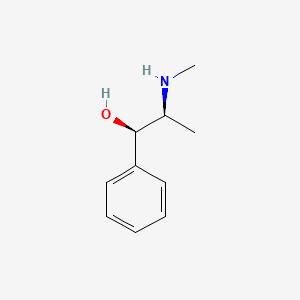
| Formula | C10H15NO |
|---|---|
| Molecular weight | 165.24 g/mol |
| IUPAC name | (1R,2S)-2-(methylamino)-1-phenylpropan-1-ol |
| CAS | 299-42-3 |
| PubChem CID | 9294 |
| InChIKey | KWGRBVOPPLSCSI-WPRPVWTQSA-N |
| logP | 1.33 (XLogP 0.9) |
| Polar surface area | 32.26 Ų |
| H-bond acceptors / donors | 2 / 2 |
| Drug-likeness (QED) | 0.71 |
| Lipinski violations | 0 |
SMILES
CN[C@@H](C)[C@H](O)c1ccccc1Biology & Pharmacokinetics
Pharmacokinetics
| BBB penetrant | No |
|---|
Enzyme interactions
| Enzyme | Role | Detail |
|---|---|---|
| CYP1A2 | Inhibitor | — |
| CYP1A2 | Substrate | — |
| CYP2C19 | Substrate | — |
| CYP2D6 | Inhibitor | — |
| CYP2D6 | Substrate | — |
Receptor binding (top 1)
| Target | Action | Affinity |
|---|---|---|
| β2-adrenoceptor (ADRB2) | Agonist | pKi 5.6 |
Transporters
BCRP (Inhibitor)BSEP (Inhibitor)MRP1 (Inhibitor)OATP1B1 (Inhibitor)OATP1B3 (Inhibitor)OCT2 (Inhibitor)OCTN2 (Inhibitor)P-gp (Inhibitor)P-gp (Substrate)
Drug–drug interactions (100+, DDInter)
| Interacting drug | Severity | Management |
|---|---|---|
| Amitriptyline | major | |
| Amoxapine | major | |
| Bupropion | major | |
| Clomipramine | major | |
| Cocaine (nasal) | major | |
| Cocaine (topical) | major | |
| Desipramine | major | |
| Dihydroergotamine | major | |
| Doxepin | major | |
| Ergometrine | major | |
| Ergotamine | major | |
| Imipramine | major | |
| Iobenguane (I-131) | major | |
| Iohexol | major | |
| Iopamidol | major | |
| Isocarboxazid | major | |
| Linezolid | major | |
| Methylene blue | major | |
| Methylergometrine | major | |
| Methysergide | major | |
| Nortriptyline | major | |
| Phenelzine | major | |
| Procarbazine | major | |
| Protriptyline | major | |
| Selegiline | major | |
| Sibutramine | major | |
| Tramadol | major | |
| Tranylcypromine | major | |
| Trimipramine | major | |
| Acarbose | moderate | |
| Acebutolol | moderate | |
| Acetohexamide | moderate | |
| Albiglutide | moderate | |
| Alimemazine | moderate | |
| Alogliptin | moderate | |
| Amifampridine | moderate | |
| Amphetamine | moderate | |
| Arformoterol | moderate | |
| Atenolol | moderate | |
| Atomoxetine | moderate |
Showing 40 of 100+.
Registered Products (3)
| Brand | Form / strength | Pack | Agent | Citizen (JOD) |
|---|---|---|---|---|
| EPHEDRINE AGUETTANT 3 mg/ml, solution for injection in pre-filled syringe | Injection 30 mg/1 ml | 1 BOX/10 SYR pack varies | شركة مستودع ادوية جرينلاند | — |
| EPHEDRINE AGUETTANT 30 mg/ml, solution for injection | Injection 30 mg/1 ml | 10 amp pack varies | شركة مستودع ادوية جرينلاند | — |
| Ephedrine HCl INJ | Injection 30 mg/ml | 1 ml | AL Razi Drug Store | — |