Desflurane
JFDA label: Suprane Liquid For Inhalation 240ml
Mechanism of Action
Positive Modulator of Glycine receptor (alpha-1/beta) — Glycine receptor (alpha-1/beta) positive modulator; Positive Allosteric Modulator of GABA-A receptor; anion channel — GABA-A receptor; anion channel positive allosteric modulator; Opener of Potassium channel subfamily K member 10 — Potassium channel subfamily K member 10 opener; Opener of Potassium channel subfamily K member 18 — Potassium channel subfamily K member 18 opener; Opener of Potassium channel subfamily K member 3 — Potassium channel subfamily K member 3 opener; Opener of Potassium channel subfamily K member 9 — Potassium channel subfamily K member 9 opener; Opener of Potassium channel subfamily K member 2 — Potassium channel subfamily K member 2 opener
| Target | Action | Gene / class |
|---|---|---|
| GABA-A receptor; anion channel efficacy | POSITIVE ALLOSTERIC MODULATOR | |
| Glycine receptor (alpha-1/beta) efficacy | POSITIVE MODULATOR | |
| Potassium channel subfamily K member 10 efficacy | OPENER | KCNK10 |
| Potassium channel subfamily K member 18 efficacy | OPENER | KCNK18 |
| Potassium channel subfamily K member 2 efficacy | OPENER | KCNK2 |
| Potassium channel subfamily K member 3 efficacy | OPENER | KCNK3 |
| Potassium channel subfamily K member 9 efficacy | OPENER | KCNK9 |
Indications
Approved
- Canadian labeling
- US labeling
Contraindications
Source: Lexicomp
- Additional contraindications (not in US labeling): History of hepatitis due to a halogenated inhalational anesthetic or in whom hepatic dysfunction, jaundice or unexplained fever, leukocytosis, or eosinophilia has occurred after previous halogenated anesthetic administration Absolute
- Hypersensitivity to desflurane, other halogenated agents, or any component of the formulation Absolute
- history of moderate to severe hepatic impairment following anesthesia with desflurane or other halogenated agents and not otherwise explained Absolute
- induction of anesthesia in pediatric patients Absolute
- known or suspected genetic susceptibility to malignant hyperthermia Absolute
- patients in whom general anesthesia is contraindicated Absolute
Adverse Reactions
Cardiac disorders (6)
Common bradycardia · hypertension (including malignant hypertension) · nodal arrhythmia · Oxygen saturation decreased · shivering · tachycardia
Nervous system disorders (1)
Common Headache
Gastrointestinal disorders (3)
Very Common Nausea · vomiting
Common Sialorrhea
Musculoskeletal and connective tissue disorders (1)
Common Laryngospasm
Eye disorders (1)
Common Conjunctivitis
Respiratory, thoracic and mediastinal disorders (5)
Very Common apnea · breath-holding · Cough
Common Increased bronchial secretions · pharyngitis
Dosing
Source: Lexicomp
Warnings & Precautions
Source: Lexicomp
Decreased blood flow
May cause decrease in hepatic and/or renal blood flow.
Hepatitis
May cause sensitivity hepatitis in patients who have been sensitized by previous exposure to halogenated anesthetics.
Hyperkalemia
Use of inhaled anesthetics has been associated with rare cases of perioperative hyperkalemia (including fatalities) in pediatric patients; concomitant use of succinylcholine was associated with many of the reported cases, but not all. Risk of hyperkalemia is increased in patients with underlying neuromuscular disease (eg, Duchenne muscular dystrophy). Other abnormalities may include elevation in CK and myoglobinuria. Monitor closely for arrhythmias. Aggressively identify and treat hyperkalemia.
Increased intracranial pressure
May dilate the cerebral vasculature and may, in certain conditions, increase intracranial pressure. In patients with intracranial space-occupying lesions, administer at ≤0.8 MAC in conjunction with a barbiturate induction and hyperventilation in the period before cranial decompression; maintain cerebral perfusion pressure.
Malignant hyperthermia
May trigger malignant hyperthermia (MH); some reported cases have been fatal. Use is contraindicated in patients susceptible to MH.
QT prolongation
Cases of QT prolongation in association with torsade de pointes (some fatal) have been reported with inhaled anesthetic agents; use caution when administering to patients at risk of QT prolongation (eg, concurrent use of drugs that can prolong the QT interval, such as class Ia and III antiarrhythmic drugs, elderly patients, congenital QT prolongation) (Han 2010; Kang 2006; Nakao 2010).
Respiratory depression
Causes dose-dependent respiratory depression and blunted ventilatory response to hypoxia and hypercapnia. Hypoxic pulmonary vasoconstriction is blunted which may lead to increased pulmonary shunt. May produce elevated carbon monoxide levels and carboxyhemoglobin in the presence of a desiccated dry carbon dioxide absorbent within the circle breathing system of an anesthetic machine; barium hydroxide and soda lime desiccation have been reported when fresh gasses are passed over a carbon dioxide canister at high flow rates over many hours or days. Maintain fresh absorbent as per manufacturer guidelines regardless of state of colorimetric indicator. Disease-related concerns:
Cardiovascular disease
Do not use as a single agent to induce anesthesia in patients with CAD or in whom an increase in heart rate or blood pressure should be avoided. Abrupt increases in inspired concentrations >1 MAC can produce a transient increase in blood pressure and heart rate due to increased plasma catecholamine levels. Acute, rapid increases in desflurane concentration can produce increased sympathetic cardiovascular stimulation which lasts for 2 to 4 minutes; can be blunted by concurrent use of nitrous oxide, opioids, beta-blockers, and alpha-2 agonists (Weiskopf 1994). Hypotensive effect due to peripheral vasodilation is dose dependent and increases as anesthesia is deepened. In a scientific statement from the American Heart Association, desflurane has been determined to be an agent that may exacerbate underlying myocardial dysfunction (magnitude: major) (AHA [Page 2016]).
Hepatic disease
Due to the risk of hepatitis with halogenated anesthetics, use in patients with cirrhosis, viral hepatitis, or other preexisting hepatic disease should be approached with caution; disruption of hepatic function, icterus, and fatal liver necrosis have been reported and may indicate hypersensitivity. Consider the use of an anesthetic other than a halogenated anesthetic. Special populations:
Pediatric
Postoperative agitation may occur in children while emerging from anesthesia. Contraindicated for induction of general anesthesia in pediatric patients due to the higher incidence of moderate to severe upper airway adverse events (eg, laryngospasm, coughing, breath-holding, increased secretions). Do not use to maintain anesthesia in nonintubated pediatric patients. Use with caution when used to maintain anesthesia in children ≤6 years when a laryngeal mask airway (LMA) is in place due to the increased potential for adverse respiratory effects especially with removal of the LMA under deep anesthesia. Use with caution in children with asthma or recent upper respiratory infection; increased risk for airway narrowing and increased airway resistance.
Pediatric neurotoxicity
In pediatric and neonatal patients Special handling:
Occupational caution
Although there are no documented adverse effects of chronic occupational exposure to halogenated anesthetic vapors, like desflurane, some epidemiological studies suggest a link between these anesthetics and increased health problems (particularly spontaneous abortion). There is no specific work exposure limit established for desflurane. However, the National Institute for Occupational Safety and Health (NIOSH) has recommended that workers should not be exposed to ceiling concentrations greater than 2 ppm of any halogenated anesthetic agent over a period ≤1 hour. The predicted effects of acute overexposure by inhalation of desflurane include headache, dizziness, or (in extreme cases) unconsciousness. Precautions (eg, adequate ventilation, scavenging-systems, minimizing leaks/spills) can help to lessen any potential risk. Other warnings/precautions:
Monitoring
Transient elevations in white blood cell count and glucose may occur.
Pregnancy & Lactation
Pregnancy
Adverse events have been observed in animal reproduction studies. Based on animal data, repeated or prolonged use of general anesthetic and sedation medications that block N-methyl-D- aspartate (NMDA) receptors and/or potentiate gamma-aminobutyric acid (GABA) activity, may affect brain development. Human fetuses may be most vulnerable during the third trimester. Until additional information is available, the benefits and risks of maternal treatment with desflurane during pregnancy should be evaluated, especially for procedures lasting more than 3 hours. The ACOG recommends that pregnant women should not be denied medically indicated surgery or procedures, regardless of trimester. If the procedure is elective, it should be delayed until after delivery (ACOG 2011).
Lactation
It is not known if desflurane is present in breast milk. The manufacturer recommends that caution be exercised when administering desflurane to nursing women. Due to rapid washout, desflurane levels in milk most likely have no clinical importance 24 hours after anesthesia.
Monitoring
| Clinical pearl | Blood pressure, heart rate and rhythm, temperature, oxygen saturation, end-tidal CO2 and end-tidal desflurane concentrations should be monitored prior to and throughout anesthesia; adverse respiratory symptoms in pediatric patients (≤6 years); signs and symptoms of airway narrowing in children with asthma or recent upper respiratory infection |
|---|
Chemistry & Properties
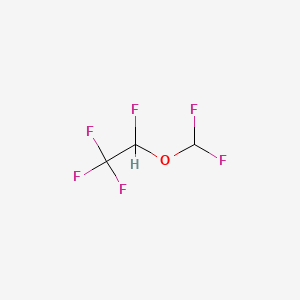
| Formula | C3H2F6O |
|---|---|
| Molecular weight | 168.04 g/mol |
| IUPAC name | 2-(difluoromethoxy)-1,1,1,2-tetrafluoroethane |
| CAS | 57041-67-5 |
| PubChem CID | 42113 |
| InChIKey | DPYMFVXJLLWWEU-UHFFFAOYSA-N |
| logP | 2.08 (XLogP 2.6) |
| Polar surface area | 9.23 Ų |
| H-bond acceptors / donors | 1 / 0 |
| Drug-likeness (QED) | 0.57 |
| Lipinski violations | 0 |
SMILES
FC(F)OC(F)C(F)(F)FBiology & Pharmacokinetics
Pharmacokinetics
| BBB penetrant | Yes (logBB 0.11) |
|---|
Enzyme interactions
| Enzyme | Role | Detail |
|---|---|---|
| CYP1A2 | Inhibitor | — |
| CYP1A2 | Substrate | — |
| CYP2B6 | Substrate | — |
| CYP2C19 | Inhibitor | — |
| CYP2C19 | Substrate | — |
Transporters
BCRP (Inhibitor)BSEP (Inhibitor)MRP1 (Inhibitor)OATP1B1 (Inhibitor)OATP1B3 (Inhibitor)P-gp (Inhibitor)P-gp (Substrate)
Drug–drug interactions (5, DDInter)
| Interacting drug | Severity | Management |
|---|---|---|
| Epinephrine | major | |
| Codeine | moderate | |
| Hydrocodone | moderate | |
| Morphine | moderate | |
| Opium | moderate |
Registered Products (1)
| Brand | Form / strength | Pack | Agent | Citizen (JOD) |
|---|---|---|---|---|
| Suprane Liquid For Inhalation | Solution 100 % | 240 ml | Khoury Drug Store | — |