Sumatriptan
JFDA label: Imigran
Mechanism of Action
Agonist of 5-hydroxytryptamine receptor 1B — Serotonin 1b (5-HT1b) receptor agonist; Agonist of 5-hydroxytryptamine receptor 1D — Serotonin 1d (5-HT1d) receptor agonist
| Target | Action | Gene / class |
|---|---|---|
| 5-hydroxytryptamine receptor 1B efficacy | AGONIST | HTR1B |
| 5-hydroxytryptamine receptor 1D efficacy | AGONIST | HTR1D |
Indications
Approved
- Cluster headache
- Migraine
Off-label
- Migraine (children/adolescents) (Intranasal)
- Migraine (children/adolescents) (Oral)
- Migraine (children/adolescents) (SubQ)
Contraindications
Source: Lexicomp
- Hypersensitivity (eg, angioedema, anaphylaxis) to sumatriptan or any component of the formulation Absolute
- Wolff-Parkinson-White syndrome or arrhythmias associated with other cardiac accessory conduction pathway disorders Absolute
- concurrent administration or within 2 weeks of discontinuing an MAO type A inhibitors Absolute
- history of cerebrovascular syndromes (including strokes, transient ischemic attacks), history of hemiplegic or basilar migraine Absolute
- ischemic heart disease or signs or symptoms of ischemic heart disease (coronary artery vasospasm, Prinzmetal angina, angina pectoris, myocardial infarction, silent myocardial ischemia) Absolute
- peripheral vascular disease (including ischemic bowel disease) Absolute
- severe hepatic impairment (excluding Sumavel) Absolute
- uncontrolled hypertension Absolute
- use within 24 hours of another 5-HT1 agonist Absolute
- use within 24 hours of ergotamine derivatives Absolute
Adverse Reactions
Cardiac disorders (9)
Common chest discomfort · chest pain · chest pressure · chest tightness · Flushing · Hot and cold flashes · local discomfort
Not Known Ischemia · Raynaud phenomenon
Nervous system disorders (22)
Very Common dizziness · feeling hot · Tingling sensation · vertigo
Common Burning sensation · drowsiness · fatigue · feeling of heaviness · headache · heaviness of chest · localized burning · Localized numbness · malaise · nasal cavity pain · numbness · Pain · paresthesia · sedation · sensation of pressure · sensation of tightness · strange feeling · tight feeling in the head
Blood and lymphatic system disorders (1)
Not Known Splenic infarction
Gastrointestinal disorders (6)
Very Common Dysgeusia · nausea · unusual taste · vomiting
Common Nausea and vomiting · Sore throat
Skin and subcutaneous tissue disorders (1)
Common Diaphoresis
Musculoskeletal and connective tissue disorders (7)
Common Jaw pain · jaw pressure · jaw tightness · myalgia · Neck pain · neck stiffness · weakness
General disorders and administration site conditions (4)
Very Common Injection site reaction · warm sensation at injection site
Common Local irritation · Local pain
Respiratory, thoracic and mediastinal disorders (8)
Common bronchospasm · Nasal discomfort · nasal signs and symptoms · Pharyngeal edema · rhinitis · Rhinorrhea · sinus discomfort · sore nose
Dosing
Source: Lexicomp
Warnings & Precautions
Source: Lexicomp
Anaphylactic/anaphylactoid reactions
Anaphylactic, anaphylactoid, and hypersensitivity reactions (including angioedema) have been reported; may be life threatening or fatal.
Cardiac events
Coronary artery vasospasm, transient ischemia, myocardial infarction, ventricular tachycardia/fibrillation, cardiac arrest, and death have been reported with 5-HT1 agonist administration (some occurring within a few hours of administration). Discontinue sumatriptan if these events occur. Patients who experience sensations of chest pain/pressure/tightness or symptoms suggestive of angina following dosing should be evaluated for coronary artery disease or Prinzmetal angina before receiving additional doses; if dosing is resumed and similar symptoms recur, monitor with ECG.
Cerebrovascular events
Cerebral/subarachnoid hemorrhage and stroke (may be fatal) have been reported with 5-HT1 agonist administration. Discontinue sumatriptan if a cerebrovascular event occurs.
CNS depression
May cause CNS depression, such as dizziness, weakness, or drowsiness, which may impair physical or mental abilities; patients must be cautioned about performing tasks which require mental alertness (eg, operating machinery or driving).
Elevated blood pressure
Significant elevation in blood pressure, including hypertensive crisis, has been reported on rare occasions in patients with and without a history of hypertension. Use is contraindicated in patients with uncontrolled hypertension.
Ocular effects
Transient and permanent blindness and significant partial vision loss have been reported (rare) with use of 5-HT1 agonist.
Serotonin syndrome
Serotonin syndrome may occur with 5-HT1 agonists, particularly when used concomitantly with other serotonergic drugs; symptoms (eg, diarrhea, hyperreflexia, hyperthermia, incoordination, mental status changes, nausea, tachycardia, vomiting) typically occur minutes to hours after initiation/dose increase of a serotonergic drug. Discontinue use if serotonin syndrome is suspected.
Vasospasm-related events
Peripheral vascular ischemia, GI vascular ischemia and infarction, splenic infarction, and Raynaud syndrome have been reported with 5-HT1 agonists. Disease-related concerns:
Coronary artery disease
Perform a cardiovascular evaluation in 5-HT1 agonists-naive patients who have risk factors for CAD (eg, hypertension, hypercholesterolemia, smoker, obesity, diabetes, strong family history of CAD, menopause, male >40 years of age) prior to initiation of therapy. Patients with suspected CAD should have cardiovascular evaluation to rule out CAD before considering use; if cardiovascular evaluation is “satisfactory,” first dose should be given in the health care provider's office (consider ECG monitoring). Periodic evaluation of cardiovascular status should be done in these patients during intermittent long-term use.
Hepatic impairment
Use oral formulations of sumatriptan with caution (and with dosage limitations) in patients with mild to moderate hepatic impairment where treatment is necessary and advisable. Presystemic clearance of orally administered sumatriptan is reduced in hepatic impairment, leading to increased plasma concentrations; dosage reduction of the oral product is recommended. Non-oral routes of administration (intranasal, subcutaneous) do not undergo similar hepatic first-pass metabolism and are not expected to result in significantly altered pharmacokinetics in patients with hepatic impairment. Use of the oral, intranasal, Alsuma, Imitrex, and Zembrace injectable is contraindicated in severe hepatic impairment; Sumavel is not recommended in severe hepatic impairment.
Seizure disorders
Use with caution in patients with history of seizure disorder or in patients with a lowered seizure threshold; seizures have been reported after sumatriptan administration in patients with or without a history of seizures. Concurrent drug therapy issues:
Drug-drug interactions
Potentially significant interactions may exist, requiring dose or frequency adjustment, additional monitoring, and/or selection of alternative therapy. Consult drug interactions database for more detailed information. Special populations:
Elderly
Use with caution; perform a cardiovascular evaluation prior to initiation of therapy in elderly patients with cardiovascular risk factors (eg, diabetes, hypertension, smoking, obesity, strong family history of coronary artery disease) and periodically during intermittent long-term use. Other warnings/precautions:
Appropriate use
Only indicated for the acute treatment of migraine or cluster headache (depending on product); not indicated for migraine or cluster headache prophylaxis, or for the treatment of hemiplegic or basilar migraine. Acute migraine agents (eg, 5-HT1 agonists, opioids, ergotamine, or a combination of the agents) used for 10 or more days per month may lead to worsening of headaches (medication overuse headache); withdrawal treatment may be necessary in the setting of overuse. If a patient does not respond to the first dose, the diagnosis of migraine or cluster headache should be reconsidered; rule out underlying neurologic disease in patients with atypical headache and in patients with no prior history of migraine or cluster headache.
Pregnancy & Lactation
Pregnancy
In a study using full-term, healthy human placentas, limited amounts of sumatriptan were found to cross the placenta (Schenker 1995). Pregnancy outcome information for sumatriptan is available from a pregnancy registry sponsored by GlaxoSmithKline. As of September 2012, data were available for 617 pregnancies (626 infants/fetuses) exposed to sumatriptan (including 7 pregnancies also exposed to naratriptan). Following sumatriptan exposure, the risk of major birth defects following first trimester exposure was 4.2% and no consistent pattern of birth defects was observed. The pregnancy registry was closed to enrollment in January 2012 (Ephross 2014). An analysis of data collected between 1995 and 2008 using the Swedish Medical Birth Register reported pregnancy outcomes following 5-HT1B/1D agonist exposure. An increased risk of major congenital malformations was not observed following sumatriptan exposure (2,229 exposed during the first trimester) (Källén 2011). An increased risk of ma
Lactation
Sumatriptan is present in breast milk. The authors of a study calculated the mean relative infant dose (RID) of sumatriptan to be 3.5% when compared to a weight-adjusted maternal dose of 6 mg. In general, breastfeeding is considered acceptable when the RID is The RID of sumatriptan was calculated using a mean milk concentration of 87.2 mcg/L (range: 61.9 to 112.5 mcg/L). This milk concentration was obtained following maternal administration of sumatriptan 6 mg SubQ as a single dose to 5 wome
Monitoring
| Clinical pearl | Headache severity, blood pressure, signs/symptoms suggestive of angina; perform a cardiovascular evaluation prior to initiation of therapy in 5-HT1 agonist-naive patients who have multiple cardiovascular risk factors (eg, increased age, diabetes, hypertension, smoking, obesity, strong family history of CAD); monitor ECG with first dose in patients with multiple cardiovascular risk factors who have a negative cardiovascular evaluation and consider periodic cardiovascular evaluation in such patients during intermittent long-term use. |
|---|
Chemistry & Properties
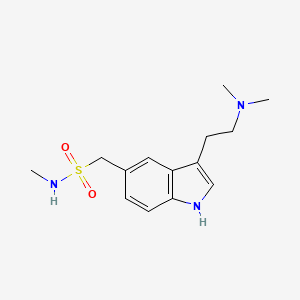
| Formula | C14H21N3O2S |
|---|---|
| Molecular weight | 295.41 g/mol |
| IUPAC name | 1-[3-[2-(dimethylamino)ethyl]-1H-indol-5-yl]-N-methylmethanesulfonamide |
| CAS | 103628-46-2 |
| PubChem CID | 5358 |
| InChIKey | KQKPFRSPSRPDEB-UHFFFAOYSA-N |
| logP | 1.32 (XLogP 0.9) |
| Polar surface area | 65.2 Ų |
| H-bond acceptors / donors | 3 / 2 |
| Drug-likeness (QED) | 0.84 |
| Lipinski violations | 0 |
SMILES
CNS(=O)(=O)Cc1ccc2[nH]cc(CCN(C)C)c2c1Biology & Pharmacokinetics
Pharmacokinetics
| BBB penetrant | Yes (logBB -0.4) |
|---|
Enzyme interactions
| Enzyme | Role | Detail |
|---|---|---|
| CYP1A2 | Substrate | — |
| CYP2C19 | Substrate | — |
| CYP2C9 | Substrate | — |
| CYP2D6 | Substrate | — |
| CYP3A4 | Substrate | — |
Receptor binding (top 13)
| Target | Action | Affinity |
|---|---|---|
| 5-HT1D (HTR1D) | Binding | pKi 8.5 |
| 5-HT1B (HTR1B) | Binding | pKi 8.0 |
| 5-HT1F (HTR1F) | Binding | pKi 7.6 |
| 5-HT1F receptor (HTR1F) | Agonist | pIC50 7.2 |
| 5-HT1A (HTR1A) | Binding | pKi 6.4 |
| 5-HT7 (HTR7) | Binding | pKi 6.0 |
| 5-HT1A receptor (HTR1A) | Agonist | pKi 6.0 |
| 5-HT7L | Binding | pKi 6.0 |
| 5-HT1E (HTR1E) | Binding | pKi 5.6 |
| 5-HT6 receptor (HTR6) | Antagonist | pKi 5.6 |
| 5-HT6 (HTR6) | Binding | pKi 5.6 |
| 5-HT5a (HTR5A) | Binding | pKi 5.3 |
| 5-HT5A receptor (HTR5A) | Agonist | pKi 5.3 |
Transporters
BCRP (Inhibitor)BSEP (Inhibitor)BSEP (Inhibitor)MATE1 (Inhibitor)MDR1 (Inhibitor)MRP1 (Inhibitor)MRP2 (Inhibitor)MRP3 (Inhibitor)MRP4 (Inhibitor)OATP1B1 (Inhibitor)OATP1B3 (Inhibitor)OCT1 (Inhibitor)P-gp (Inhibitor)BCRP (Substrate)MDR1 (Substrate)OATP1A2 (Substrate)OATP1B1 (Substrate)OCT1 (Substrate)OCT2 (Substrate)OCT3 (Substrate)P-gp (Substrate)
Drug–drug interactions (15, DDInter)
| Interacting drug | Severity | Management |
|---|---|---|
| Dexfenfluramine | major | |
| Dolasetron | major | |
| Fenfluramine | major | |
| Granisetron | major | |
| Lorcaserin | major | |
| Methylene blue | major | |
| Ondansetron | major | |
| Ozanimod | major | |
| Palonosetron | major | |
| Procarbazine | major | |
| Sibutramine | major | |
| Codeine | moderate | |
| Hydrocodone | moderate | |
| Morphine | moderate | |
| Morphine (liposomal) | moderate |
Registered Products (7)
| Brand | Form / strength | Pack | Agent | Citizen (JOD) |
|---|---|---|---|---|
| Imigran Tablets | Tablet 50 mg | 2 tab pack varies | Suleiman Tannous & Sons Co. Ltd | 3.060 |
| Imigran Tablets | Tablet 50 mg | 6 tab pack varies | Suleiman Tannous & Sons Co. Ltd | 8.530 |
| SUMAFIX 50 Tablet | Tablet 69.980 mg | 5x4âs TAB /1 BOX | AL Rahma Drug Store | 21.960 |
| Imigran Inj | Powder for Injection 6 mg/0.5 ml | 2 PFS pack varies | Suleiman Tannous & Sons Co. Ltd | 26.180 |
| Imigran | Pre-filled Syringe 6 mg/0.5 ml | 2 PFS pack varies | Suleiman Tannous & Sons Co. Ltd | 29.960 |
| SUMAFIX 100 Tablet | Tablet 100 mg | 5x4âs TAB /1 BOX | AL Rahma Drug Store | 36.010 |
| Megranol 6mg/0.5ml solution for injection | Powder for Injection 6 mg/0.5 ml | 5 vial | MS PHARMA/JORDAN | 50.440 |