Cisplatin
JFDA label: CISPLATIN EBEWE VIALS
- Experienced physician:
- Renal toxicity:
- Ototoxicity:
- Hypersensitivity reactions:
- Medication safety:
- Ototoxicity
Mechanism of Action
Inhibitor of DNA — DNA inhibitor
| Target | Action | Gene / class |
|---|---|---|
| DNA efficacy | INHIBITOR |
Indications
Approved
- Bladder cancer, advanced
- Ovarian cancer, metastatic
- Testicular cancer, metastatic
Off-label
- Anal carcinoma (metastatic)
- Breast cancer (triple-negative)
- Central nervous system tumors
- Cervical cancer
- Endometrial carcinoma, recurrent, metastatic, or high-risk
- Esophageal cancer
- Gastric cancer
- Germ cell tumors, malignant (pediatric)
- Gestational trophoblastic disease (refractory)
- Head and neck cancer (locally advanced disease)
- Head and neck cancer (metastatic disease)
- Hepatobiliary cancer
- Hepatoblastoma (pediatric)
- Hodgkin lymphoma
- Malignant pleural mesothelioma
- Medulloblastoma (pediatric)
- Melanoma (metastatic)
- Multiple myeloma
- Neuroblastoma
- Neuroendocrine tumors
- Non-Hodgkin lymphoma, relapsed/refractory
- Non-small cell lung cancer
- Osteosarcoma
- Pancreatic cancer (advanced)
- Penile cancer (metastatic)
- Primary CNS lymphoma
- Prostate cancer
- Small cell lung cancer (extensive-stage disease)
- Small cell lung cancer (limited-stage disease)
- Thymoma/thymic carcinoma
- Unknown primary cancers
Class profile
| mechanismClass | Platinum compound (alkylating-like) |
|---|---|
| targetMolecule | DNA (intrastrand cross-links, N7-guanine) |
| targetPathway | DNA damage response/apoptosis |
| generation | 1st generation platinum |
| primaryTumors | Testicular,Ovarian,Lung,Bladder,Head and neck |
| resistanceMechanisms | Reduced drug uptake (CTR1 downregulation),Enhanced DNA repair (NER,ERCC1),Apoptosis resistance (p53 mutation),GSH/Metallothionein elevation |
| source | NCCN/OncoKB/Goodman&Gilman13ed |
Contraindications
Source: Lexicomp
- History of allergic reactions to cisplatin, other platinum-containing compounds, or any component of the formulation Absolute
- hearing impairment Absolute
- myelosuppressed patients Absolute
- preexisting renal impairment Absolute
Adverse Reactions
Nervous system disorders (1)
Very Common Neurotoxicity (peripheral neuropathy is dose and duration dependent)
Hepatobiliary disorders (1)
Very Common Increased liver enzymes
Renal and urinary disorders (1)
Very Common Nephrotoxicity
Blood and lymphatic system disorders (3)
Very Common Anemia · leukopenia · thrombocytopenia
Gastrointestinal disorders (1)
Very Common Nausea and vomiting
Other (1)
Common Local: Local irritation
Dosing
Source: Lexicomp
Warnings & Precautions
Source: Lexicomp
Bone marrow suppression
Myelosuppression is a major dose-related toxicity.
Extravasation
Cisplatin is a vesicant at higher concentrations, and an irritant at lower concentrations; ensure proper needle or catheter placement prior to and during infusion; avoid extravasation. Local infusion site reactions may occur; monitor infusion site during administration.
Gastrointestinal events
Nausea and vomiting are dose-related toxicities. Cisplatin is associated with a high emetic potential; antiemetics are recommended to prevent nausea and vomiting (Dupuis 2011; Hesketh 2017; Roila 2016). Nausea and vomiting are dose-related and may be immediate and/or delayed. Diarrhea may also occur.
Hypersensitivity reactions
Anaphylactic-like reactions have been reported; may include facial edema, bronchoconstriction, tachycardia, and hypotension and may occur within minutes of administration. Symptoms may be managed with epinephrine, corticosteroids, and/or antihistamines.
Hyperuricemia
Hyperuricemia has been reported with cisplatin use, and is more pronounced with doses >50 mg/m2; consider antihyperuricemic therapy to reduce uric acid levels.
Neurotoxicity
Severe (and possibly irreversible) neuropathies (including stocking-glove paresthesias, areflexia, and loss of proprioception/vibratory sensation) may occur with higher than recommended doses or more frequent administration; may require therapy discontinuation. Seizures, loss of motor function, loss of taste, leukoencephalopathy, and posterior reversible leukoencephalopathy syndrome (PRES [formerly RPLS]) have also been described.
Ototoxicity
Ototoxicity, which may be more pronounced in children, is manifested by tinnitus and/or loss of high frequency hearing and occasionally deafness; may be significant. Ototoxicity is cumulative and may be severe. Audiometric testing should be performed at baseline and prior to each dose. Certain genetic variations in the thiopurine S-methyltransferase (TPMT) gene may be associated with an increased risk of ototoxicity in children administered conventional cisplatin doses (Pussegoda 2013). Controversy may exist regarding the role of TPMT variants in cisplatin ototoxicity (Ratain 2013; Yang 2013); the association has not been consistent across populations and studies. Children without the TPMT gene variants may still be at risk for ototoxicity. Cumulative dose, prior or concurrent exposure to other ototoxic agents (eg, aminoglycosides, carboplatin), prior cranial radiation, younger age, and type of cancer may also increase the risk for ototoxicity in children (Knight 2005; Landier 2014). Pediatric patients should receive audiometric testing at baseline, prior to each dose, and for several years after discontinuing therapy. An international grading scale (SIOP Boston scale) has been developed to assess ototoxicity in children (Brock 2012).
Renal toxicity
Cumulative renal toxicity associated with cisplatin is severe. Monitor serum creatinine, blood urea nitrogen, creatinine clearance, and serum electrolytes (calcium, magnesium, potassium, and sodium) closely. According to the manufacturer’s labeling, use is contraindicated in patients with preexisting renal impairment and renal function must return to normal prior to administering subsequent cycles; some literature recommends reduced doses with renal impairment. Nephrotoxicity may be potentiated by aminoglycosides.
Secondary malignancies
Secondary malignancies have been reported with cisplatin in combination with other chemotherapy agents. Concurrent drug therapy issues:
Drug-drug interactions
Potentially significant interactions may exist, requiring dose or frequency adjustment, additional monitoring, and/or selection of alternative therapy. Consult drug interactions database for more detailed information. Special populations:
Elderly
Select dose cautiously and monitor closely in elderly patients; they may be more susceptible to nephrotoxicity and peripheral neuropathy. Other warnings/precautions:
Medication safety (usual maximum dose per cycle)
Doses >100 mg/m2/cycle (once every 3 to 4 weeks) are rare; verify with the prescriber. Exercise caution to avoid inadvertent overdose due to potential sound-alike/look-alike confusion between CISplatin and CARBOplatin or prescribing practices that fail to differentiate daily doses from the total dose per cycle. At the approved dose, cisplatin should not be administered more frequently than once every 3 to 4 weeks.
Experienced physician
Should be administered under the supervision of an experienced cancer chemotherapy physician. Adequate diagnostic and treatment facilities and appropriate management of potential complications should be readily available.
Hydration
Patients should receive adequate hydration, with or without diuretics, prior to and for 24 hours after administration; serum electrolytes, particularly magnesium and potassium, should be monitored and replaced as needed during and after therapy.
Pregnancy & Lactation
Pregnancy
Adverse effects have been observed in animal reproduction studies. Women of childbearing potential should be advised to avoid pregnancy during treatment. May case fetal harm if administered during pregnancy.
Lactation
Cisplatin is present in breast milk. Breastfeeding is not recommended by the manufacturer.
Monitoring
| Efficacy | Tumour response (RECIST criteria, tumour markers, imaging); progression-free survival; performance status (ECOG/Karnofsky) |
|---|---|
| Toxicity | CBC with differential (nadir timing depends on agent); LFTs; renal function; ECG (QT for relevant agents); echocardiogram for cardiotoxic agents (anthracyclines, trastuzumab); cumulative dose tracking for dose-limited toxicities |
| Clinical pearl | Treatment response is assessed after 2–3 cycles. Grade 3–4 toxicities typically require dose reduction or interruption per protocol-defined criteria. |
| Counseling | Attend all scheduled blood tests and imaging appointments. Report fever > 38°C (risk of neutropaenic sepsis — medical emergency), unusual bleeding, or new pain immediately. |
Chemistry & Properties
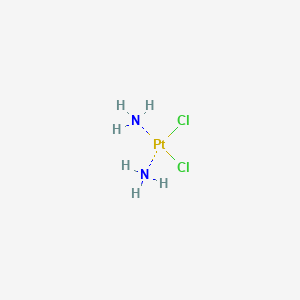
| Formula | H6Cl2N2Pt+2 |
|---|---|
| Molecular weight | 300.05 g/mol |
| IUPAC name | azane;dichloroplatinum |
| CAS | 15663-27-1 |
| PubChem CID | 5460033 |
Biology & Pharmacokinetics
Pharmacokinetics
| Half-life | 22.65 h |
|---|---|
| Protein binding | 90.0% |
Transporters
BSEP (Inhibitor)MATE1 (Inhibitor)MATE2 (Inhibitor)MRP2 (Inhibitor)MRP7 (Inhibitor)OATP1B1 (Inhibitor)OCT1 (Inhibitor)OCT2 (Inhibitor)OCT3 (Inhibitor)BCRP (Substrate)MDR1 (Substrate)MRP2 (Substrate)OATP1B1 (Substrate)OATP1B3 (Substrate)OCT1 (Substrate)OCT2 (Substrate)OCT3 (Substrate)
Drug–drug interactions (100+, DDInter)
| Interacting drug | Severity | Management |
|---|---|---|
| Adalimumab | major | |
| Aldesleukin | major | |
| Amiodarone | major | |
| Arsenic trioxide | major | |
| Bacillus calmette-guerin substrain tice live antigen | major | |
| Baricitinib | major | |
| Certolizumab pegol | major | |
| Cidofovir | major | |
| Cladribine | major | |
| Clozapine | major | |
| Deferasirox | major | |
| Deferiprone | major | |
| Diatrizoate | major | |
| Dofetilide | major | |
| Dronedarone | major | |
| Droperidol | major | |
| Etanercept | major | |
| Etelcalcetide | major | |
| Everolimus | major | |
| Fingolimod | major | |
| Golimumab | major | |
| Human Rho(D) immune globulin | major | |
| Human botulinum neurotoxin A/B immune globulin | major | |
| Human cytomegalovirus immune globulin | major | |
| Human immunoglobulin G (intravenous and subcutaneous) | major | |
| Human immunoglobulin G (intravenous) | major | |
| Infliximab | major | |
| Inotersen | major | |
| Iodipamide | major | |
| Iodixanol | major | |
| Iohexol | major | |
| Iopamidol | major | |
| Iopromide | major | |
| Iothalamic acid | major | |
| Ioversol | major | |
| Ioxilan | major | |
| Leflunomide | major | |
| Levacetylmethadol | major | |
| Measles virus vaccine live attenuated | major | |
| Mumps virus strain B level jeryl lynn live antigen | major |
Showing 40 of 100+.
Registered Products (9)
| Brand | Form / strength | Pack | Agent | Citizen (JOD) |
|---|---|---|---|---|
| CISPLATIN EBEWE VIALS | Vial 0.5 mg/ml | 50 ml pack varies | Sabbagh Drug Store | — |
| CISPLATIN EBEWE VIALS | Vial 0.5 mg/ml | 100 ml pack varies | Sabbagh Drug Store | — |
| CISPLATIN EBEWE VIALS | Vial 0.5 mg/ml | 20 ml pack varies | Sabbagh Drug Store | — |
| Cipalin 10mg/20ml Solution for Infusion | Infusion 10 mg/20 ml | 1 vial | Hikma Pharmaceuticals Co.Ltd/Jordan | — |
| Cipalin 50mg/100mg Solution for Infusion | Infusion 50 mg/100 ml | 1 vial | Hikma Pharmaceuticals Co.Ltd/Jordan | — |
| Kemoplat Inj | Injection 50 mg/100 ml | 100 ml | Sun Set Drug Store | — |
| Kemoplat Inj | Injection 10 mg/20 ml | 20 ml | Sun Set Drug Store | — |
| Placis Injection | Powder for Injection 50 mg | 1 vial | Ibn Rushd Drug Store | — |
| Placis Injection | Powder for Injection 10 mg | 1 vial | Ibn Rushd Drug Store | — |