Leflunomide
Active form: Teriflunomide.
JFDA label: lefno 20 mg
- Embryofetal toxicity:
- Hepatotoxicity:
Mechanism of Action
Inhibitor of Dihydroorotate dehydrogenase (quinone), mitochondrial — Dihydroorotate dehydrogenase inhibitor
| Target | Action | Gene / class |
|---|---|---|
| Dihydroorotate dehydrogenase (quinone), mitochondrial efficacy | INHIBITOR | DHODH |
Indications
Approved
- Rheumatoid arthritis
Off-label
- Acute and chronic rejection in recipients of solid organ transplants (prevention)
- Cytomegalovirus (CMV) disease in transplant recipients resistant to standard antivirals
- Juvenile idiopathic arthritis
Contraindications
Source: Lexicomp
- Additional contraindications (not in US labeling): Hypersensitivity to teriflunomide Absolute
- Hypersensitivity to leflunomide or any component of the formulation Absolute
- breast-feeding Absolute
- concomitant treatment with teriflunomide Absolute
- immunodeficiency states Absolute
- impaired bone marrow function or significant anemia, leukopenia, neutropenia, or thrombocytopenia due to causes other than rheumatoid arthritis Absolute
- impaired liver function Absolute
- moderate to severe renal impairment Absolute
- patients younger than 18 years of age Absolute
- pregnant women Absolute
- serious infections Absolute
- severe hepatic impairment Absolute
- severe hypoproteinemia Absolute
- women of childbearing potential who are not using reliable contraception before, during, and for a period of 2 years after treatment with leflunomide (or as long as plasma levels of the active metabolite are above 0.02 mg/L) Absolute
Adverse Reactions
Cardiac disorders (6)
Common Hypertension
Not Known Chest pain · increased blood pressure · leg thrombophlebitis · palpitations · varicose veins
Nervous system disorders (4)
Very Common Headache
Common Dizziness
Not Known Drowsiness · malaise
Hepatobiliary disorders (5)
Common Abnormal hepatic function tests · increased serum ALT
Not Known Hyperbilirubinemia · increased serum alkaline phosphatase · increased serum AST
Renal and urinary disorders (1)
Not Known Vulvovaginal candidiasis
Blood and lymphatic system disorders (2)
Not Known Leukocytosis · thrombocytopenia
Immune system disorders (2)
Common Hypersensitivity reaction
Not Known Anaphylaxis
Metabolism and nutrition disorders (1)
Not Known Increased gamma-glutamyl transferase
Gastrointestinal disorders (11)
Very Common Diarrhea · nausea
Common abdominal pain · Gastrointestinal pain · oral mucosa ulcer · vomiting
Not Known Anorexia · enlargement of salivary glands · flatulence · sore throat · xerostomia
Skin and subcutaneous tissue disorders (3)
Very Common Alopecia · skin rash
Common Pruritus
Musculoskeletal and connective tissue disorders (3)
Common Back pain · tenosynovitis · weakness
Eye disorders (5)
Not Known Blurred vision · eye disease · papilledema · retinal hemorrhage · retinopathy
Infections and infestations (1)
Not Known Abscess
Respiratory, thoracic and mediastinal disorders (4)
Common Bronchitis · rhinitis
Not Known Dyspnea · flu-like symptoms
Dosing
Source: Lexicomp
Warnings & Precautions
Source: Lexicomp
Dermatologic reactions
Rare cases of dermatologic reactions (including Stevens-Johnson syndrome, toxic epidermal necrolysis, and drug reaction with eosinophilia and systemic symptoms [DRESS]) have been reported; discontinue if evidence of severe dermatologic reaction occurs, and begin accelerated drug elimination procedures.
Hepatotoxicity
Severe liver injury, including fatal liver failure, has been reported in some patients treated with leflunomide. Leflunomide is contraindicated in patients with severe hepatic impairment. Concomitant use of leflunomide with other potentially hepatotoxic drugs may increase the risk of liver injury. Patients with preexisting acute or chronic liver disease, or those with ALT more than twice the upper limit of normal (ULN) before initiating treatment, are at increased risk and should not be treated with leflunomide. Monitor ALT levels at least monthly for 6 months after starting leflunomide, and thereafter every 6 to 8 weeks. If ALT elevation >3-fold the ULN occurs, interrupt therapy and investigate the cause. If leflunomide-induced liver injury is suspected, stop leflunomide treatment, start an accelerated drug elimination procedure, and monitor liver tests weekly until normalized. If leflunomide-induced liver injury is unlikely because another cause has been found, resumption of leflunomide therapy may be considered. If given concomitantly with methotrexate, follow the American College of Rheumatology (ACR) guidelines for monitoring methotrexate liver toxicity with ALT, AST, and serum albumin testing.
Hematologic toxicities
Pancytopenia, agranulocytosis, and thrombocytopenia have been reported with leflunomide therapy alone; most frequently hematologic toxicity occurs in patients receiving concomitant therapy with methotrexate or other immunosuppressive agents, or who had recently discontinued these therapies. In some cases, patients had a history of a significant hematologic abnormality. All patients should have platelet, white blood cell count (WBC), and hemoglobin or hematocrit monitored at baseline and monthly for 6 months following therapy initiation and then every 6 to 8 weeks thereafter. If used with concomitant methotrexate or other potential immunosuppressive agents, increase chronic monitoring to monthly. If evidence of bone marrow suppression occurs, stop treatment and initiate an accelerated drug elimination procedure.
Hypertension
Blood pressure elevations have been observed; assess blood pressure at baseline and monitor periodically during therapy.
Infections
May increase susceptibility to infection, including opportunistic pathogens (especially Pneumocystis jirovecii pneumonia, tuberculosis [including extrapulmonary tuberculosis], and aspergillosis). Severe infections, sepsis, and fatalities have been reported. Not recommended in patients with severe immunodeficiency, bone marrow dysplasia, or severe, uncontrolled infections. Caution should be exercised when considering the use in patients with a history of new/recurrent infections, with conditions that predispose them to infections, or with chronic, latent, or localized infections. Patients who develop a new infection while undergoing treatment should be monitored closely; consider interrupting therapy and initiating accelerated drug elimination procedures if infection is serious.
Interstitial lung disease
Use has been associated with interstitial lung disease and worsening of preexisting interstitial lung disease (with some fatalities reported). The risk is increased in patients with a history of interstitial lung disease. Further investigate etiology in patients who develop new-onset or worsening of pulmonary symptoms (eg, cough and dyspnea, with or without associated fever). Accelerated drug elimination procedures should be considered if leflunomide is discontinued due to interstitial lung disease.
Malignancy
Use of some immunosuppressive medications may increase the risk of malignancies, especially lymphoproliferative disorders; impact of leflunomide on the development and course of malignancies is not fully defined.
Peripheral neuropathy
Cases of peripheral neuropathy have been reported; most patients recover after treatment discontinuation, but symptoms may persist in some patients. Use with caution in patients >60 years of age, receiving concomitant neurotoxic medications or patients with diabetes; discontinue if evidence of peripheral neuropathy occurs and begin accelerated drug elimination procedures. Disease-related concerns:
Hematologic disorders
Use with caution in patients with a history of significant hematologic abnormalities; avoid use with bone marrow dysplasia. The Canadian labeling contraindicates use with impaired bone marrow function or significant anemia, leukopenia, neutropenia, or thrombocytopenia due to causes other than rheumatoid arthritis. Use has been associated with rare pancytopenia, agranulocytosis, and thrombocytopenia, generally when given concurrently or recently with methotrexate or other immunosuppressive agents. Monitoring of hematologic function is required; discontinue if evidence of bone marrow suppression and begin accelerated drug elimination procedures.
Hepatic impairment
Use is not recommended due to risk of increased hepatotoxicity.
Renal impairment
Use with caution in patients with renal impairment. The Canadian labeling contraindicates use in moderate to severe impairment.
Tuberculosis
Safety has not been established in patients with latent tuberculosis infection. Patients should be screened for tuberculosis and if necessary, treated prior to initiating leflunomide therapy. Concurrent drug therapy issues:
Drug-drug interactions
Potentially significant interactions may exist, requiring dose or frequency adjustment, additional monitoring, and/or selection of alternative therapy. Consult drug interactions database for more detailed information.
Immunosuppressants
If coadministered with other potential immunosuppressive agents, increased monitoring for hematological adverse effects is necessary.
Immunizations
No clinical data are available on the efficacy and safety of vaccinations during leflunomide treatment. Vaccination with live vaccines is not recommended; consider the long elimination half-life of the leflunomide active metabolite (eg, teriflunomide) when considering live vaccine administration after leflunomide discontinuation. Special populations:
Women of reproductive potential
Leflunomide is contraindicated in pregnant women because of the potential for fetal harm. Adverse events were observed in animal reproduction studies with doses lower than the expected human exposure. Exclude pregnancy before the start of treatment in females of reproductive potential. Advise females of reproductive potential to use effective contraception during treatment and during an accelerated elimination procedure after treatment is discontinued. Discontinue therapy and use an accelerated elimination procedure if pregnancy occurs during treatment. Women of reproductive potential should also undergo drug elimination procedures following therapy discontinuation. The Canadian labeling contraindicates use in women of childbearing potential who are not using reliable contraception before, during, and for a period of 2 years after treatment with leflunomide (or as long as plasma levels of the active metabolite are above 0.02 mg/L). Other warnings/precautions:
Drug elimination procedure
Due to variations in clearance, it may take up to 2 years to reach low levels of leflunomide metabolite (eg, teriflunomide) serum concentrations. An accelerated drug elimination procedure using cholestyramine or activated charcoal is recommended when a more rapid elimination is needed (eg, severe adverse reaction, suspected hypersensitivity or pregnancy). Refer to dosing for detailed accelerated elimination procedure. Verify plasma teriflunomide concentrations are less than 0.02 mg/L by tests at least 14 days apart. If concentrations are greater than 0.02 mg/L, repeat the accelerated elimination procedure. Use of accelerated drug elimination may potentially result in return of disease activity if the patient has been responding to leflunomide treatment.
Pregnancy & Lactation
Pregnancy
Contraindicated
Washout procedure (cholestyramine 8 g TID × 11 days) required before pregnancy attempt. Verify plasma levels < 0.02 mg/L on two tests 14 days apart
Lactation
It is not known whether leflunomide is secreted in human milk. Because the potential for serious adverse reactions exists in breast-feeding infants, a decision should be made whether to discontinue breast-feeding or discontinue the drug, taking into account the importance of the drug to the mother. Canadian labeling contraindicates use in breast-feeding women.
Monitoring
| Clinical pearl | Rheumatoid arthritis: Manufacturer's labeling: Pregnancy test to rule out pregnancy prior to initiating therapy; baseline evaluation for active tuberculosis and screen patients for latent tuberculosis; blood pressure (baseline and periodically thereafter); signs/symptoms of severe infection or pulmonary symptoms (eg, cough, dyspnea); complete blood count (WBC, platelet count, hemoglobin or hematocrit) at baseline and monthly during the initial 6 months of treatment; if stable, monitoring frequency may be decreased to every 6 to 8 weeks thereafter (continue monthly when used in combination with other immunosuppressive agents [eg, methotrexate]); hepatic function (transaminases) at least monthly for the first 6 months of treatment, then every 6 to 8 weeks thereafter (discontinue if ALT >3 x ULN, treat with accelerated elimination procedure, and monitor liver function at least weekly until normal). Alternate recommendations: Complete blood counts, serum creatinine, serum transaminases: Baseline and every 2 to 4 weeks during the initial 3 months after initiation or following dose increases, then every 8 to 12 weeks during 3 to 6 months of treatment, followed by every 12 weeks beyond 6 months of treatment; monitor more frequently if clinically indicated (Singh [ACR 2016]). CMV disease (off-label use): Monitor serum trough concentrations of active metabolite (also see Reference Range). |
|---|
Chemistry & Properties
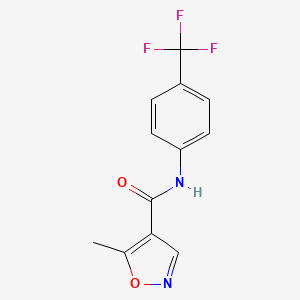
| Formula | C12H9F3N2O2 |
|---|---|
| Molecular weight | 270.21 g/mol |
| IUPAC name | 5-methyl-N-[4-(trifluoromethyl)phenyl]-1,2-oxazole-4-carboxamide |
| CAS | 75706-12-6 |
| PubChem CID | 3899 |
| InChIKey | VHOGYURTWQBHIL-UHFFFAOYSA-N |
| logP | 3.25 (XLogP 2.5) |
| Polar surface area | 55.13 Ų |
| H-bond acceptors / donors | 3 / 1 |
| Drug-likeness (QED) | 0.91 |
| Lipinski violations | 0 |
SMILES
Cc1oncc1C(=O)Nc1ccc(C(F)(F)F)cc1Biology & Pharmacokinetics
Pharmacokinetics
| BBB penetrant | No |
|---|
Enzyme interactions
| Enzyme | Role | Detail |
|---|---|---|
| CYP1A2 | Inhibitor | IC₅₀ 0.49999999999999994 µM |
| CYP1A2 | Substrate | — |
| CYP2B6 | Inhibitor | — |
| CYP2C19 | Inhibitor | — |
| CYP2C8 | Inhibitor | — |
| CYP3A4 | Inhibitor | — |
Transporters
BCRP (Inhibitor)BCRP (Inhibitor)BSEP (Inhibitor)BSEP (Inhibitor)MRP1 (Inhibitor)MRP2 (Inhibitor)MRP3 (Inhibitor)MRP4 (Inhibitor)OAT3 (Inhibitor)OATP1B1 (Inhibitor)OATP1B1 (Inhibitor)OATP1B3 (Inhibitor)OATP1B3 (Inhibitor)P-gp (Inhibitor)BCRP (Substrate)P-gp (Substrate)
Drug–drug interactions (100+, DDInter)
| Interacting drug | Severity | Management |
|---|---|---|
| Abacavir | major | |
| Abatacept | major | |
| Abemaciclib | major | |
| Abiraterone | major | |
| Acalabrutinib | major | |
| Acarbose | major | |
| Acetaminophen | major | |
| Acetylsalicylic acid | major | |
| Acitretin | major | |
| Adalimumab | major | |
| Afatinib | major | |
| Aflibercept | major | |
| Aldesleukin | major | |
| Alectinib | major | |
| Alefacept | major | |
| Alemtuzumab | major | |
| Altretamine | major | |
| Ambrisentan | major | |
| Aminosalicylic acid | major | |
| Amiodarone | major | |
| Anakinra | major | |
| Antilymphocyte immunoglobulin (horse) | major | |
| Antithymocyte immunoglobulin (rabbit) | major | |
| Asparaginase Erwinia chrysanthemi | major | |
| Asparaginase Escherichia coli | major | |
| Atezolizumab | major | |
| Atomoxetine | major | |
| Atorvastatin | major | |
| Atovaquone | major | |
| Auranofin | major | |
| Aurothioglucose | major | |
| Avapritinib | major | |
| Axicabtagene ciloleucel | major | |
| Axitinib | major | |
| Azacitidine | major | |
| Azathioprine | major | |
| Azithromycin | major | |
| Bacillus calmette-guerin substrain tice live antigen | major | |
| Baricitinib | major | |
| Basiliximab | major |
Showing 40 of 100+.
Registered Products (3)
| Brand | Form / strength | Pack | Agent | Citizen (JOD) |
|---|---|---|---|---|
| Life | Tablet 20 mg | 30 tab | ٠ستÙدع أدÙÙØ© اÙÙÙÙÙÙÙ | 11.590 |
| lefno | Tablet 20 mg | 30 tab | Itqan Pharmaceutical Industries/Jordan | 15.870 |
| Arotan | Tablet 20 mg | 30 tab | Ibn Rushd Drug Store | 16.550 |