Acetylsalicylic Acid
🧬 Cross-allergy: NSAIDs
JFDA label: Salisal Plus Tablets
Mechanism of Action
Inhibitor of Cyclooxygenase — Cyclooxygenase inhibitor
| Target | Action | Gene / class |
|---|---|---|
| Cyclooxygenase efficacy | INHIBITOR |
Indications
Approved
- Analgesic/Antipyretic
- Chronic coronary artery disease
- Extended-release capsules
- History of ischemic stroke or transient ischemic attack
- Immediate release
- Revascularization procedures
- Rheumatoid disease
Off-label
- Acute coronary syndromes (ST-elevation MI, non-ST-elevation MI, unstable angina)
- Acute ischemic stroke/transient ischemic attack
- Aortic valve repair (thromboprophylaxis)
- Atrial fibrillation (prevention of thromboembolism)
- Blalock-Taussig or Glenn shunt placement (primary prophylaxis)
- Carotid artery stenosis (asymptomatic)
- Colorectal cancer risk reduction (primary/secondary prevention)
- Colorectal cancer risk reduction in hereditary nonpolyposis colon cancer carriers (Lynch syndrome)
- Fontan or Norwood surgery (primary prophylaxis)
- Kawasaki disease
- Percutaneous coronary intervention
- Pericarditis
- Pericarditis associated with MI
- Peripheral arterial disease
- Peripheral artery bypass graft surgery
- Peripheral artery percutaneous transluminal angioplasty
- Polycythemia vera
- Preeclampsia (prevention)
- Prevention (primary) of cardiovascular disease
- Prevention (secondary) after CABG surgery
- Prevention (secondary) of cardiovascular disease (patients with diabetes)
- Prosthetic heart valve (thromboprophylaxis)
- Rheumatic fever
- Transcatheter atrial septal defect (ASD) or ventricular septal defect (VSD) devices (postprocedure prophylaxis)
- Ventricular assist device (VAD) placement
Contraindications
Source: Curated · Lexicomp
- Active peptic ulcer disease Absolute
- Children and teenagers with viral illness (risk of Reye's syndrome) Absolute
- Hypersensitivity to NSAIDs Absolute
- patients with asthma, rhinitis, and nasal polyps Absolute
- use in children or teenagers for viral infections, with or without fever. Documentation of allergenic cross-reactivity for salicylates is limited. However, because of similarities in chemical structure and/or pharmacologic actions, the possibility of cross-sensitivity cannot be ruled out with certainty Absolute
Adverse Reactions
Cardiac disorders (4)
Not Known Cardiac arrhythmia · edema · hypotension · tachycardia
Nervous system disorders (12)
Not Known Agitation · cerebral edema · coma · confusion · dizziness · fatigue · headache · hyperthermia · insomnia · lethargy · nervousness · Reye's syndrome
Hepatobiliary disorders (3)
Not Known Hepatitis (reversible) · hepatotoxicity · increased serum transaminases
Renal and urinary disorders (11)
Not Known Increased blood urea nitrogen · increased serum creatinine · interstitial nephritis · Postpartum hemorrhage · prolonged gestation · prolonged labor · proteinuria · renal failure (including cases caused by rhabdomyolysis) · renal insufficiency · renal papillary necrosis · stillborn infant
Blood and lymphatic system disorders (8)
Not Known Anemia · blood coagulation disorder · disseminated intravascular coagulation · hemolytic anemia · hemorrhage · iron deficiency anemia · prolonged prothrombin time · thrombocytopenia
Immune system disorders (2)
Not Known Anaphylaxis · angioedema
Metabolism and nutrition disorders (6)
Not Known Acidosis · dehydration · hyperglycemia · hyperkalemia · hypernatremia (buffered forms) · hypoglycemia (children)
Gastrointestinal disorders (10)
Not Known duodenal ulcer · dyspepsia · epigastric distress · gastritis · gastrointestinal erosion · Gastrointestinal ulcer · heartburn · nausea · stomach pain · vomiting
Skin and subcutaneous tissue disorders (2)
Not Known Skin rash · urticaria
Musculoskeletal and connective tissue disorders (3)
Not Known Acetabular bone destruction · rhabdomyolysis · weakness
Ear and labyrinth disorders (2)
Not Known Hearing loss · tinnitus
General disorders and administration site conditions (1)
Not Known Low birth weight
Respiratory, thoracic and mediastinal disorders (8)
Not Known Asthma · bronchospasm · dyspnea · hyperventilation · laryngeal edema · noncardiogenic pulmonary edema · respiratory alkalosis · tachypnea
Other (15)
Not Known Anorectal stenosis (suppository) · atrial fibrillation (toxicity) · cardiac conduction disturbance (toxicity) · cerebral infarction (ischemic) · cholestatic jaundice · colitis · colonic ulceration · coronary artery vasospasm · delirium · esophageal obstruction · esophagitis (with esophageal ulcer) · hematoma (esophageal) · macular degeneration (age-related) (Li 2014) · periorbital edema · rhinosinusitis
Dosing
Source: Lexicomp
Warnings & Precautions
Source: Lexicomp
Salicylate sensitivity
Patients with sensitivity to tartrazine dyes, nasal polyps, and asthma may have an increased risk of salicylate sensitivity.
Tinnitus
Discontinue use if tinnitus or impaired hearing occurs.
Upper gastrointestinal (UGI) events (eg, symptomatic or complicated ulcers)
Low-dose aspirin for cardioprotective effects is associated with a two- to fourfold increase in UGI events. The risks of these events increase with increasing aspirin dose; during the chronic phase of aspirin dosing, doses >81 mg are not recommended unless indicated (Bhatt 2008). Disease-related concerns:
Bleeding disorders
Use with caution in patients with platelet and bleeding disorders.
Dehydration
Use with caution in patients with dehydration.
Ethanol use
Heavy ethanol use (>3 drinks/day) can increase bleeding risks and may enhance gastric mucosal damage.
Gastrointestinal disease
Use with caution in patients with erosive gastritis. Avoid use in patients with active peptic ulcer disease.
Hepatic impairment
Avoid use in severe hepatic failure.
Renal impairment
When using high dosages (eg, analgesic or anti-inflammatory uses), use with caution and monitor renal function or consider the use of an alternative analgesic/anti-inflammatory agent (NKF [Henrich 1996]; Whelton 2000). Low-dose aspirin (eg, 75 to 162 mg daily) may be safely used in patients with any degree of renal impairment (KDOQI 2005; KDOQI 2007). Concurrent drug therapy issues:
Alteplase
In the treatment of acute ischemic stroke, avoid aspirin for 24 hours following administration of alteplase; administration within 24 hours increases the risk of hemorrhagic transformation (Jauch 2013).
COX-2 inhibitors/NSAIDs
When used concomitantly with ≤325 mg of aspirin, NSAIDs (including selective COX-2 inhibitors) substantially increase the risk of gastrointestinal complications (eg, ulcer); concomitant gastroprotective therapy (eg, proton pump inhibitors) is recommended (Bhatt 2008).
Drug-drug interactions
Potentially significant interactions may exist, requiring dose or frequency adjustment, additional monitoring, and/or selection of alternative therapy. Consult drug interactions database for more detailed information. Special populations:
Lower GI bleed patients
An individualized and multidisciplinary approach should be used to manage patients with an acute lower GI bleed (LGIB) who are on antiplatelet medications. Aspirin for primary prevention of cardiovascular events should be avoided in most patients with LGIB who do not have established cardiovascular disease and do not have high risk factors for cardiovascular events. However, aspirin for secondary cardiovascular prevention should generally not be discontinued in patients with established cardiovascular disease and a history of lower GI bleeding (Strate 2016).
Pediatric
When used for self-medication (OTC labeling): Children and teenagers who have or are recovering from chickenpox or flu-like symptoms should not use this product. Changes in behavior (along with nausea and vomiting) may be an early sign of Reye syndrome; patients should be instructed to contact their healthcare provider if these occur.
Surgical patients
Aspirin should be avoided (if possible) in surgical patients for 1 to 2 weeks prior to elective surgery, to reduce the risk of excessive bleeding. In patients with cardiac stents or who have recently (within the previous 14 days) undergone balloon angioplasty that have not completed their full course of antiplatelet therapy (eg, dual antiplatelet therapy), antiplatelet therapy should be continued and elective surgery should be delayed until course of antiplatelet therapy is complete; patient specific situations should be discussed with cardiologist (ACC/AHA [Fleisher 2014]; ACC/AHA [Levine 2016]; AHA/ACC/SCAI/ACS/ADA [Grines 2007]). Dosage form specific issues:
Polysorbate 80
Some dosage forms may contain polysorbate 80 (also known as Tweens). Hypersensitivity reactions, usually a delayed reaction, have been reported following exposure to pharmaceutical products containing polysorbate 80 in certain individuals (Isaksson 2002; Lucente 2000; Shelley 1995). Thrombocytopenia, ascites, pulmonary deterioration, and renal and hepatic failure have been reported in premature neonates after receiving parenteral products containing polysorbate 80 (Alade 1986; CDC 1984). See manufacturer's labeling. Other warnings/precautions:
Resistance
Aspirin resistance is defined as measurable, persistent platelet activation that occurs in patients prescribed a therapeutic dose of aspirin. Clinical aspirin resistance, the recurrence of some vascular event despite a regular therapeutic dose of aspirin, is considered aspirin treatment failure. Proposed mechanisms of aspirin resistance include poor adherence with therapy, poor absorption, inadequate dosage, drug interactions, increased isoprostane activity, platelet hypersensitivity to agonists, increased COX-2 activity, COX-1 polymorphism, and platelet alloantigen 2 polymorphism of platelet glycoprotein IIIa. Estimates of biochemical aspirin resistance range from 5.5% to 60% depending on the population studied and the assays used (Gasparyan 2008). Patients with aspirin resistance may have a higher risk of cardiovascular events compared to those who are aspirin sensitive (Gum 2003). Aspirin resistance is likely dose-related but may be influenced by dynamic factors yet to be identified; further research is required.
Pregnancy & Lactation
Pregnancy
Caution
LOW DOSE (75–150 mg/day): prescribed from 12 weeks for pre-eclampsia prevention in high-risk women — safe and beneficial. ANALGESIC/ANTI-INFLAMMATORY DOSES: avoid from 30 weeks
Lactation
Salicylic acid is present in breast milk following maternal use of aspirin (Bailey 1982; Findlay 1981; Jamali 1981). The relative infant dose (RID) of aspirin is 8% when calculated using the highest breast milk concentration located and compared to an infant therapeutic dose of 90 mg/kg/day. In general, breastfeeding is considered acceptable when the RID is The RID of aspirin was calculated using a milk concentration of 48.1 mcg/mL, providing an estimated daily infant dose via breast milk of
LactMed: monitor the infant.
Chemistry & Properties
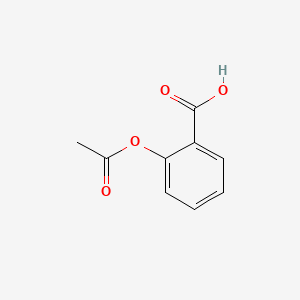
| Formula | C9H8O4 |
|---|---|
| Molecular weight | 180.16 g/mol |
| IUPAC name | 2-acetyloxybenzoic acid |
| CAS | 50-78-2 |
| PubChem CID | 2244 |
| InChIKey | BSYNRYMUTXBXSQ-UHFFFAOYSA-N |
| logP | 1.31 (XLogP 1.2) |
| Polar surface area | 63.6 Ų |
| H-bond acceptors / donors | 3 / 1 |
| Drug-likeness (QED) | 0.55 |
| Lipinski violations | 0 |
SMILES
CC(=O)Oc1ccccc1C(=O)OBiology & Pharmacokinetics
Pharmacokinetics
| BBB penetrant | Yes (logBB -0.5) |
|---|
Receptor binding (top 3)
| Target | Action | Affinity |
|---|---|---|
| COX-2 (PTGS2) | Inhibitor | pIC50 5.6 |
| COX-1 | Binding | pKi 5.6 |
| COX-2 | Binding | pKi 5.1 |
Transporters
BCRP (Inhibitor)BCRP (Inhibitor)BSEP (Inhibitor)BSEP (Inhibitor)MCT1 (Inhibitor)MRP1 (Inhibitor)MRP3 (Inhibitor)MRP4 (Inhibitor)OAT1 (Inhibitor)OAT2 (Inhibitor)OAT3 (Inhibitor)OAT4 (Inhibitor)OATP1B1 (Inhibitor)OATP1B3 (Inhibitor)OATP1B3 (Inhibitor)OCT1 (Inhibitor)OCT2 (Inhibitor)P-gp (Inhibitor)MDR1 (Substrate)P-gp (Substrate)
Drug–drug interactions (100+, DDInter)
| Interacting drug | Severity | Management |
|---|---|---|
| Acalabrutinib | major | |
| Acetazolamide | major | |
| Anisindione | major | |
| Apixaban | major | |
| Ardeparin | major | |
| Avapritinib | major | |
| Betrixaban | major | |
| Brinzolamide (ophthalmic) | major | |
| Cabozantinib | major | |
| Caplacizumab | major | |
| Dalteparin | major | |
| Danaparoid | major | |
| Dasatinib | major | |
| Deferasirox | major | |
| Defibrotide | major | |
| Desirudin | major | |
| Diclofenamide | major | |
| Dicoumarol | major | |
| Dorzolamide (ophthalmic) | major | |
| Drotrecogin alfa | major | |
| Edoxaban | major | |
| Enoxaparin | major | |
| Fondaparinux | major | |
| Ibritumomab tiuxetan | major | |
| Ibrutinib | major | |
| Ibuprofen | major | |
| Inotersen | major | |
| Ketorolac | major | |
| Leflunomide | major | |
| Methazolamide | major | |
| Methotrexate | major | |
| Omacetaxine mepesuccinate | major | |
| Panobinostat | major | |
| Ponatinib | major | |
| Ramucirumab | major | |
| Regorafenib | major | |
| Rivaroxaban | major | |
| Teriflunomide | major | |
| Tinzaparin | major | |
| Tipranavir | major |
Showing 40 of 100+.
Registered Products (21)
| Brand | Form / strength | Pack | Agent | Citizen (JOD) |
|---|---|---|---|---|
| Salisal Plus Tablets | Tablet 325 mg, 150 mg, 75 mg | 10 tab pack varies | UNITED PHARM.MFG.CO.LTD(UPM)/JORDAN | 0.210 |
| Salisal Plus Tablets | Tablet 325 mg, 150 mg, 75 mg | 20 tab pack varies | UNITED PHARM.MFG.CO.LTD(UPM)/JORDAN | 0.400 |
| Aspirin 0.1 gm tabs | Tablet 0.1 g | 30 tab | Khoury Drug Store | 0.660 |
| Adiprin EC tablet | Tablet 100 mg | 30 tab pack varies | The Arab Pharmaceutical Manufactruing Co. | 0.720 |
| Salisal | Tablet 100 mg | 30 tab pack varies | UNITED PHARM.MFG.CO.LTD(UPM)/JORDAN | 0.720 |
| Thrombo ASS | Tablet 100 mg | 30 tab pack varies | Kurdi Drug Store | 1.230 |
| Ascafol | Tablet 65 mg, 250 mg, 250 mg | 30 tab | Advanced Pharmaceutical Industry | 1.250 |
| Aspitect 81mg low dose | Tablet 81 mg | 30 tab pack varies | 3R Pharmaceutical Industries | 1.250 |
| Aspirin-C | Tablet 400 mg, 240 mg | 10 tab | The Jordan Drugstore Co | 1.320 |
| Panda Migraine | Tablet 250 mg, 65 mg, 250 mg | 30 tab | JORDAN SWEDEN MEDICAL&STERILE.CO(JOSWE)/JORDAN | 1.750 |
| Aspirin Protect EC Tabs | Tablet 100 mg | 30 tab | The Jordan Drugstore Co | 1.960 |
| Salisal | Tablet 100 mg | 90 tab pack varies | UNITED PHARM.MFG.CO.LTD(UPM)/JORDAN | 2.040 |
| Thrombo ASS | Tablet 100 mg | 50 tab pack varies | Kurdi Drug Store | 2.060 |
| Adiprin EC tablet | Tablet 100 mg | 100 tab pack varies | The Arab Pharmaceutical Manufactruing Co. | 2.260 |
| Salisal Plus Tablets | Tablet 325 mg, 150 mg, 75 mg | 100 tab pack varies | UNITED PHARM.MFG.CO.LTD(UPM)/JORDAN | 2.400 |
| Thrombo ASS | Tablet 100 mg | 100 tab pack varies | Kurdi Drug Store | 3.050 |
| Aspitect 81mg low dose | Tablet 81 mg | 90 tab pack varies | 3R Pharmaceutical Industries | 3.530 |
| Panadol Migraine | Tablet 250 mg, 65 mg, 250 mg | 24 Caplets | Sukhtian Group | 4.970 |
| Trinomia 100mg/20mg/2.5mg | Capsule 100 mg, 20 mg, 2.5 mg | 28 cap | Ibn Rushd Drug Store | 11.000 |
| Trinomia 100mg/20mg/5mg | Capsule 100 mg, 20 mg, 5 mg | 28 cap | Ibn Rushd Drug Store | 12.750 |
| Trinomia 100mg/20mg/10mg | Capsule 100 mg, 20 mg, 10 mg | 28 cap | Ibn Rushd Drug Store | 16.260 |