Lenalidomide
JFDA label: Revlimid 5mg Hard Capsule
- Fetal risk:
- Hematologic toxicity:
- Venous and arterial thromboembolism:
Mechanism of Action
Inhibitor of CRL4(CRBN) E3 ubiquitin ligase — CRL4(CRBN) E3 ubiquitin ligase inhibitor
| Target | Action | Gene / class |
|---|---|---|
| CRL4(CRBN) E3 ubiquitin ligase efficacy | INHIBITOR |
Indications
Approved
- Mantle cell lymphoma
- Multiple myeloma
- Myelodysplastic syndromes
Off-label
- Chronic lymphocytic leukemia, relapsed or refractory
- Diffuse large B-cell lymphoma, relapsed or refractory
- Multiple myeloma, newly diagnosed
- Myelodysplastic syndrome (MDS) without deletion 5q
- Systemic light chain amyloidosis
Contraindications
Source: Lexicomp
- Additional contraindications (not in the US labeling): Platelet count 3 (in MDS patients) Absolute
- Severe hypersensitivity (eg, angioedema, Stevens-Johnson syndrome, toxic epidermal necrolysis) to lenalidomide or any component of the formulation Absolute
- breastfeeding women Absolute
- hypersensitivity to thalidomide or pomalidomide Absolute
- male patients unable to follow or comply with required contraceptive measures Absolute
- women capable of becoming pregnant Absolute
Adverse Reactions
Cardiac disorders (29)
Very Common Peripheral edema
Common cardiac failure · chest pain · deep vein thrombosis · Edema · hypertension · hypotension · palpitations · pulmonary embolism
Not Known Angina pectoris · atrial fibrillation (including exacerbation) · bradycardia · cardiac disease (aortic disorder) · cardiogenic shock · cardiomyopathy · cerebral infarction · cerebrovascular accident · ischemia · ischemic heart disease · myocardial infarction · septic shock · subarachnoid hemorrhage · superficial thrombophlebitis · supraventricular cardiac arrhythmia · supraventricular tachycardia · tachyarrhythmia · thrombosis · transient ischemic attacks · ventricular dysfunction
Nervous system disorders (22)
Very Common dizziness · Fatigue · headache · paresthesia
Common chills · hypoesthesia · Insomnia · lethargy · pain · peripheral neuropathy · rigors · vertigo
Not Known Abnormal gait · aphasia · cerebellar infarction · confusion · depression · dysarthria · falling · impaired consciousness · migraine · spinal cord compression
Hepatobiliary disorders (4)
Common hyperbilirubinemia · Increased serum ALT
Not Known Abnormal hepatic function tests (may be transient) · hepatic failure
Renal and urinary disorders (11)
Very Common Urinary tract infection
Common Dysuria · Renal failure · urolithiasis (ureter)
Not Known Acute renal failure · Azotemia · hematuria · increased serum creatinine · pelvic pain · perirectal abscess · urosepsis
Blood and lymphatic system disorders (29)
Very Common anemia · leukopenia · neutropenia · Thrombocytopenia
Common bruise · febrile neutropenia · granulocytopenia · lymphocytopenia · myelodysplastic syndrome · pancytopenia · squamous cell carcinoma of skin · Tumor flare
Not Known Acquired blood coagulation disorder · acute leukemia · basal cell carcinoma · bone marrow depression · bronchogenic carcinoma · decreased hemoglobin · hemolysis · hemolytic anemia · malignant lymphoma · malignant neoplasm of lung · myelocytic leukemia (acute) · postprocedural hemorrhage · progression of cancer · prostate carcinoma · rectal hemorrhage · splenic infarction · warm antibody immunohemolytic anemia
Immune system disorders (2)
Common Hypersensitivity reaction
Not Known Transfusion reaction
Metabolism and nutrition disorders (12)
Very Common hypokalemia · Weight loss
Common Dehydration · hypocalcemia · hypomagnesemia · hyponatremia · hypothyroidism
Not Known Gout · gouty arthritis · Graves disease · hypernatremia · hypoglycemia
Gastrointestinal disorders (30)
Very Common abdominal pain · constipation · decreased appetite · Diarrhea · gastroenteritis · nausea · vomiting
Common Anorexia · dysgeusia · loose stools · oral herpes · upper abdominal pain · xerostomia
Not Known Biliary obstruction · cholecystitis (may be acute) · colonic polyps · diverticulitis · dysphagia · gastritis · gastrointestinal hemorrhage · gastrointestinal reflux disease · infection of mouth · inguinal hernia (obstructive) · intestinal obstruction (small intestine) · intestinal perforation · irritable bowel syndrome · ischemic colitis · melena · pancreatitis · pseudomembranous colitis
Skin and subcutaneous tissue disorders (9)
Very Common Pruritus · skin rash · xeroderma
Common cellulitis · diaphoresis · ecchymoses · erythema · Night sweats
Not Known Sweet syndrome
Musculoskeletal and connective tissue disorders (14)
Very Common arthralgia · back pain · limb pain · muscle cramps · Muscle spasm · weakness
Common musculoskeletal pain · Myalgia · myasthenia · swelling of extremities
Not Known Arthritis (including exacerbation) · bone fracture (femur, femoral neck, pelvis, hip, rib, spinal compression) · calcium pyrophosphate deposition disease · neck pain
Ear and labyrinth disorders (1)
Not Known Otic infection
Infections and infestations (12)
Very Common Influenza
Common bacteremia · Herpes zoster · infection · sepsis
Not Known Clostridium infection · fungal infection · herpes virus infection · kidney infection · localized infection · pseudomonas infection · staphylococcal infection
General disorders and administration site conditions (7)
Very Common Fever
Common Physical health deterioration · troponin increased (troponin I)
Not Known Accidental injury (traffic accident) · Catheter infection · mass (renal) · nodule
Respiratory, thoracic and mediastinal disorders (26)
Very Common Bronchitis · cough · dyspnea · epistaxis · nasopharyngitis · pharyngitis · pneumonia · rhinitis · sinusitis · upper respiratory tract infection
Common dyspnea on exertion · hypoxia · Oropharyngeal pain · pleural effusion · pulmonary infection · respiratory distress · respiratory tract infection · rhinorrhea
Not Known Acute sinusitis · chronic obstructive pulmonary disease (includes exacerbation) · interstitial pulmonary disease · lobar pneumonia · pulmonary edema · pulmonary infiltrates · respiratory failure · wheezing
Dosing
Source: Lexicomp
Warnings & Precautions
Source: Lexicomp
Bone marrow suppression
Hematologic toxicity (neutropenia and thrombocytopenia) occurs in a majority of patients (grade 3/4: 80% in patients with del 5q myelodysplastic syndrome) and may require dose reductions and/or delays; the use of blood product support and/or growth factors may be needed. CBC should be monitored weekly for the first 8 weeks and at least monthly thereafter in patients being treated for del 5q myelodysplastic syndromes. In patients being treated for multiple myeloma, monitor CBC weekly for the first 2 cycles, every 2 weeks during cycle 3, and monthly thereafter. In patients receiving lenalidomide for mantle cell lymphoma (MCL), monitor CBC weekly for the first cycle, every 2 weeks during cycles 2 to 4, and monthly thereafter. Monitor for signs of infection, bleeding, or bruising; may require dosage adjustment.
CNS effects
May cause dizziness or fatigue; caution patients about performing tasks that require mental alertness (eg, operating machinery, driving).
Dermatologic reactions
Angioedema and severe cutaneous reactions (eg, Stevens-Johnson syndrome [SJS], toxic epidermal necrolysis [TEN], and drug reaction with eosinophilia and systemic symptoms [DRESS]) have been reported; may be fatal. DRESS may manifest as a cutaneous reaction (eg, rash, exfoliative dermatitis), eosinophilia, fever, and/or lymphadenopathy with systemic complications, which may include hepatitis, nephritis, pneumonitis, myocarditis, and/or pericarditis. Consider interrupting or discontinuing treatment with grade 2 or 3 skin rash; discontinue and do not reinitiate treatment with angioedema, grade 4 rash, exfoliative or bullous rash, or for suspected SJS, TEN, or DRESS. Patients with a history of grade 4 rash with thalidomide should not receive lenalidomide.
Hepatotoxicity
Hepatic failure, including fatalities, has occurred in patients treated with combination lenalidomide and dexamethasone therapy; may have hepatocellular, cholestatic, or mixed characteristics. Risk factors may include preexisting viral liver disease, elevated liver enzymes at baseline, and concomitant medications. Monitor closely; interrupt therapy in patients with abnormal hepatic function tests. May consider resuming treatment at a lower dose upon return to baseline.
Secondary malignancy
Second primary malignancies (SPMs), including hematologic (primarily AML and MDS) and solid tumor malignancies, and non-melanoma skin cancers, have been reported with lenalidomide when used for the treatment of MDS and multiple myeloma; the incidence may be higher when lenalidomide is used in combination with an alkylating agent. Monitor for development of secondary malignancies.
Thromboembolic events
Lenalidomide has been associated with a significant increase in risk for arterial and venous thromboembolic events in multiple myeloma patients treated with lenalidomide and dexamethasone combination therapy. Deep vein thrombosis (DVT), pulmonary embolism (PE), myocardial infarction, and stroke have occurred; monitor for signs and symptoms of thromboembolism (shortness of breath, chest pain, or arm or leg swelling) and instruct patients to seek prompt medical attention with development of these symptoms. Thromboprophylaxis is recommended; the choice of regimen should be based on an assessment of the patient's underlying risk factors. The American Society of Clinical Oncology guidelines for VTE prophylaxis and treatment recommend thromboprophylaxis for patients receiving lenalidomide in combination with chemotherapy and/or dexamethasone; either aspirin or low molecular weight heparin (LMWH) is recommended for lower risk patients and LMWH is recommended for higher-risk patients (Lyman 2013; Lyman 2015). Erythropoietin-stimulating agents (ESAs) and estrogens may contribute to thromboembolic risk; use with caution. Patients with a prior history of arterial thromboembolic events may be at greater risk; minimize modifiable factors such as hyperlipidemia, hypertension, and smoking. Anticoagulant prophylaxis should be individualized and selected based on the thromboembolism risk of the combination treatment regimen, using the safest and easiest to administer (Palumbo 2008).
Thyroid disorders
Both hypothyroidism and hyperthyroidism have been reported with lenalidomide use; monitor thyroid function prior to therapy initiation and periodically throughout treatment.
Tumor flare
Observed in studies of lenalidomide for the treatment of chronic lymphocytic leukemia (CLL) and lymphoma; clinical presentation includes low grade fever, pain, rash, and tender lymph node swelling. In patients with mantle cell lymphoma (MCL), tumor flare may mimic disease progression; monitor closely. In clinical trials, the majority of tumor flare events occurred in the first cycle of therapy. Treatment with corticosteroids, nonsteroidal anti-inflammatory drugs (NSAIDs), and/or analgesics may be considered; therapy interruption may be necessary as well.
Tumor lysis syndrome
Patients with a high tumor burden may be at risk for tumor lysis syndrome; monitor closely; institute appropriate management for hyperuricemia. Tumor lysis syndrome (with fatalities) has been reported with lenalidomide. Disease-related concerns:
Heart failure
In a scientific statement from the American Heart Association, lenalidomide has been determined to be an agent that may either cause direct myocardial toxicity or exacerbate underlying myocardial dysfunction (magnitude: major) (AHA [Page 2016]).
Mantle cell lymphoma
An increased incidence of early deaths (within 20 weeks) was reported in one study of patients receiving lenalidomide for the treatment of mantle cell lymphoma. Risk factors for early death include high tumor burden, mantle cell lymphoma international prognostic index (MIPI) score at diagnosis, and high WBC count (≥10,000/mm3) at baseline.
Multiple myeloma
An increase in mortality was noted in 2 clinical studies in patients with multiple myeloma who received pembrolizumab in combination with a thalidomide analogue and dexamethasone. Causes of death in the experimental arm (containing pembrolizumab, dexamethasone, and a thalidomide analogue [pomalidomide or lenalidomide]) included myocarditis, Stevens-Johnson syndrome, MI, pericardial hemorrhage, cardiac failure, respiratory tract infection, neutropenic sepsis, sepsis, multiple organ dysfunction, respiratory failure, intestinal ischemia, cardiopulmonary arrest, suicide, pulmonary embolism, cardiac arrest, pneumonia, sudden death, and large intestine perforation. Multiple myeloma is not an approved indication for PD-1 or PD-L1 blocking antibodies; pembrolizumab should not be used to treat multiple myeloma in combination with a thalidomide analogue and dexamethasone unless as part of a clinical trial.
Renal impairment
Use with caution in patients with renal impairment; may experience an increased rate of toxicities due to reduced clearance and increased half-life. Initial dosage adjustments are recommended for moderate to severe and dialysis-dependent renal impairment.
Stem cell mobilization
Lenalidomide use (≥4 cycles) may decrease the number of CD34+ cells collected for autologous stem cell transplant. Transplant eligible patients receiving lenalidomide should be referred to an appropriate transplant center in order to optimize the timing of stem cell collection. Cyclophosphamide in combination with G-CSF or G-CSF in combination with a CXC chemokine receptor 4 inhibitor (eg, plerixafor) may be considered when CD34+ cell collection is impaired. Concurrent drug therapy issues:
Drug-drug interactions
Potentially significant interactions may exist, requiring dose or frequency adjustment, additional monitoring, and/or selection of alternative therapy. Consult drug interactions database for more detailed information. Special populations:
Elderly
Certain adverse reactions (DVT, pulmonary embolism, atrial fibrillation, renal failure) are more likely in elderly patients. Monitor renal function closely, and select dose accordingly.
Pediatric
If used in patients between 12 to 18 years of age, the parent or legal guardian must agree to ensure compliance with the Revlimid REMS program.
Pregnancy
Do not use lenalidomide in pregnant women. Lenalidomide is an analogue of thalidomide (a human teratogen) and could potentially cause severe birth defects or embryo-fetal death; use is contraindicated during pregnancy and pregnancy must be avoided while taking lenalidomide. Obtain 2 negative pregnancy tests prior to initiation of treatment; 2 forms of contraception (or abstain from heterosexual intercourse) must be used at least 4 weeks prior to, during and for 4 weeks after lenalidomide treatment (and during treatment interruptions). In order to decrease the risk of embryo-fetal exposure, lenalidomide is available only through a restricted distribution program (Revlimid REMS). Males taking lenalidomide (even those vasectomized) must use a latex or synthetic condom during any sexual contact with women of reproductive potential and for up to 28 days following discontinuation of therapy. Males taking lenalidomide must not donate sperm. Other warnings/precautions:
Appropriate use
In a clinical trial comparing lenalidomide versus chlorambucil single agent therapy in patients >65 years of age with chronic lymphocytic leukemia patients (not an FDA-approved indication), increased mortality was observed in the lenalidomide treatment arm. Atrial fibrillation, cardiac failure, and MI were observed more frequently in lenalidomide-treated patients; lenalidomide (alone or in combination) is not currently recommended for first-line treatment of CLL.
REMS program
Due to the embryo-fetal risk, lenalidomide is only available through a restricted program under the Revlimid REMS program. Prescribers and pharmacies must be certified with the program to prescribe or dispense lenalidomide. Lenalidomide should only be prescribed to patients (male and female) who can understand and comply with the conditions of the Revlimid REMS program.
Blood donation
Patients should be advised not to donate blood during therapy and for 1 month following completion of therapy.
Lactose intolerance
Product may contain lactose; avoid use in patients with Lapp lactase deficiency, glucose-galactose malabsorption, or glucose intolerance.
Pregnancy & Lactation
Pregnancy
Contraindicated
RevAid/RevAssist REMS programme mandatory. Contraception required
Lactation
It is not known if lenalidomide is present in breast milk. Due to the potential for serious adverse reactions in the infant, breastfeeding is not recommended by the manufacturer.
Monitoring
| Clinical pearl | CBC with differential (MCL - weekly for the first cycle, every 2 weeks during cycles 2 to 4; MDS - weekly for first 8 weeks; Multiple myeloma - weekly for the first 2 cycles, every 2 weeks during the third cycle), then monthly thereafter; serum creatinine, liver function tests, thyroid function tests (TSH at baseline then every 2 to 3 months during lenalidomide treatment [Hamnvik 2011]); ECG when clinically indicated; monitor for signs and symptoms of infection (if neutropenic), secondary malignancies, thromboembolism, dermatologic toxicity, tumor lysis syndrome, or tumor flare reaction. Women of reproductive potential: Pregnancy test 10 to 14 days and 24 hours prior to initiating therapy, weekly during the first 4 weeks of treatment, then every 2 to 4 weeks through 4 weeks after therapy discontinued. Monitor adherence. |
|---|
Chemistry & Properties
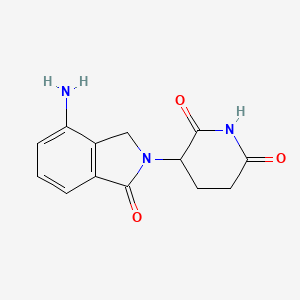
| Formula | C13H13N3O3 |
|---|---|
| Molecular weight | 259.26 g/mol |
| IUPAC name | 3-(7-amino-3-oxo-1H-isoindol-2-yl)piperidine-2,6-dione |
| CAS | 191732-72-6 |
| PubChem CID | 216326 |
| InChIKey | GOTYRUGSSMKFNF-UHFFFAOYSA-N |
| logP | 0.03 (XLogP -0.5) |
| Polar surface area | 92.5 Ų |
| H-bond acceptors / donors | 4 / 2 |
| Drug-likeness (QED) | 0.55 |
| Lipinski violations | 0 |
SMILES
Nc1cccc2c1CN(C1CCC(=O)NC1=O)C2=OBiology & Pharmacokinetics
Pharmacokinetics predicted
| Bioavailability | 10.0% |
|---|---|
| Half-life | 1.805 h |
| Volume of distribution | 0.66 L/kg |
| Protein binding | 35.3% |
| BBB penetrant | No |
Enzyme interactions
| Enzyme | Role | Detail |
|---|---|---|
| CYP2C19 | Substrate | — |
| CYP3A4 | Substrate | — |
Receptor binding (top 1)
| Target | Action | Affinity |
|---|---|---|
| cereblon (CRBN) | None | pIC50 5.8 |
Transporters
BCRP (Inhibitor)BCRP (Inhibitor)BSEP (Inhibitor)BSEP (Inhibitor)MDR1 (Inhibitor)MRP1 (Inhibitor)MRP2 (Inhibitor)MRP3 (Inhibitor)MRP4 (Inhibitor)OAT1 (Inhibitor)OAT3 (Inhibitor)OATP1B1 (Inhibitor)OATP1B1 (Inhibitor)OATP1B3 (Inhibitor)OCT2 (Inhibitor)P-gp (Inhibitor)BCRP (Substrate)MATE1 (Substrate)MDR1 (Substrate)MRP1 (Substrate)MRP2 (Substrate)MRP3 (Substrate)OAT1 (Substrate)OAT3 (Substrate)OATP2 (Substrate)OCT1 (Substrate)OCT2 (Substrate)OCTN1 (Substrate)OCTN2 (Substrate)P-gp (Substrate)
Drug–drug interactions (100+, DDInter)
| Interacting drug | Severity | Management |
|---|---|---|
| Adalimumab | major | |
| Atezolizumab | major | |
| Atorvastatin | major | |
| Avelumab | major | |
| Bacillus calmette-guerin substrain tice live antigen | major | |
| Baricitinib | major | |
| Cerivastatin | major | |
| Certolizumab pegol | major | |
| Cladribine | major | |
| Clozapine | major | |
| Conestat alfa | major | |
| Conjugated estrogens | major | |
| Conjugated estrogens (topical) | major | |
| Darbepoetin alfa | major | |
| Deferiprone | major | |
| Dienestrol (topical) | major | |
| Diethylstilbestrol | major | |
| Drospirenone | major | |
| Durvalumab | major | |
| Erythropoietin | major | |
| Esterified estrogens | major | |
| Estradiol | major | |
| Estradiol (topical) | major | |
| Estrone | major | |
| Estrone sulfate | major | |
| Estrone sulfate (topical) | major | |
| Etanercept | major | |
| Ethinylestradiol | major | |
| Fingolimod | major | |
| Fluvastatin | major | |
| Golimumab | major | |
| Human C1-esterase inhibitor | major | |
| Infliximab | major | |
| Leflunomide | major | |
| Lomitapide | major | |
| Lovastatin | major | |
| Measles virus vaccine live attenuated | major | |
| Mestranol | major | |
| Mipomersen | major | |
| Mumps virus strain B level jeryl lynn live antigen | major |
Showing 40 of 100+.
Registered Products (23)
| Brand | Form / strength | Pack | Agent | Citizen (JOD) |
|---|---|---|---|---|
| LENALID 10 (Lenalidomide Capsules 10mg) | Capsule 10 mg | 21 cap | Al-Motakadema Pharmaceutical LTD. | — |
| LENALID 15 (Lenalidomide Capsules 15mg) | Capsule 15 mg | 21 cap | Al-Motakadema Pharmaceutical LTD. | — |
| LENALID 25 (Lenalidomide Capsules 25mg) | Capsule 25 mg | 21 cap | Al-Motakadema Pharmaceutical LTD | — |
| Lammalid | Capsule Lenalidomide 10 mg | 21 cap | MS Pharma Jordan | — |
| Lenalidomide Neapolis | Capsule Lenalidomide 5 mg | 21 cap | Professional Drug Store | — |
| Lenalidomide Neapolis | Capsule Lenalidomide 10 mg | 21 cap | Professional Drug Store | — |
| Lenalidomide Neapolis | Capsule Lenalidomide 15 mg | 21 cap | Professional Drug Store | — |
| Lenalidomide Neapolis | Capsule Lenalidomide 25 mg | 21 cap | Professional Drug Store | — |
| Revlimid 10mg Hard Caps | Capsule 10 mg | 21 cap | Petra Drug Store | — |
| Revlimid 15 mg Hard Caps | Capsule 15 mg | 21 cap | Petra Drug Store | — |
| Revlimid 25mg Hard Caps | Capsule 25 mg | 21 cap | Petra Drug Store | — |
| Revlimid 5mg Hard Capsule | Capsule 5 mg | 21 cap | Petra Drug Store | — |
| Sotira | Capsule 25 mg | 21 cap | Hikma Pharmaceuticals Co.Ltd/Jordan | — |
| Sotira | Capsule 10 mg | 21 cap | Hikma Pharmaceuticals Co.Ltd/Jordan | — |
| Sotira | Capsule 15 mg | 21 cap | Hikma Pharmaceuticals Co.Ltd/Jordan | — |
| Sotira | Capsule 5 mg | 21 cap | Hikma Pharmaceuticals Co.Ltd/Jordan | — |
| Tymocan | Capsule 25 mg | 21 cap | Pharma International Company/ Jordan | — |
| Tymocan | Capsule 15 mg | 21 cap | Pharma International Company/ Jordan | — |
| Tymocan | Capsule 5 mg | 21 cap | Pharma International Company/ Jordan | — |
| Tymocan | Capsule 10 mg | 21 cap | Pharma International Company/ Jordan | — |
| lammalid | Capsule Lenalidomide 15 mg | 21 cap | MS Pharma Jordan | — |
| lammalid | Capsule Lenalidomide 25 mg | 21 cap | MS Pharma Jordan | — |
| lammalid | Capsule Lenalidomide 5 mg | 21 cap | MS Pharma Jordan | — |