Buprenorphine
JFDA label: BuTrans 20 mcg/h
- Accidental exposure (buccal film, transdermal patch):
- Addiction, abuse, and misuse (buccal film, immediate-release injection, transdermal patch):
- Life-threatening respiratory depression (buccal film, immediate-release injection, transdermal patch):
- Neonatal opioid withdrawal syndrome (buccal film, immediate-release injection, transdermal patch):
- Risk associated with insertion and removal (subdermal implant):
- Risks from concomitant use with benzodiazepines or other CNS depressants (buccal film, immediate-release injection, transdermal patch):
- Risk of serious harm or death with intravenous administration (extended-release injection):
Mechanism of Action
Agonist of Mu-type opioid receptor — Mu opioid receptor agonist; Agonist of Kappa-type opioid receptor — Kappa opioid receptor agonist
| Target | Action | Gene / class |
|---|---|---|
| Kappa-type opioid receptor efficacy | AGONIST | OPRK1 |
| Mu-type opioid receptor efficacy | AGONIST | OPRM1 |
Indications
Approved
- Buccal film, transdermal patch
- Extended-release injection
- Immediate-release injection
- Opioid dependence
- Pain management
- Subdermal implant
- Sublingual tablet
Off-label
- Opioid withdrawal in heroin-dependent hospitalized patients (immediate-release injection)
- Perineural anesthesia
Contraindications
Source: Lexicomp
- GI obstruction, including paralytic ileus (known or suspected). Documentation of allergenic cross-reactivity for opioids is limited. However, because of similarities in chemical structure and/or pharmacologic actions, the possibility of cross-sensitivity cannot be ruled out with certainty Absolute
- Hypersensitivity (eg, anaphylaxis) to buprenorphine or any component of the formulation. Buccal film, immediate-release injection, transdermal patch: Additional contraindications: Significant respiratory depression Absolute
- Transdermal patch and buccal film (Additional contraindications Absolute
- acute alcoholism or alcohol dependence Absolute
- acute or severe asthma in an unmonitored setting or in the absence of resuscitative equipment Absolute
- acute respiratory depression Absolute
- breastfeeding Absolute
- concurrent use or use within 14 days of MAOIs Absolute
- convulsive disorders Absolute
- cor pulmonale Absolute
- delirium tremens Absolute
- head injury Absolute
- hypercapnia Absolute
- increased cerebrospinal or intracranial pressure Absolute
- known or suspected oral mucositis (buccal film only) Absolute
- management of acute pain, including use in outpatient or day surgeries Absolute
- management of perioperative pain relief, or in other situations characterized by rapidly varying analgesic requirements Absolute
- mild, intermittent or short duration pain that can otherwise be managed Absolute
- myasthenia gravis Absolute
- not in US labeling): Hypersensitivity to other opioids Absolute
- obstructive airway (other than asthma) Absolute
- opioid dependent patients and for opioid withdrawal treatment Absolute
- pregnancy or during labor and delivery Absolute
- severe CNS depression Absolute
- severe hepatic insufficiency Absolute
- status asthmaticus Absolute
- suspected surgical abdomen (eg, acute appendicitis or pancreatitis) Absolute
Adverse Reactions
Cardiac disorders (5)
Common chest pain · Chest pain, xerostomia, anorexia, application site rash, application site irritation · Edema · Hypertension, anxiety, diarrhea, xerostomia, vomiting, abdominal pain, bronchitis (≥1% to Miscellaneous: Fever (≥1% to · Hypotension
Nervous system disorders (12)
Very Common Headache · insomnia
Common chills · Depression · dizziness · drowsiness · fatigue · migraine · paresthesia · sedation · sensation of cold · vertigo
Blood and lymphatic system disorders (1)
Common Hemorrhage
Gastrointestinal disorders (7)
Very Common abdominal pain
Common Constipation · flatulence · nausea · toothache · upper abdominal pain · vomiting
Skin and subcutaneous tissue disorders (6)
Very Common Pruritus
Common Diaphoresis · Erythema · excoriation · skin lesion · skin rash
Musculoskeletal and connective tissue disorders (4)
Common Arthralgia (1% to Respiratory: Bronchitis (1% to Miscellaneous: Fever (1% to · Back pain · limb pain · weakness
Eye disorders (1)
Common Miosis
Infections and infestations (1)
Very Common Infection
General disorders and administration site conditions (5)
Very Common Local pruritus · Pain at medication pump site
Common Fever · laceration · Local swelling
Respiratory, thoracic and mediastinal disorders (4)
Common cough · dyspnea · Hypoventilation · Oropharyngeal pain
Other (2)
Very Common Central nervous system: Sedation
Common Gastrointestinal: Vomiting
Dosing
Source: Lexicomp
Warnings & Precautions
Source: Lexicomp
CNS depression
May cause CNS depression, which may impair physical or mental abilities; patients must be cautioned about performing tasks that require mental alertness (eg, operating machinery, driving).
Hepatic events
Hepatitis has been reported; hepatic events ranged from transient, asymptomatic transaminase elevations to hepatic failure; in many cases, patients had preexisting hepatic impairment. Monitor liver function tests in patients at increased risk for hepatotoxicity (eg, history of alcohol abuse, preexisting hepatic dysfunction, IV drug abusers) prior to and during therapy. Remove buprenorphine subdermal implant if signs and symptoms of buprenorphine toxicity develop concurrent with hepatic impairment. If signs and symptoms of toxicity or overdose occur within 2 weeks of extended-release injection, removal of the depot may be required.
Hypersensitivity reactions
Hypersensitivity, including bronchospasm, angioneurotic edema, and anaphylactic shock, have been reported. The most common symptoms include rash, hives, and pruritus.
Hypotension
May cause severe hypotension (including orthostatic hypotension and syncope); use with caution in patients with hypovolemia, cardiovascular disease (including acute MI), or drugs that may exaggerate hypotensive effects (including phenothiazines or general anesthetics). Monitor for symptoms of hypotension following initiation or dose titration. Avoid use in patients with circulatory shock.
Infection
Subdermal implant: Infection may occur at site of insertion or removal, with excessive palpation shortly after insertion and improper removal increasing the risk. Examine the insertion site 1 week following insertion for signs of infection or problems with wound healing.
QT prolongation
Buprenorphine has been observed to cause QTc prolongation. Do not exceed a dose of 900 mcg every 12 hours buccal film or one 20 mcg/hour transdermal patch. Avoid using in patients with a personal or family history of long QT syndrome or in patients taking concurrent class IA or III antiarrhythmics or other medications that prolong the QT interval. Use with caution in patients with hypokalemia, hypomagnesemia, or clinically unstable cardiac disease, including unstable heart failure, unstable atrial fibrillation, symptomatic bradycardia, or active MI.
Respiratory depression
Buccal film, extended-release and immediate-release injection, transdermal patch: [US Boxed Warning]: Serious, life-threatening, or fatal respiratory depression may occur. Monitor closely for respiratory depression, especially during initiation or dose escalation. Misuse or abuse by chewing, swallowing, snorting, or injecting buprenorphine extracted from the buccal film or transdermal system will result in the uncontrolled delivery of buprenorphine and pose a significant risk of overdose and death. Misuse by self-injection of buprenorphine or the concomitant use of buprenorphine and benzodiazepines (or other CNS depressants, including alcohol) may result in coma or death. Carbon dioxide retention from opioid-induced respiratory depression can exacerbate the sedating effects of opioids. If the extended-release injection is discontinued due to respiratory depression, monitor the patient for ongoing respiratory depression for several months due to its extended-release characteristics. Use with caution in patients with compromised respiratory function (eg, chronic obstructive pulmonary disease, cor pulmonale, decreased respiratory reserve, hypoxia, hypercapnia, or preexisting respiratory depression). Disease-related concerns:
Abdominal conditions
May obscure diagnosis or clinical course of patients with acute abdominal conditions.
Adrenocortical insufficiency
Use with caution in patients with adrenal insufficiency, including Addison disease. Long-term opioid use may cause adrenal insufficiency (nausea, vomiting, anorexia, fatigue, weakness, dizziness and low blood pressure) or secondary hypogonadism, which may lead to sexual dysfunction, infertility, mood disorders, and osteoporosis (Brennan 2013).
Biliary tract impairment
Use with caution in patients with biliary tract dysfunction, including acute pancreatitis; opioids may cause constriction of sphincter of Oddi.
Bowel obstruction
Use with caution in patients with a history of ileus or bowel obstruction; buccal film, immediate-release injection, and transdermal patch are contraindicated in patients with known or suspected GI obstruction, including paralytic ileus.
CNS depression/coma
Avoid use in patients with impaired consciousness or coma because these patients are susceptible to intracranial effects of CO2 retention.
Delirium tremens
Use with caution in patients with delirium tremens.
Dermatological conditions
Subdermal implant: Use subdermal implants with caution in patients with a history of keloid formation, connective tissue disease (ie, scleroderma), or history of recurrent MRSA infections.
Head trauma
Use with extreme caution in patients with head injury, intracranial lesions, or elevated intracranial pressure (ICP); exaggerated elevation of ICP may occur. Buprenorphine can produce miosis and changes in the level of consciousness that may interfere with patient evaluation.
Hepatic impairment
Use buccal film and sublingual tablet with caution in patients with moderate hepatic impairment; dosage adjustment recommended in severe hepatic impairment. Use immediate-release injection with caution in patients with severe impairment. Subdermal implants should not be used in patients with preexisting moderate to severe hepatic impairment. Transdermal patch should not be used in patients with severe hepatic impairment; consider alternative therapy with more flexibility for dosing adjustments. Patients with preexisting moderate or severe hepatic impairment are not candidates for the extended-release injection. If moderate or severe impairment develops during treatment with the extended-release injection, continue with caution and monitor for toxicity for several months.
Obesity
Use with caution in patients who are morbidly obese.
Oral mucositis
Buccal film: Oral mucositis may lead to more rapid absorption and higher buprenorphine plasma levels; reduce dose in patients with oral mucositis and monitor closely for signs and symptoms of toxicity or overdose.
Prostatic hyperplasia/urinary stricture
Use with caution in patients with prostatic hyperplasia and/or urinary stricture.
Psychosis
Use with caution in patients with toxic psychosis.
Renal impairment
Use with caution in patients with renal impairment.
Respiratory disease
Use with caution and monitor for respiratory depression in patients with significant chronic obstructive pulmonary disease or cor pulmonale, and those with a substantially decreased respiratory reserve, hypoxia, hypercapnia, or preexisting respiratory depression, particularly when initiating and titrating therapy; critical respiratory depression may occur, even at therapeutic dosages. Consider the use of alternative nonopioid analgesics in these patients.
Seizure
Use with caution in patients with a history of seizure disorders; may cause or exacerbate preexisting seizures.
Sleep-disordered breathing
Use opioids with caution for chronic pain and titrate dosage cautiously in patients with risk factors for sleep-disordered breathing, including HF and obesity. Avoid opioids in patients with moderate to severe sleep-disordered breathing (Dowell [CDC 2016]).
Thyroid dysfunction
Use with caution in patients with thyroid dysfunction. Concurrent drug therapy issues:
Benzodiazepines and other CNS depressants
Buccal film, extended-release and immediate-release injection, transdermal patch: Concomitant use of benzodiazepines or other CNS depressants, including alcohol and opioids, may result in profound sedation, respiratory depression, coma, and death. Reserve concomitant prescribing of opioids and benzodiazepines or other CNS depressants for use in patients for whom alternative treatment options are inadequate. Limit dosages and durations to the minimum required. Follow patients for signs and symptoms of respiratory depression and sedation. Prohibiting medication-assisted treatment of opioid use disorder may increase the risk of morbidity and mortality, therefore patients should be educated on the risks of concomitant use with benzodiazepines, sedatives, opioid analgesics, and alcohol. Strategies should be developed to manage use of prescribed or illicit benzodiazepines or other CNS depressants at initiation of or during treatment with buprenorphine; adjustments to induction procedures and additional monitoring may be required. If appropriate, delay or omit buprenorphine dose if a patient is sedated at time of buprenorphine dosing. Discontinuation of benzodiazepines or other CNS depressants is preferred; gradual tapering of benzodiazepine or other CNS depressant, decreasing to lowest effective dose, or monitoring in a higher level of care for taper may be appropriate. Benzodiazepines are not the treatment of choice for anxiety or insomnia for patients in buprenorphine treatment;
Drug-drug interactions
Potentially significant interactions may exist, requiring dose or frequency adjustment, additional monitoring, and/or selection of alternative therapy. Consult drug interactions database for more detailed information. Special populations:
Cachectic or debilitated patients
Use with caution in cachectic or debilitated patients; there is a greater potential for life-threatening respiratory depression, even at therapeutic dosages. Consider the use of alternative nonopioid analgesics in these patients.
Elderly
Use with caution in elderly patients; may be more sensitive to adverse effects (eg, life-threatening respiratory depression). In chronic pain, monitor opioid use closely in this age group due to an increased potential for risks, including certain risks such as falls/fracture, cognitive impairment, and constipation (Dowell [CDC 2016]). Consider the use of alternative nonopioid analgesics in these patients.
Neonates
Neonatal withdrawal syndrome: Buccal film, extended-release and immediate-release injection, transdermal patch: [US Boxed Warning]: Prolonged use of opioids during pregnancy can cause neonatal withdrawal syndrome, which may be life-threatening if not recognized and treated according to protocols developed by neonatology experts. If opioid use is required for a prolonged period in a pregnant woman, advise the patient of the risk of neonatal withdrawal syndrome and ensure that appropriate treatment will be available. Signs and symptoms include irritability, hyperactivity and abnormal sleep pattern, high-pitched cry, tremor, vomiting, diarrhea, and failure to gain weight. Onset, duration, and severity depend on the drug used, duration of use, maternal dose, and rate of drug elimination by the newborn. Dosage form specific issues:
Extended-release injection
Serious harm or death could result if extended-release injection is administered IV. The injection forms a solid mass upon contact with body fluids and may cause occlusion, local tissue damage, and thromboembolic events, including life-threatening pulmonary emboli if administered IV. Because of the risk of serious harm or death that could result from IV self-administration, buprenorphine extended-release injection is only available through a restricted program called the Sublocade REMS Program. Health care settings and pharmacies that order and dispense buprenorphine extended-release injection must be certified in this program and comply with the REMS requirements. Administer via subcutaneous route only. Do not administer IM or IV.
Subdermal implant
Insertion and removal of implant are associated with the risk of implant migration, protrusion, and expulsion. Rare but serious complications including nerve damage and migration resulting in embolism and death may result from improper insertion in the upper arm. Additional complications may include local migration, protrusion, and expulsion. Incomplete insertions or infections may lead to protrusion or expulsion. Because of the risks associated with insertion and removal, buprenorphine implant is available only through a restricted program. All health care providers must successfully complete a live training program on the insertion and removal procedures and become certified, prior to performing insertions or prescribing buprenorphine implants. Patients must be monitored to ensure that the implant is removed by a health care provider certified to perform insertions.
Transdermal patch
To properly dispose of transdermal patch, fold it over on itself and flush down the toilet; alternatively, seal the used patch in the provided Patch-Disposal Unit and dispose of in the trash. Avoid exposure of application site and surrounding area to direct external heat sources (eg, heating pads, electric blankets, heat or tanning lamps, hot baths/saunas, hot water bottles, direct sunlight). Buprenorphine release from the patch is temperature-dependent and may result in overdose. Patients who experience fever or increase in core temperature should be monitored closely and adjust dose if signs of respiratory depression or CNS depression occur. Application-site reactions, including rare cases of severe reactions (eg, vesicles, discharge, "burns"), have been observed with use; onset varies from days to months after initiation; patients should be instructed to report severe reactions promptly and discontinue therapy. Special handling:
Disposal
Extended-release injection and subdermal implant: Handle the removed depots or implants with adequate security, accountability, and proper disposal, per facility procedure for a Schedule III drug product, and per applicable federal, state, and local regulations. Other warnings/precautions:
Abuse/misuse/diversion
Buccal film, extended-release and immediate-release injection, transdermal patch: [US Boxed Warning]: Use exposes patients and other users to the risks of addiction, abuse, and misuse, potentially leading to overdose and death. Assess each patient's risk prior to prescribing; monitor all patients regularly for development of these behaviors or conditions. Use with caution in patients with a history of drug abuse or acute alcoholism; potential for drug dependency exists. Other factors associated with an increased risk for misuse include younger age and psychotropic medication use. Consider offering naloxone prescriptions in patients with factors associated with an increased risk for overdose, such as history of overdose or substance use disorder, higher opioid dosages (≥50 morphine milligram equivalents/day orally), and concomitant benzodiazepine use (Dowell [CDC 2016]). The misuse of buccal film by swallowing or of transdermal patch by placing it in the mouth, chewing it, swallowing it, or using it in ways other than indicated may cause choking, overdose, and death.
Accidental ingestion
Buccal film, transdermal patch: [US Boxed Warning]: Accidental ingestion of even one dose, especially in children, can result in a fatal overdose of buprenorphine.
Acute pain
When using buprenorphine for treatment of opioid dependence, treat acute pain with nonopioid analgesics whenever possible. If treatment with a high-affinity full opioid analgesic is required, monitor closely for respiratory depression because high doses may be necessary to achieve pain relief.
Appropriate use
Buccal film, transdermal patch: Indicated for the management of pain severe enough to require daily, around-the-clock, long-term opioid treatment; should not be used for as-needed pain relief. Therapy with the buccal film or transdermal patch is not appropriate for use in the management of addictions. When used for chronic pain (outside of end-of-life or palliative care, active cancer treatment, sickle cell disease, or medication-assisted treatment for opioid use disorder) in outpatient setting in adults, opioids should not be used as first-line therapy for chronic pain management (pain >3-month duration or beyond time of normal tissue healing) due to limited short-term benefits, undetermined long-term benefits, and association with serious risks (eg, overdose, MI, auto accidents, risk of developing opioid use disorder). Preferred management includes nonpharmacologic therapy and nonopioid therapy (eg, NSAIDs, acetaminophen, certain anticonvulsants and antidepressants). If opioid therapy is initiated, it should be combined with nonpharmacologic and nonopioid therapy, as appropriate. Prior to initiation, known risks of opioid therapy should be discussed and realistic treatment goals for pain/function should be established, including consideration for discontinuation if benefits do not outweigh risks. Therapy should be continued only if clinically meaningful improvement in pain/function outweighs risks. Therapy should be initiated at the lowest effective dosage using immediate-r
Appropriate use
Subdermal implant: Not appropriate for patients who are new to treatment or have not sustained prolonged clinical stability on buprenorphine ≤8 mg/day.
Discontinuation of therapy
Extended-release injection and sublingual tablet: There is no maximum recommended duration for maintenance treatment of opioid addiction; patients may require treatment indefinitely. Advise patients of the potential to relapse to illicit drug use following discontinuation of opioid agonist/partial agonist medication-assisted treatment. If the extended-release injection is discontinued or the depot is removed, monitor the patient for several months for signs and symptoms of withdrawal. After steady-state has been achieved (4 to 6 months), patients discontinuing extended-release injections may have detectable plasma levels of buprenorphine for 12 months or longer.
Optimal pain regimen
An opioid-containing analgesic regimen should be tailored to each patient's needs and based upon the type of pain being treated (acute versus chronic), the route of administration, degree of tolerance for opioids (naive versus chronic user), age, weight, and medical condition. The optimal analgesic dose varies widely among patients; doses should be titrated to pain relief/prevention. When switching patients from buprenorphine to naltrexone, do not initiate naltrexone until 7 to 14 days after buprenorphine discontinuation. No time delay is required when switching patients from buprenorphine to methadone (Kampman [ASAM 2015]).
Partial opioid agonist and mixed opioid agonist/antagonist overdose
Reversal of partial opioid agonists or mixed opioid agonist/antagonists (eg, buprenorphine, pentazocine) may be incomplete and large doses of naloxone may be required.
Surgery
In patients undergoing elective surgery (excluding caesarean section), discontinuation of buprenorphine 24 to 36 hours before anticipated need for surgical anesthesia may be considered. Short-acting opioids may be given during and/or after surgery. In patients unable to abruptly discontinue buprenorphine prior to surgery, full opioid agonists may be added to the buprenorphine to maintain proper anesthesia; however, increased doses may be required to overcome buprenorphine receptor blockade. If opioid therapy is required as part of anesthesia, patients should be continuously monitored in an anesthesia care setting by persons not involved in in the conduct of the surgical or diagnostic procedure. This guidance applies to anyone who has been treated with extended release buprenorphine injection within the past 6 months. The decision whether to discontinue buprenorphine prior to elective surgery should be made in consultation with the surgeon and anesthesiologist (Kampman [ASAM 2015]).
Withdrawal
Concurrent use of opioid agonist/antagonist analgesics may precipitate withdrawal symptoms and/or reduced analgesic efficacy in patients following prolonged therapy with mu opioid agonists. Abrupt discontinuation following prolonged use may also lead to withdrawal symptoms and is not recommended; taper dose gradually when discontinuing. Withdrawal signs and symptoms will be delayed in patients who discontinue the extended-release injection or have it removed; transmucosal buprenorphine may be needed to treat withdrawal in these patients. Tablets, which are used for induction treatment of opioid dependence, should not be started until objective and clear signs of moderate withdrawal are evident. If subdermal implants are not immediately replaced in contralateral arm after removal, maintain patients on their previous dosage of sublingual buprenorphine.
Pregnancy & Lactation
Pregnancy
[US Boxed Warning]: Prolonged use of opioids during pregnancy can result in neonatal opioid withdrawal syndrome, which may be life-threatening if not recognized and requires management according to protocols developed by neonatology experts. If opioid use is required for a prolonged period in a pregnant woman, advise the patient of the risk of neonatal opioid withdrawal syndrome and ensure appropriate treatment will be available. Buprenorphine crosses the placenta; buprenorphine and norbuprenorphine can be detected in newborn serum, urine, and meconium following in utero exposure (CSAT 2004). Based on available data, an increased risk of major malformations has not been observed. Following chronic opioid therapy in pregnancy, adverse events in the newborn (including withdrawal) may occur; monitoring of the neonate is recommended. The minimum effective dose should be used if opioids are needed (Chou 2009). The onset of withdrawal in infants of women receiving buprenorphine during preg
Lactation
Buprenorphine is present in breast milk. Based on data from six women taking a median oral dose of buprenorphine 0.29 mg/kg/day, 5 to 8 days postpartum, the concentrations of buprenorphine and its metabolite in breast milk were low (0.2% and 0.12% of the weight adjusted maternal dose, respectively). Using data from seven women taking an average oral dose of buprenorphine 7 mg/day, ~1 month postpartum, the concentrations of buprenorphine and its metabolite in breast milk were also low (0.38% an
LactMed: monitor the infant.
Monitoring
| Clinical pearl | Pain relief, respiratory and mental status, CNS depression (especially in elderly, debilitated or cachectic patients particularly during treatment initiation or titration, or when using concomitant CNS depressants), blood pressure (monitor for hypotension during initiation and titration); LFTs (prior to initiation and during therapy); monthly for 300 mg maintenance treatment with extended-release injection); signs of addiction, abuse, or misuse; symptoms of withdrawal; patients with biliary tract disease for worsening symptoms; application site reactions (transdermal patch); signs or symptoms of hypogonadism or hypoadrenalism (Brennan 2013); signs and symptoms of toxicity or overdose (especially in patients with hepatic impairment); signs of infection or problems with wound healing one week after insertion of subdermal implant. Alternate recommendations: Chronic pain (long-term therapy outside of end-of-life or palliative care, active cancer treatment, sickle cell disease, or medication-assisted treatment for opioid use disorder): Evaluate benefits/risks of opioid therapy within 1 to 4 weeks of treatment initiation and with dose increases. Re-evaluate benefits/risks every 3 months during therapy or more frequently in patients at increased risk of overdose or opioid use disorder. Urine drug testing is recommended prior to initiation and re-checking should be considered at least yearly (includes controlled prescription medications and illicit drugs of abuse). State prescripti |
|---|
Chemistry & Properties
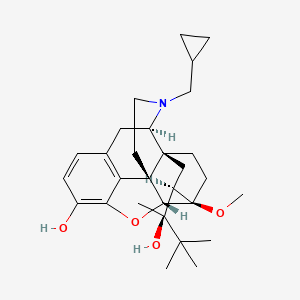
| Formula | C29H41NO4 |
|---|---|
| Molecular weight | 467.65 g/mol |
| IUPAC name | (1S,2S,6R,14R,15R,16R)-5-(cyclopropylmethyl)-16-[(2S)-2-hydroxy-3,3-dimethylbutan-2-yl]-15-methoxy-13-oxa-5-azahexacyclo[13.2.2.12,8.01,6.02,14.012,20]icosa-8(20),9,11-trien-11-ol |
| CAS | 52485-79-7 |
| PubChem CID | 644073 |
| InChIKey | RMRJXGBAOAMLHD-CTAPUXPBSA-N |
| logP | 4.41 (XLogP 5.0) |
| Polar surface area | 62.16 Ų |
| H-bond acceptors / donors | 5 / 2 |
| Drug-likeness (QED) | 0.69 |
| Lipinski violations | 0 |
SMILES
CO[C@@]12CC[C@@]3(C[C@@H]1[C@](C)(O)C(C)(C)C)[C@H]1Cc4ccc(O)c5c4[C@@]3(CCN1CC1CC1)[C@H]2O5Biology & Pharmacokinetics
Pharmacokinetics
| BBB penetrant | Yes |
|---|
Enzyme interactions
| Enzyme | Role | Detail |
|---|---|---|
| CYP1A2 | Substrate | — |
| CYP2B6 | Inhibitor | — |
| CYP2C19 | Substrate | — |
| CYP2D6 | Substrate | — |
| CYP3A4 | Inhibitor | — |
| CYP3A4 | Substrate | — |
Receptor binding (top 10)
| Target | Action | Affinity |
|---|---|---|
| OPIATE Mu (OPRM1) | Binding | pKi 9.2 |
| OPIATE Kappa (OPRK1) | Binding | pKi 9.1 |
| MOR | Binding | pKi 9.0 |
| μ receptor (OPRM1) | Agonist | pKi 8.8 |
| OPIATE Delta (OPRD1) | Binding | pKi 8.4 |
| KOR | Binding | pKi 7.6 |
| DOR | Binding | pKi 7.5 |
| NOP | Binding | pKi 6.4 |
| CB1 | Binding | pKi 5.7 |
| DAT | Binding | pKi 5.7 |
Transporters
BCRP (Inhibitor)BCRP (Inhibitor)BSEP (Inhibitor)MDR1 (Inhibitor)MRP1 (Inhibitor)OATP1B1 (Inhibitor)OATP1B3 (Inhibitor)P-gp (Inhibitor)BCRP (Substrate)MDR1 (Substrate)P-gp (Substrate)
Drug–drug interactions (100+, DDInter)
| Interacting drug | Severity | Management |
|---|---|---|
| Alvimopan | major | |
| Anagrelide | major | |
| Arsenic trioxide | major | |
| Bupropion | major | |
| Cabozantinib | major | |
| Ceritinib | major | |
| Chloroquine | major | |
| Chlorphenesin | major | |
| Cisapride | major | |
| Codeine | major | |
| Crizotinib | major | |
| Dolasetron | major | |
| Dronabinol | major | |
| Ethanol | major | |
| Fingolimod | major | |
| Halofantrine | major | |
| Hydrocodone | major | |
| Hydroxychloroquine | major | |
| Iohexol | major | |
| Iopamidol | major | |
| Ivosidenib | major | |
| Lumefantrine | major | |
| Macimorelin | major | |
| Methylene blue | major | |
| Morphine | major | |
| Morphine (liposomal) | major | |
| Nabilone | major | |
| Naltrexone | major | |
| Nilotinib | major | |
| Opium | major | |
| Osimertinib | major | |
| Ozanimod | major | |
| Panobinostat | major | |
| Papaverine | major | |
| Pasireotide | major | |
| Procarbazine | major | |
| Siponimod | major | |
| Toremifene | major | |
| Vandetanib | major | |
| Vemurafenib | major |
Showing 40 of 100+.
Registered Products (3)
| Brand | Form / strength | Pack | Agent | Citizen (JOD) |
|---|---|---|---|---|
| BuTrans 5mcg/h | Patch 5 mg | 4 patch | Sukhtian Group | 21.960 |
| BuTrans 10mcg/h | Tablet 10 mcg/h | 4 tab | Sukhtian Group | 40.450 |
| BuTrans 20 mcg/h | Tablet 20 mg | 4 tab | Sukhtian Group | 72.860 |