Nilotinib
JFDA label: Tasigna
- QT Prolongation and Sudden Deaths:
Mechanism of Action
Nilotinib is a selective tyrosine kinase inhibitor that targets BCR-ABL kinase, c-KIT and platelet derived growth factor receptor (PDGFR); it does not have activity against the SRC family. Nilotinib inhibits BCR-ABL mediated proliferation of leukemic cell lines by binding to the ATP-binding site of BCR-ABL and inhibiting tyrosine kinase activity. Nilotinib has activity in imatinib-resistant BCR-ABL kinase mutations.
Indications
Approved
- Chronic myelogenous leukemia
Off-label
- Acute lymphoblastic leukemia (ALL), Philadelphia chromosome-positive (Ph+)
- Gastrointestinal stromal tumor (GIST) (refractory)
Class profile
| mechanismClass | Tyrosine kinase inhibitor (TKI) |
|---|---|
| targetMolecule | BCR-ABL,KIT,PDGFR |
| targetPathway | BCR-ABL signaling |
| generation | 2nd generation ABL TKI |
| primaryTumors | CML |
| resistanceMechanisms | T315I and E255K/V (primary resistance),Y253H,F359C/V |
| source | NCCN/OncoKB/Goodman&Gilman13ed |
Contraindications
Source: Lexicomp
- Additional contraindications (not in the US labeling): Hypersensitivity to nilotinib or any component of the formulation Absolute
- Hypokalemia, hypomagnesemia, or long QT syndrome Absolute
- persistent QTc >480 msec Absolute
Adverse Reactions
Cardiac disorders (20)
Very Common hypertension · Peripheral edema
Common angina pectoris · cardiac arrhythmia (including AV block, atrial fibrillation, bradycardia, cardiac flutter, extrasystoles, and tachycardia) · cerebral ischemia · chest discomfort · chest pain (including noncardiac) · flushing · Ischemic heart disease · palpitations · pericardial effusion · peripheral arterial disease · prolonged Q-T interval on ECG
Not Known Hypotension · occlusive arterial disease (basilar, peripheral) · pericarditis · reduced ejection fraction · shock (hemorrhagic) · thrombosis · ventricular dysfunction
Nervous system disorders (24)
Very Common dizziness · fatigue · Headache · insomnia
Common Anxiety · depression · flank pain · hypoesthesia · malaise · myasthenia · pain · paresthesia · peripheral neuropathy · vertigo · voice disorder
Not Known Amnesia · breast induration · cerebral edema · confusion · disorientation · dysesthesia · dysphoria · lethargy · restless leg syndrome
Hepatobiliary disorders (7)
Very Common Hepatic: Increased serum ALT · hyperbilirubinemia · increased serum AST
Common Ascites · hepatic insufficiency · increased serum alkaline phosphatase
Not Known Hepatomegaly
Renal and urinary disorders (5)
Common Pollakiuria
Not Known Hematuria · Renal failure · urinary incontinence · urine discoloration
Blood and lymphatic system disorders (19)
Very Common anemia · Neutropenia · thrombocytopenia
Common Bruise · cutaneous papilloma · decreased hemoglobin · eosinophilia · febrile neutropenia · hemophthalmos · hemorrhage · leukopenia · lymphocytopenia · pancytopenia
Not Known Increased parathyroid hormone · leukocytosis · paraproteinemia · petechiae · retroperitoneal hemorrhage · thrombocythemia
Immune system disorders (2)
Common Change in serum protein (decreased globulins)
Not Known Hypersensitivity
Metabolism and nutrition disorders (29)
Very Common hyperglycemia · hypophosphatemia · increased serum cholesterol · Increased serum glucose · increased serum triglycerides
Common Decreased serum albumin · diabetes mellitus · fluid retention · hypercalcemia · hypercholesterolemia · hyperkalemia · hyperlipidemia · hyperphosphatemia · hypertriglyceridemia · hypocalcemia · hypokalemia · hypomagnesemia · hyponatremia · increased gamma-glutamyl transferase · increased HDL cholesterol · increased VLDL · weight gain · weight loss
Not Known Altered hormone level (insulin C-peptide decreased) · hypermenorrhea · hyperparathyroidism (secondary) · hyperuricemia · hypoglycemia · thyroiditis
Gastrointestinal disorders (28)
Very Common abdominal pain · constipation · decreased appetite · diarrhea · increased serum lipase · Nausea · upper abdominal pain · vomiting
Common abdominal distension · abdominal distress · dysgeusia · Dyspepsia · flatulence · gastroenteritis · gastrointestinal hemorrhage · increased serum amylase · pancreatitis
Not Known Cholestasis · enterocolitis · gastric ulcer (perforation possible) · gingivitis · hematemesis · hemorrhoids · hiatal hernia · intestinal obstruction · oral lesion (papilloma) · rectal hemorrhage · ulcerative esophagitis
Skin and subcutaneous tissue disorders (27)
Very Common alopecia · night sweats · pruritus · Skin rash · xeroderma
Common Acne vulgaris · dermatitis (including allergic and acneiform) · eczema · erythema · folliculitis · hyperhidrosis · urticaria
Not Known Dermal ulcer · erythema multiforme · erythema nodosum · exfoliative dermatitis · furuncle · hyperkeratosis · palmar-plantar erythrodysesthesia · psoriasis · skin atrophy · skin blister · skin discoloration · skin hyperpigmentation · skin hypertrophy · skin photosensitivity · tinea pedis
Musculoskeletal and connective tissue disorders (11)
Very Common Arthralgia · back pain · limb pain · muscle spasm · musculoskeletal pain · myalgia · ostealgia · weakness
Common Increased creatine phosphokinase · neck pain
Not Known Arthritis
Eye disorders (13)
Common conjunctivitis · eye pruritus · Eyelid edema · periorbital edema · xerophthalmia
Not Known Blepharitis · diplopia · eye pain · optic neuritis · papilledema · photophobia · retinopathy (central serous chorioretinopathy) · swelling of eye
Ear and labyrinth disorders (3)
Not Known Auditory impairment · otalgia · tinnitus
Infections and infestations (5)
Very Common Influenza
Not Known Abscess · anal abscess · reactivation of HBV · sepsis
General disorders and administration site conditions (6)
Very Common Fever
Not Known Benign nodule (sebaceous hyperplasia) · cyst (dermal) · Local swelling (nipple) · localized edema · troponin increased
Respiratory, thoracic and mediastinal disorders (12)
Very Common Cough · dyspnea · flu-like symptoms · nasopharyngitis · oropharyngeal pain · upper respiratory tract infection
Common epistaxis · hoarseness · Pleural effusion · pulmonary edema
Not Known Pulmonary hypertension · wheezing
Dosing
Source: Lexicomp
Warnings & Precautions
Source: Lexicomp
Bone marrow suppression
Reversible myelosuppression, including grades 3 and 4 thrombocytopenia, neutropenia, and anemia may occur; may require dose reductions and/or treatment delay. Monitor blood counts every 2 weeks for the first 2 months, then monthly.
Cardiovascular
Cardiovascular events such as ischemic heart disease-related events, arterial vascular occlusive events, peripheral arterial occlusive disease, and ischemic cerebrovascular accident have been reported. Use caution in patients with preexisting risk factors, and monitor for new or worsening symptoms suggestive of cardiovascular events.
Electrolyte imbalance
Electrolyte abnormalities may occur during treatment, including hypophosphatemia, hyper-/hypokalemia, hypocalcemia, and hyponatremia. Correct electrolyte abnormalities prior to treatment initiation; monitor periodically.
Fluid retention
Fluid retention, including pleural and pericardial effusions, ascites, and pulmonary edema were reported; may be severe. Monitor closely for signs/symptoms of fluid retention (eg, rapid weight gain or swelling) and for symptoms of respiratory or cardiac distress (eg, shortness of breath). Evaluate promptly and manage as appropriate.
Hemorrhage
Serious hemorrhagic events (including fatal events) have occurred in chronic myelogenous leukemia (CML) patients treated with nilotinib. In a clinical study comparing nilotinib and imatinib in the treatment of newly diagnosed Philadelphia chromosome-positive (Ph+) chronic phase CML, hemorrhagic events (eg, GI hemorrhage, including grade 3 or 4 events) occurred more frequently in the nilotinib arm. Monitor for signs/symptoms of bleeding and manage as clinically appropriate.
Hepatotoxicity
Nilotinib may cause hepatotoxicity, including dose-limiting elevations in bilirubin, transaminases, and alkaline phosphatase; monitor liver function monthly or as clinically indicated.
QT prolongation/sudden death
May prolong the QT interval; sudden deaths have been reported. Use in patients with hypokalemia, hypomagnesemia, or long QT syndrome is contraindicated. Correct hypomagnesemia and hypokalemia prior to initiating therapy; monitor electrolytes periodically. Monitor ECG and QTc (baseline, at 7 days, with dose change, and periodically). Avoid the use of QT-prolonging agents and strong CYP3A4 inhibitors; also avoid concurrent use with antiarrhythmics; may increase the risk of potentially-fatal arrhythmias. The sudden deaths reported appear to be related to dose-dependent ventricular repolarization abnormalities. Prolonged QT interval may result in torsade de pointes, which may cause syncope, seizure, and/or death. Patients with uncontrolled or significant cardiovascular disease were excluded from studies.
Tumor lysis syndrome
Tumor lysis syndrome (TLS) has been reported in patients with resistant or intolerant CML; the majority of cases had malignant disease progression, high WBC counts, and/or dehydration. Maintain adequate hydration and treat high uric acid levels prior to nilotinib initiation. Disease-related concerns:
Gastrectomy
Consider alternative therapy or a dosage increase (with more frequent monitoring) in patients with total gastrectomy (nilotinib exposure is reduced).
Hepatic impairment
Dosage reduction is recommended in patients with hepatic impairment, along with close monitoring of QT interval. Nilotinib metabolism is primarily hepatic; exposure is increased in patients with hepatic impairment.
Pancreatitis
Use with caution in patients with a history of pancreatitis, may cause dose-limiting elevations of serum lipase and amylase; monitor. In patients with abdominal symptoms in conjunction with lipase increases, withhold treatment and consider diagnostics to exclude pancreatitis. Monitor serum lipase levels monthly or as clinically necessary. Concurrent drug therapy issues:
Drug-drug/drug-food interactions
Potentially significant interactions may exist, requiring dose or frequency adjustment, additional monitoring, and/or selection of alternative therapy. Consult drug interactions database for more detailed information. [US Boxed Warning]: Avoid concurrent use with medications known to prolong the QT interval and with strong CYP3A4 inhibitors. Special populations:
Polymorphisms
UGT1A1 polymorphisms may be a risk factor for increased toxicity (eg, hyperbilirubinemia) (Shibata 2013). Dosage form specific issues:
Lactose
Capsules contain lactose; do not use with galactose intolerance, severe lactase deficiency, or glucose-galactose malabsorption syndromes. Other warnings/precautions:
Appropriate administration
Administer on an empty stomach, at least 1 hour before and 2 hours after food. Food increased the bioavailability/serum levels which may then prolong QTc. Nilotinib solubility is decreased at higher pH; concurrent use with proton pump inhibitors is not recommended. If necessary, H2-receptor blockers may be administered ~10 hours before and 2 hours after a nilotinib dose. Antacids (eg, aluminum hydroxide, magnesium hydroxide, simethicone) may be administered ~2 hours before or 2 hours after nilotinib.
BCR-ABL transcript monitoring
Monitor BCR-ABL transcript levels in patients eligible for treatment discontinuation using an authorized test validated to measure molecular response levels with a sensitivity of at least MR4.5 (BCR-ABL/ABL ≤0.0032% IS). Information on authorized tests for detection and quantitation of BCR-ABL transcripts is available at http://www.fda.gov/CompanionDiagnostics.
Pregnancy & Lactation
Pregnancy
Based on data from animal reproduction studies and the mechanism of action, nilotinib may cause fetal harm if administered during pregnancy. Verify pregnancy status in females of reproductive potential prior to initiating therapy. Women of reproductive potential should be advised to use effective contraception during treatment and for at least 14 days after the last dose.
Lactation
It is not known if nilotinib is present in breast milk. Due to the potential for serious adverse reactions in the breastfed infant, breastfeeding is not recommended by the manufacturer during therapy and for at least 14 days after the last dose.
Monitoring
| Efficacy | Tumour response (RECIST criteria, tumour markers, imaging); progression-free survival; performance status (ECOG/Karnofsky) |
|---|---|
| Toxicity | CBC with differential (nadir timing depends on agent); LFTs; renal function; ECG (QT for relevant agents); echocardiogram for cardiotoxic agents (anthracyclines, trastuzumab); cumulative dose tracking for dose-limited toxicities |
| Clinical pearl | Treatment response is assessed after 2–3 cycles. Grade 3–4 toxicities typically require dose reduction or interruption per protocol-defined criteria. |
| Counseling | Attend all scheduled blood tests and imaging appointments. Report fever > 38°C (risk of neutropaenic sepsis — medical emergency), unusual bleeding, or new pain immediately. |
Chemistry & Properties
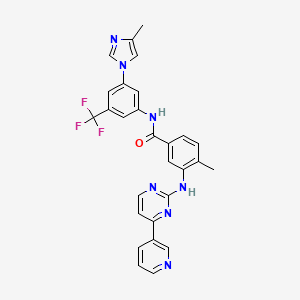
| Formula | C28H22F3N7O |
|---|---|
| Molecular weight | 529.53 g/mol |
| IUPAC name | 4-methyl-N-[3-(4-methylimidazol-1-yl)-5-(trifluoromethyl)phenyl]-3-[(4-pyridin-3-ylpyrimidin-2-yl)amino]benzamide |
| CAS | 641571-10-0 |
| PubChem CID | 644241 |
| InChIKey | HHZIURLSWUIHRB-UHFFFAOYSA-N |
| logP | 6.36 (XLogP 4.9) |
| Polar surface area | 97.62 Ų |
| H-bond acceptors / donors | 7 / 2 |
| Drug-likeness (QED) | 0.27 |
| Lipinski violations | 2 |
SMILES
Cc1cn(-c2cc(NC(=O)c3ccc(C)c(Nc4nccc(-c5cccnc5)n4)c3)cc(C(F)(F)F)c2)cn1Biology & Pharmacokinetics
Pharmacokinetics
| BBB penetrant | No |
|---|
Enzyme interactions
| Enzyme | Role | Detail |
|---|---|---|
| CYP1A2 | Inhibitor | — |
| CYP2C8 | Inhibitor | — |
| CYP2C9 | Substrate | — |
| CYP2D6 | Substrate | — |
| CYP3A4 | Inhibitor | IC₅₀ 0.5800000000000001 µM |
| CYP3A4 | Substrate | — |
Receptor binding (top 28)
| Target | Action | Affinity |
|---|---|---|
| discoidin domain receptor tyrosine kinase 2 (DDR2) | Inhibitor | pIC50 9.3 |
| V-abl Abelson murine leukemia viral oncogene homolog | Binding | pKi 9.0 |
| Platelet-derived growth factor receptor, alpha polypeptid | Binding | pKi 8.7 |
| Platelet-derived growth factor receptor, beta polypeptide (PDGFRB) | Binding | pKi 8.7 |
| V-kit Hardy-Zuckerman 4 feline sarcoma viral oncogene homolog (avian) (KIT) | Binding | pKi 8.7 |
| EPH receptor B2 | Binding | pKi 8.4 |
| EPH receptor B1 (EPHB1) | Binding | pKi 7.8 |
| ABL proto-oncogene 1, non-receptor tyrosine kinase (ABL1) | Inhibitor | pIC50 7.8 |
| EPH receptor B4 (EPHB4) | Binding | pKi 7.4 |
| discoidin domain receptor tyrosine kinase 1 (DDR1) | Inhibitor | pIC50 7.4 |
| Lymphocyte-specific protein tyrosine kinase (LCK) | Binding | pKi 5.7 |
| Protein-tyrosine kinase Tie2 | Binding | pKi 5.4 |
| Fms-related tyrosine kinase 3 (FLT3) | Binding | pKi 5.4 |
| V-yes-1 Yamaguchi sarcoma viral related oncogene homolog (LYN) | Binding | pKi 5.4 |
| Insulin receptor (INSR) | Binding | pKi 5.4 |
Transporters
BCRP (Inhibitor)BCRP (Inhibitor)BSEP (Inhibitor)CNT1 (Inhibitor)CNT3 (Inhibitor)ENT1 (Inhibitor)ENT2 (Inhibitor)MATE1 (Inhibitor)MDR1 (Inhibitor)MRP1 (Inhibitor)MRP1 (Inhibitor)OAT3 (Inhibitor)OATP1B1 (Inhibitor)OATP1B1 (Inhibitor)OATP1B3 (Inhibitor)OATP1B3 (Inhibitor)OATP2B1 (Inhibitor)OCT1 (Inhibitor)OCT2 (Inhibitor)OCT3 (Inhibitor)OCTN2 (Inhibitor)P-gp (Inhibitor)BCRP (Substrate)MDR1 (Substrate)OATP1B1 (Substrate)OATP1B3 (Substrate)OCT1 (Substrate)P-gp (Substrate)
Drug–drug interactions (100+, DDInter)
| Interacting drug | Severity | Management |
|---|---|---|
| Abarelix | major | |
| Abiraterone | major | |
| Adalimumab | major | |
| Adenosine | major | |
| Alfuzosin | major | |
| Alimemazine | major | |
| Amiodarone | major | |
| Amisulpride | major | |
| Amitriptyline | major | |
| Amoxapine | major | |
| Amprenavir | major | |
| Anagrelide | major | |
| Apalutamide | major | |
| Apomorphine | major | |
| Arsenic trioxide | major | |
| Asenapine | major | |
| Astemizole | major | |
| Atazanavir | major | |
| Atomoxetine | major | |
| Azithromycin | major | |
| Bacillus calmette-guerin substrain tice live antigen | major | |
| Baricitinib | major | |
| Bedaquiline | major | |
| Bepridil | major | |
| Bexarotene | major | |
| Bicalutamide | major | |
| Boceprevir | major | |
| Brexpiprazole | major | |
| Buprenorphine | major | |
| Cabozantinib | major | |
| Carbamazepine | major | |
| Ceritinib | major | |
| Certolizumab pegol | major | |
| Chloroquine | major | |
| Chlorpromazine | major | |
| Ciprofloxacin | major | |
| Cisapride | major | |
| Citalopram | major | |
| Cladribine | major | |
| Clarithromycin | major |
Showing 40 of 100+.
Registered Products (5)
| Brand | Form / strength | Pack | Agent | Citizen (JOD) |
|---|---|---|---|---|
| NILONIB 150 | Capsule 150 mg | 28 cap | Omicron Pharma | — |
| NILONIB 200 | Capsule 227.38 mg | 28 cap | Omicron Pharma | — |
| Tasigna | Capsule 200 mg | 28 cap pack varies | The Jordan Drugstore Co | — |
| Tasigna | Capsule 200 mg | 112 cap pack varies | The Jordan Drugstore Co | — |
| Tasigna | Tablet 150 mg | 112 tab | The Jordan Drugstore Co | — |