Carbamazepine
🧬 Cross-allergy: Aromatic anticonvulsants
JFDA label: CARBATOL 200 TABS.
- Serious dermatologic reactions and HLA-B*1502 allele:
- Aplastic anemia and agranulocytosis:
Mechanism of Action
Blocker of Sodium channel alpha subunit — Sodium channel alpha subunit blocker
| Target | Action | Gene / class |
|---|---|---|
| Sodium channel alpha subunit efficacy | BLOCKER |
Indications
Approved
- Bipolar 1 disorder (Equetro only)
- Epilepsy
- Trigeminal or glossopharyngeal neuralgia (oral only)
Off-label
- Neuropathic pain, critically ill patients
- Neuropsychiatric symptoms of dementia
- Restless legs syndrome
Contraindications
Source: Lexicomp · Curated
- Additional contraindications (not in US labeling): Atrioventricular (AV) heart block Absolute
- Concomitant nefazodone Absolute
- Concurrent MAOI use or within 14 days Absolute
- History of bone marrow suppression or aplastic anaemia Absolute
- Hypersensitivity to carbamazepine, tricyclic antidepressants, or any component of the formulation Absolute
- bone marrow depression Absolute
- concomitant use of delavirdine or other non-nucleoside reverse transcriptase inhibitors that are substrate of CYP3A4 Absolute
- concomitant use of nefazodone or boceprevir Absolute
- concurrent use with itraconazole and voriconazole Absolute
- hepatic disease Absolute
- history of hepatic porphyria (acute intermittent porphyria, variegate porphyria, porphyria cutanea tarda) Absolute
- serious blood disorder Absolute
- with or within 14 days of MAO inhibitor use Absolute
Adverse Reactions
Cardiac disorders (11)
Common atrial tachycardia, abnormality in thinking, paresthesia, twitching, vertigo · Atrioventricular block · cardiac arrhythmia · cardiac failure · coronary artery disease (aggravation) · edema · Hypertension · hypotension · syncope · thromboembolism · thrombophlebitis
Nervous system disorders (14)
Very Common ataxia · Dizziness · drowsiness
Common Agitation · amnesia · chills · depression · fatigue · hallucination · headache · hyperacusis · neuroleptic malignant syndrome (NMS) · peripheral neuritis · talkativeness
Hepatobiliary disorders (3)
Common Abnormal hepatic function tests · hepatitis · jaundice
Renal and urinary disorders (8)
Common Azotemia · impotence · Increased blood urea nitrogen · microscopic urine deposits · oliguria · renal failure · urinary frequency · urinary retention
Blood and lymphatic system disorders (11)
Common Agranulocytosis · Anemia · aplastic anemia · bone marrow depression · eosinophilia · leukocytosis · leukopenia · lymphadenopathy · pancytopenia · purpura · thrombocytopenia
Immune system disorders (2)
Common Hypersensitivity reaction · multi-organ hypersensitivity
Metabolism and nutrition disorders (5)
Common Albuminuria · glycosuria · Hyponatremia, xerostomia · porphyria · SIADH
Gastrointestinal disorders (5)
Very Common Nausea · vomiting
Common Glossitis · pancreatitis · stomatitis
Skin and subcutaneous tissue disorders (15)
Common Acute generalized exanthematous pustulosis · alopecia · diaphoresis · dyschromia · erythema multiforme · erythema nodosum · exfoliative dermatitis · maculopapular rash · onychomadesis · Pruritus · skin photosensitivity · skin rash · Stevens-Johnson syndrome · toxic epidermal necrolysis · urticaria
Musculoskeletal and connective tissue disorders (7)
Common Arthralgia · exacerbation of systemic lupus erythematosus · leg cramps · myalgia · osteoporosis · tremor · Weakness
Eye disorders (5)
Common Blurred vision · Cataract · conjunctivitis · diplopia (intravenous: 5%; oral: Frequency not defined: · increased intraocular pressure
General disorders and administration site conditions (1)
Common Fever
Respiratory, thoracic and mediastinal disorders (3)
Common Dry throat · pneumonia · pulmonary hypersensitivity
Dosing
Source: Lexicomp
Warnings & Precautions
Source: Lexicomp
Blood dyscrasias
The risk of developing anemia or agranulocytosis is increased during treatment. Monitor CBC, platelets, and differential prior to and during therapy; discontinue if significant bone marrow suppression occurs. A spectrum of hematologic effects has been reported with use (eg, agranulocytosis, aplastic anemia, neutropenia, leukopenia, thrombocytopenia, pancytopenia, and anemias); patients with a previous history of adverse hematologic reaction to any drug may be at increased risk. Early detection of hematologic change is important; advise patients of early signs and symptoms including fever, sore throat, mouth ulcers, infections, easy bruising, and petechial or purpuric hemorrhage.
CNS depression
May cause CNS depression, which may impair physical or mental abilities; patients must be cautioned about performing tasks which require mental alertness (eg, operating machinery or driving).
Dermatologic toxicity
Severe and sometimes fatal dermatologic reactions, including toxic epidermal necrolysis (TENS) and Stevens-Johnson syndrome (SJS), may occur during therapy. The risk is increased in patients with the variant HLA-B*1502 allele, found most often in patients of Asian ancestry. Patients with an increased likelihood of carrying this allele should be screened prior to initiating therapy. Avoid use in patients testing positive for the allele; discontinue therapy in patients who have a serious dermatologic reaction. The risk of SJS or TENS may also be increased if carbamazepine is used in combination with other antiepileptic drugs associated with these reactions. Presence of the HLA-B*1502 allele has not been found to predict the risk of less serious dermatologic reactions such as anticonvulsant hypersensitivity syndrome or nonserious rash.
Hepatotoxicity
Hepatotoxicity ranging from slight elevations in liver enzymes to rare hepatic failure has been reported and may occur concomitantly with other immunoallergenic syndromes such as multiorgan hypersensitivity (DRESS syndrome) and serious dermatologic reactions including SJS; monitor baseline and periodic liver function, particularly in patients with a history of liver disease; discontinue carbamazepine immediately in cases of aggravated liver dysfunction or active liver disease. In some cases, hepatic effects may progress despite discontinuation of carbamazepine. Rare cases of a hepatic failure and vanishing bile duct syndrome involving destruction and disappearance of the intrahepatic bile ducts have been reported. Clinical courses of vanishing bile duct syndrome have been variable ranging from fulminant to indolent.
Hypersensitivity reactions
The risk of developing a hypersensitivity reaction may be increased in patients with the variant HLA-A*3101 allele. These hypersensitivity reactions include SJS/TEN, maculopapular eruptions, and drug reaction with eosinophilia and systemic symptoms (DRESS/multiorgan hypersensitivity). The HLA-A*3101 allele may occur more frequently in patients of African-American, Asian, European, Indian, Arabic, Latin American, and Native American ancestry. Hypersensitivity has also been reported in patients experiencing reactions to other anticonvulsants; the history of hypersensitivity reactions in the patient or their immediate family members should be reviewed. Approximately 25% to 30% of patients allergic to carbamazepine will also have reactions with oxcarbazepine.
Hyponatremia
Hyponatremia may occur and is often caused by the syndrome of inappropriate antidiuretic hormone secretion (SIADH). Risk of SIADH appears to be dose-related. Elderly or patients taking diuretics are at increased risk for hyponatremia. Consider discontinuing therapy in patients with symptomatic hyponatremia.
Multiorgan hypersensitivity reactions
Potentially serious, sometimes fatal multiorgan hypersensitivity reactions (also known as drug reaction with eosinophilia and systemic symptoms [DRESS]) have been reported with some antiepileptic drugs; including carbamazepine; monitor for signs and symptoms of possible disparate manifestations associated with lymphatic, hepatic, renal, and/or hematologic organ systems; gradual discontinuation and conversion to alternate therapy may be required.
Psychiatric effects
May activate latent psychosis and/or cause confusion or agitation; elderly patients may be at an increased risk for psychiatric effects.
Renal toxicity
Renal toxicity has been reported; monitor renal function at baseline and periodically thereafter.
Suicidal ideation
Pooled analysis of trials involving various antiepileptics (regardless of indication) showed an increased risk of suicidal thoughts/behavior (incidence rate: 0.43% treated patients compared to 0.24% of patients receiving placebo); risk observed as early as 1 week after initiation and continued through duration of trials (most trials ≤24 weeks). Monitor all patients for notable changes in behavior that might indicate suicidal thoughts or depression; notify healthcare provider immediately if symptoms occur. Disease-related concerns:
Anticholinergic sensitivity
Has mild anticholinergic activity; use with caution in patients with sensitivity to anticholinergic effects (urinary retention, increased intraocular pressure, constipation).
Cardiovascular disease
May cause conduction abnormalities, including AV heart block; use caution in patients with underlying ECG abnormalities, preexisting cardiac damage, or patients who are at risk for conduction abnormalities. In a scientific statement from the American Heart Association, carbamazepine has been determined to be an agent that may exacerbate underlying myocardial dysfunction (magnitude: major) in patients with heart failure (AHA [Page 2016]).
Hepatic impairment
Use with caution in patients with hepatic impairment; avoid use in patients with hepatic porphyria (eg, acute intermittent porphyria, variegate porphyria, porphyria cutanea tarda).
Renal impairment
Use with caution in patients with renal impairment. Avoid use of IV product in moderate or severe renal impairment. Concurrent drug therapy issues:
Drug-drug interactions
Potentially significant interactions may exist, requiring dose or frequency adjustment, additional monitoring, and/or selection of alternative therapy. Consult drug interactions database for more detailed information. Special populations:
Asian ancestry
Patients with an increased likelihood of carrying the HLA-B*1502 allele, such as those of Asian descent, should be screened for the variant HLA-B*1502 allele prior to initiating therapy. This genetic variant has been associated with a significantly increased risk of developing Stevens-Johnson syndrome and/or toxic epidermal necrolysis. Patients with a positive result should not be started on carbamazepine.
Elderly
May activate latent psychosis, confusion, or agitation.
Pediatric
Exacerbation of certain seizure types have been seen after initiation of therapy in children with mixed seizure disorders. Dosage form specific issues:
Injection
Vials contain the excipient cyclodextrin (sulfobutylether beta-cyclodextrin), which may accumulate in patients with renal insufficiency, although the clinical significance of this finding is uncertain (Luke 2010).
Sorbitol
The suspension may contain sorbitol; avoid use in patents with hereditary fructose intolerance.
Suspension
Administration of the suspension will yield higher peak and lower trough serum levels than an equal dose of the tablet form; consider a lower starting dose given more frequently (same total daily dose) when using the suspension. Other warnings/precautions:
Appropriate use
Not effective in absence, myoclonic, or akinetic seizures; carbamazepine administration may increase the frequency of seizures in patients with these types of seizures.
Withdrawal
Anticonvulsants should not be discontinued abruptly because of the possibility of increasing seizure frequency; therapy should be withdrawn gradually to minimize the potential of increased seizure frequency, unless safety concerns require a more rapid withdrawal.
Pregnancy & Lactation
Pregnancy
Caution
Lower risk than valproate; preferred option among enzyme-inducing AEDs. High-dose folic acid (5 mg/day), prenatal anomaly scan. Neonatal vitamin K
Lactation
Carbamazepine and its active epoxide metabolite are found in breast milk. Carbamazepine can also be detected in the serum of nursing infants. Transient hepatic dysfunction has been observed in some case reports. Nursing should be discontinued if adverse events are observed. According to the manufacturer, the decision to continue or discontinue breastfeeding during therapy should take into account the risk of exposure to the infant and the benefits of treatment to the mother. Respiratory depressi
LactMed: monitor the infant.
Monitoring
| Efficacy | Serum carbamazepine 4–12 mg/L; seizure/mood episode control; CBC and LFTs at baseline and periodically |
|---|---|
| Toxicity | Diplopia, ataxia, drowsiness (dose-related); CBC for aplastic anaemia/agranulocytosis; LFTs for hepatotoxicity; hyponatraemia (SIADH) |
| Clinical pearl | Auto-inducer: levels fall over the first 3–5 weeks of treatment as it induces its own metabolism. May need dose titration after the initial stabilisation period. |
| Counseling | Report fever, sore throat, unusual bruising, or rash (especially blistering) immediately. Avoid grapefruit juice. |
Chemistry & Properties
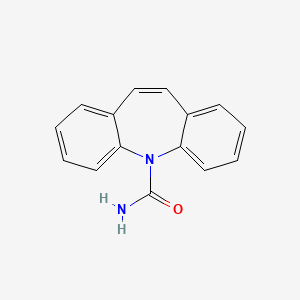
| Formula | C15H12N2O |
|---|---|
| Molecular weight | 236.27 g/mol |
| IUPAC name | benzo[b][1]benzazepine-11-carboxamide |
| CAS | 298-46-4 |
| PubChem CID | 2554 |
| InChIKey | FFGPTBGBLSHEPO-UHFFFAOYSA-N |
| logP | 3.39 (XLogP 2.5) |
| Polar surface area | 46.33 Ų |
| H-bond acceptors / donors | 1 / 1 |
| Drug-likeness (QED) | 0.75 |
| Lipinski violations | 0 |
SMILES
NC(=O)N1c2ccccc2C=Cc2ccccc21Biology & Pharmacokinetics
Pharmacokinetics
| BBB penetrant | Yes (logBB -0.1) |
|---|
Enzyme interactions
| Enzyme | Role | Detail |
|---|---|---|
| CYP1A2 | Inhibitor | — |
| CYP1A2 | Substrate | — |
| CYP2B6 | Substrate | — |
| CYP2C19 | Substrate | — |
| CYP2C8 | Inhibitor | — |
| CYP2C9 | Inhibitor | — |
| CYP2C9 | Substrate | — |
| CYP2D6 | Substrate | — |
| CYP3A4 | Substrate | — |
Transporters
BCRP (Inhibitor)BCRP (Inhibitor)BSEP (Inhibitor)BSEP (Inhibitor)MCT1 (Inhibitor)MDR1 (Inhibitor)MRP1 (Inhibitor)MRP2 (Inhibitor)MRP3 (Inhibitor)MRP4 (Inhibitor)NTCP (Inhibitor)OATP1B1 (Inhibitor)OATP1B1 (Inhibitor)OATP1B3 (Inhibitor)OATP1B3 (Inhibitor)OATP2B1 (Inhibitor)OCT1 (Inhibitor)OCTN1 (Inhibitor)OCTN2 (Inhibitor)P-gp (Inhibitor)BCRP (Substrate)MDR1 (Substrate)MRP2 (Substrate)OATP1A2 (Substrate)P-gp (Substrate)
Drug–drug interactions (100+, DDInter)
| Interacting drug | Severity | Management |
|---|---|---|
| Abemaciclib | major | |
| Abiraterone | major | |
| Acalabrutinib | major | |
| Alpelisib | major | |
| Apixaban | major | |
| Apremilast | major | |
| Artemether | major | |
| Avatrombopag | major | |
| Axitinib | major | |
| Bortezomib | major | |
| Bosutinib | major | |
| Brigatinib | major | |
| Cabozantinib | major | |
| Ceritinib | major | |
| Cladribine | major | |
| Clarithromycin | major | |
| Cobicistat | major | |
| Cobimetinib | major | |
| Copanlisib | major | |
| Crizotinib | major | |
| Cyclosporine | major | |
| Darolutamide | major | |
| Dasatinib | major | |
| Deferiprone | major | |
| Deflazacort | major | |
| Eliglustat | major | |
| Encorafenib | major | |
| Entrectinib | major | |
| Erythromycin | major | |
| Ethinylestradiol | major | |
| Everolimus | major | |
| Fedratinib | major | |
| Fostamatinib | major | |
| Gilteritinib | major | |
| Glasdegib | major | |
| Hydrocodone | major | |
| Ibrutinib | major | |
| Idelalisib | major | |
| Imatinib | major | |
| Irinotecan | major |
Showing 40 of 100+.
Registered Products (14)
| Brand | Form / strength | Pack | Agent | Citizen (JOD) |
|---|---|---|---|---|
| CARBATOL 200 TABS. | Tablet 200 mg | 30 tab pack varies | Dar Al Dawa Development and Investment Co Ltd/Jordan | 1.950 |
| Carbazine 200 Tablets | Tablet 200 mg | 30 tab pack varies | United Pharmaceutical Manufacturing Co. Ltd. | 1.950 |
| Neurotop | Tablet 200 mg | 50 tab | Kurdi Drug Store | 2.980 |
| Neurotop Retard tab | Tablet 400 mg | 30 tab pack varies | Hayat Pharmaceutical Industries CO.PLC/JORDAN | 4.380 |
| Tegretol CR Tablet | Tablet 200 mg | 50 tab | The Jordan Drugstore Co | 4.900 |
| Tegretol Suspension | Suspension 100 mg/5 ml | 250 ml | The Jordan Drugstore Co | 5.810 |
| Tegretol CR | Tablet 400 mg | 30 tab | The Jordan Drugstore Co | 5.930 |
| Neurotop Retard tab | Tablet 300 mg | 50 tab | Kurdi Drug Store | 8.250 |
| Neurotop Retard tab | Tablet 600 mg | 30 tab pack varies | Kurdi Drug Store | 8.950 |
| Neurotop Retard tab | Tablet 400 mg | 100 tab pack varies | Hayat Pharmaceutical Industries CO.PLC/JORDAN | 13.720 |
| Neurotop Retard tab | Tablet 600 mg | 50 tab pack varies | Kurdi Drug Store | 14.910 |
| CARBATOL 200 TABS. | Tablet 200 mg | 500 tab pack varies | Dar Al Dawa Development and Investment Co Ltd/Jordan | 26.820 |
| Carbazine 200 Tablets | Tablet 200 mg | 500 tab pack varies | United Pharmaceutical Manufacturing Co. Ltd. | 29.000 |
| Carbazine 200 Tablets | Tablet 200 mg | 1000 tab pack varies | United Pharmaceutical Manufacturing Co. Ltd. | 55.220 |