Bortezomib
JFDA label: Velcade Injection
Mechanism of Action
Inhibitor of 26S proteasome — 26S proteasome inhibitor
| Target | Action | Gene / class |
|---|---|---|
| 26S proteasome efficacy | INHIBITOR |
Indications
Approved
- Mantle cell lymphoma
- Multiple myeloma
Off-label
- Antibody-mediated rejection (AMR) in cardiac transplantation (treatment)
- Cutaneous T-cell lymphomas (mycosis fungoides), relapsed/refractory
- Follicular lymphoma, relapsed/refractory
- Peripheral T-cell lymphoma, relapsed/refractory
- Systemic light-chain amyloidosis
- Waldenström macroglobulinemia, relapsed/refractory
Contraindications
Source: Lexicomp
- Hypersensitivity (excluding local reactions) to bortezomib, boron, boric acid (generic product), glycine (generic product), mannitol (Velcade), or any component of the formulation Absolute
- administration via the intrathecal route Absolute
Adverse Reactions
Cardiac disorders (32)
Not Known acute pulmonary edema · aggravated atrial fibrillation · angina pectoris · atrial flutter · atrioventricular block · bradycardia · cardiac disease · cardiac failure · cardiogenic shock · cerebrovascular accident · deep vein thrombosis · edema · embolism (peripheral) · facial edema · hemorrhagic stroke · hypertension · Hypotension · ischemic heart disease · myocardial infarction · pericardial effusion · pericarditis · peripheral edema · phlebitis · portal vein thrombosis · pulmonary edema · pulmonary embolism · septic shock · sinoatrial arrest · subdural hematoma · torsades de pointes · transient ischemic attacks · ventricular tachycardia
Nervous system disorders (1)
Not Known Peripheral neuropathy, pruritus, urticaria
Renal and urinary disorders (10)
Not Known Bilateral hydronephrosis · Bladder spasm · hematuria · hemorrhagic cystitis · nephrolithiasis · proliferative glomerulonephritis · renal failure · urinary incontinence · urinary retention · urinary tract infection
Blood and lymphatic system disorders (3)
Not Known anemia (12% to 23%; grade 3: 4% to 6%; grade 4: Hepatic: Ascites, hepatic failure, hepatic hemorrhage, hepatitis, hyperbilirubinemia · neutropenia · Thrombocytopenia
Immune system disorders (4)
Not Known Anaphylaxis · angioedema · hypersensitivity angiitis · hypersensitivity reaction
Metabolism and nutrition disorders (11)
Not Known amyloid heart disease · Dehydration · hyperglycemia (diabetic patients) · hyperkalemia · hypernatremia · hyperuricemia · hypocalcemia · hypoglycemia (diabetic patients) · hypokalemia · hyponatremia · weight loss
Gastrointestinal disorders (23)
Not Known abdominal pain · anorexia · cholestasis · constipation · decreased appetite · Diarrhea · duodenitis (hemorrhagic) · dysphagia · fecal impaction · gastritis (hemorrhagic) · gastroenteritis · gastroesophageal reflux disease · hematemesis · intestinal obstruction · intestinal perforation · melena · nausea · oral candidiasis · pancreatitis · paralytic ileus · peritonitis · stomatitis · vomiting
Musculoskeletal and connective tissue disorders (7)
Not Known arthralgia · back pain · bone fracture · limb pain · myalgia · ostealgia · Weakness
Eye disorders (4)
Not Known Blurred vision · conjunctival infection · conjunctival irritation · diplopia
Ear and labyrinth disorders (1)
Not Known Auditory impairment
Infections and infestations (6)
Not Known aspergillosis · bacteremia · herpes simplex infection · Herpes zoster · listeriosis · toxoplasmosis
General disorders and administration site conditions (4)
Not Known catheter infection · Fever · Injection site reaction · irritation at injection site
Respiratory, thoracic and mediastinal disorders (19)
Not Known adult respiratory distress syndrome · aspiration pneumonia · atelectasis · bronchitis · chronic obstructive pulmonary disease (exacerbation) · cough · Dyspnea · epistaxis · hemoptysis · hypoxia · laryngeal edema · nasopharyngitis · pleural effusion · pneumonia · pneumonitis · pulmonary hypertension · pulmonary infiltrates (including diffuse) · respiratory tract infection · sinusitis
Dosing
Source: Lexicomp
Warnings & Precautions
Source: Lexicomp
Bone marrow suppression
Hematologic toxicity, including grade 3 and 4 neutropenia and thrombocytopenia may occur; risk is increased in patients with pretreatment platelet counts 3. Monitor frequently throughout treatment; may require treatment interruption, or dosage reduction. Management with platelet transfusions, supportive care, and/or myeloid growth factors may be necessary. Nadirs generally occur following the last dose of a cycle and recover prior to the next cycle. Hemorrhage (gastrointestinal and intracerebral) due to low platelet count has been observed. Neutropenic fever has been observed.
Cardiovascular effects
Acute development or exacerbation of HF and new onset decreased left ventricular ejection fraction (LVEF) have been reported with bortezomib; some cases have occurred in patients without risk factors for HF and/or decreased LVEF. Monitor closely in patients with risk factors for HF or existing heart disease. Isolated case of QTc prolongation have been reported with bortezomib.
Gastrointestinal effects
Nausea, vomiting, diarrhea, or constipation may occur; may require antiemetics or antidiarrheals. Ileus may occur. Administer fluid and electrolytes to prevent dehydration; interrupt therapy for severe symptoms.
Hepatotoxicity
Acute liver failure has been reported (rarely) in patients receiving multiple concomitant medications and with serious underlying conditions. Hepatitis, transaminase increases, and hyperbilirubinemia have also been reported; interrupt therapy to assess reversibility. Use caution in patients with hepatic dysfunction; reduced initial doses are recommended for moderate and severe hepatic impairment (exposure is increased); closely monitor for toxicities. Limited data exists for patients that have been rechallenged.
Herpes reactivation
Herpes (zoster and simplex) reactivation has been reported with bortezomib; consider antiviral prophylaxis during therapy.
Hypersensitivity
Anaphylactic reaction, drug hypersensitivity, immune complex mediated hypersensitivity, angioedema, and laryngeal edema have been reported with bortezomib.
Hypotension
Bortezomib may cause hypotension (including postural and orthostatic); use caution with dehydration, history of syncope, or medications associated with hypotension (may require adjustment of antihypertensive medication, hydration, and mineralocorticoids and/or sympathomimetics).
Peripheral neuropathy
Bortezomib may cause or worsen peripheral neuropathy (usually sensory but may be mixed sensorimotor); risk may be increased with previous use of neurotoxic agents or preexisting peripheral neuropathy (in patients with preexisting neuropathy, use only after risk versus benefit assessment); monitor for signs and symptoms; adjustment of dose and/or schedule may be required. The incidence of grades 2 and 3 peripheral neuropathy may be lower with SubQ route (compared to IV); consider SubQ administration in patients with preexisting or at high risk for peripheral neuropathy. The majority of patients with ≥ grade 2 peripheral neuropathy have improvement in or resolution of symptoms with dose adjustments or discontinuation. In a study of elderly patients receiving a weekly bortezomib schedule with combination chemotherapy, the incidence of peripheral neuropathy was significantly reduced without an effect on outcome (Boccadoro 2010; Palumbo 2009). The generic product (by Fresenius Kabi) is NOT approved for subcutaneous administration.
Posterior reversible leukoencephalopathy syndrome
Posterior reversible leukoencephalopathy syndrome (PRES, formerly RPLS) has been reported (rarely). Symptoms of PRES include confusion, headache, hypertension, lethargy, seizure, blindness and/or other vision, or neurologic disturbances; discontinue bortezomib if PRES occurs. MRI is recommended to confirm PRES diagnosis. The safety of reinitiating bortezomib in patients previously experiencing PRES is unknown.
Progressive multifocal leukoencephalopathy
Progressive multifocal leukoencephalopathy (PML) has been rarely observed; evaluate promptly any new onset or worsening neurologic symptoms (eg, confusion, loss of balance, vision disturbances, reduced strength or weakness in an arm/leg).
Pulmonary toxicity
Pulmonary disorders (some fatal) including pneumonitis, interstitial pneumonia, lung infiltrates, and acute respiratory distress syndrome (ARDS) have been reported. Pulmonary hypertension (without left heart failure or significant pulmonary disease) has been reported rarely. Promptly evaluate with new or worsening cardiopulmonary symptoms; therapy interruption may be required.
Tumor lysis syndrome
Tumor lysis syndrome has been reported with bortezomib; risk is increased in patients with high tumor burden prior to treatment; monitor closely. Disease-related concerns:
Diabetes
Hyper- and hypoglycemia may occur in diabetic patients receiving oral hypoglycemics; monitor; may require adjustment of diabetes medications. Concurrent drug therapy issues:
Drug-drug/drug-food interactions
Potentially significant interactions may exist, requiring dose or frequency adjustment, additional monitoring, and/or selection of alternative therapy. Consult drug interactions database for more detailed information. Coadministration of strong CYP3A4 inhibitors may increase bortezomib exposure; monitor for toxicity and consider dose reduction if concurrent therapy cannot be avoided. Efficacy may be reduced when administered with strong CYP3A4 inducers; concomitant use is not recommended. Other warnings/precautions:
Appropriate administration
For SubQ (Velcade only) or IV administration only. Intrathecal administration is contraindicated; inadvertent intrathecal administration has resulted in death. Bortezomib should NOT be prepared during the preparation of any intrathecal medications. After preparation, keep bortezomib in a location away from the separate storage location recommended for intrathecal medications. Bortezomib should NOT be delivered to the patient at the same time with any medications intended for central nervous system administration. The reconstituted concentrations for IV and SubQ administration are different; use caution when calculating the volume for each route and dose. The manufacturer provides stickers to facilitate identification of the route for reconstituted vials. The generic product (by Fresenius Kabi) is approved for IV administration only.
Pregnancy & Lactation
Pregnancy
Based on the mechanism of action and on findings in animal reproduction studies, bortezomib may cause fetal harm if administered during pregnancy. Verify pregnancy status in women of reproductive potential prior to initiating therapy; women of reproductive potential should avoid becoming pregnant during bortezomib treatment. Females and males of reproductive potential should use effective contraception during and for at least 2 months following bortezomib treatment (refer to specific product labeling for details). Bortezomib may potentially affect male or female fertility (based on the mechanism of action).
Lactation
It is not known if bortezomib is present in breast milk. The manufacturer recommends lactating women avoid breastfeeding during and for 2 months following bortezomib treatment.
Monitoring
| Clinical pearl | CBC with differential and platelets (monitor frequently throughout therapy); liver function tests (in patients with existing hepatic impairment); verify pregnancy status in women of reproductive potential prior to therapy initiation; signs/symptoms of peripheral neuropathy, dehydration, hypotension, PRES, or PML; renal function, baseline chest x-ray and then periodic pulmonary function testing (with new or worsening pulmonary symptoms) |
|---|
Chemistry & Properties
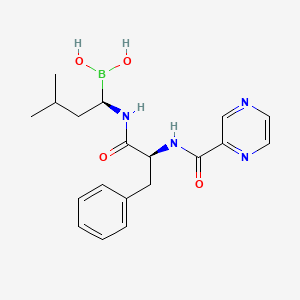
| Formula | C19H25BN4O4 |
|---|---|
| Molecular weight | 384.25 g/mol |
| IUPAC name | [(1R)-3-methyl-1-[[(2S)-3-phenyl-2-(pyrazine-2-carbonylamino)propanoyl]amino]butyl]boronic acid |
| CAS | 179324-69-7 |
| PubChem CID | 387447 |
| InChIKey | GXJABQQUPOEUTA-RDJZCZTQSA-N |
SMILES
CC(C)C[C@H](NC(=O)[C@H](Cc1ccccc1)NC(=O)c1cnccn1)B(O)OBiology & Pharmacokinetics
Pharmacokinetics predicted
| Bioavailability | 70.0% |
|---|---|
| Half-life | 1.394 h |
| Volume of distribution | 11.237 L/kg |
| Protein binding | 86.2% |
| BBB penetrant | No |
Enzyme interactions
| Enzyme | Role | Detail |
|---|---|---|
| CYP1A2 | Substrate | — |
| CYP2C9 | Substrate | — |
| CYP2D6 | Substrate | — |
| CYP3A4 | Substrate | — |
Receptor binding (top 1)
| Target | Action | Affinity |
|---|---|---|
| proteasome 20S subunit beta 5 (PSMB5) | Inhibitor | pIC50 7.7 |
Transporters
BCRP (Inhibitor)BSEP (Inhibitor)BSEP (Inhibitor)MDR1 (Inhibitor)MRP1 (Inhibitor)MRP2 (Inhibitor)MRP3 (Inhibitor)MRP4 (Inhibitor)NTCP (Inhibitor)OATP1B1 (Inhibitor)OATP1B3 (Inhibitor)OATP1B3 (Inhibitor)P-gp (Inhibitor)MDR1 (Substrate)P-gp (Substrate)
Drug–drug interactions (100+, DDInter)
| Interacting drug | Severity | Management |
|---|---|---|
| Adalimumab | major | |
| Apalutamide | major | |
| Bacillus calmette-guerin substrain tice live antigen | major | |
| Baricitinib | major | |
| Carbamazepine | major | |
| Certolizumab pegol | major | |
| Cladribine | major | |
| Clozapine | major | |
| Deferiprone | major | |
| Enzalutamide | major | |
| Etanercept | major | |
| Fingolimod | major | |
| Fosphenytoin | major | |
| Golimumab | major | |
| Infliximab | major | |
| Leflunomide | major | |
| Lomitapide | major | |
| Lumacaftor | major | |
| Measles virus vaccine live attenuated | major | |
| Mipomersen | major | |
| Mitotane | major | |
| Mumps virus strain B level jeryl lynn live antigen | major | |
| Natalizumab | major | |
| Ozanimod | major | |
| Pexidartinib | major | |
| Phenobarbital | major | |
| Phenytoin | major | |
| Primidone | major | |
| Rifabutin | major | |
| Rifampicin | major | |
| Rifapentine | major | |
| Rotavirus vaccine | major | |
| Rubella virus vaccine | major | |
| Samarium (153Sm) lexidronam | major | |
| Siponimod | major | |
| Smallpox (Vaccinia) Vaccine, Live | major | |
| St. John's Wort | major | |
| Talimogene laherparepvec | major | |
| Teriflunomide | major | |
| Tofacitinib | major |
Showing 40 of 100+.
Registered Products (8)
| Brand | Form / strength | Pack | Agent | Citizen (JOD) |
|---|---|---|---|---|
| BORTEN 3.5 mg Vial for Injection | Powder for Injection 3.5 mg | 1 vial | Omicron Pharma | — |
| Bortezomib NEAPOLIS | Vial Bortezomib 3.5 mg | 1 vial | Professional Drug Store | — |
| Brotex 3.5mg Powder For Solution For Inj | Powder for Injection 3.5 mg | 1 vial | MS PHARMA/JORDAN | — |
| Mibzo | Vial 3.5 mg | 1 vial pack varies | Manar Drug Store | — |
| Mibzo | Tablet 3.5 mg | 10 Via/1 BOX pack varies | Manar Drug Store | — |
| Veelbore 3.5 mg Powder for solution | Solution 3.5 mg | 1 vial | Hikma Pharmaceuticals Co.Ltd/Jordan | — |
| Velcade Injection | Powder for Injection 3.5 mg | 1 vial | Adatco Drug Store | — |
| atrenova | Vial 3.5 mg | 1 vial | Dar Al Dawa Development and Investment Co Ltd/Jordan | — |