Ciprofloxacin
🧬 Cross-allergy: Fluoroquinolones
JFDA label: CIPRODAR 250 TABS.
- neurotoxicity — ChEMBL drug_warning (Black Box Warning) | United States
- musculoskeletal toxicity — ChEMBL drug_warning (Black Box Warning) | United States
- SERIOUS ADVERSE REACTIONS INCLUDING TENDINITIS, TENDON RUPTURE, PERIPHERAL NEUROPATHY, CENTRAL NERVOUS SYSTEM EFFECTS AND EXACERBATION OF MYASTHENIA GRAVIS Fluoroquinolones, including ciprofloxacin, h
Mechanism of Action
Inhibitor of Bacterial DNA gyrase — Bacterial DNA gyrase inhibitor; Inhibitor of Topoisomerase IV — Topoisomerase IV inhibitor
| Target | Action | Gene / class |
|---|---|---|
| Bacterial DNA gyrase efficacy | INHIBITOR | |
| Topoisomerase IV efficacy | INHIBITOR |
Indications
Approved
- Bacterial Infections — bacterial disease
- Bronchitis, Chronic — chronic bronchitis
- Cystitis — cystitis
- Eye Infections — eye infection
- Gonorrhea — gonorrhea
- Infections — infection
- Intraabdominal Infections — infection
- Otitis Externa — otitis externa
- Prostatitis — prostatitis
- Pyelonephritis — pyelonephritis
- Sinusitis — sinusitis
- Typhoid Fever — typhoid fever
- Urinary Tract Infections — urinary tract infection
Off-label
- Amyotrophic Lateral Sclerosis
- Anthrax
- Breast Neoplasms
- Bronchiectasis
- Cataract
- Communicable Diseases
- Corneal Ulcer
- Crohn Disease
- Cystic Fibrosis
- Diarrhea
- Digestive System Diseases
- Endophthalmitis
- Fever
- Hypertriglyceridemia
- Kidney Calculi
- Leukemia, Lymphocytic, Chronic, B-Cell
- Lipid Metabolism Disorders
- Liver Abscess
- Neutropenia
- Otitis Media
- Pancreatic Neoplasms
- Peritonitis
- Plague
- Pneumonia
- Prostatic Neoplasms, Castration-Resistant
- Pulmonary Disease, Chronic Obstructive
- Sepsis
- Urinary Bladder Neoplasms
- Urolithiasis
Antimicrobial Spectrum
Expected / intrinsic spectrum (EUCAST breakpoints & labels) — not local resistance. Source: EUCAST v16 · curated · openfda-label.
Bacteria
| Organism | Activity | MIC |
|---|---|---|
| Acinetobacter lwoffi | Active | — |
| Acinetobacter spp. | Susceptible | 0.001 mg/L |
| Aeromonas spp. | Susceptible | 0.25 mg/L |
| Bacillus anthracis | Active | — |
| Bacillus spp. | Susceptible | 0.001 mg/L |
| Bacteroides fragilis | Active | — |
| Campylobacter jejuni | Active | — |
| Campylobacter jejuni/coli | Susceptible | 0.5 mg/L |
| Campylobacter jejuni/coli | Susceptible | 0.001 mg/L |
| Citrobacter freundii | Active | — |
| Citrobacter koseri | Active | — |
| Corynebacterium spp. | Susceptible | 0.001 mg/L |
| Enterobacter aerogenes | Active | — |
| Enterobacter cloacae | Active | — |
| Enterobacterales | Susceptible | 0.125 mg/L |
| Enterococcus faecalis | Active | — |
| Enterococcus spp. | Susceptible | 4.0 mg/L |
| Escherichia coli | Susceptible | 0.25 mg/L |
| Haemophilus influenzae | Susceptible | 0.5 mg/L |
| Haemophilus influenzae | Susceptible | 0.03 mg/L |
| Haemophilus parainfluenzae | Active | — |
| Klebsiella oxytoca | Active | — |
| Klebsiella pneumoniae | Susceptible | 0.25 mg/L |
| Legionella pneumophila | Active | — |
| Moraxella catarrhalis | Susceptible | 0.125 mg/L |
| Morganella morganii | Active | — |
| Neisseria gonorrhoeae | Susceptible | 0.03 mg/L |
| Neisseria gonorrhoeae | Susceptible | 0.03 mg/L |
| Pasteurella multocida | Susceptible | 0.06 mg/L |
| Proteus mirabilis | Active | — |
| Proteus vulgaris | Active | — |
| Providencia rettgeri | Active | — |
| Providencia stuartii | Active | — |
| Pseudomonas aeruginosa | Susceptible | 0.5 mg/L |
| Pseudomonas aeruginosa | Susceptible | 0.001 mg/L |
| Salmonella enteritidis | Active | — |
| Salmonella spp. | Susceptible | 0.06 mg/L |
| Salmonella typhi | Active | — |
| Serratia marcescens | Active | — |
| Shigella boydii | Active | — |
| Shigella dysenteriae | Active | — |
| Shigella flexneri | Active | — |
| Shigella sonnei | Active | — |
| Staphylococcus aureus | Susceptible | 1.0 mg/L |
| Staphylococcus epidermidis | Active | — |
| Staphylococcus haemolyticus | Active | — |
| Staphylococcus hominis | Active | — |
| Staphylococcus saprophyticus | Active | — |
| Streptococcus pneumoniae | Active | — |
| Streptococcus pyogenes | Active | — |
| Vibrio cholerae | Active | — |
| Vibrio parahaemolyticus | Active | — |
| Vibrio spp. | Susceptible | 0.25 mg/L |
| Vibrio vulnificus | Active | — |
| Yersinia enterocolitica | Active | — |
| Yersinia pestis | Active | — |
| Campylobacter jejuni/coli | Resistant | 0.5 mg/L |
| Escherichia coli | Resistant | 1.0 mg/L |
| Klebsiella pneumoniae | Resistant | 1.0 mg/L |
| Neisseria gonorrhoeae | Resistant | 0.06 mg/L |
| Pseudomonas aeruginosa | Resistant | 1.0 mg/L |
| Salmonella spp. | Resistant | 0.5 mg/L |
| Staphylococcus aureus | Resistant | 1.0 mg/L |
Class profile
| gramStatus | Gram- |
|---|---|
| spectrumBreadth | Broad |
| atypicalCoverage | No |
| isBactericidal | 1 |
| moaCategory | DNA synthesis inhibitor (topoisomerase II/IV) |
| pdIndex | Concentration-dependent |
| postAntibioticEffect | Prolonged |
| mrsaCoverage | 0 |
| resistanceMechanisms | Target site mutations (gyrA,gyrB,parC,parE),Active efflux,Decreased permeability,Plasmid-mediated (qnr genes) |
Contraindications
Source: Curated · openFDA
- Children < 18 years (unless for specific indications e.g. anthrax, complicated UTI) Absolute
- History of tendon disorders related to fluoroquinolone use Absolute
- Known hypersensitivity to ciprofloxacin tablets or other quinolones (4.1 , 5.6 , 5.7) Concomitant administration with tizanidine (4.2) 4.1 Hypersensitivity Ciprofloxacin tablets are contraindicated in persons with a history of hypersensitivity to ciprofloxacin, any member of the quinolone class of antibacterials, or any of the product components [see Warnings and Precautions (5.7) ]. 4.2 Tizanidine Concomitant administration with tizanidine is contraindicated [see Drug Interactions (7) ]. Absolute
Adverse Reactions
Cardiac disorders (1)
Uncommon QT prolongation
Nervous system disorders (2)
Uncommon CNS effects (dizziness, confusion, seizures) · Peripheral neuropathy
Hepatobiliary disorders (1)
Uncommon Elevated liver enzymes
Gastrointestinal disorders (2)
Common Diarrhoea · Nausea
Skin and subcutaneous tissue disorders (1)
Uncommon Photosensitivity
Musculoskeletal and connective tissue disorders (1)
Uncommon Tendinitis / tendon rupture
Infections and infestations (1)
Uncommon Clostridioides difficile colitis
Dosing
Source: openFDA
Warnings & Precautions
Source: openFDA
Boxed Warning
SERIOUS ADVERSE REACTIONS INCLUDING TENDINITIS, TENDON RUPTURE, PERIPHERAL NEUROPATHY, CENTRAL NERVOUS SYSTEM EFFECTS AND EXACERBATION OF MYASTHENIA GRAVIS Fluoroquinolones, including ciprofloxacin, have been associated with disabling and potentially irreversible serious adverse reactions that have occurred together [see Warnings and Precautions (5.1) ] including: Tendinitis and tendon rupture [see Warnings and Precautions (5.2) ] Peripheral neuropathy [see Warnings and Precautions (5.3) ] Central nervous system effects [see Warnings and Precautions (5.4) ] Discontinue ciprofloxacin immediately and avoid the use of fluoroquinolones, including ciprofloxacin, in patients who experience any of these serious adverse reactions [see Warnings and Precautions (5.1) ]. Fluoroquinolones, including ciprofloxacin, may exacerbate muscle weakness in patients with myasthenia gravis. Avoid ciprofloxacin in patients with known history of myasthenia gravis [see Warnings and Precautions (5.5) ]. Because fluoroquinolones, including ciprofloxacin, have been associated with serious adverse reactions [see Warnings and Precautions (5.1 to 5.16) ], reserve ciprofloxacin for use in patients who have no alternative treatment options for the following indications: Acute exacerbation of chronic bronchitis [see Indications and Usage (1.10) ] Acute uncomplicated cystitis [see Indications and Usage (1.11) ] Acute sinusitis [see Indications and Usage (1.12) ] WARNING: SERIOUS ADVERSE REACTIONS INCLUDING TENDINITIS, TENDON RUPTURE, PERIPHERAL NEUROPATHY, CENTRAL NERVOUS SYSTEM EFFECTS AND EXACERBATION OF MYASTHENIA GRAVIS See full prescribing information for complete boxed warning. Fluoroquinolones, including ciprofloxacin, have been associated with disabling and potentially irreversible serious adverse reactions that have occurred together (5.1) , including: Tendinitis and tendon rupture (5.2) Peripheral neuropathy (5.3) Central nervous system effects (5.4) Discontinue ciprofloxacin immediately and avoid the use of fluoroquinolones, including ciprofloxacin, in patients who experience any of these serious adverse reactions (5.1) Fluoroquinolones, including ciprofloxacin, may exacerbate muscle weakness in patients with myasthenia gravis. Avoid ciprofloxacin in patients with known history of myasthenia gravis. (5.5) Because fluoroquinolones, including ciprofloxacin, have been associated with serious adverse reactions (5.1 to 5.16) , reserve ciprofloxacin for use in patients who have no alter
Warnings & Precautions
Hypersensitivity and other serious reactions: Serious and sometimes fatal reactions (for example, anaphylactic reactions) may occur after the first or subsequent doses of ciprofloxacin. Discontinue ciprofloxacin at the first sign of skin rash, jaundice or any sign of hypersensitivity. (4.1 , 5.6 , 5.7) Hepatotoxicity: Discontinue immediately if signs and symptoms of hepatitis occur. (5.8) Clostridioides difficile -associated diarrhea: Evaluate if colitis occurs. (5.11) QT Prolongation: Prolongation of the QT interval and isolated cases of torsade de pointes have been reported. Avoid use in patients with known prolongation, those with hypokalemia, and with other drugs that prolong the QT interval. (5.12 , 7 , 8.5)
Disabling and Potentially Irreversible Serious Adverse Reactions Inclu
Disabling and Potentially Irreversible Serious Adverse Reactions Including Tendinitis and Tendon Rupture, Peripheral Neuropathy, and Central Nervous System Effects Fluoroquinolones, including ciprofloxacin, have been associated with disabling and potentially irreversible serious adverse reactions from different body systems that can occur together in the same patient. Commonly seen adverse reactions include tendinitis, tendon rupture, arthralgia, myalgia, peripheral neuropathy, and central nervous system effects (hallucinations, anxiety, depression, insomnia, severe headaches, and confusion). These reactions can occur within hours to weeks after starting ciprofloxacin. Patients of any age or without pre-existing risk factors have experienced these adverse reactions [see Warnings and Precautions (5.2 , 5.3 , 5.4) ]. Discontinue ciprofloxacin immediately at the first signs or symptoms of any serious adverse reaction. In addition, avoid the use of fluoroquinolones, including ciprofloxacin, in patients who have experienced any of these serious adverse reactions associated with fluoroquinolones.
Tendinitis and Tendon Rupture Fluoroquinolones, including ciprofloxaci
Tendinitis and Tendon Rupture Fluoroquinolones, including ciprofloxacin, have been associated with an increased risk of tendinitis and tendon rupture in all ages [see Warnings and Precautions (5.1) and Adverse Reactions (6.2) ]. This adverse reaction most frequently involves the Achilles tendon, and has also been reported with the rotator cuff (the shoulder), the hand, the biceps, the thumb, and other tendons. Tendinitis or tendon rupture can occur, within hours or days of starting ciprofloxacin, or as long as several months after completion of fluoroquinolone therapy. Tendinitis and tendon rupture can occur bilaterally. The risk of developing fluoroquinolone-associated tendinitis and tendon rupture is increased in patients over 60 years of age, in patients taking corticosteroid drugs, and in patients with kidney, heart or lung transplants. Other factors that may independently increase the risk of tendon rupture include strenuous physical activity, renal failure, and previous tendon disorders such as rheumatoid arthritis. Tendinitis and tendon rupture have also occurred in patients taking fluoroquinolones who do not have the above risk factors. Discontinue ciprofloxacin immediately if the patient experiences pain, swelling, inflammation or rupture of a tendon. Avoid fluoroquinolones, including ciprofloxacin, in patients who have a history of tendon disorders or have experienced tendinitis or tendon rupture [see Adverse Reactions (6.2) ].
Peripheral Neuropathy Fluoroquinolones, including ciprofloxacin, have
Peripheral Neuropathy Fluoroquinolones, including ciprofloxacin, have been associated with an increased risk of peripheral neuropathy. Cases of sensory or sensorimotor axonal polyneuropathy affecting small and/or large axons resulting in paresthesias, hypoesthesias, dysesthesias and weakness have been reported in patients receiving fluoroquinolones, including ciprofloxacin. Symptoms may occur soon after initiation of ciprofloxacin and may be irreversible in some patients [see Warnings and Precautions (5.1) and Adverse Reactions (6.1 , 6.2) ]. Discontinue ciprofloxacin immediately if the patient experiences symptoms of peripheral neuropathy including pain, burning, tingling, numbness, and/or weakness, or other alterations in sensations including light touch, pain, temperature, position sense and vibratory sensation, and/or motor strength in order to minimize the development of an irreversible condition. Avoid fluoroquinolones, including ciprofloxacin, in patients who have previously experienced peripheral neuropathy [see Adverse Reactions (6.1 , 6.2) ].
Central Nervous System Effects Psychiatric Adverse Reactions Fluoroqui
Central Nervous System Effects Psychiatric Adverse Reactions Fluoroquinolones, including ciprofloxacin, have been associated with an increased risk of psychiatric adverse reactions, including: toxic psychosis, psychotic reactions progressing to suicidal ideations/thoughts, hallucinations, or paranoia; depression, or self-injurious behavior such as attempted or completed suicide; anxiety, agitation, or nervousness; confusion, delirium, disorientation, or disturbances in attention; insomnia or nightmares; memory impairment. These reactions may occur following the first dose. Advise patients receiving ciprofloxacin to inform their healthcare provider immediately if these reactions occur, discontinue the drug, and institute appropriate care. Central Nervous System Adverse Reactions Fluoroquinolones, including ciprofloxacin, have been associated with an increased risk of seizures (convulsions), increased intracranial pressure (pseudotumor cerebri), dizziness, and tremors. Ciprofloxacin, like other fluoroquinolones, is known to trigger seizures or lower the seizure threshold. Cases of status epilepticus have been reported. As with all fluoroquinolones, use ciprofloxacin with caution in epileptic patients and patients with known or suspected CNS disorders that may predispose to seizures or lower the seizure threshold (for example, severe cerebral arteriosclerosis, previous history of convulsion, reduced cerebral blood flow, altered brain structure, or stroke), or in the presence of other risk factors that may predispose to seizures or lower the seizure threshold (for example, certain drug therapy, renal dysfunction). If seizures occur, discontinue ciprofloxacin and institute appropriate care [see Adverse Reactions (6.1) and Drug Interactions (7) ].
Exacerbation of Myasthenia Gravis Fluoroquinolones, including ciproflo
Exacerbation of Myasthenia Gravis Fluoroquinolones, including ciprofloxacin, have neuromuscular blocking activity and may exacerbate muscle weakness in patients with myasthenia gravis. Postmarketing serious adverse reactions, including deaths and requirement for ventilatory support, have been associated with fluoroquinolone use in patients with myasthenia gravis. Avoid ciprofloxacin in patients with known history of myasthenia gravis [see Adverse Reactions (6.2) ].
Other Serious and Sometimes Fatal Adverse Reactions Other serious and
Other Serious and Sometimes Fatal Adverse Reactions Other serious and sometimes fatal adverse reactions, some due to hypersensitivity, and some due to uncertain etiology, have been reported in patients receiving therapy with quinolones, including ciprofloxacin. These events may be severe and generally occur following the administration of multiple doses. Clinical manifestations may include one or more of the following: Fever, rash, or severe dermatologic reactions (for example, toxic epidermal necrolysis, Stevens-Johnson syndrome); Vasculitis; arthralgia; myalgia; serum sickness; Allergic pneumonitis; Interstitial nephritis; acute renal insufficiency or failure; Hepatitis; jaundice; acute hepatic necrosis or failure; Anemia, including hemolytic and aplastic; thrombocytopenia, including thrombotic thrombocytopenic purpura; leukopenia; agranulocytosis; pancytopenia; and/or other hematologic abnormalities. Discontinue ciprofloxacin immediately at the first appearance of a skin rash, jaundice, or any other sign of hypersensitivity and supportive measures instituted [see Adverse Reactions (6.1 , 6.2) ].
Hypersensitivity Reactions Serious and occasionally fatal hypersensiti
Hypersensitivity Reactions Serious and occasionally fatal hypersensitivity (anaphylactic) reactions, some following the first dose, have been reported in patients receiving fluoroquinolone therapy, including ciprofloxacin. Some reactions were accompanied by cardiovascular collapse, acute myocardial ischemia with or without myocardial infarction, loss of consciousness, tingling, pharyngeal or facial edema, dyspnea, urticaria, and itching. Only a few patients had a history of hypersensitivity reactions. Serious anaphylactic reactions require immediate emergency treatment with epinephrine and other resuscitation measures, including oxygen, intravenous fluids, intravenous antihistamines, corticosteroids, pressor amines, and airway management, including intubation, as indicated [see Adverse Reactions (6.1 , 6.2) ] .
Hepatotoxicity Cases of severe hepatotoxicity, including hepatic necro
Hepatotoxicity Cases of severe hepatotoxicity, including hepatic necrosis, life-threatening hepatic failure, and fatal events, have been reported with ciprofloxacin. Acute liver injury is rapid in onset (range 1 to 39 days), and is often associated with hypersensitivity. The pattern of injury can be hepatocellular, cholestatic, or mixed. Most patients with fatal outcomes were older than 55 years old. In the event of any signs and symptoms of hepatitis (such as anorexia, jaundice, dark urine, pruritus, or tender abdomen), discontinue treatment immediately. There can be a temporary increase in transaminases, alkaline phosphatase, or cholestatic jaundice, especially in patients with previous liver damage, who are treated with ciprofloxacin [see Adverse Reactions (6.2 , 6.3) ].
Risk of Aortic Aneurysm and Dissection Epidemiologic studies report an
Risk of Aortic Aneurysm and Dissection Epidemiologic studies report an increased rate of aortic aneurysm and dissection within two months following use of fluoroquinolones, particularly in elderly patients. The cause for the increased risk has not been identified. In patients with a known aortic aneurysm or patients who are at greater risk for aortic aneurysms, reserve ciprofloxacin for use only when there are no alternative antibacterial treatments available.
Serious Adverse Reactions with Concomitant Theophylline Serious and fa
Serious Adverse Reactions with Concomitant Theophylline Serious and fatal reactions have been reported in patients receiving concurrent administration of ciprofloxacin and theophylline. These reactions have included cardiac arrest, seizure, status epilepticus, and respiratory failure. Instances of nausea, vomiting, tremor, irritability, or palpitation have also occurred. Although similar serious adverse reactions have been reported in patients receiving theophylline alone, the possibility that these reactions may be potentiated by ciprofloxacin cannot be eliminated. If concomitant use cannot be avoided, monitor serum levels of theophylline and adjust dosage as appropriate [see Drug Interactions (7) ].
Clostridioides difficile -Associated Diarrhea Clostridioides difficile
Clostridioides difficile -Associated Diarrhea Clostridioides difficile (C. difficile) -associated diarrhea (CDAD) has been reported with use of nearly all antibacterial agents, including ciprofloxacin, and may range in severity from mild diarrhea to fatal colitis. Treatment with antibacterial agents alters the normal flora of the colon leading to overgrowth of C. difficile . C. difficile produces toxins A and B which contribute to the development of CDAD. Hypertoxin producing isolates of C. difficile cause increased morbidity and mortality, as these infections can be refractory to antimicrobial therapy and may require colectomy. CDAD must be considered in all patients who present with diarrhea following antibacterial use. Careful medical history is necessary since CDAD has been reported to occur over two months after the administration of antibacterial agents. If CDAD is suspected or confirmed, ongoing antibacterial use not directed against C. difficile may need to be discontinued. Appropriate fluid and electrolyte management, protein supplementation, antibacterial treatment of C. difficile , and institute surgical evaluation as clinically indicated [see Adverse Reactions (6.1) ].
Prolongation of the QT Interval Some fluoroquinolones, including cipro
Prolongation of the QT Interval Some fluoroquinolones, including ciprofloxacin, have been associated with prolongation of the QT interval on the electrocardiogram and cases of arrhythmia. Cases of torsade de pointes have been reported during postmarketing surveillance in patients receiving fluoroquinolones, including ciprofloxacin. Avoid ciprofloxacin in patients with known prolongation of the QT interval, risk factors for QT prolongation or torsade de pointes (for example, congenital long QT syndrome, uncorrected electrolyte imbalance, such as hypokalemia or hypomagnesemia and cardiac disease, such as heart failure, myocardial infarction, or bradycardia), and patients receiving Class IA antiarrhythmic agents (quinidine, procainamide), or Class III antiarrhythmic agents (amiodarone, sotalol), tricyclic antidepressants, macrolides, and antipsychotics. Elderly patients may also be more susceptible to drug-associated effects on the QT interval [see Adverse Reactions (6.2) , Use in Specific Populations (8.5) ].
Musculoskeletal Disorders in Pediatric Patients and Arthropathic Effec
Musculoskeletal Disorders in Pediatric Patients and Arthropathic Effects in Animals Ciprofloxacin is indicated in pediatric patients (less than 18 years of age) only for cUTI, prevention of inhalational anthrax (post exposure), and plague [see Indications and Usage (1.7 , 1.8 , 1.11 )]. An increased incidence of adverse reactions compared to controls, including reactions related to joints and/or surrounding tissues, has been observed [see Adverse Reactions (6.1) ]. In pre-clinical studies, oral administration of ciprofloxacin caused lameness in immature dogs. Histopathological examination of the weight-bearing joints of these dogs revealed permanent lesions of the cartilage. Related quinolone-class drugs also produce erosions of cartilage of weight-bearing joints and other signs of arthropathy in immature animals of various species [see Use in Specific Populations (8.4) and Nonclinical Toxicology (13.2) ].
Photosensitivity/Phototoxicity Moderate to severe photosensitivity/pho
Photosensitivity/Phototoxicity Moderate to severe photosensitivity/phototoxicity reactions, the latter of which may manifest as exaggerated sunburn reactions (for example, burning, erythema, exudation, vesicles, blistering, edema) involving areas exposed to light (typically the face, “V” area of the neck, extensor surfaces of the forearms, dorsa of the hands), can be associated with the use of quinolones including ciprofloxacin after sun or UV light exposure. Therefore, avoid excessive exposure to these sources of light. Discontinue ciprofloxacin if phototoxicity occurs [see Adverse Reactions (6.1) ].
Development of Drug Resistant Bacteria Prescribing ciprofloxacin table
Development of Drug Resistant Bacteria Prescribing ciprofloxacin tablets in the absence of a proven or strongly suspected bacterial infection or a prophylactic indication is unlikely to provide benefit to the patient and increases the risk of the development of drug-resistant bacteria.
Potential Risks with Concomitant Use of Drugs Metabolized by Cytochrom
Potential Risks with Concomitant Use of Drugs Metabolized by Cytochrome P450 1A2 Enzymes Ciprofloxacin is an inhibitor of the hepatic CYP1A2 enzyme pathway. Co-administration of ciprofloxacin and other drugs primarily metabolized by CYP1A2 (for example, theophylline, methylxanthines, caffeine, tizanidine, ropinirole, clozapine, olanzapine and zolpidem), results in increased plasma concentrations of the co-administered drug and could lead to clinically significant pharmacodynamic adverse reactions of the co-administered drug [see Drug Interactions (7) and Clinical Pharmacology (12.3) ].
Interference with Timely Diagnosis of Syphilis Ciprofloxacin has not b
Interference with Timely Diagnosis of Syphilis Ciprofloxacin has not been shown to be effective in the treatment of syphilis. Antimicrobial agents used in high dose for short periods of time to treat gonorrhea may mask or delay the symptoms of incubating syphilis. Perform a serologic test for syphilis in all patients with gonorrhea at the time of diagnosis. Perform follow-up serologic test for syphilis three months after ciprofloxacin treatment.
Crystalluria Crystals of ciprofloxacin have been observed rarely in th
Crystalluria Crystals of ciprofloxacin have been observed rarely in the urine of human subjects but more frequently in the urine of laboratory animals, which is usually alkaline [see Nonclinical Toxicology (13.2) ]. Crystalluria related to ciprofloxacin has been reported only rarely in humans because human urine is usually acidic. Avoid alkalinity of the urine in patients receiving ciprofloxacin. Hydrate patients well to prevent the formation of highly concentrated urine [see Dosage and Administration (2.4) ].
Blood Glucose Disturbances Fluoroquinolones, including ciprofloxacin,
Blood Glucose Disturbances Fluoroquinolones, including ciprofloxacin, have been associated with disturbances of blood glucose, including symptomatic hyperglycemia and hypoglycemia, usually in diabetic patients receiving concomitant treatment with an oral hypoglycemic agent (for example, glyburide) or with insulin. In these patients, careful monitoring of blood glucose is recommended. Severe cases of hypoglycemia resulting in coma or death have been reported. If a hypoglycemic reaction occurs in a patient being treated with ciprofloxacin, discontinue ciprofloxacin and initiate appropriate therapy immediately [see Adverse Reactions (6.1) , Drug Interactions (7) ].
Pregnancy & Lactation
Pregnancy
Caution
Avoid as first-line; use only if no safer alternative and benefit outweighs risk (e.g., anthrax, complicated UTI). Short courses appear safe in T1/T2
Lactation
To substantially diminish the amount of drug that reaches the breastmilk after using eye drops, place pressure over the tear duct by the corner of
Monitoring
| Efficacy | Culture and susceptibility testing; clinical resolution (temperature, WBC, CRP, procalcitonin) |
|---|---|
| Toxicity | Renal function (dose adjustment in renal impairment); hepatic function for hepatically cleared agents; signs of C. difficile infection (diarrhoea) |
| Clinical pearl | Culture results guide de-escalation to narrower-spectrum therapy. Review antibiotic appropriateness at 48–72 h (antimicrobial stewardship). |
| Counseling | Complete the full course. Report persistent diarrhoea, rash, or lack of improvement after 48–72 h. |
Chemistry & Properties
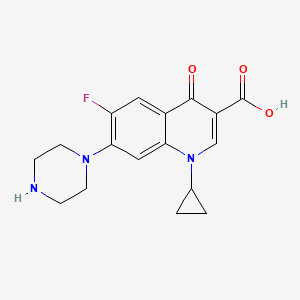
| Formula | C17H18FN3O3 |
|---|---|
| Molecular weight | 331.35 g/mol |
| IUPAC name | 1-cyclopropyl-6-fluoro-4-oxo-7-piperazin-1-ylquinoline-3-carboxylic acid |
| CAS | 85721-33-1 |
| PubChem CID | 2764 |
| InChIKey | MYSWGUAQZAJSOK-UHFFFAOYSA-N |
| logP | 1.58 (XLogP -1.1) |
| Polar surface area | 74.57 Ų |
| H-bond acceptors / donors | 5 / 2 |
| Drug-likeness (QED) | 0.89 |
| Lipinski violations | 0 |
SMILES
O=C(O)c1cn(C2CC2)c2cc(N3CCNCC3)c(F)cc2c1=OBiology & Pharmacokinetics
Pharmacokinetics
| BBB penetrant | No |
|---|
Transporters
BCRP (Inhibitor)BCRP (Inhibitor)BSEP (Inhibitor)BSEP (Inhibitor)MATE1 (Inhibitor)MATE2 (Inhibitor)MDR1 (Inhibitor)MRP (Inhibitor)MRP1 (Inhibitor)MRP2 (Inhibitor)MRP3 (Inhibitor)MRP4 (Inhibitor)NTCP (Inhibitor)OAT1 (Inhibitor)OAT3 (Inhibitor)OATP1A2 (Inhibitor)OATP1B1 (Inhibitor)OATP1B1 (Inhibitor)OATP1B3 (Inhibitor)P-gp (Inhibitor)BCRP (Substrate)MATE1 (Substrate)MDR1 (Substrate)MRP2 (Substrate)OATP1A2 (Substrate)OCT1 (Substrate)P-gp (Substrate)PEPT1 (Substrate)Transporter(unspecified) (Substrate)
Drug–drug interactions (100+, DDInter)
| Interacting drug | Severity | Management |
|---|---|---|
| Acalabrutinib | major | |
| Acetohexamide | major | |
| Aminolevulinic acid | major | |
| Aminophylline | major | |
| Anagrelide | major | |
| Arsenic trioxide | major | |
| Betamethasone | major | |
| Bosutinib | major | |
| Brigatinib | major | |
| Bupropion | major | |
| Cabozantinib | major | |
| Ceritinib | major | |
| Chloroquine | major | |
| Chlorpropamide | major | |
| Cisapride | major | |
| Cobimetinib | major | |
| Crizotinib | major | |
| Deflazacort | major | |
| Dexamethasone | major | |
| Dicoumarol | major | |
| Dolasetron | major | |
| Eliglustat | major | |
| Entrectinib | major | |
| Fingolimod | major | |
| Fludrocortisone | major | |
| Glimepiride | major | |
| Glipizide | major | |
| Glyburide | major | |
| Halofantrine | major | |
| Hydrocodone | major | |
| Hydrocortisone | major | |
| Hydroxychloroquine | major | |
| Ibrutinib | major | |
| Insulin aspart (aspart protamine) | major | |
| Insulin aspart (aspart) | major | |
| Insulin degludec | major | |
| Insulin detemir | major | |
| Insulin glargine | major | |
| Insulin glulisine | major | |
| Insulin human | major |
Showing 40 of 100+.
Registered Products (77)
| Brand | Form / strength | Pack | Agent | Citizen (JOD) |
|---|---|---|---|---|
| Ciprocin Eye/Ear Drops | Ophthalmic Solution 15 mg/5 ml | 5 ml | Khoury Drug Store | 1.370 |
| Opticin | Solution 0.3 %w/v | 5 ml | Land Of Medicine Drug Store | 1.370 |
| CIPRODAR E/E DROPS | Oral Drops 0.3 % | 5 ml | Dar Al Dawa Development and Investment Co Ltd/Jordan | 1.850 |
| Ciloxan Eye & Ear Drops | Ophthalmic Solution 3 mg/ml | 5 ml | Modern Drug Store | 1.950 |
| Siprosan Tablets | Tablet 500 mg | 14 tab | eastward drugstore | 3.000 |
| Ciprocin eye ear drops | Ophthalmic Solution (Hcl) 0.3 % | 10 ml | Amman Pharmaceutical Indusries | 3.300 |
| Omacip | Tablet 250 mg | 10 tab | Reda Jardaneh Drug Store | 3.310 |
| Ciproquin FC Tab | Film-Coated Tablet 250 mg | 10 tab pack varies | Hayat Pharmaceutical Industries CO.PLC/JORDAN | 3.730 |
| Cipropharm tab | Tablet 250 mg | 10 tab pack varies | Pharma International Company/ Jordan | 3.820 |
| Ciprover 500mg f/c Tabs | Tablet 500 mg | 10 tab pack varies | JORDAN RIVER PHARMA.IND(JORIVER)/JORDAN | 4.360 |
| Omacip | Tablet 500 mg | 10 tab | Reda Jardaneh Drug Store | 4.420 |
| Bactall | Tablet 250 mg | 10 tab | THE JORDANIAN PHARMACEUTICAL MANUFACTURING COMPANY/JORDAN | 4.500 |
| Ciproflacin 250 Tablet | Tablet 250 mg | 10 tab pack varies | AL-RAM PHARMA.INDUS.CO.LTD/JORDAN | 4.500 |
| Cipromid F.C Tablets | Film-Coated Tablet 250 mg | 10 tab | MIDDLE EAST PHARMA&CHEMICAL IND/JORDAN | 4.500 |
| Floroxin 250 Tablets | Tablet (Hcl) 250 mg | 10 tab | UNITED PHARM.MFG.CO.LTD(UPM)/JORDAN | 4.500 |
| Ciproquin FC Tab | Film-Coated Tablet 500 mg | 10 tab pack varies | Hayat Pharmaceutical Industries CO.PLC/JORDAN | 4.830 |
| CIPRODAR 250 TAB. | Tablet 250 mg | 10 tab pack varies | Dar Al Dawa Development and Investment Co Ltd/Jordan | 5.000 |
| Bactiflox Neo Lactab | Film-Coated Tablet 500 mg | 10 Lactab | Khoury Drug Store | 5.400 |
| Ciprogen | Tablet 500 mg | 10 tab | Khoury Drug Store | 5.400 |
| Quinox | Tablet 500 mg | 10 tab | Sukhtian Group | 5.400 |
| CIPRO 500 TAB | Tablet 500 mg | 10 tab pack varies | JORDAN SWEDEN MEDICAL&STERILE.CO(JOSWE)/JORDAN | 5.500 |
| Cipropharm tab | Tablet 500 mg | 10 tab pack varies | Pharma International Company/ Jordan | 5.500 |
| Floxar SR Tab | Tablet 1000 mg | 5 tab pack varies | JORDAN SWEDEN MEDICAL&STERILE.CO(JOSWE)/JORDAN | 5.990 |
| Mecado SR | Tablet 1000 mg | 5 tab pack varies | JORDAN SWEDEN MEDICAL&STERILE.CO(JOSWE)/JORDAN | 5.990 |
| Cipromid F.C Tablets | Film-Coated Tablet 500 mg | 10 tab pack varies | MIDDLE EAST PHARMA&CHEMICAL IND/JORDAN | 6.000 |
| Ciprover 500mg f/c Tabs | Tablet 500 mg | 14 tab pack varies | JORDAN RIVER PHARMA.IND(JORIVER)/JORDAN | 6.100 |
| Ciproflacin-500 F.C tablet | Film-Coated Tablet 500 mg | 10 tab pack varies | AL-RAM PHARMA.INDUS.CO.LTD/JORDAN | 6.580 |
| Floroxin 500 Tablets | Tablet 500 mg | 10 tab | UNITED PHARM.MFG.CO.LTD(UPM)/JORDAN | 6.580 |
| Ciproquin F.C Tab | Film-Coated Tablet 500 mg | 14 tab pack varies | Hayat Pharmaceutical Industries CO.PLC/JORDAN | 6.680 |
| Bactall | Tablet 500 mg | 10 tab | THE JORDANIAN PHARMACEUTICAL MANUFACTURING COMPANY/JORDAN | 6.950 |
| CIPRODAR 500 TAB. | Tablet 500 mg | 10 tab pack varies | Dar Al Dawa Development and Investment Co Ltd/Jordan | 6.950 |
| Ciprolon 500 Tablets | Tablet 500 mg | 10 tab pack varies | Hikma Pharmaceuticals Co.Ltd/Jordan | 6.950 |
| Floxacin F.C Tablets | Film-Coated Tablet 500 mg | 10 tab | Ibn Rushd Drug Store | 7.100 |
| CIPROBAY | Tablet 250 mg | 10 tab | Khoury Drug Store | 7.500 |
| CIPRO 500 TAB | Tablet 500 mg | 14 tab pack varies | JORDAN SWEDEN MEDICAL&STERILE.CO(JOSWE)/JORDAN | 7.700 |
| Cipropharm tab | Tablet 500 mg | 14 tab pack varies | Pharma International Company/ Jordan | 7.700 |
| CIPROBAY | Tablet 500 mg | 10 tab | Khoury Drug Store | 7.720 |
| Ciprodar XL | Tablet 1 g | 7 tab | Dar Al Dawa Development and Investment Co Ltd/Jordan | 7.980 |
| Floxar SR Tablets | Tablet 1000 mg | 7 tab pack varies | JORDAN SWEDEN MEDICAL&STERILE.CO(JOSWE)/JORDAN | 7.980 |
| Mecado SR | Tablet 1000 mg | 7 tab pack varies | JORDAN SWEDEN MEDICAL&STERILE.CO(JOSWE)/JORDAN | 7.980 |
| Bactiflox Neo Lactab | Film-Coated Tablet 750 mg | 10 Lactab | Khoury Drug Store | 8.110 |
| Cipromid F.C Tablets | Film-Coated Tablet 750 mg | 10 tab | MIDDLE EAST PHARMA&CHEMICAL IND/JORDAN | 8.910 |
| CIPRODAR 500 TAB. | Tablet 500 mg | 14 tab pack varies | Dar Al Dawa Development and Investment Co Ltd/Jordan | 9.730 |
| Ciproflacin-750 F.C tablet | Film-Coated Tablet 750 mg | 10 tab | AL-RAM PHARMA.INDUS.CO.LTD/JORDAN | 9.900 |
| Bactall | Tablet 750 mg | 10 tab | THE JORDANIAN PHARMACEUTICAL MANUFACTURING COMPANY/JORDAN | 10.420 |
| Ciprodar | Tablet 750 mg | 10 tab | Dar Al Dawa Development and Investment Co Ltd/Jordan | 10.420 |
| Floroxin 750 Tablets | Tablet 750 mg | 10 tab | UNITED PHARM.MFG.CO.LTD(UPM)/JORDAN | 10.420 |
| CIPRO 500 TAB | Tablet 500 mg | 250 tab pack varies | JORDAN SWEDEN MEDICAL&STERILE.CO(JOSWE)/JORDAN | 116.880 |
| CIPRODAR 250 TABS. | Tablet 250 mg | 300 tab pack varies | Dar Al Dawa Development and Investment Co Ltd/Jordan | 127.500 |
| Ciproquin FC Tab | Film-Coated Tablet 250 mg | 500 tab pack varies | Hayat Pharmaceutical Industries CO.PLC/JORDAN | 158.530 |
| Cipropharm tab | Tablet 250 mg | 500 tab pack varies | Pharma International Company/ Jordan | 162.350 |
| Ciprover 500mg f/c Tabs | Tablet 500 mg | 500 tab pack varies | JORDAN RIVER PHARMA.IND(JORIVER)/JORDAN | 174.400 |
| Ciproquin FC Tab | Film-Coated Tablet 500 mg | 500 tab pack varies | Hayat Pharmaceutical Industries CO.PLC/JORDAN | 205.280 |
| CIPRODAR 250 TABS. | Tablet 250 mg | 500 tab pack varies | Dar Al Dawa Development and Investment Co Ltd/Jordan | 212.500 |
| Cipropharm tab | Tablet 500 mg | 500 tab pack varies | Pharma International Company/ Jordan | 233.750 |
| Cipromid F.C Tablets | Film-Coated Tablet 500 mg | 500 tab pack varies | MIDDLE EAST PHARMA&CHEMICAL IND/JORDAN | 254.910 |
| CIPRODAR 500 TABS. | Tablet 500 mg | 500 tab pack varies | Dar Al Dawa Development and Investment Co Ltd/Jordan | 295.380 |
| Ciprolon 500 Tablets | Tablet 500 mg | 500 tab pack varies | Hikma Pharmaceuticals Co.Ltd/Jordan | 295.380 |
| Ciprover 500mg f/c Tabs | Tablet 500 mg | 1000 tab pack varies | JORDAN RIVER PHARMA.IND(JORIVER)/JORDAN | 348.800 |
| Ciproflacin 250 Tablet | Tablet 250 mg | 1000 tab pack varies | AL-RAM PHARMA.INDUS.CO.LTD/JORDAN | 382.500 |
| Ciproflacin-500 F.C tablet | Film-Coated Tablet 500 mg | 1000 tab pack varies | AL-RAM PHARMA.INDUS.CO.LTD/JORDAN | 559.300 |
| Ciprolon 500 Tablets | Tablet 500 mg | 1000 tab pack varies | Hikma Pharmaceuticals Co.Ltd/Jordan | 590.750 |
| Cefloxine 200mg/100 ml Solution For Infusion | Infusion 2 mg/1 ml | 100 ml pack varies | MS PHARMA/JORDAN | — |
| Cefloxine 400mg/200 ml Solution For Infusion | Infusion 2 mg/1 ml | 200 ml pack varies | MS PHARMA/JORDAN | — |
| Cipro-Sol | Solution 200 mg/100 ml | 100 ml | Sabbagh Drug Store | — |
| Ciprobay 200mg Infusion | Infusion 200 mg | 100 ml | Khoury Drug Store | — |
| Ciprolon | Infusion 400 mg/200 ml | 200 ml | Hikma Pharmaceuticals Co.Ltd/Jordan | — |
| Ciprolon 200 Infusion | Infusion as lactate 200 mg/100 ml | 1 vial | Hikma Pharmaceuticals Co.Ltd/Jordan | — |
| Ciprox Injection | Powder for Injection 200 mg | 100 ml | Sun Set Drug Store | — |
| Topistin | Infusion 400 mg/200 ml | 200 ml | Burqan Drug Store | — |
| Topistin | Solution 200 mg/100 ml | 100 ml | Burqan Drug Store | — |
| Ufexil | Solution 400 mg/200 ml | 200 ml pack varies | Al Hilal Drug Store | — |
| Ufexil | Solution 400 mg/200 ml | 200 ml pack varies | Al Hilal Drug Store | — |
| Ufexil | Solution 400 mg/200 ml | 200 ml pack varies | Al Hilal Drug Store | — |
| Ufexil 200mg/100ml Solution For I.V Infusion | Infusion 200 mg/100 ml | 100 ml pack varies | Al Hilal Drug Store | — |
| Ufexil 200mg/100ml Solution For I.V Infusion | Infusion 200 mg/100 ml | 100 ml pack varies | Al Hilal Drug Store | — |
| Ufexil 200mg/100ml Solution For I.V Infusion | Infusion 200 mg/100 ml | 100 ml pack varies | Al Hilal Drug Store | — |