insulin glargine
JFDA label: Novomix Penfill Cart.
Mechanism of Action
Agonist of Insulin receptor — Insulin receptor agonist
| Target | Action | Gene / class |
|---|---|---|
| Insulin receptor efficacy | AGONIST | INSR |
Indications
Approved
- Diabetes mellitus, types 1 and 2
Contraindications
Source: Lexicomp
- Hypersensitivity to insulin glargine or any component of the formulation Absolute
- during episodes of hypoglycemia Documentation of allergenic cross-reactivity for insulin is limited. However, because of similarities in chemical structure and/or pharmacologic actions, the possibility of cross-sensitivity cannot be ruled out with certainty Absolute
Adverse Reactions
Cardiac disorders (3)
Very Common Hypertension · peripheral edema
Common Retinal vascular disease
Nervous system disorders (2)
Very Common Depression
Common Headache
Renal and urinary disorders (1)
Very Common Urinary tract infection
Immune system disorders (1)
Very Common Antibody development
Metabolism and nutrition disorders (2)
Very Common Hypoglycemia
Not Known Sodium retention
Gastrointestinal disorders (1)
Very Common Diarrhea
Musculoskeletal and connective tissue disorders (3)
Very Common Arthralgia · back pain · limb pain
Eye disorders (2)
Very Common Cataract · retinopathy
Infections and infestations (2)
Very Common infection · Influenza
General disorders and administration site conditions (6)
Common Accidental injury · Pain at injection site
Not Known Erythema at injection site · itching at injection site · localized edema · swelling at injection site
Respiratory, thoracic and mediastinal disorders (7)
Very Common bronchitis · cough · nasopharyngitis · sinusitis · Upper respiratory tract infection
Common Pharyngitis · rhinitis
Dosing
Source: Lexicomp
Warnings & Precautions
Source: Lexicomp
Hypersensitivity
Severe, life-threatening allergic reactions, including anaphylaxis, may occur. If hypersensitivity reactions occur, discontinue therapy.
Hypoglycemia
The most common adverse effect of insulin is hypoglycemia. The timing of hypoglycemia differs among various insulin formulations. Hypoglycemia may result from increased work or exercise without eating; use of long-acting insulin preparations (eg, insulin detemir, insulin glargine, insulin degludec) may delay recovery from hypoglycemia. Profound and prolonged episodes of hypoglycemia may result in convulsions, unconsciousness, temporary or permanent brain damage, or even death. Insulin requirements may be altered during illness, emotional disturbances, or other stressors. Instruct patients to use caution with ethanol; may increase risk of hypoglycemia.
Hypokalemia
Insulin (especially IV insulin) causes a shift of potassium from the extracellular space to the intracellular space, possibly producing hypokalemia. If left untreated, hypokalemia may result in respiratory paralysis, ventricular arrhythmia and even death. Use with caution in patients at risk for hypokalemia (eg, loop diuretic use). Monitor serum potassium and supplement potassium when necessary. Disease-related concerns:
Hepatic impairment
Use with caution in patients with hepatic impairment. Dosage requirements may be reduced.
Renal impairment
Use with caution in patients with renal impairment. Dosage requirements may be reduced. Concurrent drug therapy issues:
Drug-drug interactions
Potentially significant interactions may exist, requiring dose or frequency adjustment, additional monitoring, and/or selection of alternative therapy. Consult drug interactions database for more detailed information. Special populations:
Hospitalized patients with diabetes
Exclusive use of a sliding scale insulin regimen (insulin regular) in the inpatient hospital setting is strongly discouraged. In the critical care setting, continuous IV insulin infusion (insulin regular) has been shown to best achieve glycemic targets. In noncritically ill patients with either poor oral intake or taking nothing by mouth, basal insulin or basal plus bolus is preferred. In noncritically ill patients with adequate nutritional intake, a combination of basal insulin, nutritional, and correction components is preferred. An effective insulin regimen will achieve the goal glucose range without the risk of severe hypoglycemia. A blood glucose value Dosage form specific issues:
Multiple dose injection pens
According to the Centers for Disease Control and Prevention (CDC), pen-shaped injection devices should never be used for more than one person (even when the needle is changed) because of the risk of infection. The injection device should be clearly labeled with individual patient information to ensure that the correct pen is used (CDC 2012). Other warnings/precautions:
Administration
Insulin glargine is a clear solution, but it is NOT intended for IV or IM administration or via an insulin pump.
Appropriate use
Diabetes mellitus: The general objective of exogenous insulin therapy is to approximate the physiologic pattern of insulin secretion which is characterized by two distinct phases. Phase 1 insulin secretion suppresses hepatic glucose production and phase 2 insulin secretion occurs in response to carbohydrate ingestion; therefore, exogenous insulin therapy may consist of basal insulin (eg, intermediate- or long-acting insulin), insulin administered via continuous subcutaneous insulin infusion [CSII]) and/or preprandial insulin (eg, short- or rapid-acting insulin) (see Related Information: Insulin Products). Patients with type 1 diabetes do not produce endogenous insulin; therefore, these patients require both basal and preprandial insulin administration. Patients with type 2 diabetes retain some beta-cell function in the early stages of their disease; however, as the disease progresses, phase 1 insulin secretion may become completely impaired and phase 2 insulin secretion becomes delayed and/or inadequate in response to meals. Therefore, patients with type 2 diabetes may be treated with oral antidiabetic agents, basal insulin, and/or preprandial insulin depending on the stage of disease and current glycemic control. Since treatment regimens often consist of multiple agents, dosage adjustments must address the specific phase of insulin release that is primarily contributing to the patient’s impaired glycemic control. Treatment and monitoring regimens must be individualized.
Patient education
Diabetes self-management education (DSME) is essential to maximize the effectiveness of therapy.
Pregnancy & Lactation
Pregnancy
Safe
Drug of choice for diabetes in pregnancy. Tight glucose control reduces congenital malformations, macrosomia, stillbirth. Monitor glucose closely — requirements change by trimester
Lactation
In a study using insulin glargine, both exogenous and endogenous insulin were present in breast milk (Whitmore 2012). Breastfeeding is encouraged for all women, including those with type 1, type 2, or GDM (ACOG 2005; ADA 2018c; Blumer 2013; Metzger 2007). A small snack (such as milk) before breastfeeding may help decrease the risk of hypoglycemia in women with pregestational diabetes (ACOG 2005; Reader 2004). The manufacturer considers the use of insulin glargine to be compatible with breastfeed
Monitoring
| Efficacy | Fasting blood glucose (target 80–130 mg/dL); HbA1c every 3 months until target then every 6 months |
|---|---|
| Toxicity | Hypoglycaemia; injection site reactions (lipohypertrophy/lipoatrophy from fixed-site injections); hypokalaemia |
| Clinical pearl | Long-acting insulins should not be mixed with other insulin types in the same syringe. Rotate injection sites to prevent lipohypertrophy. |
| Counseling | Rotate injection sites. Always keep fast-acting glucose available. Check blood glucose more frequently during illness, unusual physical activity, or changes in diet. |
Chemistry & Properties
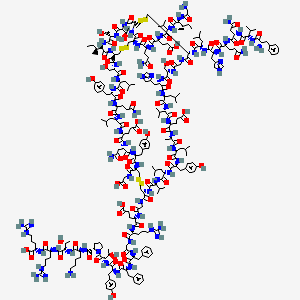
| CAS | 160337-95-1 |
|---|---|
| PubChem CID | 118984454 |
SMILES
CCC(C)C1C(=O)NC2CSSCC(C(=O)NC(CSSCC(C(=O)NCC(=O)NC(C(=O)NC(C(=O)NC(C(=O)NC(C(=O)NC(C(=O)NC(C(=O)NC(C(=O)NC(C(=O)NC(C(=O)NC(C(=O)NC(CSSCC(NC(=O)C(NC(=O)C(NC(=O)C(NC(=O)C(NC(=O)C(NC(=O)C(NC(=O)C(NC(=O)C(NC2=O)CO)CC(C)C)CC3=CC=C(C=C3)O)CCC(=O)N)CC(C)C)CCC(=O)O)CC(=O)N)CC4=CC=C(C=C4)O)C(=O)NCC(=O)O)C(=O)NCC(=O)NC(CCC(=O)O)C(=O)NC(CCCNC(=N)N)C(=O)NCC(=O)NC(CC5=CC=CC=C5)C(=O)NC(CC6=CC=CC=C6)C(=O)NC(CC7=CC=C(C=C7)O)C(=O)NC(C(C)O)C(=O)N8CCCC8C(=O)NC(CCCCN)C(=O)NC(C(C)O)C(=O)NC(CCCNC(=N)N)C(=O)NC(CCCNC(=N)N)C(=O)O)C(C)C)CC(C)C)CC9=CC=C(C=C9)O)CC(C)C)C)CCC(=O)O)C(C)C)CC(C)C)CC2=CNC=N2)CO)NC(=O)C(CC(C)C)NC(=O)C(CC2=CNC=N2)NC(=O)C(CCC(=O)N)NC(=O)C(CC(=O)N)NC(=O)C(C(C)C)NC(=O)C(CC2=CC=CC=C2)N)C(=O)NC(C(=O)NC(C(=O)N1)CO)C(C)O)NC(=O)C(CCC(=O)N)NC(=O)C(CCC(=O)O)NC(=O)C(C(C)C)NC(=O)C(C(C)CC)NC(=O)CNBiology & Pharmacokinetics
Pharmacokinetics predicted
| Bioavailability | 70.0% |
|---|---|
| Half-life | 13.28 h |
| Volume of distribution | 0.133 L/kg |
| Protein binding | -77.5% |
| BBB penetrant | No |
Transporters
BCRP (Inhibitor)BSEP (Inhibitor)MRP1 (Inhibitor)OATP1B1 (Inhibitor)OATP1B3 (Inhibitor)P-gp (Inhibitor)P-gp (Substrate)
Drug–drug interactions (100+, DDInter)
| Interacting drug | Severity | Management |
|---|---|---|
| Cinoxacin | major | |
| Ciprofloxacin | major | |
| Delafloxacin | major | |
| Enoxacin | major | |
| Gatifloxacin | major | |
| Gemifloxacin | major | |
| Grepafloxacin | major | |
| Levofloxacin | major | |
| Lomefloxacin | major | |
| Moxifloxacin | major | |
| Nalidixic acid | major | |
| Norfloxacin | major | |
| Ofloxacin | major | |
| Sparfloxacin | major | |
| Trovafloxacin | major | |
| Acebutolol | moderate | |
| Acetazolamide | moderate | |
| Acetohexamide | moderate | |
| Acetylsalicylic acid | moderate | |
| Albiglutide | moderate | |
| Alimemazine | moderate | |
| Aloe Vera Leaf | moderate | |
| Alogliptin | moderate | |
| Alpelisib | moderate | |
| Amprenavir | moderate | |
| Aripiprazole | moderate | |
| Asenapine | moderate | |
| Asparaginase Erwinia chrysanthemi | moderate | |
| Asparaginase Escherichia coli | moderate | |
| Atazanavir | moderate | |
| Atenolol | moderate | |
| Azilsartan medoxomil | moderate | |
| Benazepril | moderate | |
| Bendroflumethiazide | moderate | |
| Benzphetamine | moderate | |
| Benzthiazide | moderate | |
| Betamethasone | moderate | |
| Betaxolol | moderate | |
| Betaxolol (ophthalmic) | moderate | |
| Bexarotene | moderate |
Showing 40 of 100+.
Registered Products (21)
| Brand | Form / strength | Pack | Agent | Citizen (JOD) |
|---|---|---|---|---|
| NovoRapid 100IU/ml Solution for Injection vial | Injection 100 IU/ml | 10 ml | Khoury Drug Store | 17.660 |
| NovoRapid Flexpen | Pre-filled Pen 100 IU/ml | 3 ml | Khoury Drug Store | 24.490 |
| Humalog Cartridge 100iu/ml | Cartridge 100 IU/ml | 3 ml | THE ARAB DRUG STORE P.S.C | 27.410 |
| Humalog Mix 25/ 100IU/ml | Solution 25 %, 75 % | 3 ml | THE ARAB DRUG STORE P.S.C | 27.410 |
| Humalog Mix 50 | Injection 100 IU/ml | 3 ml | THE ARAB DRUG STORE P.S.C | 27.410 |
| NovoRapid Penfills | Injection 100 IU/ml | 3 ml | Khoury Drug Store | 28.210 |
| Novomix Penfill Cart. | Cartridge 100 IU/ml | 3 ml | Khoury Drug Store | 28.210 |
| Novomix 30 flexpen | Injection 100 IU/ml | 3 ml | Khoury Drug Store | 32.420 |
| Semglee | Pre-filled Pen 100 UNT/1 ml | 3 ml | Sabbagh Drug Store | 32.640 |
| Apidra Solostar 100IU/ml Solution for Injection | Injection 100 IU/ml | 3 ml | Ulfa Pharma Co. | 34.230 |
| Novomix 50 flexpen | Injection 100 IU/ml | 3 ml | Khoury Drug Store | 36.550 |
| Levemir Flexpen 100IU/ml solution for injection | Injection 14.2 mg/ml | 3 ml | Khoury Drug Store | 39.020 |
| Levemir Penfill | Cartridge 100 IU/ml | 3 ml | Khoury Drug Store | 39.690 |
| Toujeo 300 IU/ml Solution for Inj in PFP | Injection 300 IU/ml | 1.5 ml pack varies | Ulfa Pharma Co. | 43.960 |
| Tresiba Penfill 100 iu/ml | Cartridge 100 IU/ml | 3 ml | Khoury Drug Store | 49.290 |
| Lantus Solostar | Pre-filled Pen 100 IU/ml | 3 ml | Ulfa Pharma Co. | 49.810 |
| Tresiba Flextouch 100IU/ML | Pre-filled Pen 100 IU/ml | 3 ml | Khoury Drug Store | 51.160 |
| Ryzodeg 100 IU/ml Flextouch solution for injection | Powder for Injection 30 %, 70 % | 3 ml | Khoury Drug Store | 59.910 |
| Tresiba Flextouch 200IU ,3 X 3 | Pre-filled Pen 200 IU/ml | 3 ml | Khoury Drug Store | 61.040 |
| Toujeo 300 IU/ml Solution for Inj in PFP | Injection 300 IU/ml | 1.5 ml pack varies | Ulfa Pharma Co. | 66.460 |
| Ryzodeg Penfill 100IU/ml | Cartridge 180 nmol, 420 nmol | 3 ml | Khoury Drug Store | 72.940 |