Levofloxacin
🧬 Cross-allergy: Fluoroquinolones
JFDA label: Tavanic I.V Sol for Inf.
- SERIOUS ADVERSE REACTIONS INCLUDING TENDINITIS, TENDON RUPTURE, PERIPHERAL NEUROPATHY, CENTRAL NERVOUS SYSTEM EFFECTS AND EXACERBATION OF MYASTHENIA GRAVIS • Fluoroquinolones, including levofloxacin,
Mechanism of Action
Inhibitor of DNA gyrase — DNA gyrase inhibitor; Inhibitor of Topoisomerase IV — Topoisomerase IV inhibitor
| Target | Action | Gene / class |
|---|---|---|
| DNA gyrase efficacy | INHIBITOR | |
| Topoisomerase IV efficacy | INHIBITOR |
Indications
Approved
- Bacterial Infections — bacterial disease
- Bronchitis, Chronic — chronic bronchitis
- Conjunctivitis, Bacterial — bacterial conjunctivitis
- Cystic Fibrosis — cystic fibrosis
- Eye Infections — eye infection
- Infections — infection
- Pneumonia — pneumonia
- Respiratory Tract Infections — respiratory tract infectious disorder
- Sinusitis — sinusitis
- Urinary Tract Infections — urinary tract infection
Off-label
- Appendicitis
- Bronchitis
- Cataract
- Cellulitis
- Diabetic Foot
- Dyspepsia
- Endocarditis
- Fever
- Helicobacter Infections
- Hot Flashes
- Influenza, Human
- Lymphoma, Non-Hodgkin
- Maxillary Sinusitis
- Neoplasms
- Neutropenia
- Otitis Media
- Pelvic Inflammatory Disease
- Pneumonia, Bacterial
- Prostatic Hyperplasia
- Prostatitis
- Pulmonary Disease, Chronic Obstructive
- Pyelonephritis
- Sarcoidosis
- Severe Acute Respiratory Syndrome
- Skin Diseases
- Staphylococcal Infections
- Tuberculosis
- Tuberculosis, Multidrug-Resistant
- Tuberculosis, Pulmonary
Antimicrobial Spectrum
Expected / intrinsic spectrum (EUCAST breakpoints & labels) — not local resistance. Source: EUCAST v16 · curated · openfda-label.
Bacteria
| Organism | Activity | MIC |
|---|---|---|
| Acinetobacter baumannii | Active | — |
| Acinetobacter lwoffii | Active | — |
| Acinetobacter spp. | Susceptible | 0.5 mg/L |
| Aeromonas spp. | Susceptible | 0.5 mg/L |
| Bacillus anthracis | Active | — |
| Bacillus spp. | Susceptible | 0.001 mg/L |
| Citrobacter freundii | Active | — |
| Citrobacter koseri | Active | — |
| Clostridium perfringens | Active | — |
| Enterobacter aerogenes | Active | — |
| Enterobacter cloacae | Active | — |
| Enterobacter sakazakii | Active | — |
| Enterobacterales | Susceptible | 0.5 mg/L |
| Enterococcus faecalis | Active | — |
| Enterococcus spp. | Susceptible | 4.0 mg/L |
| Escherichia coli | Susceptible | 0.25 mg/L |
| Haemophilus influenzae | Susceptible | 2.0 mg/L |
| Haemophilus influenzae | Susceptible | 0.06 mg/L |
| Haemophilus parainfluenzae | Active | — |
| Helicobacter pylori | Susceptible | 1.0 mg/L |
| Klebsiella oxytoca | Active | — |
| Klebsiella pneumoniae | Susceptible | 0.25 mg/L |
| Legionella pneumophila | Susceptible | 1.0 mg/L |
| Moraxella catarrhalis | Susceptible | 0.125 mg/L |
| Morganella morganii | Active | — |
| Mycoplasma pneumoniae | Susceptible | 1.0 mg/L |
| Pasteurella multocida | Susceptible | 0.06 mg/L |
| Proteus mirabilis | Active | — |
| Proteus vulgaris | Active | — |
| Providencia rettgeri | Active | — |
| Providencia stuartii | Active | — |
| Pseudomonas aeruginosa | Susceptible | 1.0 mg/L |
| Pseudomonas aeruginosa | Susceptible | 0.001 mg/L |
| Pseudomonas fluorescens | Active | — |
| Serratia marcescens | Active | — |
| Staphylococcus aureus | Susceptible | 1.0 mg/L |
| Staphylococcus epidermidis | Active | — |
| Staphylococcus haemolyticus | Active | — |
| Staphylococcus saprophyticus | Active | — |
| Streptococcus A/B/C/G | Susceptible | 0.001 mg/L |
| Streptococcus agalactiae | Active | — |
| Streptococcus milleri | Active | — |
| Streptococcus pneumoniae | Susceptible | 2.0 mg/L |
| Streptococcus pneumoniae | Susceptible | 0.001 mg/L |
| Streptococcus pyogenes | Active | — |
| Vibrio spp. | Susceptible | 0.25 mg/L |
| Yersinia pestis | Active | — |
| Escherichia coli | Resistant | 1.0 mg/L |
Class profile
| gramStatus | Both |
|---|---|
| spectrumBreadth | Broad |
| atypicalCoverage | Yes |
| isBactericidal | 1 |
| moaCategory | DNA synthesis inhibitor (topoisomerase II/IV) |
| pdIndex | Concentration-dependent |
| postAntibioticEffect | Prolonged |
| mrsaCoverage | 0 |
| resistanceMechanisms | Target site mutations (gyrA,gyrB,parC,parE),Active efflux,Decreased permeability |
Contraindications
Source: Curated · openFDA
- Children < 18 years — risk of musculoskeletal events Absolute
- History of QT prolongation or torsades de pointes Absolute
- Levofloxacin tablets are contraindicated in persons with known hypersensitivity to levofloxacin, or other quinolone antibacterials [see Warnings and Precautions ( 5.3 )]. Known hypersensitivity to levofloxacin tablets or other quinolones ( 4 , 5.7 ) Absolute
Adverse Reactions
Cardiac disorders (1)
Uncommon QT prolongation / torsades de pointes
Vascular disorders (1)
Rare Aortic aneurysm / dissection (rare, debated)
Nervous system disorders (4)
Common Headache
Uncommon CNS effects (confusion, seizures, psychosis) · Dizziness · Peripheral neuropathy
Gastrointestinal disorders (2)
Common Diarrhoea · Nausea
Skin and subcutaneous tissue disorders (1)
Uncommon Photosensitivity
Musculoskeletal and connective tissue disorders (1)
Uncommon Tendinitis / tendon rupture
Infections and infestations (1)
Uncommon Clostridioides difficile colitis
Dosing
Source: openFDA
Warnings & Precautions
Source: openFDA
Boxed Warning
SERIOUS ADVERSE REACTIONS INCLUDING TENDINITIS, TENDON RUPTURE, PERIPHERAL NEUROPATHY, CENTRAL NERVOUS SYSTEM EFFECTS AND EXACERBATION OF MYASTHENIA GRAVIS • Fluoroquinolones, including levofloxacin, have been associated with disabling and potentially irreversible serious adverse reactions that have occurred together [ see Warnings and Precautions ( 5.1 )] , including: o Tendinitis and tendon rupture [ see Warnings and Precautions ( 5.2 ) ] o Peripheral neuropathy [ see Warnings and Precautions ( 5.3 ) ] o Central nervous system effects [ see Warnings and Precautions ( 5.4 ) ] Discontinue levofloxacin immediately and avoid the use of fluoroquinolones, including levofloxacin, in patients who experience any of these serious adverse reactions [ see Warnings and Precautions ( 5.1 ) ] • Fluoroquinolones, including levofloxacin, may exacerbate muscle weakness in patients with myasthenia gravis. Avoid levofloxacin in patients with a known history of myasthenia gravis [ see Warnings and Precautions ( 5.5 ) ]. • Because fluoroquinolones, including levofloxacin, have been associated with serious adverse reactions [ see Warnings and Precautions (5.1-5.15) ], reserve levofloxacin for use in patients who have no alternative treatment options for the following indications: o Uncomplicated urinary tract infection [ see Indications and Usage ( 1.12 ) ] o Acute bacterial exacerbation of chronic bronchitis [ see Indications and Usage ( 1.13 ) ] o Acute bacterial sinusitis [ see Indications and Usage ( 1.14 )] . WARNING: SERIOUS ADVERSE REACTIONS INCLUDING TENDINITIS, TENDON RUPTURE, PERIPHERAL NEUROPATHY, CENTRAL NERVOUS SYSTEM EFFECTS AND EXACERBATION OF MYASTHENIA GRAVIS See full prescribing information for complete boxed warning . Fluoroquinolones, including levofloxacin, have been associated with disabling and potentially irreversible serious adverse reactions that have occurred together ( 5.1 ), including: o Tendinitis and tendon rupture ( 5.2 ) o Peripheral neuropathy ( 5.3 ) o Central nervous system effects ( 5.4 ) Discontinue levofloxacin immediately and avoid the use of fluoroquinolones, including levofloxacin, in patients who experience any of these serious adverse reactions ( 5.1 ) Fluoroquinolones, including levofloxacin, may exacerbate muscle weakness in patients with myasthenia gravis. Avoid levofloxacin in patients with a known history of myasthenia gravis [see Warnings and Precautions ( 5.5 )] . Because fluoroquinolones, including levofloxacin, have been ass
Warnings & Precautions
Anaphylactic reactions and allergic skin reactions, serious, occasionally fatal, may occur after first dose ( 4 , 5.7 ) Hematologic (including agranulocytosis, thrombocytopenia), and renal toxicities may occur after multiple doses ( 5.6 ) Hepatotoxicity: Severe, and sometimes fatal, hepatotoxicity has been reported. Discontinue immediately if signs and symptoms of hepatitis occur ( 5.8 ) Clostridium difficile -associated colitis: evaluate if diarrhea occurs ( 5.10 ) Prolongation of the QT interval and isolated cases of torsade de pointes have been reported. Avoid use in patients with known prolongation, those with hypokalemia, and with other drugs that prolong the QT interval ( 5.11 , 8.5 )
Disabling and Potentially Irreversible Serious Adverse Reactions Inclu
Disabling and Potentially Irreversible Serious Adverse Reactions Including Tendinitis and Tendon Rupture, Peripheral Neuropathy, and Central Nervous System Effects Fluoroquinolones, including levofloxacin, have been associated with disabling and potentially irreversible serious adverse reactions from different body systems that can occur together in the same patient. Commonly seen adverse reactions include tendinitis, tendon rupture, arthralgia, myalgia, peripheral neuropathy, and central nervous system effects (hallucinations, anxiety, depression, insomnia, severe headaches, and confusion). These reactions can occur within hours to weeks after starting levofloxacin. Patients of any age or without pre-existing risk factors have experienced these adverse reactions [see Warnings and Precautions ( 5.2 , 5.3 , 5.4 )]. Discontinue levofloxacin immediately at the first signs or symptoms of any serious adverse reaction. In addition, avoid the use of fluoroquinolones, including levofloxacin, in patients who have experienced any of these serious adverse reactions associated with fluoroquinolones.
Tendinitis and Tendon Rupture Fluoroquinolones, including levofloxacin
Tendinitis and Tendon Rupture Fluoroquinolones, including levofloxacin, have been associated with an increased risk of tendinitis and tendon rupture in all ages [see Warnings and Precautions ( 5.1 ) and Adverse Reactions ( 6.2 )]. This adverse reaction most frequently involves the Achilles tendon and has also been reported with the rotator cuff (the shoulder), the hand, the biceps, the thumb, and other tendon sites. Tendinitis or tendon rupture can occur within hours or days of starting levofloxacin or as long as several months after completion of fluoroquinolone therapy. Tendinitis and tendon rupture can occur bilaterally. The risk of developing fluoroquinolone-associated tendinitis and tendon rupture is increased in patients over 60 years of age, in those taking corticosteroid drugs, and in patients with kidney, heart or lung transplants. Other factors that may independently increase the risk of tendon rupture include strenuous physical activity, renal failure, and previous tendon disorders such as rheumatoid arthritis. Tendinitis and tendon rupture have been reported in patients taking fluoroquinolones who do not have the above risk factors. Discontinue levofloxacin immediately if the patient experiences pain, swelling, inflammation or rupture of a tendon. Patients should be advised to rest at the first sign of tendinitis or tendon rupture, and to contact their healthcare provider regarding changing to a non-quinolone antimicrobial drug. Avoid levofloxacin in patients who have a history of tendon disorders or tendon rupture [see Adverse Reactions (6.3)and Patient Counseling Information ( 17 )].
Peripheral Neuropathy Fluoroquinolones, including levofloxacin, have b
Peripheral Neuropathy Fluoroquinolones, including levofloxacin, have been associated with an increased risk of peripheral neuropathy. Cases of sensory or sensorimotor axonal polyneuropathy affecting small and/or large axons resulting in paresthesias, hypoesthesias, dysesthesias and weakness have been reported in patients receiving fluoroquinolones, including levofloxacin. Symptoms may occur soon after initiation of levofloxacin and may be irreversible in some patients [see Warnings and Precautions ( 5.1 ) and Adverse Reactions ( 6.1 , 6.2 )]. Discontinue levofloxacin immediately if the patient experiences symptoms of neuropathy including pain, burning, tingling, numbness, and/or weakness or other alterations of sensation including light touch, pain, temperature, position sense, and vibratory sensation. Avoid fluoroquinolones, including levofloxacin, in patients who have previously experienced peripheral neuropathy [see Adverse Reactions ( 6 ) and Patient Counseling Information ( 17 )].
Central Nervous System Effects Psychiatric Adverse Reactions Fluoroqui
Central Nervous System Effects Psychiatric Adverse Reactions Fluoroquinolones, including levofloxacin, have been associated with an increased risk of psychiatric adverse reactions, including: toxic psychoses, hallucinations, or paranoia; depression, or suicidal thoughts; anxiety, agitation, restlessness, or nervousness; confusion, delirium, disorientation, or disturbances in attention; insomnia or nightmares; memory impairment. Attempted or completed suicide have been reported, especially in patients with a medical history of depression, or an underlying risk factor for depression. These reactions may occur following the first dose. If these reactions occur in patients receiving levofloxacin, discontinue levofloxacin and institute appropriate measures. Central Nervous System Adverse Reactions Fluoroquinolones, including levofloxacin, have been associated with an increased risk of seizures (convulsions), increased intracranial pressure (including pseudotumor cerebri), tremors, and lightheadedness. As with other fluoroquinolones levofloxacin should be used with caution in patients with a known or suspected central nervous system (CNS) disorder that may predispose them to seizures or lower the seizure threshold (e.g., severe cerebral arteriosclerosis, epilepsy) or in the presence of other risk factors that may predispose them to seizures or lower the seizure threshold (e.g., certain drug therapy, renal dysfunction). If these reactions occur in patients receiving levofloxacin, discontinue levofloxacin and institute appropriate measures [see Adverse Reactions ( 6 ), Drug Interactions ( 7.4 , 7.5 ), and Patient Counseling Information ( 17 )].
Exacerbation of Myasthenia Gravis Fluoroquinolones, including levoflox
Exacerbation of Myasthenia Gravis Fluoroquinolones, including levofloxacin, have neuromuscular blocking activity and may exacerbate muscle weakness in patients with myasthenia gravis. Postmarketing serious adverse reactions, including deaths and requirement for ventilatory support, have been associated with fluoroquinolone use in patients with myasthenia gravis. Avoid levofloxacin in patients with a known history of myasthenia gravis [see Adverse Reactions ( 6.3 ) and Patient Counseling Information ( 17 )].
Other Serious and Sometimes Fatal Adverse Reactions Other serious and
Other Serious and Sometimes Fatal Adverse Reactions Other serious and sometimes fatal adverse reactions, some due to hypersensitivity, and some due to uncertain etiology, have been reported rarely in patients receiving therapy with fluoroquinolones, including levofloxacin. These events may be severe and generally occur following the administration of multiple doses. Clinical manifestations may include one or more of the following: fever, rash, or severe dermatologic reactions (e.g., toxic epidermal necrolysis, Stevens-Johnson Syndrome); vasculitis; arthralgia; myalgia; serum sickness; allergic pneumonitis; interstitial nephritis; acute renal insufficiency or failure; hepatitis; jaundice; acute hepatic necrosis or failure; anemia, including hemolytic and aplastic; thrombocytopenia, including thrombotic thrombocytopenic purpura; leukopenia; agranulocytosis; pancytopenia; and/or other hematologic abnormalities. Discontinue levofloxacin immediately at the first appearance of skin rash, jaundice, or any other sign of hypersensitivity and institute supportive measures [see Adverse Reactions ( 6 ) and Patient Counseling Information ( 17 )] .
Hypersensitivity Reactions Serious and occasionally fatal hypersensiti
Hypersensitivity Reactions Serious and occasionally fatal hypersensitivity and/or anaphylactic reactions have been reported in patients receiving therapy with fluoroquinolones, including levofloxacin. These reactions often occur following the first dose. Some reactions have been accompanied by cardiovascular collapse, hypotension/shock, seizure, loss of consciousness, tingling, angioedema (including tongue, laryngeal, throat, or facial edema/swelling), airway obstruction (including bronchospasm, shortness of breath, and acute respiratory distress), dyspnea, urticaria, itching, and other serious skin reactions. Levofloxacin should be discontinued immediately at the first appearance of a skin rash or any other sign of hypersensitivity. Serious acute hypersensitivity reactions may require treatment with epinephrine and other resuscitative measures, including oxygen, intravenous fluids, antihistamines, corticosteroids, pressor amines, and airway management, as clinically indicated [see Adverse Reactions ( 6 ) and Patient Counseling Information ( 17 ) ].
Hepatotoxicity Post-marketing reports of severe hepatotoxicity (includ
Hepatotoxicity Post-marketing reports of severe hepatotoxicity (including acute hepatitis and fatal events) have been received for patients treated with levofloxacin. No evidence of serious drug-associated hepatotoxicity was detected in clinical trials of over 7,000 patients. Severe hepatotoxicity generally occurred within 14 days of initiation of therapy and most cases occurred within 6 days. Most cases of severe hepatotoxicity were not associated with hypersensitivity [see Warnings and Precautions ( 5.6 )]. The majority of fatal hepatotoxicity reports occurred in patients 65 years of age or older and most were not associated with hypersensitivity. Levofloxacin should be discontinued immediately if the patient develops signs and symptoms of hepatitis [see Adverse Reactions ( 6 ) and Patient Counseling Information ( 17 )].
Risk of Aortic Aneurysm and Dissection Epidemiologic studies report an
Risk of Aortic Aneurysm and Dissection Epidemiologic studies report an increased rate of aortic aneurysm and dissection within two months following use of fluoroquinolones, particularly in elderly patients. The cause for the increased risk has not been identified. In patients with a known aortic aneurysm or patients who are at greater risk for aortic aneurysms, reserve levofloxacin for use only when there are no alternative antibacterial treatments available.
Clostridium difficile - Associated Diarrhea Clostridium difficile -ass
Clostridium difficile - Associated Diarrhea Clostridium difficile -associated diarrhea (CDAD) has been reported with use of nearly all antibacterial agents, including levofloxacin, and may range in severity from mild diarrhea to fatal colitis. Treatment with antibacterial agents alters the normal flora of the colon leading to overgrowth of C. difficile. C. difficile produces toxins A and B which contribute to the development of CDAD. Hypertoxin producing strains of C. difficile cause increased morbidity and mortality, as these infections can be refractory to antimicrobial therapy and may require colectomy. CDAD must be considered in all patients who present with diarrhea following antibiotic use. Careful medical history is necessary since CDAD has been reported to occur over two months after the administration of antibacterial agents. If CDAD is suspected or confirmed, ongoing antibiotic use not directed against C. difficile may need to be discontinued. Appropriate fluid and electrolyte management, protein supplementation, antibiotic treatment of C. difficile, and surgical evaluation should be instituted as clinically indicated [see Adverse Reactions ( 6.2 ) and Patient Counseling Information ( 17 )].
Prolongation of the QT Interval Some fluoroquinolones, including levof
Prolongation of the QT Interval Some fluoroquinolones, including levofloxacin, have been associated with prolongation of the QT interval on the electrocardiogram and infrequent cases of arrhythmia. Rare cases of torsade de pointes have been spontaneously reported during postmarketing surveillance in patients receiving fluoroquinolones, including levofloxacin. Levofloxacin should be avoided in patients with known prolongation of the QT interval, patients with uncorrected hypokalemia, and patients receiving Class IA (quinidine, procainamide), or Class III (amiodarone, sotalol) antiarrhythmic agents. Elderly patients may be more susceptible to drug-associated effects on the QT interval [ see Adverse Reactions ( 6.3 ), Use in Specific Populations ( 8.5 ), and Patient Counseling Information ( 17 ) ].
Musculoskeletal Disorders in Pediatric Patients and Arthropathic Effec
Musculoskeletal Disorders in Pediatric Patients and Arthropathic Effects in Animals Levofloxacin is indicated in pediatric patients (6 months of age and older) only for the prevention of inhalational anthrax (post-exposure) and for plague [see Indications and Usage ( 1.7 , 1.8 )]. An increased incidence of musculoskeletal disorders (arthralgia, arthritis, tendinopathy, and gait abnormality) compared to controls has been observed in pediatric patients receiving levofloxacin [see Use in Specific Populations ( 8.4 )]. In immature rats and dogs, the oral and intravenous administration of levofloxacin resulted in increased osteochondrosis. Histopathological examination of the weight-bearing joints of immature dogs dosed with levofloxacin revealed persistent lesions of the cartilage. Other fluoroquinolones also produce similar erosions in the weight-bearing joints and other signs of arthropathy in immature animals of various species [see Animal Toxicology and/or Pharmacology ( 13.2 ) ].
Blood Glucose Disturbances Fluoroquinolones, including levofloxacin, h
Blood Glucose Disturbances Fluoroquinolones, including levofloxacin, have been associated with disturbances of blood glucose, including symptomatic hyperglycemia and hypoglycemia, usually in diabetic patients receiving concomitant treatment with an oral hypoglycemic agent (e.g., glyburide) or with insulin. In these patients, careful monitoring of blood glucose is recommended. Severe cases of hypoglycemia resulting in coma or death have been reported. If a hypoglycemic reaction occurs in a patient being treated with levofloxacin, discontinue levofloxacin and initiate appropriate therapy immediately [see Adverse Reactions (6.2), Drug Interactions ( 7.3 ) and Patient Counseling Information ( 17 )] .
Photosensitivity/ Phototoxicity Moderate to severe photosensitivity/ph
Photosensitivity/ Phototoxicity Moderate to severe photosensitivity/phototoxicity reactions, the latter of which may manifest as exaggerated sunburn reactions (e.g., burning, erythema, exudation, vesicles, blistering, edema) involving areas exposed to light (typically the face, "V" area of the neck, extensor surfaces of the forearms, dorsa of the hands), can be associated with the use of fluoroquinolones after sun or UV light exposure. Therefore, excessive exposure to these sources of light should be avoided. Drug therapy should be discontinued if photosensitivity/phototoxicity occurs [see Adverse Reactions (6.3) and Patient Counseling Information ( 17 )].
Development of Drug Resistant Bacteria Prescribing levofloxacin in the
Development of Drug Resistant Bacteria Prescribing levofloxacin in the absence of a proven or strongly suspected bacterial infection or a prophylactic indication is unlikely to provide benefit to the patient and increases the risk of the development of drug-resistant bacteria [see Patient Counseling Information ( 17 )].
Pregnancy & Lactation
Pregnancy
Caution
Use only if no alternative. Macrolides or beta-lactams preferred
Lactation
Levofloxacin amounts in breastmilk appear to be considerably lower than the infant dose and would not be expected to cause any serious adverse
Monitoring
| Efficacy | Culture and susceptibility testing; clinical resolution (temperature, WBC, CRP, procalcitonin) |
|---|---|
| Toxicity | Renal function (dose adjustment in renal impairment); hepatic function for hepatically cleared agents; signs of C. difficile infection (diarrhoea) |
| Clinical pearl | Culture results guide de-escalation to narrower-spectrum therapy. Review antibiotic appropriateness at 48–72 h (antimicrobial stewardship). |
| Counseling | Complete the full course. Report persistent diarrhoea, rash, or lack of improvement after 48–72 h. |
Chemistry & Properties
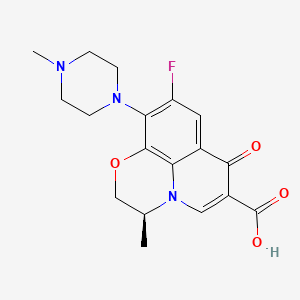
| Formula | C36H42F2N6O9 |
|---|---|
| Molecular weight | 740.76 g/mol |
| IUPAC name | (2S)-7-fluoro-2-methyl-6-(4-methylpiperazin-1-yl)-10-oxo-4-oxa-1-azatricyclo[7.3.1.05,13]trideca-5(13),6,8,11-tetraene-11-carboxylic acid |
| CAS | 100986-85-4 |
| PubChem CID | 149096 |
| InChIKey | SUIQUYDRLGGZOL-RCWTXCDDSA-N |
| logP | 1.54 (XLogP -0.4) |
| Polar surface area | 75.01 Ų |
| H-bond acceptors / donors | 6 / 1 |
| Drug-likeness (QED) | 0.87 |
| Lipinski violations | 0 |
SMILES
C[C@H]1COc2c(N3CCN(C)CC3)c(F)cc3c(=O)c(C(=O)O)cn1c23.C[C@H]1COc2c(N3CCN(C)CC3)c(F)cc3c(=O)c(C(=O)O)cn1c23.OBiology & Pharmacokinetics
Pharmacokinetics predicted
| Bioavailability | 10.0% |
|---|---|
| Half-life | 4.57 h |
| Volume of distribution | 1.387 L/kg |
| Protein binding | 23.4% |
| BBB penetrant | Yes |
Transporters
BCRP (Inhibitor)BSEP (Inhibitor)BSEP (Inhibitor)MATE1 (Inhibitor)MATE2 (Inhibitor)MDR1 (Inhibitor)MRP1 (Inhibitor)MRP2 (Inhibitor)MRP3 (Inhibitor)MRP4 (Inhibitor)OATP1A2 (Inhibitor)OATP1B1 (Inhibitor)OATP1B1 (Inhibitor)OATP1B3 (Inhibitor)OATP1B3 (Inhibitor)OATP2B1 (Inhibitor)OCT1 (Inhibitor)OCT2 (Inhibitor)OCTN1 (Inhibitor)OCTN2 (Inhibitor)P-gp (Inhibitor)MATE1 (Substrate)MATE2 (Substrate)MDR1 (Substrate)OAT1 (Substrate)OAT3 (Substrate)OATP1A2 (Substrate)OCT2 (Substrate)OCTN2 (Substrate)P-gp (Substrate)
Drug–drug interactions (100+, DDInter)
| Interacting drug | Severity | Management |
|---|---|---|
| Acetohexamide | major | |
| Aminolevulinic acid | major | |
| Amiodarone | major | |
| Amisulpride | major | |
| Anagrelide | major | |
| Anisindione | major | |
| Arsenic trioxide | major | |
| Bedaquiline | major | |
| Bempedoic acid | major | |
| Bepridil | major | |
| Betamethasone | major | |
| Bupropion | major | |
| Cabozantinib | major | |
| Ceritinib | major | |
| Chloroquine | major | |
| Chlorpropamide | major | |
| Cisapride | major | |
| Citalopram | major | |
| Clozapine | major | |
| Crizotinib | major | |
| Deflazacort | major | |
| Dexamethasone | major | |
| Dicoumarol | major | |
| Disopyramide | major | |
| Dofetilide | major | |
| Dolasetron | major | |
| Dronedarone | major | |
| Droperidol | major | |
| Efavirenz | major | |
| Escitalopram | major | |
| Fingolimod | major | |
| Fludrocortisone | major | |
| Glimepiride | major | |
| Glipizide | major | |
| Glyburide | major | |
| Halofantrine | major | |
| Haloperidol | major | |
| Hydrocortisone | major | |
| Hydroxychloroquine | major | |
| Ibutilide | major |
Showing 40 of 100+.
Registered Products (60)
| Brand | Form / strength | Pack | Agent | Citizen (JOD) |
|---|---|---|---|---|
| Jovanic 250 mg F/C tablet | Tablet 250 mg | 5 tab pack varies | JERASH PHARMACEUTICALS LTD.CO/JORDAN | 4.790 |
| Ravivo | Tablet 500 mg | 7 tab | eastward drugstore | 4.810 |
| Levaquin | Tablet 500 mg | 5 tab | Ibn Rushd Drug Store | 6.110 |
| EVOMAX | Tablet 250 mg | 7 tab pack varies | THE JORDANIAN PHARMACEUTICAL MANUFACTURING COMPANY/JORDAN | 6.300 |
| Ravivo | Tablet 750 mg | 7 tab | eastward drugstore | 6.300 |
| Joswe Avoxin | Tablet 250 mg | 7 tab | JORDAN SWEDEN MEDICAL&STERILE.CO(JOSWE)/JORDAN | 6.700 |
| Matador | Tablet 250 mg | 7 tab | Dar Al Dawa Development and Investment Co Ltd/Jordan | 6.700 |
| Nevotic | Tablet 250 mg | 7 tab | Pharma International Company/ Jordan | 6.700 |
| Tavaquin 250mg F.C Tablet | Film-Coated Tablet 250 mg | 7 tab | JORDAN RIVER PHARMA.IND(JORIVER)/JORDAN | 6.700 |
| Uniflox | Tablet 250 mg | 7 tab | UNITED PHARM.MFG.CO.LTD(UPM)/JORDAN | 6.700 |
| Jovanic 250 mg F/C tablet | Tablet 250 mg | 7 tab pack varies | JERASH PHARMACEUTICALS LTD.CO/JORDAN | 6.710 |
| Tavoxin | Tablet 500 mg | 7 tab pack varies | Professional Drug Store | 6.730 |
| Levanix Tab | Tablet 500 mg | 5 tab pack varies | Reda Jardaneh Drug Store | 6.980 |
| Zynolev | Tablet 500 mg | 5 tab pack varies | Noor Drug Store | 6.980 |
| Levotop 500 | Tablet 500 mg | 10 tab | Sahar Drug Store | 8.080 |
| loxpharm 500 mg film coated tablets | Film-Coated Tablet 500 mg | 7 tab | JORDAN RIVER PHARMA.IND(JORIVER)/JORDAN | 8.550 |
| EVOMAX | Tablet 250 mg | 10 tab pack varies | THE JORDANIAN PHARMACEUTICAL MANUFACTURING COMPANY/JORDAN | 9.000 |
| Tavaquin 500 mg F.C Tab | Film-Coated Tablet 500 mg | 7 tab pack varies | JORDAN RIVER PHARMA.IND(JORIVER)/JORDAN | 9.570 |
| Levanix Tab | Tablet 500 mg | 7 tab pack varies | Reda Jardaneh Drug Store | 9.770 |
| Zynolev | Tablet 500 mg | 7 tab pack varies | Noor Drug Store | 9.770 |
| Evomax | Tablet 500 mg | 7 tab pack varies | THE JORDANIAN PHARMACEUTICAL MANUFACTURING COMPANY/JORDAN | 10.420 |
| Avicare 500 Tab | Tablet 500 mg | 7 tab | Hayat Pharmaceutical Industries CO.PLC/JORDAN | 10.990 |
| Joswe Avoxin | Tablet 500 mg | 7 tab pack varies | Jordan Sweden Medical & Sterilization Co. | 10.990 |
| Jovanic 500mg F.C Tablets | Film-Coated Tablet 500 mg | 7 tab | JERASH PHARMACEUTICALS LTD.CO/JORDAN | 10.990 |
| Matador | Tablet 500 mg | 7 tab | Dar Al Dawa Development and Investment Co Ltd/Jordan | 10.990 |
| Nevotic | Tablet 500 mg | 7 tab pack varies | Pharma International Company/ Jordan | 10.990 |
| Nevotic | Tablet 500 mg | 10 tab pack varies | Pharma International Company/ Jordan | 10.990 |
| Uniflox | Tablet 500 mg | 7 tab | UNITED PHARM.MFG.CO.LTD(UPM)/JORDAN | 10.990 |
| Jovanic 750mg F.C.Tablet | Film-Coated Tablet 750 mg | 5 tab pack varies | JERASH PHARMACEUTICALS LTD.CO/JORDAN | 11.770 |
| Matador | Tablet 750 mg | 5 tab pack varies | Dar Al Dawa Development and Investment Co Ltd/Jordan | 11.770 |
| Nevotic 750 mg F.C Tab | Film-Coated Tablet 750 mg | 5 tab pack varies | Pharma International Company/ Jordan | 11.770 |
| Tavoxin | Tablet 500 mg | 10 tab pack varies | Professional Drug Store | 11.930 |
| Tavanic | Tablet 500 mg | 7 tab | UNITED PHARM.MFG.CO.LTD(UPM)/JORDAN | 12.210 |
| loxpharm 750 mg film coated tablets | Film-Coated Tablet 750 mg | 7 tab | JORDAN RIVER PHARMA.IND(JORIVER)/JORDAN | 12.830 |
| Evomax | Tablet 500 mg | 10 tab pack varies | THE JORDANIAN PHARMACEUTICAL MANUFACTURING COMPANY/JORDAN | 14.890 |
| Tavaquin 500 mg F.C Tab | Film-Coated Tablet 500 mg | 14 tab pack varies | JORDAN RIVER PHARMA.IND(JORIVER)/JORDAN | 15.690 |
| Joswe Avoxin | Tablet 750 mg | 7 tab | JORDAN SWEDEN MEDICAL&STERILE.CO(JOSWE)/JORDAN | 16.480 |
| Jovanic 750mg F.C.Tablet | Film-Coated Tablet 750 mg | 7 tab pack varies | JERASH PHARMACEUTICALS LTD.CO/JORDAN | 16.480 |
| Matador | Tablet 750 mg | 7 tab pack varies | Dar Al Dawa Development and Investment Co Ltd/Jordan | 16.480 |
| Nevotic 750 mg F.C Tab | Film-Coated Tablet 750 mg | 7 tab pack varies | Pharma International Company/ Jordan | 16.480 |
| Tavaquin 750mg F.C Tab | Film-Coated Tablet 750 mg | 7 tab | JORDAN RIVER PHARMA.IND(JORIVER)/JORDAN | 16.480 |
| Uniflox | Tablet 750 mg | 7 tab | UNITED PHARM.MFG.CO.LTD(UPM)/JORDAN | 16.490 |
| Joswe Avoxin | Tablet 500 mg | 14 tab pack varies | Jordan Sweden Medical & Sterilization Co. | 20.880 |
| Tavaquin 500 mg F.C Tab | Film-Coated Tablet 500 mg | 350 tab pack varies | JORDAN RIVER PHARMA.IND(JORIVER)/JORDAN | 406.730 |
| Lefort | Vial 5 mg/ml | 100 ml | ORIENT DRUG STORE CO | — |
| Levoflox | Vial 5 mg/ml | 1 vial | Professional Drug Store | — |
| Levonic | Vial 500 mg | 1 vial | Hikma Pharmaceuticals Co.Ltd/Jordan | — |
| Levonic | Infusion 250 mg/50 ml | 1 bag | Hikma Pharmaceuticals Co.Ltd/Jordan | — |
| Levonic | Infusion 500 mg/100 ml | 1 bag | Hikma Pharmaceuticals Co.Ltd/Jordan | — |
| Levonic | Infusion 750 mg/150 ml | 1 BAG/1 BOX | Hikma Pharmaceuticals | — |
| Loxamox 250mg/50ml Solution for Infusion | Infusion 5 mg/1 ml | 50 ml | MS PHARMA/JORDAN | — |
| Loxamox 500mg/100 Solution For Infusion | Infusion 5 mg/1 ml | 100 ml | MS PHARMA/JORDAN | — |
| Matador 5m/ml | Vial 5 mg/ml | 1 vial | Dar Al Dawa Development and Investment Co Ltd/Jordan | — |
| Talerin | Solution 5 mg/ml | 100 ml pack varies | Al Hilal Drug Store | — |
| Talerin | Solution 5 mg/ml | 100 ml pack varies | Al Hilal Drug Store | — |
| Talerin | Solution 5 mg/ml | 100 ml pack varies | Al Hilal Drug Store | — |
| Talerin | Solution 5 mg/ml | 100 ml pack varies | Al Hilal Drug Store | — |
| Tavanic 250mg Solution For Infusion | Infusion 250 mg/50 ml | 50 ml | Ulfa Pharma Co. | — |
| Tavanic I.V Sol for Inf. | Solution 5 mg/ml | 1 vial | Ulfa Pharma Co. | — |
| levoxipolin 500 mg / 100 ml Solution for I.V. Infusion | Infusion Levofloxacin Hemihydrate 5 mg/1 ml | 100 ml | JAWEDA INT. DRUD STORE | — |