Haloperidol
JFDA label: SERENACE Tablets
- Increased mortality in elderly patients with dementia-related psychosis:
Mechanism of Action
Antagonist of 5-hydroxytryptamine receptor 2A — Serotonin 2a (5-HT2a) receptor antagonist; Inverse Agonist of D2-like dopamine receptor — D2-like dopamine receptor inverse agonist
| Target | Action | Gene / class |
|---|---|---|
| 5-hydroxytryptamine receptor 2A efficacy | ANTAGONIST | HTR2A |
| D2-like dopamine receptor efficacy | INVERSE AGONIST |
Indications
Approved
- Behavioral disorders (tablet, concentrate)
- Hyperactivity (tablet, concentrate)
- IM, decanoate
- IM, lactate
- Psychotic disorders (tablet, concentrate)
- Schizophrenia
- Tourette disorder (tablet, concentrate, IM lactate)
Off-label
- Chemotherapy-associated nausea and vomiting (breakthrough) (adults)
- Chorea of Huntington disease
- Delirium in the intensive care unit (treatment)
- Nausea and vomiting in advanced or terminal illness
- Obsessive-compulsive disorder
- Postoperative nausea and vomiting, prevention
- Psychosis/agitation associated with dementia
- Rapid tranquilization (agitation/aggression/violent behavior)
Contraindications
Source: Lexicomp · Curated
- Additional contraindications (not in US labeling): Significant depressive states Absolute
- Hypersensitivity to haloperidol or any component of the formulation Absolute
- Parkinson disease Absolute
- Parkinson's disease Absolute
- Progressive supranuclear palsy (severe dopaminergic deficiency states) Absolute
- previous spastic diseases Absolute
- severe CNS depression Absolute
- young children Absolute
Adverse Reactions
Cardiac disorders (1)
Uncommon QT prolongation
Vascular disorders (1)
Uncommon Orthostatic hypotension
Nervous system disorders (11)
Very Common Akathisia · Anxiety · Dystonia, tremor, bradykinesia · euphoria · Extrapyramidal symptoms (EPS) · lethargy · psychotic symptoms (exacerbation) · vertigo
Common Sedation · Tardive dyskinesia
Very Rare Neuroleptic malignant syndrome
Renal and urinary disorders (3)
Very Common Breast engorgement · impotence · lactation
Endocrine disorders (1)
Very Common Hyperprolactinaemia
Metabolism and nutrition disorders (4)
Very Common Hyperglycemia · hyponatremia · increased libido · menstrual disease
Gastrointestinal disorders (3)
Very Common Anorexia · diarrhea · dyspepsia
Skin and subcutaneous tissue disorders (1)
Very Common Diaphoresis
Eye disorders (4)
Very Common Cataract · Oculogyric crisis (decanoate: 6%; lactate: Frequency not defined: · retinopathy · visual disturbance
Other (1)
Very Common Central nervous system: Extrapyramidal reaction (lactate: 51%; oral: 1% to 10%:
Respiratory, thoracic and mediastinal disorders (1)
Very Common Increased depth of respiration
Dosing
Source: Lexicomp
Warnings & Precautions
Source: Lexicomp
Altered cardiac conduction
Cases of sudden death, QT prolongation, and torsades de pointes have been reported with haloperidol use; risk may be increased with doses exceeding recommendations and/or intravenous administration (off-label route) of intramuscular lactate injection. Use with caution or avoid use in patients with electrolyte abnormalities (eg, hypokalemia, hypomagnesemia), hypothyroidism, familial long QT syndrome, concomitant medications which may augment QT prolongation, or any underlying cardiac abnormality which may also potentiate risk. Prior to initiation of intravenous therapy, obtain a baseline ECG. Consider continuous ECG monitoring, especially if the patient has risk factors for QTc prolongation, the baseline ECG reveals a prolonged QTc, or cumulative doses of ≥2 mg are needed. Monitor electrolyte concentrations throughout therapy. If the baseline QTc interval increases by 20% to 25%, increases >500 msec, or if T-waves flatten or U-waves develop on the ECG, reduce the dosage or consider alternative therapy (Hassballa 2003; Meyer-Massetti 2010).
Anticholinergic effects
May cause anticholinergic effects (constipation, xerostomia, blurred vision, urinary retention); use with caution in patients with decreased gastrointestinal motility, paralytic ileus, urinary retention, BPH, xerostomia, or visual problems. Relative to other neuroleptics, haloperidol has a low potency of cholinergic blockade (Richelson 1999).
Blood dyscrasias
Leukopenia, neutropenia, and agranulocytosis (sometimes fatal) have been reported in clinical trials and postmarketing reports with antipsychotic use; presence of risk factors (eg, preexisting low WBC or history of drug-induced leuko-/neutropenia) should prompt periodic blood count assessment. Discontinue therapy at first signs of blood dyscrasias or if absolute neutrophil count 3.
CNS depression
May cause CNS depression, which may impair physical or mental abilities; patients must be cautioned about performing tasks that require mental alertness (eg, operating machinery, driving).
Esophageal dysmotility/aspiration
Antipsychotic use has been associated with esophageal dysmotility and aspiration; use with caution in patients at risk of pneumonia (ie, Alzheimer disease) (Maddalena 2004).
Extrapyramidal symptoms
May cause extrapyramidal symptoms (EPS), including pseudoparkinsonism, acute dystonic reactions, akathisia, and tardive dyskinesia. Risk of dystonia (and possibly other EPS) may be greater with increased doses, use of conventional antipsychotics, males, and younger patients. Factors associated with greater vulnerability to tardive dyskinesia include older in age, female gender combined with postmenopausal status, Parkinson disease, pseudoparkinsonism symptoms, affective disorders (particularly major depressive disorder), concurrent medical diseases such as diabetes, previous brain damage, alcoholism, poor treatment response, and use of high doses of antipsychotics (APA [Lehman 2004]; Soares-Weiser 2007). Consider therapy discontinuation with signs/symptoms of tardive dyskinesia.
Falls
May increase the risk for falls due to somnolence, orthostatic hypotension, and motor or sensory instability. Complete fall risk assessments at baseline and periodically during treatment in patients with diseases or on medications that may also increase fall risk.
Hyperprolactinemia
May increase prolactin levels; clinical significance of hyperprolactinemia in patients with breast cancer or other prolactin-dependent tumors is unknown.
Neuroleptic malignant syndrome (NMS)
Use may be associated with NMS; monitor for mental status changes, fever, muscle rigidity, and/or autonomic instability. Following recovery from NMS, reintroduction of drug therapy should be carefully considered; if an antipsychotic agent is resumed, allow at least 2 weeks to elapse after recovery before rechallenge, consider a lower potency antipsychotic and monitor closely for the reemergence of NMS (Strawn 2007).
Orthostatic hypotension
May cause orthostatic hypotension; use with caution in patients at risk of this effect or in those who would not tolerate transient hypotensive episodes (cerebrovascular disease, cardiovascular disease, hypovolemia, or concurrent medication use that may predispose to hypotension/bradycardia). Relative to other neuroleptics, the risk of orthostatic hypotension is low (APA [Lehman 2004]).
Temperature regulation
Impaired core body temperature regulation may occur; caution with strenuous exercise, heat exposure, dehydration, and concomitant medication possessing anticholinergic effects (Kwok 2005; Martinez 2002). Disease-related concerns:
Cardiovascular disease
Use with caution in patients with severe cardiovascular disease because of the possibility of transient hypotension and/or precipitation of angina pain.
Bipolar disorder
Use with caution in patients with bipolar disorder; when used to control mania, there may be a rapid mood swing to depression. Haloperidol does not possess antidepressant effects (Cipriani 2006).
Dementia
Elderly patients with dementia-related psychosis treated with antipsychotics are at an increased risk of death compared to placebo. Most deaths appeared to be either cardiovascular (eg, heart failure, sudden death) or infectious (eg, pneumonia) in nature. Avoid the first-line use of oral haloperidol in elderly patients with dementia-related psychosis due to a greater risk of harm relative to other antipsychotics (APA [Reus 2016]). Haloperidol is not approved for the treatment of dementia-related psychosis.
Glaucoma
Use with caution in patients with narrow-angle glaucoma; condition may be exacerbated by cholinergic blockade (APA [Lehman 2004]).
Parkinson disease
Use is contraindicated in patients with Parkinson disease; these patients may be more sensitive to adverse effects (APA [Lehman 2004]).
Seizure disorder
Use with caution in patients at risk of seizures, including those with a history of seizures, EEG abnormalities, or concurrent anticonvulsant therapy; haloperidol may lower the seizure threshold.
Thyroid dysfunction
Avoid in thyrotoxicosis; severe neurotoxicity (rigidity, inability to walk or talk) may occur with use. Concurrent drug therapy issues:
Drug-drug interactions
Potentially significant interactions may exist, requiring dose or frequency adjustment, additional monitoring, and/or selection of alternative therapy. Consult drug interactions database for more detailed information. Special populations:
Elderly
Increased risk for developing tardive dyskinesia, particularly elderly women. Dosage form specific issues:
Benzyl alcohol and derivatives
Some dosage forms may contain benzyl alcohol; large amounts of benzyl alcohol (≥99 mg/kg/day) have been associated with a potentially fatal toxicity (“gasping syndrome”) in neonates; the “gasping syndrome” consists of metabolic acidosis, respiratory distress, gasping respirations, CNS dysfunction (including convulsions, intracranial hemorrhage), hypotension and cardiovascular collapse (AAP ["Inactive" 1997]; CDC 1982); some data suggests that benzoate displaces bilirubin from protein binding sites (Ahlfors 2001); avoid or use dosage forms containing benzyl alcohol with caution in neonates. See manufacturer's labeling. Other warnings/precautions:
Discontinuation of therapy
When discontinuing antipsychotic therapy, the manufacturer and the American Psychiatric Association (APA), Canadian Psychiatric Association (CPA), and World Federation of Societies of Biological Psychiatry (WFSBP) guidelines recommend gradually tapering antipsychotics to avoid physical withdrawal symptoms, including anorexia, anxiety, diaphoresis, diarrhea, dizziness, dyskinesia, headache, myalgia, nausea, paresthesia, restlessness, tremulousness, and vomiting (APA [Lehman 2004]; CPA [Addington 2005]; Lambert 2007; WFSBP [Hasan 2012]). The risk of withdrawal symptoms is highest following abrupt discontinuation of highly anti-cholinergic or dopaminergic antipsychotics (Cerovecki 2013). Additional factors such as duration of antipsychotic exposure, the indication for use, medication half-life, and risk for relapse should be considered. In schizophrenia, there is no reliable indicator to differentiate the minority who will not from the majority who will relapse with drug discontinuation. However, studies in which the medication of well-stabilized patients were discontinued indicate that 75% of patients relapse within 6 to 24 months. Indefinite maintenance antipsychotic medication is generally recommended, and especially for patients who have had multiple prior episodes or 2 episodes within 5 years (APA [Lehman 2004]).
Parenteral administration
Hypotension may occur, particularly with parenteral administration. Risk of QT prolongation, torsade de pointes, and sudden death appear to be increased with intravenous administration, particularly at higher doses. Although the short-acting form (lactate) is used clinically intravenously, the IV use of the injection is not an FDA-approved route of administration; the decanoate form should never be administered intravenously.
Pregnancy & Lactation
Pregnancy
Caution
Preferred antipsychotic in pregnancy for severe mental illness (most data); avoid high doses near delivery
Lactation
Haloperidol is found in breast milk and has been detected in the plasma and urine of breastfeeding infants (Whalley 1981; Yoshida 1999). Breast engorgement, gynecomastia, and lactation are known side effects with the use of haloperidol. Breastfeeding is not recommended by the manufacturer.
LactMed: monitor the infant.
Monitoring
| Clinical pearl | Mental status; vital signs (as clinically indicated); ECG (as clinically indicated and with off-label intravenous administration); weight, height, BMI, waist circumference (baseline; at every visit for the first 6 months; quarterly with stable antipsychotic dose); CBC (as clinically indicated; monitor frequently during the first few months of therapy in patients with preexisting low WBC or history of drug-induced leukopenia/neutropenia); electrolytes and liver function (annually and as clinically indicated); fasting plasma glucose level/ HbA1c (baseline, then yearly; in patients with diabetes risk factors or if gaining weight repeat 4 months after starting antipsychotic, then yearly); lipid panel (baseline; repeat every 2 years if LDL level is normal; repeat every 6 months if LDL level is >130 mg/dL); changes in menstruation, libido, development of galactorrhea, erectile and ejaculatory function (at each visit for the first 12 weeks after the antipsychotic is initiated or until the dose is stable, then yearly); abnormal involuntary movements or parkinsonian signs (baseline; repeat weekly until dose stabilized for at least 2 weeks after introduction and for 2 weeks after any significant dose increase); tardive dyskinesia (every 6 months; high-risk patients every 3 months); visual changes (inquire yearly); ocular examination (yearly in patients >40 years; every 2 years in younger patients) (ADA 2004; Lehman 2004; Marder 2004). ICU delirium: Monitor either the Confusion Asse |
|---|
Chemistry & Properties
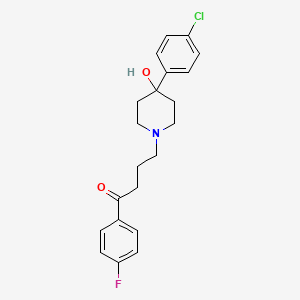
| Formula | C21H23ClFNO2 |
|---|---|
| Molecular weight | 375.87 g/mol |
| IUPAC name | 4-[4-(4-chlorophenyl)-4-hydroxypiperidin-1-yl]-1-(4-fluorophenyl)butan-1-one |
| CAS | 52-86-8 |
| PubChem CID | 3559 |
| InChIKey | LNEPOXFFQSENCJ-UHFFFAOYSA-N |
| logP | 4.43 (XLogP 3.2) |
| Polar surface area | 40.54 Ų |
| H-bond acceptors / donors | 3 / 1 |
| Drug-likeness (QED) | 0.76 |
| Lipinski violations | 0 |
SMILES
O=C(CCCN1CCC(O)(c2ccc(Cl)cc2)CC1)c1ccc(F)cc1Biology & Pharmacokinetics
Pharmacokinetics
| BBB penetrant | Yes (logBB 1.3) |
|---|
Enzyme interactions
| Enzyme | Role | Detail |
|---|---|---|
| CARBONYL REDUCTASE | Substrate | — |
| CYP1A2 | Substrate | — |
| CYP2C19 | Inhibitor | IC₅₀ 2.8700000000000006 µM |
| CYP2C19 | Substrate | — |
| CYP2C9 | Substrate | — |
| CYP2D6 | Inhibitor | — |
| CYP2D6 | Substrate | IC₅₀ 3.6399999999999997 µM |
| CYP3A4 | Substrate | IC₅₀ 16.47482928591371 µM |
| UGT | Substrate | — |
Receptor binding (top 30)
| Target | Action | Affinity |
|---|---|---|
| Dopamine D2A | Binding | pKi 9.2 |
| DOPAMINE D2 Short (DRD2) | Binding | pKi 9.0 |
| D2L | Binding | pKi 9.0 |
| DOPAMINE D2 Long (DRD2) | Binding | pKi 8.8 |
| DOPAMINE D4.4 | Binding | pKi 8.8 |
| DOPAMINE D2 (DRD2) | Binding | pKi 8.7 |
| D2 | Binding | pKi 8.6 |
| DOPAMINE D4 (DRD4) | Binding | pKi 8.5 |
| Sigma | Binding | pKi 8.4 |
| DOPAMINE D3 (DRD3) | Binding | pKi 8.4 |
| alpha1-Adrenocepter | Binding | pKi 8.3 |
| DOPAMINE D4.2 | Binding | pKi 8.2 |
| D3 | Binding | pKi 8.2 |
| alpha1 | Binding | pKi 8.2 |
| adrenergic Alpha1B (ADRA1B) | Binding | pKi 8.1 |
Transporters
ASBT (Inhibitor)BCRP (Inhibitor)BCRP (Inhibitor)BSEP (Inhibitor)BSEP (Inhibitor)MDR1 (Inhibitor)MRP1 (Inhibitor)MRP2 (Inhibitor)MRP3 (Inhibitor)MRP4 (Inhibitor)OATP1B1 (Inhibitor)OATP1B3 (Inhibitor)OATP1B3 (Inhibitor)OCT1 (Inhibitor)OCTN2 (Inhibitor)P-gp (Inhibitor)MDR1 (Substrate)OATP1A2 (Substrate)OCT1 (Substrate)P-gp (Substrate)
Drug–drug interactions (100+, DDInter)
| Interacting drug | Severity | Management |
|---|---|---|
| Abarelix | major | |
| Abiraterone | major | |
| Alimemazine | major | |
| Anagrelide | major | |
| Apalutamide | major | |
| Arsenic trioxide | major | |
| Astemizole | major | |
| Bicalutamide | major | |
| Bosutinib | major | |
| Bupropion | major | |
| Cabozantinib | major | |
| Ceritinib | major | |
| Chloroquine | major | |
| Cilostazol | major | |
| Cisapride | major | |
| Clarithromycin | major | |
| Codeine | major | |
| Crizotinib | major | |
| Dasatinib | major | |
| Daunorubicin | major | |
| Daunorubicin (liposomal) | major | |
| Degarelix | major | |
| Dolasetron | major | |
| Doxepin | major | |
| Doxepin (topical) | major | |
| Doxorubicin | major | |
| Doxorubicin (liposomal) | major | |
| Encorafenib | major | |
| Entrectinib | major | |
| Enzalutamide | major | |
| Epirubicin | major | |
| Eribulin | major | |
| Erythromycin | major | |
| Fingolimod | major | |
| Fluconazole | major | |
| Flutamide | major | |
| Gilteritinib | major | |
| Glasdegib | major | |
| Goserelin | major | |
| Granisetron | major |
Showing 40 of 100+.
Registered Products (12)
| Brand | Form / strength | Pack | Agent | Citizen (JOD) |
|---|---|---|---|---|
| Haldol tabs | Tablet 5 mg | 25 tab | Telegraph Drug Store | 2.210 |
| Haloxen | Tablet 5 mg | 30 tab pack varies | JAWEDA INT. DRUD STORE | 2.280 |
| HAPROL | Ampoule 5 mg/1 ml | 5 amp | AL Rahma Drug Store | 3.470 |
| Haldol Decanoas Amps | Ampoule 50 mg/ml | 1 amp | Telegraph Drug Store | 3.560 |
| Halomak-5 | Ampoule 5 mg/ml | 10 ampoule | Oasis of Hope | 3.670 |
| Haloxen Tab | Tablet 10 mg | 30 tab pack varies | JAWEDA INT. DRUD STORE | 4.250 |
| SERENACE Tablets | Tablet 5 mg | 50 tab | Sabbagh Drug Store | 6.330 |
| Haloperidol Inj | Injection 5 mg/ml | 10 amp | AL Rahma Drug Store | 6.600 |
| Haldol Decanoas Amps | Ampoule 100 mg/ml | 1 amp | Telegraph Drug Store | 8.440 |
| SERENACE Tablets | Tablet 10 mg | 50 tab | Sabbagh Drug Store | 8.440 |
| Haloxen | Tablet 5 mg | 1000 tab pack varies | JAWEDA INT. DRUD STORE | 64.590 |
| Haloxen Tab | Tablet 10 mg | 1000 tab pack varies | JAWEDA INT. DRUD STORE | 115.970 |