Fluconazole
JFDA label: Funzol 100 capsule
Mechanism of Action
Inhibitor of Lanosterol 14-alpha demethylase — Cytochrome P450 51 inhibitor
| Target | Action | Gene / class |
|---|---|---|
| Lanosterol 14-alpha demethylase efficacy | INHIBITOR | ERG11 |
Indications
Off-label
- Candida intertrigo
- Candidiasis, empiric therapy (non-neutropenic patients in the ICU)
- Coccidioidomycosis (non-HIV infected)
- Cryptococcal pneumonia
- Primary antifungal prophylaxis in pediatric oncology patients
- Surgical prophylaxis (perioperative)
Antimicrobial Spectrum
Expected / intrinsic spectrum (EUCAST breakpoints & labels) — not local resistance. Source: openfda-label.
Fungi
| Organism | Activity | MIC |
|---|---|---|
| Candida albicans | Active | — |
| Candida dubliniensis | Active | — |
| Candida glabrata | Active | — |
| Candida guilliermondii | Active | — |
| Candida kefyr | Active | — |
| Candida krusei | Active | — |
| Candida lusitaniae | Active | — |
| Candida parapsilosis | Active | — |
| Candida tropicalis | Active | — |
| Cryptococcus neoformans | Active | — |
Class profile
| antifungalClass | Azole |
|---|---|
| targetMolecule | Lanosterol 14-alpha-demethylase (CYP51) |
| isFungicidal | 0 |
| spectrumCandida | S (not C.krusei/C.glabrata) |
| spectrumAspergillus | Resistant |
| spectrumCryptococcus | S |
| spectrumDermatophytes | Resistant |
| resistanceMechanisms | ERG11 mutations (Y132F/K143R/F145L),Efflux pumps (CDR1/CDR2/MDR1),Overexpression of CYP51 |
| source | Pappas2016/Lass-Florl2011 |
Contraindications
Source: Curated · Lexicomp
- Co-administration with QT-prolonging drugs metabolised by CYP3A4 (cisapride, astemizole) Absolute
- Hypersensitivity to fluconazole or any component of the formulation (cross-reaction with other azole antifungal agents may occur, but has not been established Absolute
- coadministration of terfenadine in adult patients receiving multiple doses of 400 mg or higher or with CYP3A4 substrates which may lead to QTc prolongation (eg, astemizole, cisapride, erythromycin, pimozide, or quinidine) Absolute
- use caution) Absolute
Adverse Reactions
Cardiac disorders (1)
Uncommon QT prolongation
Nervous system disorders (3)
Common Headache
Not Known dizziness · Headache
Hepatobiliary disorders (7)
Uncommon Elevated liver enzymes
Rare Serious hepatotoxicity (rare)
Not Known Hepatitis · increased serum alkaline phosphatase · increased serum ALT · increased serum AST · jaundice
Gastrointestinal disorders (7)
Common Nausea
Not Known abdominal pain · diarrhea · dysgeusia · dyspepsia · Nausea · vomiting
Skin and subcutaneous tissue disorders (2)
Uncommon Rash
Not Known Skin rash
Dosing
Source: Lexicomp
Warnings & Precautions
Source: Lexicomp
Arrhythmias
Cases of QTc prolongation and torsade de pointes associated with fluconazole use have been reported (usually high dose or in combination with agents known to prolong the QT interval); use caution in patients with concomitant medications or conditions which are arrhythmogenic.
CNS effects
May occasionally cause dizziness or seizures; use caution driving or operating machinery.
Hepatotoxicity
Serious (and sometimes fatal) hepatic toxicity (eg, hepatitis, cholestasis, fulminant hepatic failure) has been observed. Monitor patients who develop abnormal liver function tests for the development of more severe hepatic injury; discontinue fluconazole if signs and symptoms consistent with liver disease develop.
Hypersensitivity reactions
Anaphylaxis has been reported rarely; use with caution in patients with hypersensitivity to other azoles.
Skin reactions
Rare exfoliative skin disorders have been observed; fatal outcomes have been reported in patients with serious concomitant diseases. Monitor patients with deep seated fungal infections closely for rash development and discontinue if lesions progress. In patients with superficial fungal infections who develop a rash attributable to fluconazole, treatment should also be discontinued. Disease-related concerns:
Hepatic impairment
Use with caution in patients with preexisting hepatic impairment; monitor liver function closely and discontinue if symptoms consistent with liver disease develop.
Renal impairment
Use with caution in patients with renal impairment; dosage adjustment may be necessary. Concurrent drug therapy issues:
Drug-drug interactions
Potentially significant interactions may exist, requiring dose or frequency adjustment, additional monitoring, and/or selection of alternative therapy. Consult drug interactions database for more detailed information. Dosage form specific issues:
Benzyl alcohol and derivatives
Some dosage forms may contain sodium benzoate/benzoic acid; benzoic acid (benzoate) is a metabolite of benzyl alcohol; large amounts of benzyl alcohol (≥99 mg/kg/day) have been associated with a potentially fatal toxicity (“gasping syndrome”) in neonates; the “gasping syndrome” consists of metabolic acidosis, respiratory distress, gasping respirations, CNS dysfunction (including convulsions, intracranial hemorrhage), hypotension, and cardiovascular collapse (AAP 1997; CDC 1982); some data suggests that benzoate displaces bilirubin from protein binding sites (Ahlfors 2001); avoid or use dosage forms containing benzyl alcohol derivative with caution in neonates. See manufacturer’s labeling.
Sucrose
Oral suspension contains sucrose; avoid use in patients with fructose intolerance, glucose-galactose malabsorption, or sucrase-isomaltase insufficiency.
Pregnancy & Lactation
Pregnancy
Caution
Single 150 mg dose for vaginal candidiasis generally considered acceptable (some guidelines prefer topical azoles). Avoid systemic courses > 150 mg total or prolonged treatment — use amphotericin B or topical azoles instead
Lactation
Fluconazole is present in breast milk at concentrations similar to maternal plasma concentrations (Force 1995; Schilling 1993). The relative infant dose (RID) of fluconazole is 5% to 21% when calculated using the highest breast milk concentration located and compared to an infant therapeutic dose of 3 to 12 mg/kg/day. In general, breastfeeding is considered acceptable when the RID is 25% breastfeeding should generally be avoided (Anderson 2016; Ito 2000). The RID of fluconazole was calcula
Monitoring
| Efficacy | Fungal culture and species identification; minimum inhibitory concentration (MIC) where available; clinical response (temperature, imaging for invasive fungal disease) |
|---|---|
| Toxicity | LFTs (hepatotoxicity — azoles in particular); renal function; ECG for QT prolongation (azoles); drug levels if available (itraconazole, voriconazole) |
| Clinical pearl | Voriconazole levels are highly variable due to CYP2C19 polymorphism — TDM recommended (target trough 2–5 mg/L). Check for drug interactions with CYP3A4 substrates. |
| Counseling | Report visual disturbances (voriconazole), jaundice, or rash. Take azoles with food or as directed to optimise absorption. |
Chemistry & Properties
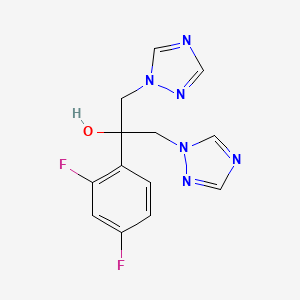
| Formula | C13H12F2N6O |
|---|---|
| Molecular weight | 306.28 g/mol |
| IUPAC name | 2-(2,4-difluorophenyl)-1,3-bis(1,2,4-triazol-1-yl)propan-2-ol |
| CAS | 86386-73-4 |
| PubChem CID | 3365 |
| InChIKey | RFHAOTPXVQNOHP-UHFFFAOYSA-N |
| logP | 0.74 (XLogP 0.4) |
| Polar surface area | 81.65 Ų |
| H-bond acceptors / donors | 7 / 1 |
| Drug-likeness (QED) | 0.75 |
| Lipinski violations | 0 |
SMILES
OC(Cn1cncn1)(Cn1cncn1)c1ccc(F)cc1FBiology & Pharmacokinetics
Pharmacokinetics
| BBB penetrant | Yes (logBB -0.22) |
|---|
Enzyme interactions
| Enzyme | Role | Detail |
|---|---|---|
| CYP2C19 | Inhibitor | IC₅₀ 8.2 µM |
| CYP2C9 | Inhibitor | IC₅₀ 23.18510067971863 µM |
| CYP3A4 | Inhibitor | IC₅₀ 12.551116510287736 µM |
| CYP3A4 | Substrate | — |
Transporters
BCRP (Inhibitor)BCRP (Inhibitor)BSEP (Inhibitor)BSEP (Inhibitor)MDR1 (Inhibitor)MRP1 (Inhibitor)MRP2 (Inhibitor)MRP3 (Inhibitor)MRP4 (Inhibitor)OATP1B1 (Inhibitor)OATP1B1 (Inhibitor)OATP1B3 (Inhibitor)OATP1B3 (Inhibitor)OATP2B1 (Inhibitor)OCT1 (Inhibitor)P-gp (Inhibitor)MDR1 (Substrate)P-gp (Substrate)
Drug–drug interactions (100+, DDInter)
| Interacting drug | Severity | Management |
|---|---|---|
| Acalabrutinib | major | |
| Acetohexamide | major | |
| Alfentanil | major | |
| Alprazolam | major | |
| Amiodarone | major | |
| Amisulpride | major | |
| Anagrelide | major | |
| Anisindione | major | |
| Arsenic trioxide | major | |
| Astemizole | major | |
| Atorvastatin | major | |
| Avanafil | major | |
| Avapritinib | major | |
| Avatrombopag | major | |
| Bedaquiline | major | |
| Benzhydrocodone | major | |
| Bepridil | major | |
| Bosutinib | major | |
| Brexpiprazole | major | |
| Brigatinib | major | |
| Butorphanol | major | |
| Cabozantinib | major | |
| Ceritinib | major | |
| Cerivastatin | major | |
| Chloroquine | major | |
| Chlorpropamide | major | |
| Cilostazol | major | |
| Cisapride | major | |
| Citalopram | major | |
| Clopidogrel | major | |
| Clozapine | major | |
| Cobimetinib | major | |
| Colchicine | major | |
| Crizotinib | major | |
| Deflazacort | major | |
| Dicoumarol | major | |
| Disopyramide | major | |
| Dofetilide | major | |
| Dolasetron | major | |
| Dronedarone | major |
Showing 40 of 100+.
Registered Products (44)
| Brand | Form / strength | Pack | Agent | Citizen (JOD) |
|---|---|---|---|---|
| Duracan | Capsule 150 mg | 1 cap | شركة مستودع ادوية الايمان | 2.910 |
| Flucozal cap | Capsule 150 mg | 1 cap | Ibn Rushd Drug Store | 2.910 |
| Oramax | Capsule 150 mg | 1 cap | Professional Drug Store | 2.920 |
| Flucand 150 Capsules | Capsule 150 mg | 1 cap pack varies | Hikma Pharmaceuticals Co.Ltd/Jordan | 3.520 |
| FLUCOHEAL 150 CAPSULES | Capsule 150 mg | 1 cap pack varies | Dar Al Dawa Development and Investment Co Ltd/Jordan | 3.780 |
| Fungimid Capsules | Capsule 150 mg | 1 cap pack varies | MIDDLE EAST PHARMA&CHEMICAL IND/JORDAN | 3.890 |
| Candivast capsule | Capsule 150 mg | 1 cap | The Arab Pharmaceutical Manufacturing PSC/Salt | 3.940 |
| Diflazol Cap | Capsule 150 mg | 1 cap pack varies | Hayat Pharmaceutical Industries CO.PLC/JORDAN | 3.940 |
| Flucover Tab. | Tablet 150 mg | 1 tab pack varies | JORDAN RIVER PHARMA.IND(JORIVER)/JORDAN | 3.940 |
| Funzol 150 capsule | Capsule 150 mg | 1 cap pack varies | THE JORDANIAN PHARMACEUTICAL MANUFACTURING COMPANY/JORDAN | 3.940 |
| Unizole Capsule | Capsule 150 mg | 1 cap | UNITED PHARM.MFG.CO.LTD(UPM)/JORDAN | 3.940 |
| DIFLUCAN CAPS | Capsule 150 mg | 1 cap | Khoury Drug Store | 4.150 |
| Flucand 150 Capsules | Capsule 150 mg | 2 cap pack varies | Hikma Pharmaceuticals Co.Ltd/Jordan | 6.690 |
| FLUCOHEAL 150 CAPSULES | Capsule 150 mg | 2 cap pack varies | Dar Al Dawa Development and Investment Co Ltd/Jordan | 7.180 |
| Fungimid Capsules | Capsule 150 mg | 2 cap pack varies | MIDDLE EAST PHARMA&CHEMICAL IND/JORDAN | 7.390 |
| Diflazol Cap | Capsule 150 mg | 2 cap pack varies | Hayat Pharmaceutical Industries CO.PLC/JORDAN | 7.490 |
| Flucover Tab | Tablet 150 mg | 2 tab pack varies | JORDAN RIVER PHARMA.IND(JORIVER)/JORDAN | 7.490 |
| Candivast capsule | Capsule 50 mg | 7 cap | The Arab Pharmaceutical Manufacturing PSC/Salt | 8.730 |
| FLUCOHEAL 50 CAPSULES | Capsule 50 mg | 7 cap | Dar Al Dawa Development and Investment Co Ltd/Jordan | 8.730 |
| Flucand 50 Capsules | Capsule 50 mg | 7 cap | Hikma Pharmaceuticals Co.Ltd/Jordan | 8.730 |
| Fungimid Capsules | Capsule 50 mg | 7 cap pack varies | MIDDLE EAST PHARMA&CHEMICAL IND/JORDAN | 8.730 |
| Funzol 50 capsule | Capsule 50 mg | 7 cap | THE JORDANIAN PHARMACEUTICAL MANUFACTURING COMPANY/JORDAN | 8.730 |
| DIFLUCAN CAPS | Capsule 50 mg | 7 cap | Khoury Drug Store | 9.700 |
| FLUCOHEAL 150 CAPSULES | Capsule 150 mg | 4 cap pack varies | Dar Al Dawa Development and Investment Co Ltd/Jordan | 12.000 |
| Flucover Tab. | Tablet 150 mg | 4 tab pack varies | JORDAN RIVER PHARMA.IND(JORIVER)/JORDAN | 12.000 |
| Diflazol Cap | Capsule 150 mg | 4 cap pack varies | Hayat Pharmaceutical Industries CO.PLC/JORDAN | 14.660 |
| Funzol 100 capsule | Capsule 100 mg | 7 cap | THE JORDANIAN PHARMACEUTICAL MANUFACTURING COMPANY/JORDAN | 18.000 |
| Fungimid Capsule | Capsule 200 mg | 7 cap | MIDDLE EAST PHARMA&CHEMICAL IND/JORDAN | 35.470 |
| Fungimid Capsules | Capsule 150 mg | 1 cap pack varies | MIDDLE EAST PHARMA&CHEMICAL IND/JORDAN | 147.700 |
| Fungimid Capsules | Capsule 50 mg | 50 X 7 pack varies | MIDDLE EAST PHARMA&CHEMICAL IND/JORDAN | 371.030 |
| Funzol 150 capsule | Capsule 150 mg | 168 cap pack varies | THE JORDANIAN PHARMACEUTICAL MANUFACTURING COMPANY/JORDAN | 562.630 |
| Flucover Tab | Tablet 150 mg | 500 tab pack varies | JORDAN RIVER PHARMA.IND(JORIVER)/JORDAN | 1674.500 |
| DIFLUCAN | Vial 200 mg/100 ml | 1 vial | Khoury Drug Store | — |
| DIFLUCAN | Vial 100 mg/50 ml | 1 vial | Khoury Drug Store | — |
| Exomax | Injection 2 mg/ml | 100 ml | Khoury Drug Store | — |
| Flucand | Injection 2 mg/ml | 200 ml | Hikma Pharmaceuticals Co.Ltd/Jordan | — |
| Flucand Infusion | Infusion 100 mg/50 ml | 50 ml | Hikma Pharmaceuticals Co.Ltd/Jordan | — |
| Flucand Infusion | Infusion 200 mg/100 ml | 100 ml | Hikma Pharmaceuticals Co.Ltd/Jordan | — |
| Fluconazole B.Braun | Injection 2 mg/ml | 100 ml | THE ARAB DRUG STORE P.S.C | — |
| Flukas | Vial 100 mg/50 ml | 1 vial | Al Wafi Drug Store | — |
| Flukas | Vial 200 mg/100 ml | 1 vial | Professional Drug Store | — |
| Unizol 100mg/50ml Solution for Inj | Injection 2 mg/1 ml | 1 Bag pack varies | MS PHARMA/JORDAN | — |
| Unizol 200/100ml Solution for Infusion | Infusion 2 mg/1 ml | 100 ml pack varies | MS PHARMA/JORDAN | — |
| Unizol 400/200 ml Solution For Infusion | Infusion 2 mg/1 ml | 1 bag pack varies | MS PHARMA/JORDAN | — |