Norfloxacin
🧬 Cross-allergy: Fluoroquinolones
JFDA label: Noracin 400mg tablet
- Serious adverse reactions:
- Exacerbation of myasthenia gravis:
Mechanism of Action
Inhibitor of Topoisomerase IV — Topoisomerase IV inhibitor; Inhibitor of Bacterial DNA gyrase — Bacterial DNA gyrase inhibitor
| Target | Action | Gene / class |
|---|---|---|
| Bacterial DNA gyrase efficacy | INHIBITOR | |
| Topoisomerase IV efficacy | INHIBITOR |
Indications
Off-label
- Infectious Diarrhea
- Shigella dysentery type 1
- Spontaneous bacterial peritonitis (prevention)
- Traveler's diarrhea
Antimicrobial Spectrum
Expected / intrinsic spectrum (EUCAST breakpoints & labels) — not local resistance. Source: EUCAST v16.
Bacteria
| Organism | Activity | MIC |
|---|---|---|
| Enterobacterales | Susceptible | 0.5 mg/L |
Class profile
| gramStatus | Gram- |
|---|---|
| spectrumBreadth | Moderate |
| atypicalCoverage | No |
| isBactericidal | 1 |
| moaCategory | DNA synthesis inhibitor (topoisomerase II/IV, urinary tract only) |
| pdIndex | Concentration-dependent |
| postAntibioticEffect | Moderate |
| mrsaCoverage | 0 |
| resistanceMechanisms | Target site mutations (gyrA,parC),Active efflux |
Contraindications
Source: Lexicomp
- Hypersensitivity to norfloxacin, quinolones, or any component of the formulation Absolute
- history of tendonitis or tendon rupture associated with quinolone use Absolute
Adverse Reactions
Nervous system disorders (3)
Common Dizziness · headache
Uncommon Drowsiness
Hepatobiliary disorders (1)
Common Liver enzymes increased
Renal and urinary disorders (1)
Uncommon Proteinuria
Blood and lymphatic system disorders (6)
Common Eosinophilia
Uncommon decreased hematocrit · decreased hemoglobin · Decreased platelet count · leukopenia · thrombocytopenia
Metabolism and nutrition disorders (2)
Uncommon Decreased WBC count · increased serum alkaline phosphatase
Gastrointestinal disorders (12)
Common abdominal cramping · Nausea
Uncommon Abdominal pain · anorectal pain · anorexia · constipation · diarrhea · dyspepsia · flatulence · loose stools · vomiting · xerostomia
Skin and subcutaneous tissue disorders (3)
Uncommon Hyperhidrosis · pruritus · rash
Musculoskeletal and connective tissue disorders (2)
Uncommon back pain · Weakness
General disorders and administration site conditions (1)
Uncommon Fever
Dosing
Source: Lexicomp
Warnings & Precautions
Source: Lexicomp
Altered cardiac conduction
Fluoroquinolones may prolong QTc interval; avoid use in patients with a history of QTc prolongation, uncorrected hypokalemia, hypomagnesemia, or concurrent administration of other medications known to prolong the QT interval (including Class Ia and Class III antiarrhythmics, cisapride, erythromycin, antipsychotics, and tricyclic antidepressants).
Glucose regulation
Fluoroquinolones have been associated with the development of serious, and sometimes fatal, hypoglycemia. These events have occurred most often in elderly patients with diabetes, but have also been reported in patients without a prior history of diabetes. Prompt identification and treatment of hypoglycemia is essential. Individual quinolones may differ in their potential to cause this effect. It was most evident with gatifloxacin (no longer marketed as s systemic formulation). Hyperglycemia has also been associated with the use of fluoroquinolones. Patients should be monitored closely for signs/symptoms of disordered glucose regulation.
Hypersensitivity reactions
Severe hypersensitivity reactions, including anaphylaxis, have occurred with quinolone therapy. The spectrum of these reactions can vary widely; reactions may present as typical allergic symptoms (eg, itching, urticaria, rash, edema) after a single dose, or may manifest as severe idiosyncratic dermatologic (eg, Stevens-Johnson, toxic epidermal necrolysis), vascular (eg, vasculitis), pulmonary (eg, pneumonitis), renal (eg, nephritis), hepatic (eg, hepatic failure or necrosis), and/or hematologic (eg, anemia, cytopenias) events, usually after multiple doses. Prompt discontinuation of drug should occur if skin rash or other symptoms arise.
Phototoxicity
Avoid excessive sunlight and take precautions to limit exposure (eg, loose fitting clothing, sunscreen); may cause moderate-to-severe phototoxicity reactions. Discontinue use if photosensitivity occurs.
Serious adverse reactions
Fluoroquinolones are associated with disabling and potentially irreversible serious adverse reactions that may occur together, including tendinitis and tendon rupture, peripheral neuropathy, and CNS effects. Discontinue norfloxacin immediately and avoid use of fluoroquinolones in patients who experience any of these serious adverse reactions. Patients of any age or without pre-existing risk factors have experienced these reactions; may occur within hours to weeks after initiation. - CNS effects: Fluoroquinolones have been associated with an increased risk of CNS effects including seizures, increased intracranial pressure (including pseudotumor cerebri), and toxic psychosis; may also cause nervousness, agitation, insomnia, anxiety, nightmares, paranoia, dizziness, confusion, tremors, hallucinations, depression, and suicidal thoughts or actions. May occur following the first dose; discontinue immediately and avoid further use of fluoroquinolones in patients who experience these reactions. Use with caution in patients with known or suspected CNS disorder, or risk factors that may predispose to seizures or lower the seizure threshold. - Peripheral neuropathy: Fluoroquinolones have been associated with an increased risk of peripheral neuropathy; may occur soon after initiation of therapy and may be irreversible; discontinue if symptoms of sensory or sensorimotor neuropathy occur. Avoid use in patients who have previously experienced peripheral neuropathy. - Tendinitis/tendon ruptu
Superinfection
Prolonged use may result in fungal or bacterial superinfection, including C. difficile-associated diarrhea (CDAD) and pseudomembranous colitis; CDAD has been observed >2 months postantibiotic treatment. Disease-related concerns:
Myasthenia gravis
May exacerbate muscle weakness related to myasthenia gravis; avoid use in patients with known history of myasthenia gravis. Cases of severe exacerbations, including the need for ventilatory support and deaths have been reported.
Renal impairment
Use caution with renal impairment; dose adjustment required. May increase risk of tendon rupture.
Rheumatoid arthritis
Use with caution in patients with rheumatoid arthritis; may increase risk of tendon rupture.
Syphilis
Since norfloxacin is ineffective in the treatment of syphilis and may mask symptoms, all patients should be tested for syphilis at the time of gonorrheal diagnosis and 3 months later. Concurrent drug therapy issues:
Drug-drug interactions
Potentially significant interactions may exist, requiring dose or frequency adjustment, additional monitoring, and/or selection of alternative therapy. Consult drug interactions database for more detailed information. Special populations:
Elderly
Adverse effects (eg, tendon rupture, QT changes) may be increased in the elderly.
G6PD deficiency
Hemolytic reactions may (rarely) occur with quinolone use in patients with latent or actual G6PD deficiency.
Pediatric
Safety and efficacy have not been established in children; other quinolones have caused transient arthropathy in children. Other warnings/precautions:
Appropriate use
Reserve use of norfloxacin for treatment of uncomplicated urinary tract infections, including cystitis, for patients who have no alternative treatment options because of the risk of disabling and potentially serious adverse reactions (eg, tendinitis and tendon rupture, peripheral neuropathy, CNS effects).
Pregnancy & Lactation
Pregnancy
Adverse events have been observed in some animal reproduction studies. Norfloxacin crosses the placenta, distributing to cord blood and amniotic fluid (Wise 1984). Based on available data, an increased risk of teratogenic effects has not been observed following norfloxacin use during pregnancy (Bar-Oz 2009; Padberg 2014).
Lactation
Norfloxacin was not detected in the milk of nursing mothers administered an oral 200 mg dose. It is not known if concentrations would be detectable after a higher dose or multiple doses. Due to the potential for serious adverse reactions in the nursing infant, the manufacturer recommends a decision be made whether to discontinue nursing or to discontinue the drug, taking into account the importance of treatment to the mother.
Monitoring
| Efficacy | Culture and susceptibility testing; clinical resolution (temperature, WBC, CRP, procalcitonin) |
|---|---|
| Toxicity | Renal function (dose adjustment in renal impairment); hepatic function for hepatically cleared agents; signs of C. difficile infection (diarrhoea) |
| Clinical pearl | Culture results guide de-escalation to narrower-spectrum therapy. Review antibiotic appropriateness at 48–72 h (antimicrobial stewardship). |
| Counseling | Complete the full course. Report persistent diarrhoea, rash, or lack of improvement after 48–72 h. |
Chemistry & Properties
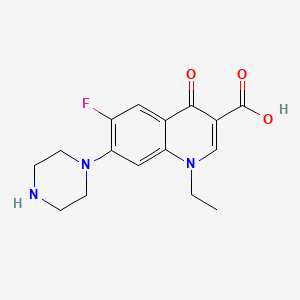
| Formula | C16H18FN3O3 |
|---|---|
| Molecular weight | 319.34 g/mol |
| IUPAC name | 1-ethyl-6-fluoro-4-oxo-7-piperazin-1-ylquinoline-3-carboxylic acid |
| CAS | 70458-96-7 |
| PubChem CID | 4539 |
| InChIKey | OGJPXUAPXNRGGI-UHFFFAOYSA-N |
| logP | 1.27 (XLogP -1.0) |
| Polar surface area | 74.57 Ų |
| H-bond acceptors / donors | 5 / 2 |
| Drug-likeness (QED) | 0.89 |
| Lipinski violations | 0 |
SMILES
CCn1cc(C(=O)O)c(=O)c2cc(F)c(N3CCNCC3)cc21Biology & Pharmacokinetics
Pharmacokinetics
| BBB penetrant | No (logBB -1.1) |
|---|
Transporters
BCRP (Inhibitor)BCRP (Inhibitor)BSEP (Inhibitor)BSEP (Inhibitor)MRP1 (Inhibitor)MRP2 (Inhibitor)MRP3 (Inhibitor)MRP4 (Inhibitor)OAT1 (Inhibitor)OAT3 (Inhibitor)OATP1A2 (Inhibitor)OATP1B1 (Inhibitor)OATP1B1 (Inhibitor)OATP1B3 (Inhibitor)OATP1B3 (Inhibitor)P-gp (Inhibitor)BCRP (Substrate)MDR1 (Substrate)MRP2 (Substrate)OATP1A2 (Substrate)P-gp (Substrate)
Drug–drug interactions (100+, DDInter)
| Interacting drug | Severity | Management |
|---|---|---|
| Acetohexamide | major | |
| Aminolevulinic acid | major | |
| Anagrelide | major | |
| Arsenic trioxide | major | |
| Betamethasone | major | |
| Bupropion | major | |
| Cabozantinib | major | |
| Ceritinib | major | |
| Chloroquine | major | |
| Chlorpropamide | major | |
| Cisapride | major | |
| Crizotinib | major | |
| Deflazacort | major | |
| Dexamethasone | major | |
| Dicoumarol | major | |
| Dolasetron | major | |
| Fingolimod | major | |
| Fludrocortisone | major | |
| Glimepiride | major | |
| Glipizide | major | |
| Glyburide | major | |
| Halofantrine | major | |
| Hydrocortisone | major | |
| Hydroxychloroquine | major | |
| Insulin aspart (aspart protamine) | major | |
| Insulin aspart (aspart) | major | |
| Insulin degludec | major | |
| Insulin detemir | major | |
| Insulin glargine | major | |
| Insulin glulisine | major | |
| Insulin human | major | |
| Insulin human (inhalation, rapid acting) | major | |
| Insulin human (isophane) | major | |
| Insulin human (regular) | major | |
| Insulin human (zinc extended) | major | |
| Insulin human (zinc) | major | |
| Insulin lispro | major | |
| Insulin lispro (protamine) | major | |
| Iohexol | major | |
| Iopamidol | major |
Showing 40 of 100+.
Registered Products (8)
| Brand | Form / strength | Pack | Agent | Citizen (JOD) |
|---|---|---|---|---|
| Apiflox eye drops | Ophthalmic Solution 3 mg/1 ml | 10 ml | Amman Pharmaceutical Indusries | 2.550 |
| Oprelex 0.3% ED | Solution 0.3 % | 5 ml | Dar Al Dawa Development and Investment Co Ltd/Jordan | 2.550 |
| Urobacid Tab | Tablet 400 mg | 14 tab | Nabulsi Drug Store | 3.580 |
| Noracin | Tablet 400 mg | 14 tab pack varies | THE JORDANIAN PHARMACEUTICAL MANUFACTURING COMPANY/JORDAN | 4.040 |
| Norax F.C Tablets | Film-Coated Tablet 400 mg | 14 tab pack varies | UNITED PHARM.MFG.CO.LTD(UPM)/JORDAN | 4.040 |
| Noroxin | Tablet 400 mg | 14 tab | Adatco Drug Store | 4.900 |
| Norax F.C Tablets | Film-Coated Tablet 400 mg | 350 tab pack varies | UNITED PHARM.MFG.CO.LTD(UPM)/JORDAN | 85.850 |
| Noracin | Tablet 400 mg | 588 tab pack varies | THE JORDANIAN PHARMACEUTICAL MANUFACTURING COMPANY/JORDAN | 144.230 |