calcium chloride
JFDA label: 10% W/V Calcium Gluconate Inj
Mechanism of Action
Moderates nerve and muscle performance via action potential excitation threshold regulation
Indications
Off-label
- Beta-blocker overdose (shock refractory to other measures)
- Calcium channel blocker overdose
- Malignant arrhythmias (including cardiac arrest) associated with hypermagnesemia
- Severe hyperkalemia
Contraindications
Source: Lexicomp
- Known or suspected digoxin toxicity Absolute
- not recommended as routine treatment in cardiac arrest (includes asystole, ventricular fibrillation, pulseless ventricular tachycardia, or pulseless electrical activity) Absolute
Adverse Reactions
Cardiac disorders (6)
Not Known Bradycardia · cardiac arrest · cardiac arrhythmia · hypotension · syncope · vasodilatation
Nervous system disorders (2)
Not Known Feeling abnormal (sense of oppression; with rapid IV injection) · tingling sensation (with rapid IV injection)
Renal and urinary disorders (1)
Not Known Nephrolithiasis
Metabolism and nutrition disorders (2)
Not Known Hot flash (with rapid IV injection) · hypercalcemia
Gastrointestinal disorders (3)
Not Known Dysgeusia (chalky taste) · gastrointestinal irritation · increased serum amylase
General disorders and administration site conditions (1)
Not Known Local tissue necrosis (following extravasation)
Other (1)
Not Known Cutaneous calcification
Dosing
Source: Lexicomp
Warnings & Precautions
Source: Lexicomp
Extravasation
Vesicant; ensure proper catheter or needle position prior to and during infusion. Avoid extravasation. Extravasation may result in severe necrosis and sloughing. Monitor the IV site closely. Disease-related concerns:
Acidosis
Use with caution in patients with respiratory acidosis, renal impairment, or respiratory failure; acidifying effect of calcium chloride may potentiate acidosis.
Hyperphosphatemia
Use with caution in patients with severe hyperphosphatemia as elevated levels of phosphorus and calcium may result in soft tissue and pulmonary arterial calcium-phosphate precipitation.
Hypokalemia
Use with caution in patients with severe hypokalemia as acute rises in serum calcium levels may result in life-threatening cardiac arrhythmias.
Hypomagnesemia
Hypomagnesemia is a common cause of hypocalcemia; therefore, correction of hypocalcemia may be difficult in patients with concomitant hypomagnesemia. Evaluate serum magnesium and correct hypomagnesemia (if necessary), particularly if initial treatment of hypocalcemia is refractory.
Renal impairment
Use with caution in patients with chronic renal failure to avoid hypercalcemia; frequent monitoring of serum calcium and phosphorus is necessary. Concurrent drug therapy issues:
Ceftriaxone
Ceftriaxone may complex with calcium causing precipitation. Fatal lung and kidney damage associated with calcium-ceftriaxone precipitates has been observed in premature and term neonates. Due to reports of precipitation reaction in neonates, do not coadminister ceftriaxone with calcium-containing solutions, even via separate infusion lines/sites or at different times in any neonate. Ceftriaxone should not be administered simultaneously with any calcium-containing solution via a Y-site in any patient. However, ceftriaxone and calcium-containing solutions may be administered sequentially of one another for use in patients other than neonates if infusion lines are thoroughly flushed (with a compatible fluid) between infusions.
Digoxin
Use with caution in digitalized patients; hypercalcemia may precipitate cardiac arrhythmias; use is contraindicated with known or suspected digoxin toxicity. Dosage form specific issues:
Aluminum
The parenteral product may contain aluminum; toxic aluminum concentrations may be seen with high doses, prolonged use, or renal dysfunction. Premature neonates are at higher risk due to immature renal function and aluminum intake from other parenteral sources. Parenteral aluminum exposure of >4 to 5 mcg/kg/day is associated with CNS and bone toxicity; tissue loading may occur at lower doses (Federal Register, 2002). See manufacturer’s labeling. Other warnings/precautions:
Appropriate product selection
Multiple salt forms of calcium exist; close attention must be paid to the salt form when ordering and administering calcium; incorrect selection or substitution of one salt for another without proper dosage adjustment may result in serious over or under dosing.
Duration of use
Avoid metabolic acidosis (ie, administer only up to 2 to 3 days then change to another calcium salt).
IV administration
For IV use only; do not inject SubQ or IM Avoid too rapid IV administration (do not exceed 100 mg/minute except in emergency situations).
Pregnancy & Lactation
Pregnancy
Animal reproduction studies have not been conducted. Calcium crosses the placenta. The amount of calcium reaching the fetus is determined by maternal physiological changes. Calcium requirements are the same in pregnant and nonpregnant females (IOM 2011). Information related to use as an antidote in pregnancy is limited. In general, medications used as antidotes should take into consideration the health and prognosis of the mother; antidotes should be administered to pregnant women if there is a clear indication for use and should not be withheld because of fears of teratogenicity (Bailey 2003). Medications used for the treatment of cardiac arrest in pregnancy are the same as in the non-pregnant woman. Doses and indications should follow current Advanced Cardiovascular Life Support guidelines. Appropriate medications should not be withheld due to concerns of fetal teratogenicity (Jeejeebhoy [AHA] 2015).
Lactation
Calcium is excreted in breast milk. The amount of calcium in breast milk is homeostatically regulated and not altered by maternal calcium intake. Calcium requirements are the same in lactating and nonlactating females (IOM 2011).
Monitoring
| Clinical pearl | Serum calcium and ionized calcium; albumin; serum phosphate; magnesium (to facilitate calcium repletion); ECG when appropriate. Monitor infusion site. Calcium channel blocker overdose, beta-blocker overdose (off-label uses): Monitor hemodynamic response; monitor serum ionized calcium levels every 30 minutes initially then every 2 hours and maintain ionized calcium ~2 times the ULN; avoid severe hypercalcemia (ionized calcium levels >2 times ULN) (Kerns 2007). |
|---|
Chemistry & Properties
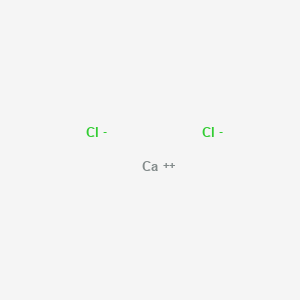
| Formula | CaCl2 |
|---|---|
| Molecular weight | 110.98 g/mol |
| IUPAC name | calcium dichloride |
| CAS | 10043-52-4 |
| PubChem CID | 5284359 |
| InChIKey | UXVMQQNJUSDDNG-UHFFFAOYSA-L |
SMILES
[Ca+2].[Cl-].[Cl-]Biology & Pharmacokinetics
Pharmacokinetics
| Protein binding | 40.0% |
|---|
Drug–drug interactions (34, DDInter)
| Interacting drug | Severity | Management |
|---|---|---|
| Ceftriaxone | major | |
| Digitoxin | major | |
| Digoxin | major | |
| Amlodipine | moderate | |
| Bendroflumethiazide | moderate | |
| Benzthiazide | moderate | |
| Bepridil | moderate | |
| Calcipotriol (topical) | moderate | |
| Calcitriol (topical) | moderate | |
| Chlorothiazide | moderate | |
| Chlorthalidone | moderate | |
| Demeclocycline | moderate | |
| Diltiazem | moderate | |
| Doxycycline | moderate | |
| Felodipine | moderate | |
| Hydrochlorothiazide | moderate | |
| Hydroflumethiazide | moderate | |
| Indapamide | moderate | |
| Isradipine | moderate | |
| Levamlodipine | moderate | |
| Metolazone | moderate | |
| Minocycline | moderate | |
| Nicardipine | moderate | |
| Nifedipine | moderate | |
| Nimodipine | moderate | |
| Nisoldipine | moderate | |
| Omadacycline | moderate | |
| Oxytetracycline | moderate | |
| Polythiazide | moderate | |
| Sarecycline | moderate | |
| Strontium chloride Sr-89 | moderate | |
| Tetracycline | moderate | |
| Trichlormethiazide | moderate | |
| Verapamil | moderate |
Registered Products (18)
| Brand | Form / strength | Pack | Agent | Citizen (JOD) |
|---|---|---|---|---|
| Mamera Caplet | Tablet 1 mg, 30 mcg, 100 mg, 30 IU, 3000 IU, 200 IU, 3 mg, 3.4 mg, 20 mg, 20 mcg, 10 mg, 12 mcg, 200 mg, 25 mcg, 150 mcg, 25 mcg, 22.5 mg, 27 mg, 2 mg, 10 mg, 25 mg, 2.3 mg | 30 tab | Jordan Sweden Medical & Sterilization Co. | 2.420 |
| Cal-C-Vita | Tablet 1 g, 300 IU, 15 mg, 250 mg | 15 tab | The Jordan Drugstore Co | 3.860 |
| Pronatal | Tablet 0.6 mg, 2.6 mcg, 18 mg, 0.03 mg, 2 mg, 85 mg, 15 mg, 0.06 mg, 150 mg, 0.03 mg, 0.2 mg, 0.05 mg, 11 mg, 1.9 mg, 27 mg, 1 mg, 53 mg, 1.4 mg, 200 IU, 1.4 mg | 30 tab | THE ARAB DRUG STORE P.S.C | 5.570 |
| Pharmaton Capsules | Capsule 20 mg, 15 mg, 10 mg, 60 mg, 400 IU, 2 mg, 4000 IU, 1 mcg, 90.3 mg, 1 mg, 10 mg, 1 mg, 10 mg, 40 mg, 10 mg, 1 mg, 2 mg, 8 mg, 66 mg, 1 mg, 26 mg, 70 mg, 0.2 mg | 30 cap | THE ARAB DRUG STORE P.S.C | 6.700 |
| Elevit Pronatal film-coated tablets | Film-Coated Tablet 0.80 mg, 4.00 mcg, 19.00 mg, 10.00 mg, 200 mcg, 100.00 mg, 1080 mcg, 12.5 mcg, 125.00 mg, 7.50 mg, 2.60 mg, 60.00 mg, 1.00 mg, 125 mg, 1.00 mg, 1.80 mg, 100.00 mg, 1.60 mg, 15.00 mg | 30 tab | The Jordan Drugstore Co | 8.330 |
| Ultimate DHEA | Capsule 25 mg, 70 mg, 90 mg, 50 mg | 60 cap | Alghad Drug Store | 25.000 |
| 10% W/V Calcium Gluconate Inj | Powder for Injection 10 % | 20 amp pack varies | THE ARAB DRUG STORE P.S.C | — |
| 10%Calcium Gluconate | Solution 10 % | 10 ml pack varies | Sabbagh Drug Store | — |
| Calcium Chloride | Ampoule 100 mg/ml | 20 amp | Khalil ibraheem drug stores | — |
| Calcium Chloride USP IV | Ampoule 1 g/10 ml | 100 amp | مستودع أدوية جاودة الدولي | — |
| Calcium Gluconate | Ampoule 9 g, 1.30 g | 50 ampoule | شركة مستودع ادوية جرينلاند | — |
| Calcium Gluconate USP IV | Ampoule 10 g/100 ml | 100 amp | JAWEDA INT. DRUD STORE | — |
| Calcium Resonium Powder | Powder 99.934 % | 300 g | Ulfa Pharma Co. | — |
| Peritoneal dialysis | Tablet 538 mg, 5.08 mg, 25.7 mg, 1.5 mg | 2 l | مستودع ادوية الثائر | — |
| Peritoneal dialysis | Tablet 538 mg, 5.08 mg, 25.7 mg, 2.5 mg | 2 l | مستودع ادوية الثائر | — |
| Peritoneal dialysis | Tablet 538 mg, 5.08 mg, 25.7 mg, 4.25 mg | 2 l | مستودع ادوية الثائر | — |
| Qatar 10% Calcium Chloride | Ampoule 10 % w/v | 35 amp | شركة مستودع ادوية جرينلاند | — |
| Resical Powder | Powder 93.5 % | 300 g | JORDAN RIVER PHARMA.IND(JORIVER)/JORDAN | — |