Idarubicin
JFDA label: Zavedos Inj
- Extravasation:
- Myocardial toxicity:
- Bone marrow suppression:
- Experienced physician:
- Hepatic impairment:
- Renal impairment:
Mechanism of Action
Idarubicin inhibits DNA and RNA synthesis by intercalation between DNA base pairs and by steric obstruction. Although the exact mechanism is unclear, it appears that direct binding to DNA (intercalation) and inhibition of DNA repair (topoisomerase II inhibition) result in blockade of DNA and RNA synthesis and fragmentation of DNA.
Indications
Approved
- Acute myeloid leukemia
Off-label
- Acute myeloid leukemia (pediatric), newly diagnosed
- Acute myeloid leukemia (pediatric), relapsed/refractory
Contraindications
Source: Lexicomp
- There are no contraindications listed in the manufacturer's labeling. Documentation of allergenic cross-reactivity for drugs in this class is limited. However, because of similarities in chemical structure and/or pharmacologic actions, the possibility of cross-sensitivity cannot be ruled out with certainty Absolute
Adverse Reactions
Cardiac disorders (2)
Very Common Cardiac failure (dose-related) · ECG abnormalities (transient; includes atrial premature contractions, S-T wave changes, supraventricular tachycardia, ventricular premature contractions; generally asymptomatic and self-limiting)
Nervous system disorders (3)
Very Common Headache
Common Peripheral neuropathy · seizure
Hepatobiliary disorders (2)
Very Common Increased serum bilirubin · increased serum transaminases
Renal and urinary disorders (1)
Very Common Urine discoloration (darker yellow)
Blood and lymphatic system disorders (3)
Very Common Anemia (effects are generally less severe with oral dosing) · bone marrow suppression (nadir: 10 to 15 days; recovery: 21 to 28 days; primarily leukopenia; effects are generally less severe with oral dosing) · thrombocytopenia (effects are generally less severe with oral dosing)
Gastrointestinal disorders (5)
Very Common diarrhea · gastrointestinal hemorrhage · nausea · stomatitis · Vomiting
Skin and subcutaneous tissue disorders (3)
Very Common Alopecia · skin rash · urticaria
General disorders and administration site conditions (1)
Very Common Radiation recall phenomenon
Dosing
Source: Lexicomp
Warnings & Precautions
Source: Lexicomp
Bone marrow suppression
Severe myelosuppression occurs when idarubicin is used at effective therapeutic doses. Patients are at risk of developing infection and bleeding due to neutropenia and thrombocytopenia, respectively (may be fatal). Monitor blood counts frequently. Do not use in patients with preexisting bone marrow suppression unless the benefit outweighs the risk.
Extravasation
[US Boxed Warning] Vesicant; may cause severe local tissue necrosis if extravasation occurs. For IV administration only; not for IM or SubQ administration. Administer through a freely flowing IV infusion line. Ensure proper needle or catheter placement prior to and during infusion. Avoid extravasation.
Gastrointestinal toxicity
Idarubicin is associated with a moderate emetic potential; antiemetics are recommended to prevent nausea and vomiting (Dupuis 2011; Hesketh 2017; Roila 2016). Abdominal pain, diarrhea, and mucositis may commonly occur. Severe enterocolitis with perforation has been reported (rare).
Hyperuricemia
Rapid lysis of leukemic cells may lead to hyperuricemia. Ensure adequate hydration and consider use of antihyperuricemic prophylaxis.
Myocardial toxicity
Idarubicin may cause myocardial toxicity leading to heart failure. Cardiotoxicity is more common in patients who have previously received anthracyclines or have preexisting cardiac disease. The risk of myocardial toxicity is also increased in patients with concomitant or prior mediastinal/pericardial irradiation, patients with anemia, bone marrow depression, infections, leukemic pericarditis, or myocarditis. Patients with active or dormant cardiovascular disease, concurrent administration of cardiotoxic drugs, prior therapy with other anthracyclines or anthracenediones are also at increased risk for cardiotoxicity. Other risk factors for anthracycline-induced cardiotoxicity include ≥60 years of age at time of treatment and ≥2 cardiovascular risk factors (smoking, hypertension, diabetes, dyslipidemia, or obesity) during or after treatment (Armenian 2017). Potentially fatal heart failure, acute arrhythmias (may be life-threatening) or other cardiomyopathies may also occur. Regular monitoring of LVEF is recommended, especially in patients with cardiac risk factors or impaired cardiac function. The half-life of other cardiotoxic agents must be considered. Avoid the use of anthracycline-based therapy for at least 5 half-lives after discontinuation of the cardiotoxic agent. Monitor cardiac function during treatment. Disease-related concerns:
Hepatic impairment
Dosage reductions are recommended in patients with hepatic impairment. Idarubicin use is not recommended if bilirubin >5 mg/dL.
Infections
Systemic infections should be controlled prior to initiation of treatment.
Renal impairment
Dosage reductions are recommended in patients with renal impairment. Concurrent drug therapy issues:
Drug-drug interactions
Potentially significant interactions may exist, requiring dose or frequency adjustment, additional monitoring, and/or selection of alternative therapy. Consult drug interactions database for more detailed information. Special populations:
Elderly
Patients >60 years of age who were undergoing induction therapy experienced heart failure, serious arrhythmias, chest pain, MI, and asymptomatic declines in LVEF more frequently than younger patients. Other warnings/precautions:
Experienced physician
Should be administered under the supervision of an experienced cancer chemotherapy physician. Use in facilities with laboratory and supportive resources adequate to monitor drug tolerance and protect and maintain a patient compromised by drug toxicity. The physician and institution must be capable of responding rapidly and completely to severe hemorrhagic conditions and/or overwhelming infection.
Pregnancy & Lactation
Pregnancy
Adverse events were observed in animal reproduction studies. Fetal fatality was noted in a case report following second trimester exposure in a pregnant woman. Guidelines for diagnosis, treatment, and follow-up of cancer during pregnancy from the European Society for Medical Oncology (ESMO) suggest utilizing an anthracycline agent other than idarubicin (in combination with cytarabine) for induction treatment in acute myeloid leukemia (AML) and only in the second and third trimester; the guidelines also recommend referral to a facility with expertise in cancer during pregnancy and a multidisciplinary team (obstetrician, neonatologist, oncology team) is encouraged (Peccatori 2013). The manufacturer recommends that women of reproductive potential avoid pregnancy during treatment.
Lactation
It is not known if idarubicin is present in breast milk. Due to the potential for serious adverse reactions in the breastfed infant, breastfeeding is not recommended by the manufacturer.
Monitoring
| Clinical pearl | CBC with differential and platelet count (frequently), cardiac function (LVEF; prior and during treatment), serum electrolytes, renal function (serum creatinine; prior to and during treatment), uric acid, liver function (ALT, AST, bilirubin; prior to and during treatment); monitor infusion site for signs of extravasation; monitor for gastrointestinal toxicity and infection |
|---|
Chemistry & Properties
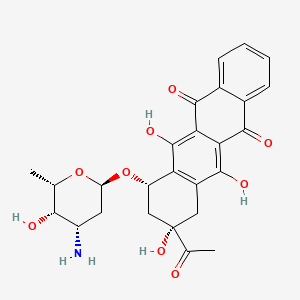
| Formula | C26H27NO9 |
|---|---|
| Molecular weight | 497.5 g/mol |
| IUPAC name | (7S,9S)-9-acetyl-7-[(2R,4S,5S,6S)-4-amino-5-hydroxy-6-methyloxan-2-yl]oxy-6,9,11-trihydroxy-8,10-dihydro-7H-tetracene-5,12-dione |
| CAS | 58957-92-9 |
| PubChem CID | 42890 |
| InChIKey | XDXDZDZNSLXDNA-TZNDIEGXSA-N |
| logP | 1.02 (XLogP 1.9) |
| Polar surface area | 176.61 Ų |
| H-bond acceptors / donors | 10 / 5 |
| Drug-likeness (QED) | 0.33 |
| Lipinski violations | 0 |
SMILES
CC(=O)[C@]1(O)Cc2c(O)c3c(c(O)c2[C@@H](O[C@H]2C[C@H](N)[C@H](O)[C@H](C)O2)C1)C(=O)c1ccccc1C3=OBiology & Pharmacokinetics
Pharmacokinetics
| BBB penetrant | Yes (logBB 0.0) |
|---|
Enzyme interactions
| Enzyme | Role | Detail |
|---|---|---|
| CYP1A2 | Substrate | — |
Transporters
BCRP (Inhibitor)BSEP (Inhibitor)MRP1 (Inhibitor)MRP1 (Inhibitor)OATP1B1 (Inhibitor)OATP1B3 (Inhibitor)P-gp (Inhibitor)BCRP (Substrate)P-gp (Substrate)
Drug–drug interactions (100+, DDInter)
| Interacting drug | Severity | Management |
|---|---|---|
| Adalimumab | major | |
| Amiodarone | major | |
| Amisulpride | major | |
| Anagrelide | major | |
| Arsenic trioxide | major | |
| Bacillus calmette-guerin substrain tice live antigen | major | |
| Baricitinib | major | |
| Bedaquiline | major | |
| Bepridil | major | |
| Cabozantinib | major | |
| Ceritinib | major | |
| Certolizumab pegol | major | |
| Chloroquine | major | |
| Cisapride | major | |
| Citalopram | major | |
| Cladribine | major | |
| Clozapine | major | |
| Crizotinib | major | |
| Deferiprone | major | |
| Disopyramide | major | |
| Dofetilide | major | |
| Dolasetron | major | |
| Dronedarone | major | |
| Droperidol | major | |
| Efavirenz | major | |
| Escitalopram | major | |
| Etanercept | major | |
| Fingolimod | major | |
| Gatifloxacin | major | |
| Golimumab | major | |
| Grepafloxacin | major | |
| Halofantrine | major | |
| Haloperidol | major | |
| Hydroxychloroquine | major | |
| Ibutilide | major | |
| Iloperidone | major | |
| Infliximab | major | |
| Ivabradine | major | |
| Ivosidenib | major | |
| Lefamulin | major |
Showing 40 of 100+.
Registered Products (3)
| Brand | Form / strength | Pack | Agent | Citizen (JOD) |
|---|---|---|---|---|
| Zavedos | Vial 1 mg/1 ml | 1 vial | Petra Drug Store | — |
| Zavedos Inj | Powder for Injection 5 mg | 1 vial | Petra Drug Store | — |
| Zavedos Inj | Powder for Injection 10 mg | 1 vial | Petra Drug Store | — |