Oxaliplatin
JFDA label: Oxaliplatin
- Hypersensitivity/Anaphylactic reactions:
Mechanism of Action
Inhibitor of DNA — DNA inhibitor
| Target | Action | Gene / class |
|---|---|---|
| DNA efficacy | INHIBITOR |
Indications
Approved
- Colon cancer, stage III (adjuvant therapy)
- Colorectal cancer, advanced
Off-label
- Biliary adenocarcinoma, advanced
- Chronic lymphocytic leukemia, refractory
- Esophageal cancer
- Gastric cancer
- Neuroblastoma, high-risk, relapsed/refractory (pediatrics)
- Neuroendocrine tumors (carcinoid), refractory
- Non Hodgkin lymphoma, relapsed/refractory
- Ovarian cancer, advanced
- Pancreatic cancer, advanced or metastatic
- Testicular cancer, refractory
- Unknown primary cancer, recurrent or refractory
Class profile
| mechanismClass | Platinum compound |
|---|---|
| targetMolecule | DNA (interstrand cross-links, bulky adducts) |
| targetPathway | DNA damage response/apoptosis |
| generation | 3rd generation platinum |
| primaryTumors | Colorectal,Gastric,Pancreatic |
| resistanceMechanisms | ERCC1/XPF overexpression,mismatch repair deficiency (distinct from cisplatin),Reduced drug influx |
| source | NCCN/OncoKB/Goodman&Gilman13ed |
Contraindications
Source: Lexicomp
- Additional contraindications (not in the US labeling): Pregnancy, breast-feeding Absolute
- Hypersensitivity to oxaliplatin, other platinum-containing compounds, or any component of the formulation Absolute
- severe renal impairment (CrCl Absolute
Adverse Reactions
Cardiac disorders (5)
Common chest pain · Edema · flushing · peripheral edema · thromboembolism
Nervous system disorders (7)
Very Common fatigue · headache · insomnia · pain · Peripheral neuropathy
Common dizziness · Rigors
Hepatobiliary disorders (3)
Very Common increased serum ALT · Increased serum AST · increased serum bilirubin
Renal and urinary disorders (2)
Common Dysuria · Increased serum creatinine
Blood and lymphatic system disorders (4)
Very Common Anemia · leukopenia · thrombocytopenia
Common Neutropenia
Immune system disorders (1)
Common Hypersensitivity reaction
Metabolism and nutrition disorders (2)
Common Dehydration · hypokalemia
Gastrointestinal disorders (14)
Very Common abdominal pain · anorexia · constipation · diarrhea · Nausea · stomatitis · vomiting
Common dysgeusia · Dyspepsia · dysphagia · flatulence · gastroesophageal reflux disease · hiccups · mucositis
Skin and subcutaneous tissue disorders (3)
Common alopecia · palmar-plantar erythrodysesthesia · Skin rash
Musculoskeletal and connective tissue disorders (2)
Very Common Back pain
Common Arthralgia
General disorders and administration site conditions (2)
Very Common Fever
Common Injection site reaction
Respiratory, thoracic and mediastinal disorders (7)
Very Common cough · Dyspnea
Common epistaxis · pharyngitis · pharyngolaryngeal dysesthesia · rhinitis · Upper respiratory tract infection
Other (1)
Common Abnormal lacrimation
Dosing
Source: Lexicomp
Warnings & Precautions
Source: Lexicomp
Bone marrow suppression
Grade 3 and 4 neutropenia occurs commonly with oxaliplatin in combination with fluorouracil and leucovorin; sepsis, neutropenic sepsis, and septic shock have been reported with oxaliplatin (some fatal). Delay oxaliplatin treatment until neutrophils are ≥1500/mm3; withhold treatment for sepsis or septic shock. Reduce the dose after recovery from grade 4 neutropenia or neutropenic fever.
Cardiotoxicity
QT prolongation and ventricular arrhythmias, including fatal torsades de pointes have been reported in postmarketing surveillance. ECG monitoring is recommend in patients with heart failure, bradyarrhythmias, concomitant medications known to cause QT prolongation (including class Ia and III antiarrhythmics), and electrolyte abnormalities. Avoid use in patients with congenital long QT syndrome. Monitor potassium and magnesium prior to and periodically during treatment; correct hypokalemia and hypomagnesemia prior to treatment initiation.
Extravasation
Oxaliplatin is an irritant with vesicant-like properties; ensure proper needle or catheter placement prior to and during infusion; avoid extravasation.
GI toxicity
Oxaliplatin is associated with a moderate emetic potential; antiemetics are recommended to prevent nausea and vomiting (Dupuis 2011; Hesketh 2017; Roila 2016). Fluorouracil and leucovorin are associated with GI adverse events; the incidence of GI toxicity is increased when oxaliplatin is administered with fluorouracil and leucovorin. Mucositis, stomatitis, GI bleeding, and GI obstruction have been reported.
Hypersensitivity/anaphylactoid reactions
Anaphylactic reactions have been reported with oxaliplatin (may occur within minutes of administration); symptoms may be managed with epinephrine, corticosteroids, antihistamines, and discontinuation; oxygen and bronchodilators have also been used (Kim 2009). Grade 3 or 4 hypersensitivity has been observed. Allergic reactions are similar to reactions reported with other platinum analogs and may occur with any cycle. Reactions typically occur after multiple cycles; in retrospective reviews, reaction occurred at a median of 7 to 9 cycles, with an onset of 5 to 70 minutes (Kim 2009; Polyzos 2009). Symptoms may include bronchospasm (rare), erythema, hypotension (rare), pruritus, rash, and/or urticaria; previously-untreated patients have also experienced flushing, diaphoresis, diarrhea, shortness of breath, chest pain, hypotension, syncope, and disorientation. According to the manufacturer, rechallenge is contraindicated (deaths due to anaphylaxis have been associated with platinum derivatives). In patients rechallenged after mild hypersensitivity, reaction recurred at a higher level of severity; for patients with severe hypersensitivity, rechallenge (with 2 to 3 days of antihistamine and corticosteroid premedication, and prolongation of infusion time) allowed for 2 to 4 additional oxaliplatin cycles; however, rechallenge was not feasible in nearly two-thirds of patients due to the severity of the initial reaction (Polyzos 2009).
Hepatotoxicity
Hepatotoxicity (including rare cases of hepatitis and hepatic failure) has been reported. Liver biopsy has revealed peliosis, idiopathic noncirrhotic portal hypertension (including nodular regenerative hyperplasia), sinusoidal alterations, perisinusoidal fibrosis, and veno-occlusive lesions. The presence of hepatic vascular disorders (including veno-occlusive disease) should be considered, especially in individuals developing portal hypertension or who present with increased liver function tests.
Neuropathy
Two different types of peripheral sensory neuropathy may occur: The first type of neuropathy is an acute presentation (within hours to 1 to 2 days), reversible (resolves within 14 days), with primarily peripheral symptoms that are often exacerbated by cold (may include pharyngolaryngeal dysesthesia); avoid mucositis prophylaxis with ice chips, exposure to cold temperatures, or consumption of cold food/beverages during or within hours after oxaliplatin infusion (may exacerbate symptoms); this acute neuropathy commonly recurs with subsequent doses. Cold-triggered neuropathy may last up to 7 days after oxaliplatin administration (Grothey 2011). The second type of neuropathy is a more persistent (>14 days) presentation that often interferes with daily activities (eg, writing, buttoning, swallowing); these symptoms may improve in some patients upon discontinuing treatment. In a retrospective evaluation of patients treated with oxaliplatin for colorectal cancer, the incidence of peripheral sensory neuropathy was similar between diabetic and nondiabetic patients (Ramanathan 2010). Several retrospective studies (as well as a small, underpowered randomized trial) have suggested calcium and magnesium infusions before and after oxaliplatin administration may reduce incidence of cumulative sensory neuropathy; however, a recent abstract of an ongoing randomized, placebo-controlled, double-blind study in patients with colorectal cancer suggests there is no benefit of calcium and magnesium
Pulmonary toxicity
May cause pulmonary fibrosis (may be fatal); withhold treatment for unexplained pulmonary symptoms (eg, crackles, dyspnea, nonproductive cough, pulmonary infiltrates) until interstitial lung disease or pulmonary fibrosis are excluded.
Reversible posterior leukoencephalopathy syndrome
Cases of reversible posterior leukoencephalopathy syndrome (RPLS) have been reported. Signs/symptoms include headache, mental status changes, seizure, blurred vision, blindness and/or other vision changes; may be associated with hypertension. Diagnosis is confirmed with brain imaging.
Rhabdomyolysis
Rhabdomyolysis (including fatal cases) has been reported with oxaliplatin. Discontinue if signs/symptoms of rhabdomyolysis occur. Disease-related concerns:
Renal impairment
Use with caution in patients with renal impairment; increased toxicity may occur. Reduce initial dose in severe impairment. Concurrent drug therapy issues:
Drug-drug interactions
Potentially significant interactions may exist, requiring dose or frequency adjustment, additional monitoring, and/or selection of alternative therapy. Consult drug interactions database for more detailed information. Special populations:
Elderly
Elderly patients are more sensitive to adverse events, particularly diarrhea, dehydration, hypokalemia, leukopenia, fatigue, and syncope. Other warnings/precautions:
Administration
Oxaliplatin is for IV administration. Administration via the intraperitoneal route (not an approved administration route) is associated with peritoneal hemorrhage and hemorrhagic complications (Charrier 2016).
Pregnancy & Lactation
Pregnancy
Adverse events were observed in animal reproduction studies at one-tenth the equivalent human dose. Women of childbearing potential should be advised to avoid pregnancy and use effective contraception during treatment. Males and females of reproductive potential desiring children should consider fertility preservation prior to therapy (Levi 2015; O'Neil 2011).
Lactation
It is not known if oxaliplatin is present in breast milk. Due to the potential for serious adverse reactions in the breastfed infant, a decision should be made to discontinue breast-feeding or to discontinue oxaliplatin taking into account the importance of treatment to the mother.
Monitoring
| Efficacy | Tumour response (RECIST criteria, tumour markers, imaging); progression-free survival; performance status (ECOG/Karnofsky) |
|---|---|
| Toxicity | CBC with differential (nadir timing depends on agent); LFTs; renal function; ECG (QT for relevant agents); echocardiogram for cardiotoxic agents (anthracyclines, trastuzumab); cumulative dose tracking for dose-limited toxicities |
| Clinical pearl | Treatment response is assessed after 2–3 cycles. Grade 3–4 toxicities typically require dose reduction or interruption per protocol-defined criteria. |
| Counseling | Attend all scheduled blood tests and imaging appointments. Report fever > 38°C (risk of neutropaenic sepsis — medical emergency), unusual bleeding, or new pain immediately. |
Chemistry & Properties
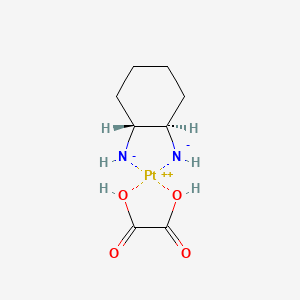
| Formula | C8H12N2O4Pt |
|---|---|
| Molecular weight | 395.27 g/mol |
| IUPAC name | [(1R,2R)-2-azanidylcyclohexyl]azanide;oxalic acid;platinum(2+) |
| PubChem CID | 9887053 |
Biology & Pharmacokinetics
Pharmacokinetics predicted
| Bioavailability | 70.0% |
|---|---|
| Half-life | 3.006 h |
| Volume of distribution | 1.47 L/kg |
| Protein binding | 20.8% |
| BBB penetrant | No |
Enzyme interactions
| Enzyme | Role | Detail |
|---|---|---|
| CYP2C19 | Substrate | — |
Transporters
BCRP (Inhibitor)BCRP (Inhibitor)BSEP (Inhibitor)BSEP (Inhibitor)MATE1 (Inhibitor)MATE2 (Inhibitor)MRP1 (Inhibitor)MRP2 (Inhibitor)MRP3 (Inhibitor)MRP4 (Inhibitor)OATP1B1 (Inhibitor)OATP1B1 (Inhibitor)OATP1B3 (Inhibitor)OATP1B3 (Inhibitor)OATP2B1 (Inhibitor)OCT1 (Inhibitor)OCT2 (Inhibitor)OCT3 (Inhibitor)OCTN1 (Inhibitor)OCTN2 (Inhibitor)P-gp (Inhibitor)BCRP (Substrate)OCT1 (Substrate)OCT2 (Substrate)OCTN1 (Substrate)P-gp (Substrate)Transporter(unspecified) (Substrate)
Drug–drug interactions (100+, DDInter)
| Interacting drug | Severity | Management |
|---|---|---|
| Adalimumab | major | |
| Amiodarone | major | |
| Amisulpride | major | |
| Anagrelide | major | |
| Arsenic trioxide | major | |
| Bacillus calmette-guerin substrain tice live antigen | major | |
| Baricitinib | major | |
| Bedaquiline | major | |
| Bepridil | major | |
| Cabozantinib | major | |
| Ceritinib | major | |
| Certolizumab pegol | major | |
| Chloroquine | major | |
| Cisapride | major | |
| Citalopram | major | |
| Cladribine | major | |
| Clozapine | major | |
| Crizotinib | major | |
| Deferiprone | major | |
| Disopyramide | major | |
| Dofetilide | major | |
| Dolasetron | major | |
| Dronedarone | major | |
| Droperidol | major | |
| Efavirenz | major | |
| Escitalopram | major | |
| Etanercept | major | |
| Fingolimod | major | |
| Gatifloxacin | major | |
| Golimumab | major | |
| Grepafloxacin | major | |
| Halofantrine | major | |
| Haloperidol | major | |
| Hydroxychloroquine | major | |
| Ibutilide | major | |
| Iloperidone | major | |
| Infliximab | major | |
| Ivabradine | major | |
| Ivosidenib | major | |
| Lefamulin | major |
Showing 40 of 100+.
Registered Products (17)
| Brand | Form / strength | Pack | Agent | Citizen (JOD) |
|---|---|---|---|---|
| Oxaliplatin | Vial 50 mg/10 ml | 1 vial pack varies | Sabbagh Drug Store | — |
| Oxaliplatin | Vial 100 mg/20 ml | 1 vial pack varies | Sabbagh Drug Store | — |
| Oxaliplatin Actavis | Vial 100 mg | 1 vial | Beta Drug Store | — |
| Oxaliplatin Actavis | Vial 50 mg | 1 vial | Beta Drug Store | — |
| Oxaliplatin Concentrate for Solution for Infusion | Infusion 100 mg/20 ml | 20 ml pack varies | Petra Drug Store | — |
| Oxaliplatin Concentrate for Solution for Infusion | Infusion 50 mg/10 ml | 10 ml pack varies | Petra Drug Store | — |
| Oxaliplatin Concentrate for Solution for Infusion | Infusion 200 mg/40 ml | 1 vial | Petra Drug Store | — |
| Oxaliplatin Ebewe | Vial 5 mg/ml | 1 vial pack varies | Sabbagh Drug Store | — |
| Oxaliplatin Ebewe | Vial 5 mg/ml | 1 vial pack varies | Sabbagh Drug Store | — |
| Oxaliplatin Ebewe | Vial 5 mg/ml | 1 vial pack varies | Sabbagh Drug Store | — |
| Oxaliplatin Medac | Vial 50 mg | 1 vial | Pharma Care Drug Store | — |
| Oxaliplatin Medac | Vial 100 mg | 1 vial | Pharma Care Drug Store | — |
| Oxaviatin | Vial 100 mg | 1 vial | Manar Drug Store | — |
| Oxaviatin | Vial 50 mg | 1 vial | Manar Drug Store | — |
| Oxitan | Vial 100 mg/50 ml | 1 vial | Sun Set Drug Store | — |
| Oxitan | Vial 50 mg | 1 vial | Sun Set Drug Store | — |
| X-Plate 100 Vial | Vial 100 mg/50 ml | 1 vial | ORIENT DRUG STORE CO | — |