Lithium Carbonate
JFDA label: CAMCOLIT TABS
- Monitoring:
Mechanism of Action
Inhibitor of Inositol monophosphatase 1 — Inositol-1(or 4)-monophosphatase 1 inhibitor; Inhibitor of Glycogen synthase kinase-3 — Glycogen synthase kinase-3 inhibitor
| Target | Action | Gene / class |
|---|---|---|
| Glycogen synthase kinase-3 efficacy | INHIBITOR | |
| Inositol monophosphatase 1 efficacy | INHIBITOR | IMPA1 |
Indications
Approved
- Bipolar disorder
Off-label
- Bipolar depression
- Depression, augmentation of antidepressant
Contraindications
Source: Lexicomp
- Hypersensitivity to lithium or any component of the formulation Immediate-release capsule, solution and tablet: Severe cardiovascular or renal disease, severe debilitation, dehydration, sodium depletion, concurrent use with diuretics Absolute
Adverse Reactions
Cardiac disorders (12)
Not Known Abnormal T waves on ECG · bradycardia · cardiac arrhythmia · chest tightness · circulatory shock · cold extremities · edema · hypotension · myxedema · sinus node dysfunction · startled response · syncope
Nervous system disorders (35)
Not Known Ataxia · blackout spells · cogwheel rigidity · coma · confusion · dizziness · drowsiness · dystonia · EEG pattern changes · extrapyramidal reaction · fatigue · hallucination · headache · hyperactive deep tendon reflex · hypertonia · involuntary choreoathetoid movements · lethargy · local anesthesia · loss of consciousness · memory impairment · metallic taste · myasthenia gravis (rare) · pseudotumor cerebri · psychomotor retardation · reduced intellectual ability · restlessness · salty taste · sedation · seizure · slowed intellectual functioning · slurred speech · stupor · tics · vertigo · worsening of organic brain syndromes
Renal and urinary disorders (5)
Not Known Decreased creatinine clearance · Impotence · incontinence · oliguria · polyuria
Blood and lymphatic system disorders (1)
Not Known Leukocytosis
Immune system disorders (1)
Not Known Angioedema
Metabolism and nutrition disorders (1)
Not Known Hypothyroidism (females 14%; males 5% [Johnston 1999]; children and adolescents: Gastrointestinal: Abdominal pain, anorexia, dental caries, diarrhea, dysgeusia, dyspepsia, excessive salivation, flatul
Skin and subcutaneous tissue disorders (11)
Not Known Acne vulgaris · alopecia · blue-gray skin pigmentation · dermal ulcer · dry or thinning of hair · exacerbation of psoriasis · folliculitis · pruritus · psoriasis · skin rash · xerosis
Musculoskeletal and connective tissue disorders (5)
Not Known Joint swelling · muscle hyperirritability · neuromuscular excitability · polyarthralgia · tremor
Eye disorders (4)
Not Known Blurred vision · exophthalmos · nystagmus · transient scotoma
Ear and labyrinth disorders (1)
Not Known Tinnitus
General disorders and administration site conditions (1)
Not Known Fever
Dosing
Source: Lexicomp
Warnings & Precautions
Source: Lexicomp
CNS depression
May cause CNS depression, which may impair physical or mental abilities; patients must be cautioned about performing tasks which require mental alertness (eg, operating machinery or driving).
Heart failure
In a scientific statement from the American Heart Association, lithium has been determined to be an agent that may cause direct myocardial toxicity that is reversible upon discontinuation (magnitude: major) (AHA [Page 2016]).
Hypercalcemia
Hypercalcemia with or without hyperparathyroidism has been reported. Risks are greater in women and possibly in older patients; symptom onset does not appear to be related to therapy duration (Lehmann 2013). Serum calcium levels typically range from slightly above normal to over 15 mg/dL and PTH levels may range from high normal to several times the upper limit of normal (Lehmann 2013); magnesium levels are often elevated; serum phosphate levels may be either normal or low (Grandjean 2009). Monitor calcium and PTH levels as clinically indicated. Consider discontinuation if clinical manifestations of hypercalcemia are present (fatigue, weakness, abdominal pain, constipation, nephrolithiasis, bone pain) or if calcium levels are >11.4 mg/dL. Following discontinuation, check serum calcium levels weekly for one month for return to baseline. Changes are usually reversible if lithium is discontinued; however, sustained hypercalcemia and parathyroid gland enlargement has been reported (Lehmann 2013).
Hypothyroidism
May cause hypothyroidism, generally within 6 to 18 months of initiating treatment. Women may be at an increased risk. If hypothyroidism develops and symptoms of bipolar disorder are well-controlled, consider continuing lithium and treating hypothyroidism (APA 2002).
Renal effects
Chronic therapy results in diminished renal concentrating ability (nephrogenic diabetes insipidus); this is usually reversible when lithium is discontinued. Monitor for changes in renal function and avoid dehydration; re-evaluation of treatment may be necessary. Morphologic changes with glomerular and interstitial fibrosis and nephron atrophy have been reported in patients on chronic lithium therapy; morphologic changes have also been reported in patients with bipolar disorder never exposed to lithium. The relationship between morphologic changes and renal function, and the association with lithium therapy, have not been established. If polyuria develops during lithium therapy, consolidating to once-daily dosing may decrease urine output (APA 2002; Carter 2013). Disease-related concerns:
Cardiovascular disease
Generally avoid use in patients with significant cardiovascular disease due to an increased risk of lithium toxicity; if use is unavoidable, use with extreme caution and monitor serum lithium levels closely. Lithium may unmask Brugada syndrome; avoid use in patients with or suspected of having Brugada syndrome. Consult with a cardiologist if a patient is suspected of having Brugada syndrome or has risk factors for Brugada syndrome (eg, unexplained syncope, a family history of Brugada syndrome, a family history of sudden death before the age of 45 years), or if unexplained syncope or palpitations develop after starting therapy.
Dehydration
Generally avoid use in patients with significant fluid loss or sodium depletion due to an increased risk of lithium toxicity. If use is unavoidable, use extreme caution and monitor serum lithium levels closely. Decreased tolerance to lithium has been reported with sweating or diarrhea and, if such occur, supplemental fluid and salt should be administered under careful medical supervision and lithium intake reduced or suspended until the condition is resolved. In addition, concomitant infection with elevated temperatures may also necessitate a temporary reduction or cessation of therapy.
Depression/suicidal ideation
Use with caution in patients at risk of suicide (suicidal thoughts or behavior) by drug overdose; lithium has a narrow therapeutic index (APA 2002).
Renal impairment
Generally avoid use in patients with significant renal disease due to an increased risk of lithium toxicity. If use is unavoidable, use extreme caution and monitor serum lithium levels closely.
Thyroid disease
Use with caution in patients with thyroid disease; hypothyroidism may occur with treatment (APA 2002). Concurrent drug therapy issues:
Drug-drug interactions
Potentially significant interactions may exist, requiring dose or frequency adjustment, additional monitoring, and/or selection of alternative therapy. Consult drug interactions database for more detailed information. Special populations:
Debilitated
Generally avoid use in severely debilitated patients due to an increased risk of lithium toxicity; if use is unavoidable, use extreme caution and monitor serum lithium levels closely.
Elderly
Use with caution in the elderly patients due to an increased risk of lithium toxicity. Dosage form specific issues:
Benzyl alcohol and derivatives
Some dosage forms may contain benzyl alcohol; large amounts of benzyl alcohol (≥99 mg/kg/day) have been associated with a potentially fatal toxicity (“gasping syndrome”) in neonates; the “gasping syndrome” consists of metabolic acidosis, respiratory distress, gasping respirations, CNS dysfunction (including convulsions, intracranial hemorrhage), hypotension, and cardiovascular collapse (AAP ["Inactive" 1997]; CDC 1982); some data suggests that benzoate displaces bilirubin from protein binding sites (Ahlfors 2001); avoid or use dosage forms containing benzyl alcohol with caution in neonates. See manufacturer’s labeling.
Propylene glycol
Some dosage forms may contain propylene glycol; large amounts are potentially toxic and have been associated with hyperosmolality, lactic acidosis, seizures and respiratory depression; use caution (AAP 1997; Zar 2007). See manufacturer’s labeling. Other warnings/precautions:
Acute manic phase
Higher serum concentrations may be required and tolerated during an acute manic phase; however, the tolerance decreases when symptoms subside.
Lithium toxicity
Lithium toxicity is closely related to serum concentrations and can occur at doses close to therapeutic levels. Facilities for prompt and accurate serum lithium determinations should be available before initiating therapy. Normal fluid and salt intake must be maintained during therapy. Lithium should generally not be given to patients with significant renal or cardiovascular disease, severe debilitation or dehydration, or sodium depletion due to risk of lithium toxicity; if use is unavoidable, lithium may be undertaken with extreme caution, including frequent serum lithium determinations and possibly hospitalization. Discontinue therapy if such clinical signs of lithium toxicity occur (eg, diarrhea, vomiting, tremor, mild ataxia, drowsiness, or muscular weakness).
Pregnancy & Lactation
Pregnancy
Adverse events have been observed in animal reproduction studies. Lithium crosses the placenta in concentrations similar to those in the maternal plasma (Newport 2005). Cardiac malformations in the infant, including Ebstein anomaly, are associated with use of lithium during the first trimester of pregnancy. Other adverse events including polyhydramnios, fetal/neonatal cardiac arrhythmias, hypoglycemia, diabetes insipidus, changes in thyroid function, premature delivery, floppy infant syndrome, or neonatal lithium toxicity are associated with lithium exposure when used later in pregnancy (ACOG 2008). The incidence of adverse events may be associated with higher maternal doses (Newport 2005). Due to pregnancy-induced physiologic changes, women who are pregnant may require dose adjustments of lithium to achieve euthymia and avoid toxicity (ACOG 2008; Grandjean 2009; Yonkers 2011). For planned pregnancies, use of lithium during the first trimester should be avoided if possible (Grandj
Lactation
Lithium is excreted in breast milk and serum concentrations of nursing infants may be 10% to 50% of the maternal serum concentration (Grandjean 2009). Hypotonia, hypothermia, cyanosis, electrocardiogram changes, and lethargy have been reported in nursing infants (ACOG 2008). It is generally recommended that breast-feeding be avoided during maternal use of lithium; however, treatment may be continued in appropriately selected patients (Grandjean 2009; Sharma 2009; Viguera 2007). The hydration sta
Monitoring
| Clinical pearl | Renal function including BUN and SrCr (baseline, every 2 to 3 months during the first 6 months of treatment, then once a year in stable patients or as clinically indicated); pediatric patients may require more frequent checks); serum electrolytes (baseline, then periodically), serum calcium (baseline, 2 to 6 weeks after initiation, then every 6 to 12 months; repeat as clinically indicated) (Broome 2011); thyroid (baseline, 1 to 2 times with in the first 6 months of treatment, then once a year in stable patients or as clinically indicated); beta-hCG pregnancy test for all females not known to be sterile (baseline); ECG with rhythm strip (baseline for all patients over 40 years, repeat as clinical indicated), CBC with differential (baseline, repeat as clinically indicated); serum lithium levels (twice weekly until both patient's clinical status and levels are stable, then repeat levels every 1 to 3 months or as clinically indicated); weight (baseline, then periodically) (APA 2002). |
|---|
Chemistry & Properties
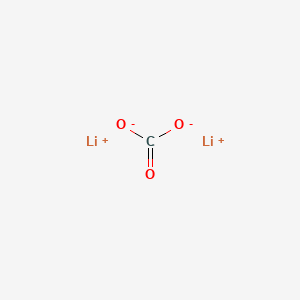
| Formula | CLi2O3 |
|---|---|
| Molecular weight | 73.89 g/mol |
| IUPAC name | dilithium;carbonate |
| CAS | 554-13-2 |
| PubChem CID | 11125 |
| InChIKey | XGZVUEUWXADBQD-UHFFFAOYSA-L |
SMILES
O=C([O-])[O-].[Li+].[Li+]Biology & Pharmacokinetics
Pharmacokinetics predicted
| Bioavailability | 10.0% |
|---|---|
| Half-life | 6.433 h |
| Volume of distribution | 0.874 L/kg |
| Protein binding | 15.9% |
| BBB penetrant | No |
Transporters
BCRP (Inhibitor)BSEP (Inhibitor)MRP1 (Inhibitor)OATP1B1 (Inhibitor)OATP1B3 (Inhibitor)P-gp (Inhibitor)P-gp (Substrate)
Drug–drug interactions (100+, DDInter)
| Interacting drug | Severity | Management |
|---|---|---|
| Anagrelide | major | |
| Arsenic trioxide | major | |
| Bupropion | major | |
| Cabozantinib | major | |
| Celecoxib | major | |
| Ceritinib | major | |
| Chloroquine | major | |
| Cisapride | major | |
| Crizotinib | major | |
| Deferasirox | major | |
| Dexfenfluramine | major | |
| Diatrizoate | major | |
| Diclofenac | major | |
| Diclofenac (topical) | major | |
| Dolasetron | major | |
| Everolimus | major | |
| Fenfluramine | major | |
| Fingolimod | major | |
| Flurbiprofen | major | |
| Granisetron | major | |
| Halofantrine | major | |
| Hydroxychloroquine | major | |
| Ibuprofen | major | |
| Iodipamide | major | |
| Iodixanol | major | |
| Iohexol | major | |
| Iopamidol | major | |
| Iopromide | major | |
| Iothalamic acid | major | |
| Ioversol | major | |
| Ioxilan | major | |
| Ivosidenib | major | |
| Lorcaserin | major | |
| Lumefantrine | major | |
| Macimorelin | major | |
| Ondansetron | major | |
| Osimertinib | major | |
| Ozanimod | major | |
| Palonosetron | major | |
| Panobinostat | major |
Showing 40 of 100+.
Registered Products (2)
| Brand | Form / strength | Pack | Agent | Citizen (JOD) |
|---|---|---|---|---|
| CAMCOLIT TABS | Tablet 250 mg | 100 tab | Khoury Drug Store | 3.060 |
| CAMCOLIT TABS | Tablet 400 mg | 100 tab | Khoury Drug Store | 8.830 |