Lamotrigine
🧬 Cross-allergy: Aromatic anticonvulsants
JFDA label: Sizatal Tab
- Serious skin rashes:
Mechanism of Action
Blocker of Sodium channel alpha subunit — Sodium channel alpha subunit blocker
| Target | Action | Gene / class |
|---|---|---|
| Sodium channel alpha subunit efficacy | BLOCKER |
Indications
Approved
- Adjunctive therapy
- Bipolar I disorder (immediate release only)
- Epilepsy
- Extended release
- Immediate release
- Monotherapy
Off-label
- Bipolar depression
Contraindications
Source: Lexicomp
- Hypersensitivity (eg, rash, angioedema, acute urticaria, extensive pruritus, mucosal ulceration) to lamotrigine or any component of the formulation Absolute
Adverse Reactions
Cardiac disorders (3)
Common Chest pain · edema · peripheral edema
Nervous system disorders (23)
Very Common Dizziness · Headache
Common abnormal dreams · abnormality in thinking · agitation · amnesia · anxiety · Ataxia · ataxia · depression · dizziness · drowsiness · dyspraxia · emotional lability · fatigue · hyperreflexia, dermatitis, diaphoresis, xeroderma · hypoesthesia · Insomnia · irritability · migraine · pain · Somnolence · suicidal ideation
Renal and urinary disorders (2)
Common Increased libido · urinary frequency
Blood and lymphatic system disorders (2)
Common Rectal hemorrhage
Very Rare Haemophagocytic lymphohistiocytosis
Metabolism and nutrition disorders (3)
Common Dysmenorrhea · weight gain · weight loss
Gastrointestinal disorders (9)
Common abdominal pain · anorexia · constipation · dyspepsia · flatulence · Nausea / vomiting · peptic ulcer · Vomiting · xerostomia
Skin and subcutaneous tissue disorders (3)
Common Skin rash (dose-dependent)
Rare Stevens-Johnson syndrome
Very Rare Toxic epidermal necrolysis
Musculoskeletal and connective tissue disorders (5)
Common arthralgia · Back pain · myalgia · neck pain · weakness
Eye disorders (4)
Common amblyopia · Diplopia / blurred vision · Nystagmus · visual disturbance
Infections and infestations (1)
Common Infection
General disorders and administration site conditions (1)
Common Fever
Other (1)
Very Common Gastrointestinal: Nausea
Respiratory, thoracic and mediastinal disorders (9)
Common bronchitis · cough · dyspnea · epistaxis · nasopharyngitis · pharyngitis · Rhinitis · sinusitis · upper respiratory tract infection
Dosing
Source: Lexicomp
Warnings & Precautions
Source: Lexicomp
Aseptic meningitis
Increased risk of developing aseptic meningitis has been reported; symptoms (eg, headache, nuchal rigidity, fever, nausea/vomiting, rash, photophobia) have generally occurred within 1 to 45 days following therapy initiation. In some cases, new onset hepatic, renal and/or other organ involvement has also occurred with symptoms, possibly suggesting aseptic meningitis is associated with a hypersensitivity reaction (eg, anticonvulsant hypersensitivity syndrome). Symptoms of aseptic meningitis generally resolve following discontinuation. In some cases, re-exposure has resulted in a rapid return of symptoms (often more severe).
Blood dyscrasias
A spectrum of hematologic effects have been reported with use (eg, neutropenia, leukopenia, thrombocytopenia, pancytopenia, anemias, and rarely, aplastic anemia and pure red cell aplasia); patients with a previous history of adverse hematologic reaction to any drug may be at increased risk. Early detection of hematologic change is important; advise patients of early signs and symptoms including fever, sore throat, mouth ulcers, infections, easy bruising, petechial or purpuric hemorrhage. May be associated with hypersensitivity syndrome.
CNS depression
May cause CNS depression, which may impair physical or mental abilities; patients must be cautioned about performing tasks which require mental alertness (eg, operating machinery or driving).
Skin reactions
Serious skin rashes requiring hospitalization and discontinuation of treatment have been reported; incidence of serious rash is higher in pediatric patients than adults; risk may be increased by coadministration with valproic acid, higher than recommended initial doses, exceeding recommended initial dose titration, or exceeding the recommended dose escalation for lamotrigine. One rash-related death was reported in a pediatric patients taking lamotrigine immediate-release as adjunctive therapy. Nearly all cases of life-threatening rashes associated with lamotrigine have occurred within 2 to 8 weeks of treatment initiation; however, isolated cases may occur after prolonged treatment (eg, 6 months) or in patients without these risk factors; discontinue at first sign of rash and do not reinitiate therapy unless rash is clearly not drug related. Rare cases of toxic epidermal necrolysis and/or rash-related death have been reported. Discontinuation of treatment may not prevent a rash from becoming life-threatening or permanently disabling or disfiguring.
Suicidal ideation
Pooled analysis of trials involving various antiepileptics (regardless of indication) showed an increased risk of suicidal thoughts/behavior (incidence rate: 0.43% treated patients compared to 0.24% of patients receiving placebo); risk observed as early as 1 week after initiation and continued through duration of trials (most trials ≤24 weeks). Monitor all patients for notable changes in behavior that might indicate suicidal thoughts or depression; notify healthcare provider immediately if symptoms occur. Disease-related concerns:
Hepatic impairment
Use with caution in patients with hepatic impairment; dosage adjustment may be required.
Renal impairment
Use with caution in patients with renal impairment; dosage adjustment may be required. Concurrent drug therapy issues:
Drug-drug interactions
Potentially significant interactions may exist, requiring dose or frequency adjustment, additional monitoring, and/or selection of alternative therapy. Consult drug interactions database for more detailed information. Special populations:
Pediatric
Children are at increased risk for developing serious skin rashes during therapy; lower starting doses and slower dose escalations may decrease the risk of rash. Dosage form specific issues:
Polysorbate 80
Some dosage forms may contain polysorbate 80 (also known as Tweens). Hypersensitivity reactions, usually a delayed reaction, have been reported following exposure to pharmaceutical products containing polysorbate 80 in certain individuals (Isaksson, 2002; Lucente 2000; Shelley, 1995). Thrombocytopenia, ascites, pulmonary deterioration, and renal and hepatic failure have been reported in premature neonates after receiving parenteral products containing polysorbate 80 (Alade, 1986; CDC, 1984). See manufacturer’s labeling. Other warnings/precautions:
Appropriate use
Bipolar disorder use: Patients treated for bipolar disorder should be monitored closely for clinical worsening or suicidality; reassess patients to determine the need for maintenance treatment if on therapy >16 weeks. Prescriptions should be written for the smallest quantity consistent with good patient care. Treatment of acute manic or mixed episodes is not recommended; efficacy has not been established and slow titration limits use.
Medication error potential
Medication errors have occurred; potential for medication errors with similar-sounding medications and between different lamotrigine formulations.
Melanin binding
Binds to melanin and may accumulate in the eye and other melanin-rich tissues; the clinical significance of this is not known.
Monotherapy
Epilepsy: Safety and efficacy have not been established for use as initial monotherapy, conversion to monotherapy from antiepileptic drugs (AED) other than carbamazepine, phenytoin, phenobarbital, primidone or valproic acid or conversion to monotherapy from two or more AEDs.
Withdrawal
Anticonvulsants should not be discontinued abruptly because of the possibility of increasing seizure frequency; therapy should be withdrawn gradually to minimize the potential of increased seizure frequency, unless safety concerns require a more rapid withdrawal. Taper over at least 2 weeks if possible.
Pregnancy & Lactation
Pregnancy
Adverse events have been observed in animal reproduction studies. Lamotrigine crosses the human placenta and can be measured in the plasma of exposed newborns (Harden and Pennell 2009; Ohman 2000). An overall increase in the risk for major congenital malformations has not been observed in available studies; however, an increased risk for cleft lip or cleft palate has not been ruled out (Cunnington 2011; Hernández-Díaz 2012; Holmes 2012). An increased risk of malformations following maternal lamotrigine use may be associated with larger doses (Cunnington 2007; Tomson 2011). Polytherapy may increase the risk of congenital malformations; monotherapy with the lowest effective dose is recommended (Harden and Meader 2009). Due to pregnancy-induced physiologic changes, women who are pregnant may require dose adjustments of lamotrigine in order to maintain clinical response; monitoring during pregnancy should be considered (Harden and Pennell 2009). For women with epilepsy who are planning a
Lactation
Lamotrigine is present in breast milk. The relative infant dose (RID) of lamotrigine reported in the literature is variable. One study reported a mean RID of 9.2% (95% CI: 7.4% to 10.9%; range: 3.1% to 21.1%) when calculated using mean breast milk concentrations and compared to patient-specific, weight-adjusted maternal doses (range: 50 to 800 mg/day) (Newport 2008). In general, breastfeeding is considered acceptable when the RID of a medication is 25% breastfeeding should be avoided (Anders
Monitoring
| Clinical pearl | Serum levels of concurrent anticonvulsants, LFTs, renal function, hypersensitivity reactions (especially rash); seizure, frequency and duration; suicidality (eg, suicidal thoughts, depression, behavioral changes); signs/symptoms of aseptic meningitis |
|---|
Chemistry & Properties
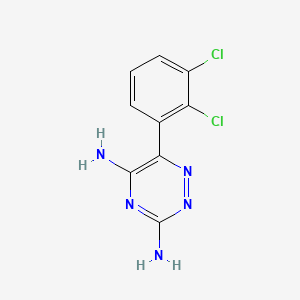
| Formula | C9H7Cl2N5 |
|---|---|
| Molecular weight | 256.1 g/mol |
| IUPAC name | 6-(2,3-dichlorophenyl)-1,2,4-triazine-3,5-diamine |
| CAS | 84057-84-1 |
| PubChem CID | 3878 |
| InChIKey | PYZRQGJRPPTADH-UHFFFAOYSA-N |
| logP | 2.01 (XLogP 1.4) |
| Polar surface area | 90.71 Ų |
| H-bond acceptors / donors | 5 / 2 |
| Drug-likeness (QED) | 0.81 |
| Lipinski violations | 0 |
SMILES
Nc1nnc(-c2cccc(Cl)c2Cl)c(N)n1Biology & Pharmacokinetics
Pharmacokinetics
| BBB penetrant | Yes (logBB 0.48) |
|---|
Enzyme interactions
| Enzyme | Role | Detail |
|---|---|---|
| CYP1A2 | Substrate | — |
| UGT | Substrate | — |
Transporters
BCRP (Inhibitor)BCRP (Inhibitor)BSEP (Inhibitor)BSEP (Inhibitor)MDR1 (Inhibitor)MRP1 (Inhibitor)MRP2 (Inhibitor)MRP4 (Inhibitor)OATP1B1 (Inhibitor)OATP1B1 (Inhibitor)OATP1B3 (Inhibitor)OATP1B3 (Inhibitor)OATP2B1 (Inhibitor)OCT2 (Inhibitor)OCTN2 (Inhibitor)P-gp (Inhibitor)BCRP (Substrate)MDR1 (Substrate)MRP2 (Substrate)OATP1A2 (Substrate)OCT1 (Substrate)OCT2 (Substrate)OCT3 (Substrate)OCTN (Substrate)OCTN1 (Substrate)OCTN2 (Substrate)P-gp (Substrate)Transporter(unspecified) (Substrate)
Drug–drug interactions (54, DDInter)
| Interacting drug | Severity | Management |
|---|---|---|
| Alimemazine | moderate | |
| Brimonidine (ophthalmic) | moderate | |
| Brimonidine (topical) | moderate | |
| Brompheniramine | moderate | |
| Carbinoxamine | moderate | |
| Cetirizine | moderate | |
| Chloroquine | moderate | |
| Chlorphenesin | moderate | |
| Chlorpheniramine | moderate | |
| Clemastine | moderate | |
| Clofedanol | moderate | |
| Codeine | moderate | |
| Cyproheptadine | moderate | |
| Desmopressin | moderate | |
| Dexbrompheniramine | moderate | |
| Dextromethorphan | moderate | |
| Diethylstilbestrol | moderate | |
| Diphenhydramine | moderate | |
| Doxepin | moderate | |
| Doxylamine | moderate | |
| Dronabinol | moderate | |
| Estramustine | moderate | |
| Ethanol | moderate | |
| Ethinylestradiol | moderate | |
| Folic acid | moderate | |
| Hydrocodone | moderate | |
| Hydroxychloroquine | moderate | |
| Leucovorin | moderate | |
| Levocetirizine | moderate | |
| Levoleucovorin | moderate | |
| Lidocaine | moderate | |
| Medroxyprogesterone acetate | moderate | |
| Mefloquine | moderate | |
| Mepyramine | moderate | |
| Metoclopramide | moderate | |
| Morphine | moderate | |
| Morphine (liposomal) | moderate | |
| Nabilone | moderate | |
| Olopatadine (nasal) | moderate | |
| Opium | moderate |
Showing 40 of 54.
Registered Products (31)
| Brand | Form / strength | Pack | Agent | Citizen (JOD) |
|---|---|---|---|---|
| Lamictal Liquitab | Tablet 5 mg | 30 tab | Suleiman Tannous & Sons Co. Ltd | 1.700 |
| Lamictal Liquitab | Tablet 25 mg | 30 tab | Suleiman Tannous & Sons Co. Ltd | 3.050 |
| Amigen 25mgDip Tab | Tablet 25 mg | 30 tab | Jordan Sweden Medical & Sterilization Co. | 3.560 |
| Epictal | Tablet 25 mg | 30 tab | JORDAN RIVER PHARMA.IND(JORIVER)/JORDAN | 3.560 |
| Lamor | Tablet 25 mg | 30 tab | Pharma International Company/ Jordan | 3.560 |
| Lavituss | Tablet 25 mg | 30 tab pack varies | Hayat Pharmaceutical Industries CO.PLC/JORDAN | 3.560 |
| Loxol Tablet | Tablet 25 mg | 30 tab | Hikma Pharmaceuticals Co.Ltd/Jordan | 3.560 |
| Seizet | Tablet 25 mg | 30 tab | UNITED PHARM.MFG.CO.LTD(UPM)/JORDAN | 3.560 |
| Amigen 50 | Tablet 50 mg | 30 tab | Jordan Sweden Medical & Sterilization Co. | 5.540 |
| Epictal | Tablet 50 mg | 30 tab pack varies | JORDAN RIVER PHARMA.IND(JORIVER)/JORDAN | 5.540 |
| Lamor | Tablet 50 mg | 30 tab | Pharma International Company/ Jordan | 5.540 |
| Loxol Tablet | Tablet 50 mg | 30 tab | Hikma Pharmaceuticals Co.Ltd/Jordan | 5.540 |
| Seizet 50mg Disp/Chew tab | Chewable Tablet 50 mg | 30 tab | UNITED PHARM.MFG.CO.LTD(UPM)/JORDAN | 5.540 |
| Sizatal 50 tab | Tablet 50 mg | 30 tab | MIDDLE EAST PHARMA&CHEMICAL IND/JORDAN | 5.540 |
| Lavituss | Tablet 25 mg | 100 tab pack varies | Hayat Pharmaceutical Industries CO.PLC/JORDAN | 11.150 |
| Lamictal Liquitab | Tablet 100 mg | 30 tab | Suleiman Tannous & Sons Co. Ltd | 11.500 |
| Epictal | Tablet 100 mg | 30 tab pack varies | JORDAN RIVER PHARMA.IND(JORIVER)/JORDAN | 12.510 |
| Loxol Tablet | Tablet 100 mg | 30 tab | Hikma Pharmaceuticals Co.Ltd/Jordan | 12.510 |
| Lamor | Tablet 100 mg | 30 tab | Pharma International Company/ Jordan | 13.860 |
| Amigen | Tablet 100 mg | 30 tab | Jordan Sweden Medical & Sterilization Co. | 13.900 |
| Lavituss | Tablet 100 mg | 30 tab pack varies | Hayat Pharmaceutical Industries CO.PLC/JORDAN | 13.900 |
| Seizet 100mg Dispersible/Chewable tab | Chewable Tablet 100 mg | 30 tab | UNITED PHARM.MFG.CO.LTD(UPM)/JORDAN | 13.900 |
| Sizatal 100 Tab | Tablet 100 mg | 30 tab | MIDDLE EAST PHARMA&CHEMICAL IND/JORDAN | 13.900 |
| Lamor | Tablet 200 mg | 30 tab | Pharma International Company/ Jordan | 21.000 |
| Amigen 200 mg disp tablet | Tablet 200 mg | 30 tab | Jordan Sweden Medical & Sterilization Co. | 28.380 |
| Epictal | Tablet 200 mg | 30 tab | JORDAN RIVER PHARMA.IND(JORIVER)/JORDAN | 29.190 |
| sizatal 150 Tab | Tablet 150 mg | 30 tab | MIDDLE EAST PHARMA&CHEMICAL IND/JORDAN | 32.810 |
| Sizatal Tab | Tablet 200 mg | 30 tab | MIDDLE EAST PHARMA&CHEMICAL IND/JORDAN | 40.280 |
| Lavituss | Tablet 100 mg | 100 tab pack varies | Hayat Pharmaceutical Industries CO.PLC/JORDAN | 43.550 |
| Epictal | Tablet 50 mg | 1000 tab pack varies | JORDAN RIVER PHARMA.IND(JORIVER)/JORDAN | 156.970 |
| Epictal | Tablet 100 mg | 1000 tab pack varies | JORDAN RIVER PHARMA.IND(JORIVER)/JORDAN | 393.830 |