Fludarabine
JFDA label: Fludarabine Ebewe 25mg/ml Solution for injection IV (Hospital)
- Bone marrow suppression:
- Autoimmune effects:
- Neurotoxicity:
- Combination with pentostatin:
- Experienced physician:
Mechanism of Action
Fludarabine inhibits DNA synthesis by inhibition of DNA polymerase and ribonucleotide reductase; also inhibits DNA primase and DNA ligase I
Indications
Approved
- Chronic lymphocytic leukemia (refractory or progressive)
Off-label
- Acute lymphocytic leukemia (pediatric) (relapsed)
- Acute myeloid leukemia (adults) (newly diagnosed)
- Acute myeloid leukemia (adults) (refractory or high/poor risk)
- Acute myeloid leukemia (pediatric) (relapsed)
- Acute myeloid leukemia (pediatrics) (newly diagnosed)
- Hematopoietic stem cell transplant (allogeneic) myeloablative conditioning regimen (older adults)
- Hematopoietic stem cell transplant (allogeneic) nonmyeloablative conditioning regimen (adults)
- Hematopoietic stem cell transplant (allogeneic) reduced-intensity conditioning regimen (adults)
- Hematopoietic stem cell transplantation (allogeneic) reduced-intensity conditioning regimen (pediatrics)
- Non-Hodgkin lymphoma: Follicular lymphoma (relapsed/refractory)
- Non-Hodgkin lymphoma: Mantle cell lymphoma (relapsed/refractory)
- Waldenström macroglobulinemia
Contraindications
Source: Lexicomp
- Hypersensitivity to fludarabine or any component of the formulation Absolute
- There are no contraindications listed in the manufacturer's US labeling Absolute
- severe renal impairment (CrCl Absolute
Adverse Reactions
Cardiac disorders (11)
Very Common Edema
Common aneurysm · Angina pectoris · cardiac arrhythmia · cardiac failure · cerebrovascular accident · deep vein thrombosis · myocardial infarction · phlebitis · supraventricular tachycardia · transient ischemic attacks
Nervous system disorders (8)
Very Common Fatigue · neurological signs and symptoms, diaphoresis
Common cerebellar syndrome · depression · difficulty thinking · headache · Malaise · sleep disorder
Hepatobiliary disorders (2)
Common Abnormal hepatic function tests · hepatic failure
Renal and urinary disorders (7)
Very Common Urinary tract infection
Common Dysuria · hematuria · proteinuria · Renal failure · renal function test abnormality · urinary hesitancy
Blood and lymphatic system disorders (6)
Very Common Anemia · bone marrow depression (nadir: 10 to 14 days; recovery: 5 to 7 weeks; dose-limiting toxicity) · neutropenia · thrombocytopenia
Common Hemorrhage · tumor lysis syndrome
Immune system disorders (1)
Common Anaphylaxis
Metabolism and nutrition disorders (2)
Common dehydration · Hyperglycemia
Gastrointestinal disorders (10)
Very Common anorexia · diarrhea · gastrointestinal hemorrhage · Nausea and vomiting
Common cholelithiasis · constipation · dysphagia · esophagitis · mucositis · Stomatitis
Skin and subcutaneous tissue disorders (3)
Common Alopecia · pruritus · seborrhea
Musculoskeletal and connective tissue disorders (4)
Very Common myalgia · Weakness
Common arthralgia · Osteoporosis
Eye disorders (1)
Very Common Visual disturbance
Ear and labyrinth disorders (1)
Common Hearing loss
Infections and infestations (1)
Very Common Infection
General disorders and administration site conditions (1)
Very Common Fever
Respiratory, thoracic and mediastinal disorders (11)
Very Common Cough · dyspnea · pneumonia · upper respiratory tract infection
Common bronchitis · epistaxis · hemoptysis · hypersensitivity pneumonitis · hypoxia · Pharyngitis · sinusitis
Dosing
Source: Lexicomp
Warnings & Precautions
Source: Lexicomp
Autoimmune effects
Life-threatening (and sometimes fatal) autoimmune effects, including hemolytic anemia, autoimmune thrombocytopenia/thrombocytopenic purpura (ITP), Evans syndrome, and acquired hemophilia have occurred; evaluate and monitor closely for hemolysis. This has occurred in patients with and without a history of autoimmune hemolytic anemia or a positive Coombs test, and who may or may not be in remission from their disease. Corticosteroids may or may not effectively control the hemolytic episodes. Discontinue fludarabine if hemolysis occurs. The hemolytic effects recurred in most patients when rechallenged with fludarabine.
Bone marrow suppression
Severe bone marrow suppression (anemia, thrombocytopenia, and neutropenia) may occur; may be cumulative. The median time to nadir was 13 days (range: 3 to 25 days) for granulocytes and 16 days (range: 2 to 32 days) for platelets. Severe myelosuppression (trilineage bone marrow hypoplasia/aplasia) has been reported (rare) with a duration of significant cytopenias ranging from 2 months to 1 year. First-line combination therapy is associated with prolonged cytopenias, with anemia lasting up to 7 months, neutropenia up to 9 months, and thrombocytopenia up to 10 months; increased age is predictive for prolonged cytopenias (Gill 2010). Monitor patients with bone marrow impairment closely for excess toxicity; may require dosage reductions.
Infection
Serious and sometimes fatal infections, including opportunistic infections and reactivations of latent viral infections such as VZV (herpes zoster) and Epstein-Barr virus have been reported with fludarabine. Prophylactic anti-infectives should be considered for patients with an increased risk for developing opportunistic infections. Use with caution in patients with documented infection, fever, immunodeficiency, or with a history of opportunistic infection.
Neurotoxicity
Higher than recommended doses (up to 96 mg/m2/day for 5 to 7 days) are associated with severe neurologic toxicity (delayed blindness, coma, death); similar neurotoxicity (agitation, coma, confusion, seizure) has been reported (rare) with standard CLL doses (25 mg/m2/day for 5 days). Symptoms of neurotoxicity due to high doses appeared from 21 to 60 days following the last fludarabine dose, although neurotoxicity has been reported as early as 7 days and up to 225 days. Although administration of up to 15 courses of treatment have been used, the possible neurotoxic effects of chronic administration are unknown. Fatigue, weakness, visual disturbances, confusion, and seizures may occur; caution patients about performing tasks which require mental alertness (eg, operating machinery or driving).
Progressive multifocal leukoencephalopathy
Progressive multifocal leukoencephalopathy (PML) (usually fatal) due to JC virus has been reported; most cases were in patients who had received prior and/or other concurrent chemotherapy. Onset may be a few weeks or may be delayed up to 1 year. Evaluate any neurological change promptly.
Reproductive effects
Fludarabine may damage testicular tissue and spermatozoa.
Transfusion-associated graft-versus-host disease
Graft-versus-host disease (GVHD) has been observed following transfusion of non-irradiated blood in patients treated with fludarabine; fatal outcome has been observed. Patients receiving fludarabine should only receive irradiated blood products due to the potential for transfusion-related GVHD.
Tumor lysis syndrome
May cause tumor lysis syndrome; risk is increased in patients with large tumor burden prior to treatment. Hydration and prophylactic antihyperuricemic therapy should be considered in patients at risk for tumor lysis syndrome. Disease-related concerns:
Renal impairment
Use with caution in patients with renal impairment; clearance of the primary metabolite 2-fluoro-ara-A is decreased in patients with renal impairment. Dosage reductions are recommended (monitor closely for excessive toxicity) in patients with creatinine clearance between 30 and 79 mL/minute; use is not recommended if CrCl Concurrent drug therapy issues:
Drug-drug interactions
Potentially significant interactions may exist, requiring dose or frequency adjustment, additional monitoring, and/or selection of alternative therapy. Consult drug interactions database for more detailed information.
Pentostatin
The use of fludarabine in combination with pentostatin (deoxycoformycin) for the treatment of refractory chronic lymphocytic leukemia has resulted in an unacceptably high incidence of fatal pulmonary toxicity. The use of fludarabine in combination with pentostatin is not recommended. Special populations:
Elderly
Monitor closely for excessive toxicity; may require reduced doses. Other warnings/precautions:
Experienced physician
Should be administered under the supervision of an experienced cancer chemotherapy physician.
Live vaccines
Avoid vaccination with live vaccines during and after fludarabine treatment.
Pregnancy & Lactation
Pregnancy
Adverse events were observed in animal reproduction studies. Based on the mechanism of action, fludarabine may cause fetal harm if administered during pregnancy. Effective contraception should be used to avoid pregnancy during and after treatment for women and men with female partners of reproductive potential.
Lactation
It is not known if fludarabine is present in breast milk. Due to the potential for serious adverse reactions in the breastfeeding infant, a decision should be made to discontinue breastfeeding or to discontinue fludarabine, taking into account the importance of treatment to the mother.
Monitoring
| Clinical pearl | CBC with differential, platelet count, AST, ALT, serum creatinine, serum albumin, uric acid; monitor for signs of infection, neurotoxicity, and tumor lysis syndrome. |
|---|
Chemistry & Properties
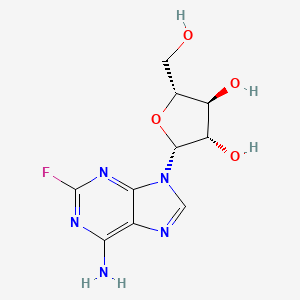
| Formula | C10H12FN5O4 |
|---|---|
| Molecular weight | 285.24 g/mol |
| IUPAC name | (2R,3S,4S,5R)-2-(6-amino-2-fluoropurin-9-yl)-5-(hydroxymethyl)oxolane-3,4-diol |
| CAS | 21679-14-1 |
| PubChem CID | 657237 |
| InChIKey | HBUBKKRHXORPQB-FJFJXFQQSA-N |
| logP | -1.84 (XLogP -0.6) |
| Polar surface area | 139.54 Ų |
| H-bond acceptors / donors | 9 / 4 |
| Drug-likeness (QED) | 0.47 |
| Lipinski violations | 0 |
SMILES
Nc1nc(F)nc2c1ncn2[C@@H]1O[C@H](CO)[C@@H](O)[C@@H]1OBiology & Pharmacokinetics
Pharmacokinetics predicted
| Bioavailability | 70.0% |
|---|---|
| Half-life | 2.021 h |
| Volume of distribution | 2.152 L/kg |
| Protein binding | 30.1% |
| BBB penetrant | No |
Receptor binding (top 2)
| Target | Action | Affinity |
|---|---|---|
| ribonucleotide reductase catalytic subunit M1 (RRM1) | Inhibitor | pIC50 6.0 |
| ribonucleotide reductase regulatory subunit M2 (RRM2) | Inhibitor | pIC50 6.0 |
Transporters
BCRP (Inhibitor)BSEP (Inhibitor)BSEP (Inhibitor)CNT3 (Inhibitor)ENT1 (Inhibitor)ENT2 (Inhibitor)MDR1 (Inhibitor)MRP1 (Inhibitor)MRP2 (Inhibitor)MRP3 (Inhibitor)MRP4 (Inhibitor)MRP5 (Inhibitor)OATP1B1 (Inhibitor)OATP1B3 (Inhibitor)P-gp (Inhibitor)P-gp (Substrate)
Drug–drug interactions (100+, DDInter)
| Interacting drug | Severity | Management |
|---|---|---|
| Adalimumab | major | |
| Bacillus calmette-guerin substrain tice live antigen | major | |
| Baricitinib | major | |
| Certolizumab pegol | major | |
| Cladribine | major | |
| Clozapine | major | |
| Deferiprone | major | |
| Etanercept | major | |
| Fingolimod | major | |
| Golimumab | major | |
| Infliximab | major | |
| Leflunomide | major | |
| Measles virus vaccine live attenuated | major | |
| Mumps virus strain B level jeryl lynn live antigen | major | |
| Natalizumab | major | |
| Ozanimod | major | |
| Pentostatin | major | |
| Rotavirus vaccine | major | |
| Rubella virus vaccine | major | |
| Samarium (153Sm) lexidronam | major | |
| Siponimod | major | |
| Smallpox (Vaccinia) Vaccine, Live | major | |
| Talimogene laherparepvec | major | |
| Teriflunomide | major | |
| Thalidomide | major | |
| Tofacitinib | major | |
| Typhoid vaccine (live) | major | |
| Upadacitinib | major | |
| Varicella Zoster Vaccine (Recombinant) | major | |
| Yellow Fever Vaccine | major | |
| Aldesleukin | moderate | |
| Alefacept | moderate | |
| Alemtuzumab | moderate | |
| Amiodarone | moderate | |
| Anakinra | moderate | |
| Anthrax vaccine | moderate | |
| Atorvastatin | moderate | |
| Auranofin | moderate | |
| Aurothioglucose | moderate | |
| Azathioprine | moderate |
Showing 40 of 100+.
Registered Products (3)
| Brand | Form / strength | Pack | Agent | Citizen (JOD) |
|---|---|---|---|---|
| FLUDARABINE PHOSPHATE NEAPOLIS | Vial 25 mg/1 ml | 1 vial | Professional Drug Store | — |
| Fludara | Vial 50 mg | 5 vial | The Jordan Drugstore Co | — |
| Fludarabine Ebewe 25mg/ml Solution for injection IV (Hospital) | Injection 25 mg/ml | 2 ml | Sabbagh Drug Store | — |