Thalidomide
JFDA label: Thalidomide BMS
- Pregnancy:
- Thromboembolic events:
Mechanism of Action
Inhibitor of CRL4(CRBN) E3 ubiquitin ligase — CRL4(CRBN) E3 ubiquitin ligase inhibitor
| Target | Action | Gene / class |
|---|---|---|
| CRL4(CRBN) E3 ubiquitin ligase efficacy | INHIBITOR |
Indications
Approved
- Erythema nodosum leprosum
- Multiple myeloma
Off-label
- AIDS-related aphthous stomatitis
- Chronic graft-versus-host disease, refractory (adults)
- Chronic graft-versus-host disease, refractory (children)
- Multiple myeloma, maintenance
- Multiple myeloma, salvage
- Systemic light chain amyloidosis
- Uremic pruritus, refractory
- Waldenström macroglobulinemia
Contraindications
Source: Lexicomp
- Additional contraindications (not in the US labeling): Hypersensitivity to lenalidomide or pomalidomide Absolute
- Hypersensitivity to thalidomide or any component of the formulation Absolute
- breastfeeding Absolute
- females at risk of becoming pregnant and male patients who are unable to follow or comply with conditions for use (refer to manufacturer labeling) Absolute
Adverse Reactions
Cardiac disorders (2)
Common Facial edema · peripheral edema
Nervous system disorders (4)
Common dizziness · Malaise · pain · vertigo
Renal and urinary disorders (1)
Common Impotence
Gastrointestinal disorders (4)
Common Constipation · nausea · oral candidiasis · toothache
Skin and subcutaneous tissue disorders (4)
Common fungal dermatitis · maculopapular rash · nail disease · Pruritus
Musculoskeletal and connective tissue disorders (5)
Common back pain · neck pain · neck stiffness · tremor · Weakness
General disorders and administration site conditions (1)
Common Accidental injury
Other (3)
Very Common Central nervous system: Drowsiness · headache · peripheral neuropathy
Dosing
Source: Lexicomp
Warnings & Precautions
Source: Lexicomp
Bone marrow suppression
May cause leukopenia and neutropenia; avoid initiating therapy if ANC 3. Persistent neutropenia may require treatment interruption. Thrombocytopenia (including grades 3 and 4) has been reported; may require dose reduction, treatment delay, or discontinuation. Monitor for signs and symptoms of bleeding (including petechiae, epistaxis, and GI bleeding), especially if concomitant medication may increase the risk of bleeding. Monitor CBC with differential and platelets. Anemia has also been observed.
Bradycardia
May cause bradycardia; use with caution when administering concomitantly with medications that may also decrease heart rate. May require thalidomide dose reduction or discontinuation.
CNS effects
May cause dizziness, drowsiness, and/or somnolence; caution patients about performing tasks which require mental alertness (eg, operating machinery or driving). Avoid ethanol and concomitant medications that may exacerbate these symptoms; dose reductions may be necessary for excessive drowsiness or somnolence.
Constipation
Constipation may commonly occur. May require treatment interruption or dosage reduction.
Dermatologic reactions
Stevens-Johnson syndrome (SJS) and toxic epidermal necrolysis (TEN) have been reported (may be fatal); withhold therapy and evaluate if skin rash occurs; permanently discontinue if rash is exfoliative, purpuric, bullous, or if SJS or TEN is suspected.
Hepatotoxicity
Abnormal liver function tests, hepatitis, and cholestatic jaundice have been reported. Hepatotoxicity (including hepatocellular and cholestatic injury) has been observed rarely (case reports), with a mean time to development of 46 days; most events resolved after discontinuing thalidomide (Vilas-Boas 2012).
Hypersensitivity
Hypersensitivity, including erythematous macular rash, possibly associated with fever, tachycardia, and hypotension has been reported. May require treatment interruption for severe reactions; discontinue if recurs with rechallenge.
Orthostatic hypotension
May cause orthostatic hypotension; use with caution in patients who would not tolerate transient hypotensive episodes. When arising from a recumbent position, advise patients to sit upright for a few minutes prior to standing.
Peripheral neuropathy
Thalidomide is commonly associated with peripheral neuropathy; may be irreversible. Neuropathy generally occurs following chronic use (over months), but may occur with short-term use; onset may be delayed. Use caution with other medications that may also cause peripheral neuropathy. Monitor for signs/symptoms of neuropathy monthly for the first 3 months of therapy and regularly thereafter. Electrophysiological testing may be considered at baseline and every 6 months to detect asymptomatic neuropathy. To limit further damage, immediately discontinue (if clinically appropriate) in patients who develop neuropathy. Reinitiate therapy only if neuropathy returns to baseline; may require dosage reduction or permanent discontinuation.
Secondary malignancy
Increased incidence of second primary malignancies (SPMs), including acute myeloid leukemia (AML) and myelodysplastic syndrome (MDS), has been observed in previously untreated multiple myeloma patients receiving thalidomide in combination with melphalan, and prednisone. In addition to AML and MDS, solid tumors have been reported with thalidomide maintenance treatment for multiple myeloma (Usmani 2012). Carefully evaluate patients for SPMs prior to and during treatment and manage as clinically indicated.
Seizures
Seizures (including grand mal convulsions) have been reported in postmarketing data; monitor closely for clinical changes indicating potential seizure activity in patients with a history of seizures, concurrent therapy with drugs that alter seizure threshold, or conditions that predispose to seizures.
Thromboembolic events
Thalidomide use for the treatment of multiple myeloma is associated with an increased risk for venous thromboembolism (VTE), including deep vein thrombosis (DVT) and pulmonary embolism (PE); the risk is increased when used in combination with standard chemotherapy agents, including dexamethasone. In one controlled study, the incidence of VTE was 22.5% in patients receiving thalidomide in combination with dexamethasone, compared to 4.9% for dexamethasone alone. Monitor for signs and symptoms of thromboembolism (shortness of breath, chest pain, or arm or leg swelling) and instruct patients to seek prompt medical attention with development of these symptoms. Consider thromboprophylaxis based on risk factors. Ischemic heart disease, including MI and stroke, also occurred at a higher rate (compared to placebo) in myeloma patients receiving thalidomide plus dexamethasone who had not received prior treatment. Assess individual risk factors for thromboembolism and consider thromboprophylaxis. The American Society of Clinical Oncology guidelines for VTE prophylaxis and treatment recommend thromboprophylaxis for patients receiving thalidomide in combination with chemotherapy and/or dexamethasone; either aspirin or low molecular weight heparin (LMWH) is recommended for lower risk patient and LMWH is recommended for higher-risk patients (Lyman 2013; Lyman 2015). Anticoagulant prophylaxis should be individualized and selected based on the venous thromboembolism risk of the combination tre
Tumor lysis syndrome
Patients with a high tumor burden may be at risk for tumor lysis syndrome; monitor closely; institute appropriate management for hyperuricemia. Disease-related concerns:
Heart failure
In a scientific statement from the American Heart Association, thalidomide has been determined to be an agent that may exacerbate underlying myocardial dysfunction (magnitude: minor) (AHA [Page 2016]).
Multiple myeloma
An increase in mortality was noted in 2 clinical studies in patients with multiple myeloma who received pembrolizumab in combination with a thalidomide analogue and dexamethasone. Causes of death in the experimental arm (containing pembrolizumab, dexamethasone, and a thalidomide analogue [pomalidomide or lenalidomide]) included myocarditis, SJS, MI, pericardial hemorrhage, cardiac failure, respiratory tract infection, neutropenic sepsis, sepsis, multiple organ dysfunction, respiratory failure, intestinal ischemia, cardiopulmonary arrest, suicide, pulmonary embolism, cardiac arrest, pneumonia, sudden death, and large intestine perforation. Multiple myeloma is not an approved indication for PD-1 or PD-L1 blocking antibodies; pembrolizumab should not be used to treat multiple myeloma in combination with a thalidomide analogue and dexamethasone unless as part of a clinical trial. Concurrent drug therapy issues:
Drug-drug interactions
Potentially significant interactions may exist, requiring dose or frequency adjustment, additional monitoring, and/or selection of alternative therapy. Consult drug interactions database for more detailed information. Special populations:
Elderly
Certain adverse reactions (constipation, fatigue, weakness, nausea, hypokalemia, hyperglycemia, DVT, pulmonary embolism, atrial fibrillation) are more likely in elderly patients.
HIV-infected patients
Thalidomide is associated with increased viral loads in studies conducted prior to the use of antiretroviral therapy. Monitor viral load after the first and third months of therapy, and every 3 months thereafter.
Pregnancy
Thalidomide is contraindicated in pregnant women. Thalidomide may cause severe birth defects or embryo-fetal death if taken during pregnancy. Thalidomide cannot be used in women who are pregnant or may become pregnant during therapy as even a single dose may cause severe birth defects. In order to decrease the risk of fetal exposure, thalidomide is available only through a special restricted distribution program (Thalomid REMS). Use is also contraindicated in women who may become pregnant. Pregnancy must be excluded prior to therapy initiation with 2 negative pregnancy tests. Women of reproductive potential must avoid pregnancy beginning 4 weeks prior to therapy, during therapy, during therapy interruptions, and for ≥4 weeks after therapy is discontinued; two reliable methods of birth control, or abstinence from heterosexual intercourse, must be used. Males taking thalidomide (even those vasectomized) must use a latex or synthetic condom during any sexual contact with women of childbearing potential and for up to 28 days following discontinuation of therapy. Males taking thalidomide must not donate sperm. Some forms of contraception may not be appropriate in certain patients. An intrauterine device (IUD) or implantable contraceptive may increase the risk of infection or bleeding; estrogen containing products may increase the risk of thromboembolism. Other warnings/precautions:
Blood donation
Patients should not donate blood during thalidomide treatment and for 4 weeks after therapy discontinuation.
REMS program
Due to the embryo-fetal risk, thalidomide is only available through a restricted program under the Thalomid REMS program. Prescribers and pharmacies must be certified with the program to prescribe or dispense thalidomide. Patients must sign an agreement and comply with the REMS program requirements.
Pregnancy & Lactation
Pregnancy
Contraindicated
REMS programme mandatory. Two reliable forms of contraception required. Monthly pregnancy tests
Lactation
It is not known if thalidomide is present in breast milk. Due to the potential for serious adverse reactions in the breastfed infant, breastfeeding is not recommended by the manufacturer.
Monitoring
| Clinical pearl | CBC with differential, platelets; thyroid function tests (TSH at baseline then every 2 to 3 months during thalidomide treatment [Hamnvik 2011]). Hepatic function tests (periodic; particularly with preexisting hepatic dysfunction or concomitant use of drugs associated with hepatotoxicity). In HIV-seropositive patients: viral load after 1 and 3 months, then every 3 months. Pregnancy testing (sensitivity of at least 50 milliunits/mL) is required 10 to 14 days prior to therapy, within 24 hours prior to initiation of therapy, weekly during the first 4 weeks, then every 4 weeks in women with regular menstrual cycles or every 2 weeks in women with irregular menstrual cycles. Signs of neuropathy monthly for the first 3 months, then periodically during treatment; consider monitoring of sensory nerve application potential amplitudes (at baseline and every 6 months) to detect asymptomatic neuropathy. Monitor for signs and symptoms of thromboembolism (shortness of breath, chest pain, arm/leg swelling), tumor lysis syndrome, bradycardia and syncope; monitor for clinical changes indicating potential seizure activity (in patients with a history of seizure). Monitor adherence. |
|---|
Chemistry & Properties
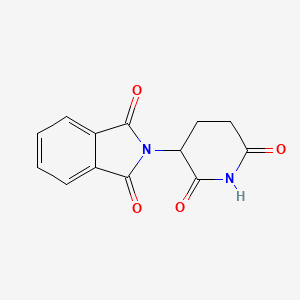
| Formula | C13H10N2O4 |
|---|---|
| Molecular weight | 258.23 g/mol |
| IUPAC name | 2-(2,6-dioxopiperidin-3-yl)isoindole-1,3-dione |
| CAS | 50-35-1 |
| PubChem CID | 5426 |
| InChIKey | UEJJHQNACJXSKW-UHFFFAOYSA-N |
| logP | 0.09 (XLogP 0.3) |
| Polar surface area | 83.55 Ų |
| H-bond acceptors / donors | 4 / 1 |
| Drug-likeness (QED) | 0.72 |
| Lipinski violations | 0 |
SMILES
O=C1CCC(N2C(=O)c3ccccc3C2=O)C(=O)N1Biology & Pharmacokinetics
Pharmacokinetics
| BBB penetrant | Yes (logBB -0.05) |
|---|
Enzyme interactions
| Enzyme | Role | Detail |
|---|---|---|
| CYP1A2 | Substrate | — |
| CYP2B6 | Substrate | — |
| CYP2C19 | Substrate | — |
| CYP2C9 | Substrate | — |
| CYP3A4 | Substrate | — |
Receptor binding (top 1)
| Target | Action | Affinity |
|---|---|---|
| cereblon (CRBN) | None | pKd 8.1 |
Transporters
BCRP (Inhibitor)BSEP (Inhibitor)MRP1 (Inhibitor)OAT3 (Inhibitor)OATP1B1 (Inhibitor)OATP1B3 (Inhibitor)P-gp (Inhibitor)P-gp (Substrate)
Drug–drug interactions (100+, DDInter)
| Interacting drug | Severity | Management |
|---|---|---|
| Adalimumab | major | |
| Aldesleukin | major | |
| Altretamine | major | |
| Anastrozole | major | |
| Asparaginase Erwinia chrysanthemi | major | |
| Asparaginase Escherichia coli | major | |
| Atezolizumab | major | |
| Avelumab | major | |
| Axitinib | major | |
| Azacitidine | major | |
| Bacillus calmette-guerin substrain tice live antigen | major | |
| Baricitinib | major | |
| Betamethasone | major | |
| Bevacizumab | major | |
| Binimetinib | major | |
| Bleomycin | major | |
| Busulfan | major | |
| Cabozantinib | major | |
| Calaspargase pegol | major | |
| Capecitabine | major | |
| Carboplatin | major | |
| Carmustine | major | |
| Certolizumab pegol | major | |
| Cetuximab | major | |
| Chlorambucil | major | |
| Cisplatin | major | |
| Cladribine | major | |
| Clofarabine | major | |
| Clozapine | major | |
| Conestat alfa | major | |
| Conjugated estrogens | major | |
| Conjugated estrogens (topical) | major | |
| Cyclophosphamide | major | |
| Cytarabine | major | |
| Dacarbazine | major | |
| Dactinomycin | major | |
| Darbepoetin alfa | major | |
| Daunorubicin | major | |
| Daunorubicin (liposomal) | major | |
| Decitabine | major |
Showing 40 of 100+.
Registered Products (1)
| Brand | Form / strength | Pack | Agent | Citizen (JOD) |
|---|---|---|---|---|
| Thalidomide BMS | Tablet 50 mg | 28 tab | Petra Drug Store | — |