Fampridine
JFDA label: Fampyra 10mg
Mechanism of Action
Blocker of Voltage-gated potassium channel — Voltage-gated potassium channel blocker
| Target | Action | Gene / class |
|---|---|---|
| Voltage-gated potassium channel efficacy | BLOCKER |
Indications
Approved
- Multiple Sclerosis — multiple sclerosis
Off-label
- Carpal Tunnel Syndrome
- Guillain-Barre Syndrome
- Ischemic Stroke
- Memory, Short-Term
- Multiple Sclerosis, Chronic Progressive
- Multiple Sclerosis, Relapsing-Remitting
- Muscle Spasticity
- Muscular Atrophy, Spinal
- Prostatic Diseases
- Sleep Apnea, Obstructive
- Spinal Cord Injuries
- Stroke
- Trauma, Nervous System
- Wounds and Injuries
Contraindications
Source: Lexicomp
- Additional contraindications (not in U.S. labeling): Mild, moderate, severe renal impairment (CrCl ≤80 mL/minute) Absolute
- Hypersensitivity to dalfampridine, 4-aminopyridine, or any component of the formulation Absolute
- concomitant use with compounded 4-aminopyridine or other forms of fampridine Absolute
- concomitant use with drugs that inhibit organic cation transporter 2 (OCT2), such as cimetidine or quinidine Absolute
- history of seizure Absolute
- moderate or severe renal impairment (CrCl ≤50 mL/minute) Absolute
Adverse Reactions
Nervous system disorders (5)
Common dizziness · equilibrium disturbance · headache · Insomnia · paresthesia
Gastrointestinal disorders (3)
Common constipation · dyspepsia · Nausea
Musculoskeletal and connective tissue disorders (3)
Common acute exacerbations of multiple sclerosis · back pain · Weakness
Other (1)
Very Common Genitourinary: Urinary tract infection
Respiratory, thoracic and mediastinal disorders (2)
Common Nasopharyngitis · pharyngolaryngeal pain
Dosing
Source: Lexicomp
Warnings & Precautions
Source: Lexicomp
Anaphylaxis
May cause anaphylaxis or severe allergic reactions; symptoms have included respiratory compromise, urticaria, and angioedema (throat and tongue). Discontinue immediately and administer appropriate medical care if a severe allergic reaction occurs.
Seizures
Associated with a dose-dependent risk of seizure; seizures may occur within days to weeks after treatment initiation and have been reported more frequently in patients with no history of seizures. Discontinue use and do not reinitiate therapy if seizure occurs during treatment. Use is contraindicated in patients with a history of seizures. Assess risk of seizure prior to treatment initiation; use caution or avoid in patients who may have a lower seizure threshold due to predisposing factors.
Urinary tract infection
Urinary tract infections were reported more frequently in patients receiving dalfampridine (compared to placebo), Disease-related concerns:
Renal impairment
Use in renal impairment is associated with an increased risk of seizure and other adverse events, primarily neurologic effects, due to increased serum concentrations; elimination is predominately via the kidneys as unchanged drug. U.S. labeling contraindicates use in moderate-to-severe renal impairment (CrCl ≤50 mL/minute). Canadian labeling contraindicates use in mild, moderate, and severe renal impairment (CrCl ≤80 mL/minute). Concurrent drug therapy issues:
4-aminopyridine formulations
Sustained release products available in the U.S. (dalfampridine) or in Canada (fampridine) should not be administered with other 4-aminopyridine formulations (eg, compounded immediate release fampridine). Other warnings/precautions:
Name confusion
The chemical entity of 4-aminopyridine is referred to with a generic name of dalfampridine in the U.S. and with a generic name of fampridine in Canada.
Pregnancy & Lactation
Pregnancy
Adverse events have been observed in animal reproduction studies, including decreased growth and death.
Lactation
It is not known if dalfampridine is excreted in breast milk. Due to the potential for serious adverse reactions in the nursing infant, the decision to discontinue dalfampridine or to discontinue breast-feeding is not recommended should take into account the importance of treatment to the mother.
Monitoring
| Clinical pearl | Renal function (baseline and at least annually thereafter); EEG; walking ability |
|---|
Chemistry & Properties
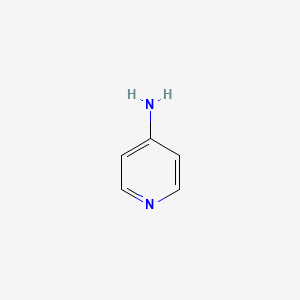
| Formula | C5H6N2 |
|---|---|
| Molecular weight | 94.12 g/mol |
| IUPAC name | pyridin-4-amine |
| CAS | 504-24-5 |
| PubChem CID | 1727 |
| InChIKey | NUKYPUAOHBNCPY-UHFFFAOYSA-N |
| logP | 0.66 (XLogP 0.3) |
| Polar surface area | 38.91 Ų |
| H-bond acceptors / donors | 2 / 1 |
| Drug-likeness (QED) | 0.51 |
| Lipinski violations | 0 |
SMILES
Nc1ccncc1Biology & Pharmacokinetics
Pharmacokinetics
| BBB penetrant | Yes |
|---|
Enzyme interactions
| Enzyme | Role | Detail |
|---|---|---|
| CYP2B6 | Inhibitor | — |
| CYP2C8 | Inhibitor | — |
| CYP2D6 | Inhibitor | — |
| CYP3A4 | Inhibitor | — |
Transporters
BCRP (Inhibitor)BSEP (Inhibitor)MDR1 (Inhibitor)MRP1 (Inhibitor)OATP1B1 (Inhibitor)OATP1B3 (Inhibitor)OCT2 (Inhibitor)P-gp (Inhibitor)MDR1 (Substrate)OCT2 (Substrate)P-gp (Substrate)
Drug–drug interactions (19, DDInter)
| Interacting drug | Severity | Management |
|---|---|---|
| Bupropion | major | |
| Iohexol | major | |
| Iopamidol | major | |
| Cimetidine | moderate | |
| Crizotinib | moderate | |
| Encorafenib | moderate | |
| Ketoconazole | moderate | |
| Lenvatinib | moderate | |
| Lindane | moderate | |
| Megestrol acetate | moderate | |
| Metformin | moderate | |
| Olaparib | moderate | |
| Picosulfuric acid | moderate | |
| Polyethylene glycol (3350 with electrolytes) | moderate | |
| Ribociclib | moderate | |
| Rucaparib | moderate | |
| Sodium sulfate | moderate | |
| Tafenoquine | moderate | |
| Vandetanib | moderate |
Registered Products (1)
| Brand | Form / strength | Pack | Agent | Citizen (JOD) |
|---|---|---|---|---|
| Fampyra | Tablet 10 mg | 56 tab | Jarash Drug Store | — |