Cyclobenzaprine
JFDA label: Xaprine 10mg Tab
Mechanism of Action
Centrally-acting skeletal muscle relaxant pharmacologically related to tricyclic antidepressants; reduces tonic somatic motor activity influencing both alpha and gamma motor neurons
Indications
Approved
- Muscle spasm
Off-label
- Acute jaw pain due to temporomandibular disorder
Contraindications
Source: Lexicomp
- Hypersensitivity to cyclobenzaprine or any component of the formulation Absolute
- acute recovery phase of MI Absolute
- arrhythmias Absolute
- during or within 14 days of MAO inhibitors Absolute
- heart block or conduction disturbances Absolute
- heart failure Absolute
- hyperthyroidism Absolute
Adverse Reactions
Nervous system disorders (8)
Very Common dizziness · Drowsiness
Common confusion · decreased mental acuity · Fatigue · headache · irritability · nervousness
Gastrointestinal disorders (8)
Very Common Xerostomia
Common abdominal pain · acid regurgitation · constipation · diarrhea · Dyspepsia · nausea · unpleasant taste
Musculoskeletal and connective tissue disorders (1)
Common Weakness
Eye disorders (1)
Common Blurred vision
Respiratory, thoracic and mediastinal disorders (2)
Common Pharyngitis · upper respiratory tract infection
Dosing
Source: Lexicomp
Warnings & Precautions
Source: Lexicomp
Anticholinergic effects
Use with caution in patients with angle-closure glaucoma, increased intraocular pressure, or urinary frequency/hesitancy.
CNS depression
May cause CNS depression, which may impair physical or mental abilities; ethanol and/or other CNS depressants may enhance these effects. Patients must be cautioned about performing tasks which require mental alertness (eg, operating machinery or driving).
Serotonin syndrome
Potentially life-threatening serotonin syndrome has occurred with cyclobenzaprine when used in combination with other serotonergic agents (eg, SSRIs, SNRIs, TCAs, buspirone, meperidine, tramadol, MAO inhibitors), bupropion, and verapamil. Monitor patients closely especially during initiation/dose titration for signs/symptoms of serotonin syndrome such as mental status changes (eg, agitation, hallucinations); autonomic instability (eg, tachycardia, labile blood pressure, diaphoresis); neuromuscular changes (eg, tremor, rigidity, myoclonus); GI symptoms (eg, nausea, vomiting, diarrhea); and/or seizures. Discontinue cyclobenzaprine and any concomitant serotonergic agent immediately if signs/symptoms arise. Concomitant use or use within 14 days of discontinuing an MAO inhibitor is contraindicated.
Toxicity
Cyclobenzaprine shares the toxic potentials of the tricyclic antidepressants, including prolongation of conduction time, arrhythmias, and tachycardia; the usual precautions of tricyclic antidepressant therapy should be observed. Disease-related concerns:
Hepatic impairment
Use with caution in patients with mild hepatic impairment; plasma concentrations increased twofold in presence of mild impairment. Not recommended in moderate-to-severe hepatic impairment. Extended release capsules not recommended in patients with hepatic impairment of any severity (mild, moderate, or severe). Concurrent drug therapy issues:
Drug-drug interactions
Potentially significant interactions may exist, requiring dose or frequency adjustment, additional monitoring, and/or selection of alternative therapy. Consult drug interactions database for more detailed information. Special populations:
Elderly
Extended release capsules not recommended for use in elderly. Other warnings/precautions:
Appropriate use
Limit therapy to 2-3 weeks; efficacy has not been established for longer periods of use.
Pregnancy & Lactation
Pregnancy
Adverse events have not been observed in animal reproduction studies. The manufacturer recommends avoiding use during pregnancy unless clearly needed.
Lactation
It is not known if cyclobenzaprine is excreted in breast milk. Because cyclobenzaprine is closely related to tricyclic antidepressants, some of which are excreted in breast milk, the manufacturer recommends that caution be exercised when administering cyclobenzaprine to breastfeeding women.
LactMed: monitor the infant.
Monitoring
| Clinical pearl | Signs/symptoms of serotonin syndrome (patients receiving other serotonergic drugs) |
|---|
Chemistry & Properties
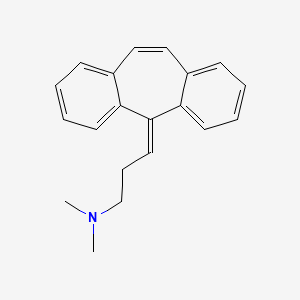
| Formula | C20H21N |
|---|---|
| Molecular weight | 275.4 g/mol |
| IUPAC name | N,N-dimethyl-3-(2-tricyclo[9.4.0.03,8]pentadeca-1(15),3,5,7,9,11,13-heptaenylidene)propan-1-amine |
| CAS | 303-53-7 |
| PubChem CID | 2895 |
| InChIKey | JURKNVYFZMSNLP-UHFFFAOYSA-N |
| logP | 4.55 (XLogP 5.2) |
| Polar surface area | 3.24 Ų |
| H-bond acceptors / donors | 1 / 0 |
| Drug-likeness (QED) | 0.68 |
| Lipinski violations | 0 |
SMILES
CN(C)CCC=C1c2ccccc2C=Cc2ccccc21Biology & Pharmacokinetics
Pharmacokinetics
| BBB penetrant | Yes (logBB 1.06) |
|---|
Enzyme interactions
| Enzyme | Role | Detail |
|---|---|---|
| CYP1A2 | Substrate | — |
| CYP2B6 | Substrate | — |
| CYP2C19 | Substrate | — |
| CYP2D6 | Inhibitor | — |
| CYP2D6 | Substrate | — |
| CYP3A4 | Substrate | — |
Transporters
BCRP (Inhibitor)BSEP (Inhibitor)BSEP (Inhibitor)MRP1 (Inhibitor)OATP1B1 (Inhibitor)OATP1B1 (Inhibitor)OATP1B3 (Inhibitor)OATP1B3 (Inhibitor)P-gp (Inhibitor)MDR1 (Substrate)P-gp (Substrate)
Drug–drug interactions (100+, DDInter)
| Interacting drug | Severity | Management |
|---|---|---|
| Bupropion | major | |
| Codeine | major | |
| Dexfenfluramine | major | |
| Doxepin | major | |
| Doxepin (topical) | major | |
| Fenfluramine | major | |
| Hydrocodone | major | |
| Iohexol | major | |
| Iopamidol | major | |
| Methylene blue | major | |
| Morphine | major | |
| Morphine (liposomal) | major | |
| Ozanimod | major | |
| Potassium chloride | major | |
| Potassium citrate | major | |
| Procarbazine | major | |
| Aclidinium | moderate | |
| Acrivastine | moderate | |
| Aldesleukin | moderate | |
| Alimemazine | moderate | |
| Anagrelide | moderate | |
| Aprepitant | moderate | |
| Atropine | moderate | |
| Azatadine | moderate | |
| Azelastine (nasal) | moderate | |
| Brimonidine (ophthalmic) | moderate | |
| Brimonidine (topical) | moderate | |
| Brompheniramine | moderate | |
| Carbinoxamine | moderate | |
| Cetirizine | moderate | |
| Chlorcyclizine | moderate | |
| Chlorpheniramine | moderate | |
| Clemastine | moderate | |
| Clidinium | moderate | |
| Clofedanol | moderate | |
| Cyclizine | moderate | |
| Cyproheptadine | moderate | |
| Deferasirox | moderate | |
| Dexbrompheniramine | moderate | |
| Dicyclomine | moderate |
Showing 40 of 100+.
Registered Products (4)
| Brand | Form / strength | Pack | Agent | Citizen (JOD) |
|---|---|---|---|---|
| Destress 5 Tablets | Tablet 5 mg | 30 tab | Sukhtian Pharma Company (SP) | 3.200 |
| Xaprine | Tablet 5 mg | 30 tab | Sukhtian Group | 4.000 |
| DeStress 10 Tablets | Tablet 10 mg | 30 tab | Sukhtian Pharma Company (SP) | 4.500 |
| Xaprine | Tablet 10 mg | 30 tab | Sukhtian Group | 5.640 |