Carfilzomib
JFDA label: Kyprolis 60mg
Mechanism of Action
Inhibitor of 26S proteasome — 26S proteasome inhibitor
| Target | Action | Gene / class |
|---|---|---|
| 26S proteasome efficacy | INHIBITOR |
Indications
Approved
- Multiple myeloma, relapsed/refractory
Off-label
- Waldenström macroglobulinemia
Contraindications
Source: Lexicomp
- Hypersensitivity to carfilzomib or any component of the formulation Absolute
- There are no contraindications listed in the manufacturer's US labeling Absolute
Adverse Reactions
Cardiac disorders (10)
Very Common chest pain · Hypertension · peripheral edema
Common Deep vein thrombosis · ischemic heart disease (Siegel 2013) · pulmonary embolism · pulmonary hypertension
Not Known Cardiac failure · hypotension · thromboembolic complications
Nervous system disorders (13)
Very Common chills · dizziness · Fatigue · headache · hypoesthesia (Siegel 2013) · insomnia · peripheral neuropathy (Siegel 2012)
Common Paresthesia (Siegel 2013) · peripheral sensory neuropathy (Siegel 2013)
Not Known Anxiety · intracranial hemorrhage · pain · voice disorder
Hepatobiliary disorders (2)
Not Known Hepatic failure · increased serum transaminases
Renal and urinary disorders (5)
Very Common Increased serum creatinine
Common acute renal failure (more common in patients with advanced relapsed and refractory multiple myeloma [Siegel 2013]) · renal failure (Siegel 2013) · Renal insufficiency
Not Known Urinary tract infection
Blood and lymphatic system disorders (8)
Very Common anemia · leukopenia (Siegel 2013) · lymphocytopenia · neutropenia (Siegel 2013) · Thrombocytopenia
Common Febrile neutropenia
Not Known Hemorrhage · pulmonary hemorrhage
Metabolism and nutrition disorders (10)
Common Hypercalcemia (Siegel 2013) · hyponatremia (Siegel 2012) · hypophosphatemia (Siegel 2012)
Not Known Hyperglycemia · hyperkalemia · hyperuricemia · hypoalbuminemia · hypocalcemia · hypokalemia · hypomagnesemia
Gastrointestinal disorders (10)
Very Common anorexia · constipation (Siegel 2013) · diarrhea · Nausea · vomiting
Not Known Abdominal pain · dyspepsia · gastrointestinal hemorrhage · toothache · upper abdominal pain
Skin and subcutaneous tissue disorders (4)
Not Known Erythema · hyperhidrosis · pruritus · skin rash
Musculoskeletal and connective tissue disorders (8)
Very Common Back pain · muscle spasm
Not Known Arthralgia · limb pain · musculoskeletal chest pain · musculoskeletal pain · myalgia · weakness
Eye disorders (2)
Not Known Blurred vision · cataract
Infections and infestations (2)
Not Known Influenza · sepsis
General disorders and administration site conditions (3)
Very Common Fever
Not Known Infusion site reaction · Multiorgan failure
Respiratory, thoracic and mediastinal disorders (13)
Very Common cough · Dyspnea · pneumonia (Siegel 2013) · upper respiratory tract infection
Not Known Bronchitis · bronchopneumonia · epistaxis · nasopharyngitis · oropharyngeal pain · pulmonary edema · pulmonary infection · respiratory tract infection · rhinitis
Dosing
Source: Lexicomp
Warnings & Precautions
Source: Lexicomp
Bone marrow suppression
Thrombocytopenia (including grade 4) was observed in patients receiving carfilzomib, with platelet nadirs occurring between day 8 and day 15 of each 28-day treatment cycle, and recovery to baseline by the start of the next cycle. Monitor platelets closely and adjust dose or withhold therapy if necessary. Hemorrhage due to thrombocytopenia may occur. Anemia, lymphopenia, leukopenia, and neutropenia were also observed.
Cardiovascular effects
Death caused by cardiac arrest has occurred within 24 hours of administration. Carfilzomib has been associated with new-onset or worsening of heart failure (HF), pulmonary edema, decreased left ventricular ejection fraction (LVEF), restrictive cardiomyopathy, myocardial ischemia, and MI (including fatalities). Some events occurred in patients with normal ventricular function at baseline. Cardiac events typically were observed throughout the course of therapy. Patients ≥75 years of age have an increased risk of heart failure. Monitor closely for cardiac complications and for volume overload (due to pretreatment hydration), particularly in patients at risk for HF; withhold carfilzomib therapy for grade 3 or 4 cardiac events until recovery. Patients with New York Heart Association Class III and IV heart failure, recent MI (within 3 to 6 months), and conduction abnormalities, angina, or arrhythmias not managed by medication were excluded from clinical trials and may be at increased risk for cardiac complications; evaluate with a comprehensive medical assessment prior to initiation and closely monitor.
Hemorrhage
Serious or fatal cases of hemorrhage have been reported, including GI, intracranial, and pulmonary hemorrhage and epistaxis. Bleeding may be spontaneous; intracranial hemorrhage has occurred without trauma. Hemorrhage has been reported in patients with and without low platelets and has also been reported in patients who were not receiving anticoagulation or antiplatelet therapy. Monitor for signs/symptoms of hemorrhage and promptly evaluate symptoms of blood loss. Reduce dose or withhold treatment as clinically indicated.
Hepatic effects
Hepatic failure, including fatal cases, has been reported rarely. Increased transaminases and hyperbilirubinemia have also been observed. Interrupt therapy with grade 3 or higher hepatic toxicity until resolved or recovered to baseline (may require dose reduction if appropriate to reinitiate); monitor liver enzymes regularly.
Hypertension
Hypertension has occurred with use; hypertensive crisis and hypertensive emergency have also been reported (some events were fatal). Control hypertension prior to initiating carfilzomib. Monitor blood pressure regularly throughout therapy; if hypertension cannot be adequately controlled, interrupt carfilzomib therapy and evaluate; assess risks versus benefits when determining to restart treatment.
Infusion reactions
May occur immediately following or within 24 hours of carfilzomib infusion; may be life-threatening. Symptoms have included fever, chills, arthralgia, myalgia, flushing, facial edema, vomiting, weakness, dyspnea, hypotension, syncope, chest tightness, or angina. To lessen the incidence and intensity of infusion reactions, administer dexamethasone prior to drug administration.
Posterior reversible encephalopathy syndrome
Posterior reversible encephalopathy syndrome (PRES) has been reported rarely with use; symptoms include seizure, headache, lethargy, confusion, blindness, altered consciousness, hypertension, and other visual/neurological disturbances. Discontinue therapy if PRES diagnosis is suspected; the safety of reinitiating therapy after PRES diagnosis is not known.
Pulmonary toxicities
Acute respiratory distress syndrome (ARDS), acute respiratory failure, and acute diffuse-infiltrative pulmonary disease (eg, pneumonitis and interstitial lung disease) have occurred in a small number of patients (some events were fatal); discontinue therapy if any of these drug-induced pulmonary toxicities occur. In clinical trials, pulmonary arterial hypertension (PAH) was observed (including grade 3 or higher events); perform cardiac imaging or other testing as appropriate, and withhold carfilzomib until PAH is resolved or returns to baseline. Dyspnea (including grade 3 or higher events) has been reported; monitor closely. Withhold carfilzomib for grade 3 or 4 dyspnea until pulmonary symptom resolution or return to baseline.
Renal toxicity
Renal toxicity (eg, renal insufficiency, acute renal failure, renal failure) has been reported with carfilzomib; some events have been fatal. Acute renal failure was observed more frequently in patients receiving carfilzomib monotherapy for advanced relapsed/refractory multiple myeloma; renal failure risk is greater when patients have a baseline reduced CrCl. Monitor renal function closely; may require therapy interruption or dose reduction.
Thrombotic microangiopathy
Thrombotic microangiopathy, including cases of thrombocytopenic thrombotic purpura/hemolytic uremic syndrome (TTP/HUS) has been reported (some fatal); monitor for signs/symptoms. Interrupt therapy if TTP/HUS diagnosis is suspected and manage appropriately (eg, plasma exchange as clinically necessary). If TTP/HUS diagnosis is excluded, may consider reinitiating therapy; the safety of restarting carfilzomib after a TTP/HUS diagnosis is not known.
Thromboembolic events
Venous thromboembolism (eg, deep vein thrombosis and pulmonary embolism) has been observed, particularly when used as part of combination therapy with dexamethasone or with lenalidomide plus dexamethasone. Thromboprophylaxis is recommended with combination therapy, and should be based on patients’ underlying risk factors, treatment regimen, and clinical status. Due to risk of thrombosis with hormonal contraception, consider an alternative method of effective contraception during combination treatment of carfilzomib with dexamethasone or lenalidomide plus dexamethasone.
Tumor lysis syndrome
Tumor lysis syndrome (TLS), including fatalities, has been observed. TLS risk is increased in multiple myeloma patients with a high tumor burden. Adequately hydrate patients prior to carfilzomib therapy and monitor closely for signs and symptoms of TLS; consider use of antihyperuricemic agents. If TLS occurs, interrupt treatment until resolved. Concurrent drug therapy issues:
Combination therapy toxicity
An increased incidence of serious and fatal adverse events was observed in a clinical trial comparing the combination of carfilzomib, melphalan, and prednisone (KMP) to bortezomib, melphalan, and prednisone (VMP) for the treatment of newly diagnosed multiple myeloma (MM) in transplant-ineligible patients. Cardiac failure, hypertension, acute renal failure, and dyspnea were observed more frequently in the KMP arm. KMP is not an approved carfilzomib combination regimen.
Drug-drug interactions
Potentially significant interactions may exist, requiring dose or frequency adjustment, additional monitoring, and/or selection of alternative therapy. Consult drug interactions database for more detailed information. Dosage form specific issues:
Injection
Vials contain the excipient cyclodextrin (sulfobutyl ether beta-cyclodextrin), which may accumulate in patients with renal insufficiency, although the clinical significance of this finding is uncertain (Luke 2010).
Pregnancy & Lactation
Pregnancy
Adverse events were observed in animal reproduction studies. Based on the mechanism of action, adverse fetal events would be expected to occur with use in pregnant women. Females and males of reproductive potential are advised to avoid pregnancy during therapy; women of reproductive potential should abstain from sexual activity or use effective contraception during treatment and for at least 30 days following therapy completion. Male patients of reproductive potential should abstain from sexual activity or use effective contraception during treatment and for at least 90 days following therapy completion.
Lactation
It is not known if carfilzomib is present in breast milk. Due to the potential for serious adverse reactions in the breastfed infant, the manufacturer recommends a decision be made to discontinue breastfeeding or to discontinue the drug, taking into account the importance of treatment to the mother and the health benefits of breastfeeding. The appropriate timing to restart breastfeeding after treatment discontinuation should be determined with the health care provider.
Monitoring
| Clinical pearl | CBC with differential and platelets (monitor frequently throughout therapy), serum potassium levels regularly during treatment, renal function, pulmonary function (with new or worsening pulmonary symptoms), liver function tests, blood pressure (regularly during treatment in all patients). Signs/symptoms of infusion-related reactions, congestive heart failure, tumor lysis syndrome, peripheral neuropathy, posterior reversible encephalopathy syndrome, thrombocytopenic thrombotic purpura/hemolytic uremic syndrome, and venous thromboembolic events. Monitor for evidence of volume overload due to pre- and posthydration. |
|---|
Chemistry & Properties
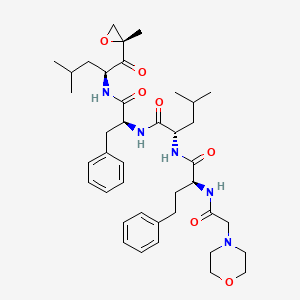
| Formula | C40H57N5O7 |
|---|---|
| Molecular weight | 719.92 g/mol |
| IUPAC name | (2S)-4-methyl-N-[(2S)-1-[[(2S)-4-methyl-1-[(2R)-2-methyloxiran-2-yl]-1-oxopentan-2-yl]amino]-1-oxo-3-phenylpropan-2-yl]-2-[[(2S)-2-[(2-morpholin-4-ylacetyl)amino]-4-phenylbutanoyl]amino]pentanamide |
| CAS | 868540-17-4 |
| PubChem CID | 11556711 |
| InChIKey | BLMPQMFVWMYDKT-NZTKNTHTSA-N |
| logP | 2.58 (XLogP 4.7) |
| Polar surface area | 158.47 Ų |
| H-bond acceptors / donors | 8 / 4 |
| Drug-likeness (QED) | 0.15 |
| Lipinski violations | 1 |
SMILES
CC(C)C[C@H](NC(=O)[C@H](CCc1ccccc1)NC(=O)CN1CCOCC1)C(=O)N[C@@H](Cc1ccccc1)C(=O)N[C@@H](CC(C)C)C(=O)[C@@]1(C)CO1Biology & Pharmacokinetics
Pharmacokinetics predicted
| Bioavailability | 70.0% |
|---|---|
| Half-life | 0.619 h |
| Volume of distribution | 2.765 L/kg |
| Protein binding | 92.1% |
| BBB penetrant | No |
Enzyme interactions
| Enzyme | Role | Detail |
|---|---|---|
| CYP2B6 | Inhibitor | — |
| CYP3A4 | Inhibitor | — |
Receptor binding (top 1)
| Target | Action | Affinity |
|---|---|---|
| proteasome 20S subunit beta 5 (PSMB5) | Inhibitor | pIC50 8.2 |
Transporters
BCRP (Inhibitor)BSEP (Inhibitor)MDR1 (Inhibitor)MRP1 (Inhibitor)OATP1B1 (Inhibitor)OATP1B3 (Inhibitor)P-gp (Inhibitor)BCRP (Substrate)MDR1 (Substrate)P-gp (Substrate)
Drug–drug interactions (100+, DDInter)
| Interacting drug | Severity | Management |
|---|---|---|
| Adalimumab | major | |
| Aminocaproic acid | major | |
| Antihemophilic factor, human recombinant | major | |
| Avatrombopag | major | |
| Bacillus calmette-guerin substrain tice live antigen | major | |
| Baricitinib | major | |
| Certolizumab pegol | major | |
| Cladribine | major | |
| Clozapine | major | |
| Coagulation Factor IX Human | major | |
| Coagulation factor VIIa Recombinant Human | major | |
| Coagulation factor X human | major | |
| Conestat alfa | major | |
| Conjugated estrogens | major | |
| Conjugated estrogens (topical) | major | |
| Danazol | major | |
| Darbepoetin alfa | major | |
| Deferiprone | major | |
| Dienestrol (topical) | major | |
| Diethylstilbestrol | major | |
| Drospirenone | major | |
| Eltrombopag | major | |
| Erythropoietin | major | |
| Esterified estrogens | major | |
| Estradiol | major | |
| Estradiol (topical) | major | |
| Estrone | major | |
| Estrone sulfate | major | |
| Estrone sulfate (topical) | major | |
| Etanercept | major | |
| Ethinylestradiol | major | |
| Etonogestrel | major | |
| Factor IX Complex (Human) | major | |
| Factor XIII (human) | major | |
| Fibrinogen human | major | |
| Fingolimod | major | |
| Fluoxymesterone | major | |
| Golimumab | major | |
| Human C1-esterase inhibitor | major | |
| Infliximab | major |
Showing 40 of 100+.
Registered Products (1)
| Brand | Form / strength | Pack | Agent | Citizen (JOD) |
|---|---|---|---|---|
| Kyprolis | Vial 60 mg | 1 vial | Adatco Drug Store | — |