Cytarabine
JFDA label: Cytarabine Powder for Inj.
- Experienced physician:
- Drug toxicities:
Mechanism of Action
Inhibitor of DNA — DNA inhibitor; Inhibitor of RNA — RNA inhibitor; Inhibitor of DNA polymerase (alpha/delta/epsilon) — DNA polymerase (alpha/delta/epsilon) inhibitor
| Target | Action | Gene / class |
|---|---|---|
| DNA efficacy | INHIBITOR | |
| DNA polymerase (alpha/delta/epsilon) efficacy | INHIBITOR | |
| RNA efficacy | INHIBITOR |
Indications
Approved
- Acute lymphocytic leukemia
- Acute myeloid leukemia
- Chronic myeloid leukemia
- Meningeal leukemia
Off-label
- Acute myeloid leukemia (consolidation)
- Acute myeloid leukemia (salvage)
- Acute promyelocytic leukemia (consolidation)
- Acute promyelocytic leukemia (induction)
- Chronic lymphocytic leukemia (refractory)
- Hodgkin lymphoma (relapsed or refractory)
- Non-Hodgkin lymphoma
- Primary central nervous system lymphoma
Class profile
| mechanismClass | Antimetabolite (cytidine analogue) |
|---|---|
| targetMolecule | DNA polymerase (chain terminator) |
| targetPathway | DNA replication |
| generation | Classic |
| primaryTumors | AML,ALL,CML blast crisis,CNS lymphoma |
| resistanceMechanisms | dCK downregulation,Cytidine deaminase overexpression,MDR efflux pumps |
| source | NCCN/OncoKB/Goodman&Gilman13ed |
Contraindications
Source: Lexicomp
- Hypersensitivity to cytarabine or any component of the formulation Absolute
Adverse Reactions
Cardiac disorders (6)
Not Known Angina pectoris · Cardiomegaly · cardiomyopathy (in combination with cyclophosphamide) · chest pain · local thrombophlebitis · pericarditis
Nervous system disorders (17)
Not Known Aphonia · Aseptic meningitis · cerebral dysfunction · coma · dizziness · drowsiness · headache · leukoencephalopathy (necrotizing; with concurrent cranial irradiation, intrathecal methotrexate, and intrathecal hydrocortisone) · nerve palsy (accessory nerve) · neuritis · neurocerebellar toxicity · neurotoxicity · paralysis (intrathecal and IV combination therapy) · paraplegia · peripheral neuropathy (motor and sensory) · personality changes · reversible posterior leukoencephalopathy syndrome
Hepatobiliary disorders (7)
Not Known Hepatic abscess · hepatic injury · Hepatic insufficiency · hepatic sinusoidal obstruction syndrome (formerly known as hepatic veno-occlusive disease) · hyperbilirubinemia · increased serum transaminases (acute) · jaundice
Renal and urinary disorders (2)
Not Known Renal insufficiency · Urinary retention
Blood and lymphatic system disorders (8)
Not Known Anemia · bone marrow depression · hemorrhage · leukopenia · megaloblastic anemia · neutropenia (onset: 1 to 7 days; nadir [biphasic]: 7 to 9 days and at 15 to 24 days; recovery [biphasic]: 9 to 12 days and at 24 to 34 days) · reticulocytopenia · thrombocytopenia (onset: 5 days; nadir: 12 to 15 days; recovery 15 to 25 days)
Immune system disorders (2)
Not Known Allergic edema · anaphylaxis
Metabolism and nutrition disorders (1)
Not Known Hyperuricemia
Gastrointestinal disorders (20)
Not Known Abdominal pain · anal fissure · anorexia · diarrhea · Dysphagia · esophageal ulcer · esophagitis · Gastrointestinal ulcer · increased serum amylase · increased serum lipase · intestinal necrosis · mucositis · nausea · necrotizing enterocolitis · pancreatitis · peritonitis · pneumatosis cystoides intestinalis · sore throat · toxic megacolon · vomiting
Skin and subcutaneous tissue disorders (10)
Not Known Acute generalized exanthematous pustulosis · alopecia · Alopecia (complete) · dermal ulcer · desquamation · ephelis · pruritus · skin rash · skin rash (severe) · urticaria
Musculoskeletal and connective tissue disorders (1)
Not Known Rhabdomyolysis
Eye disorders (5)
Not Known Blindness (with concurrent systemic chemotherapy and cranial irradiation) · Conjunctivitis · Corneal toxicity · diplopia · hemorrhagic conjunctivitis
Infections and infestations (1)
Not Known Sepsis
General disorders and administration site conditions (6)
Not Known Cellulitis at injection site · Drug toxicity (cytarabine syndrome; chest pain, conjunctivitis, fever, maculopapular rash, malaise, myalgia, ostealgia) · fever · inflammation at injection site (SC injection) · local inflammation (anus) · pain at injection site (SC injection)
Respiratory, thoracic and mediastinal disorders (6)
Not Known Acute respiratory distress · Cough · dyspnea · hoarseness · interstitial pneumonitis · pulmonary edema
Dosing
Source: Lexicomp
Warnings & Precautions
Source: Lexicomp
Bone marrow suppression
Myelosuppression (leukopenia, thrombocytopenia and anemia) is the major toxicity of cytarabine. Use with caution in patients with prior drug-induced bone marrow suppression. Monitor blood counts frequently; once blasts are no longer apparent in the peripheral blood, bone marrow should be monitored frequently. Monitor for signs of infection or neutropenic fever due to neutropenia or bleeding due to thrombocytopenia.
Cytarabine syndrome
Cytarabine (ARA-C) syndrome is characterized by fever, myalgia, bone pain, chest pain (occasionally), maculopapular rash, conjunctivitis, and malaise; generally occurs 6 to 12 hours following administration. May be managed with corticosteroids.
Gastrointestinal toxicities
Toxicities (less serious) include nausea, vomiting, diarrhea, abdominal pain, oral ulcerations and hepatic dysfunction. In adults, doses >1000 mg/m2 are associated with a moderate emetic potential (Hesketh 2017; Roila 2016). In pediatrics, doses >200 mg/m2 are associated with a moderate emetic potential and 3000 mg/m2 is associated with a high emetic potential (Dupuis 2011); antiemetics are recommended to prevent nausea and vomiting.
Hypersensitivity
Anaphylaxis resulting in acute cardiopulmonary arrest has been reported (rare).
Pancreatitis
There have been reports of acute pancreatitis in patients receiving continuous infusion cytarabine and in patients receiving cytarabine who were previously treated with L-asparaginase.
Sudden respiratory distress syndrome
Sudden respiratory distress, rapidly progressing to pulmonary edema and cardiomegaly, has been reported with high-dose cytarabine. May present as severe dyspnea with a rapid onset and refractory hypoxia with diffuse pulmonary infiltrates, leading to respiratory failure; may be fatal (Morgan 2011).
Tumor lysis syndrome
Tumor lysis syndrome and subsequent hyperuricemia may occur; consider antihyperuricemic therapy and hydrate accordingly. Disease-related concerns:
Hepatic impairment
Use with caution in patients with hepatic impairment; may be at higher risk for CNS toxicities and dosage adjustments may be required.
Renal impairment
Use with caution in patients with impaired renal function (high dose cytarabine); may be at higher risk for CNS toxicities and dosage adjustments may be required. Concurrent drug therapy issues:
Drug-drug interactions
Potentially significant interactions may exist, requiring dose or frequency adjustment, additional monitoring, and/or selection of alternative therapy. Consult drug interactions database for more detailed information. There have been case reports of fatal cardiomyopathy when high-dose cytarabine was used in combination with cyclophosphamide as a preparation regimen for transplantation. Special populations:
Pediatric
Delayed progressive ascending paralysis has been reported in two children who received combination chemotherapy with IV and intrathecal cytarabine at conventional doses for the treatment of acute myeloid leukemia (was fatal in one patient). Dosage form specific issues:
Benzyl alcohol
Some products may contain benzyl alcohol; do not use products containing benzyl alcohol or products reconstituted with bacteriostatic diluent intrathecally or for high-dose cytarabine regimens. Benzyl alcohol is associated with gasping syndrome in premature infants. Other warnings/precautions:
Experienced physician
Should be administered under the supervision of an experienced cancer chemotherapy physician. Due to the potential toxicities, induction treatment with cytarabine should be in a facility with sufficient laboratory and supportive resources.
High-dose treatment
High-dose regimens have been associated with GI, CNS, pulmonary, ocular (reversible corneal toxicity and hemorrhagic conjunctivitis; prophylaxis with ophthalmic corticosteroids is recommended) toxicities, and cardiomyopathy. Neurotoxicity associated with high-dose treatment may present as acute cerebellar toxicity (with or without cerebral impairment), personality changes, or may be severe with seizure and/or coma; may be delayed, occurring up to 3 to 8 days after treatment has begun; possibly irreversible. Risk factors for neurotoxicity include cumulative cytarabine dose, prior CNS disease and renal impairment (incidence may be up to 55% in patients with renal impairment); high-dose therapy (>18 g/m2 per cycle) and age >50 years also increase the risk for cerebellar toxicity (Herzig 1987).
Intrathecal safety
When used for intrathecal administration, should not be prepared during the preparation of any other agents. After preparation, store intrathecal medications in an isolated location or container clearly marked with a label identifying as "intrathecal" use only. Delivery of intrathecal medications to the patient should only be with other medications also intended for administration into the central nervous system (Jacobson 2009).
Pregnancy & Lactation
Pregnancy
Adverse effects were demonstrated in animal reproduction studies. Limb and ear defects have been noted in case reports of cytarabine exposure during the first trimester of pregnancy. The following have also been noted in the neonate: Pancytopenia, WBC depression, electrolyte abnormalities, prematurity, low birth weight, decreased hematocrit or platelets. Risk to the fetus is decreased if treatment can be avoided during the first trimester; however, women of childbearing potential should be advised of the potential risks.
Lactation
It is not known if cytarabine is present in breast milk. Due to the potential for serious adverse reactions in the breastfed infant, the decision to discontinue cytarabine or to discontinue breastfeeding should take into account the importance of treatment to the mother.
Monitoring
| Efficacy | Tumour response (RECIST criteria, tumour markers, imaging); progression-free survival; performance status (ECOG/Karnofsky) |
|---|---|
| Toxicity | CBC with differential (nadir timing depends on agent); LFTs; renal function; ECG (QT for relevant agents); echocardiogram for cardiotoxic agents (anthracyclines, trastuzumab); cumulative dose tracking for dose-limited toxicities |
| Clinical pearl | Treatment response is assessed after 2–3 cycles. Grade 3–4 toxicities typically require dose reduction or interruption per protocol-defined criteria. |
| Counseling | Attend all scheduled blood tests and imaging appointments. Report fever > 38°C (risk of neutropaenic sepsis — medical emergency), unusual bleeding, or new pain immediately. |
Chemistry & Properties
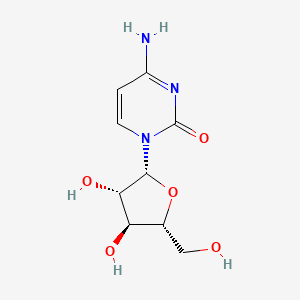
| Formula | C9H13N3O5 |
|---|---|
| Molecular weight | 243.22 g/mol |
| IUPAC name | 4-amino-1-[(2R,3S,4S,5R)-3,4-dihydroxy-5-(hydroxymethyl)oxolan-2-yl]pyrimidin-2-one |
| CAS | 147-94-4 |
| PubChem CID | 6253 |
| InChIKey | UHDGCWIWMRVCDJ-CCXZUQQUSA-N |
| logP | -2.56 (XLogP -2.1) |
| Polar surface area | 130.83 Ų |
| H-bond acceptors / donors | 8 / 4 |
| Drug-likeness (QED) | 0.45 |
| Lipinski violations | 0 |
SMILES
Nc1ccn([C@@H]2O[C@H](CO)[C@@H](O)[C@@H]2O)c(=O)n1Biology & Pharmacokinetics
Pharmacokinetics predicted
| Bioavailability | 70.0% |
|---|---|
| Half-life | 2.093 h |
| Volume of distribution | 0.632 L/kg |
| Protein binding | 32.2% |
| BBB penetrant | No |
Transporters
BCRP (Inhibitor)BSEP (Inhibitor)BSEP (Inhibitor)CNT1 (Inhibitor)CNT2 (Inhibitor)CNT3 (Inhibitor)ENT2 (Inhibitor)MATE1 (Inhibitor)MRP1 (Inhibitor)MRP2 (Inhibitor)MRP3 (Inhibitor)MRP4 (Inhibitor)OATP1B1 (Inhibitor)OATP1B3 (Inhibitor)OATP1B3 (Inhibitor)OCT3 (Inhibitor)P-gp (Inhibitor)BCRP (Substrate)ENT1 (Substrate)ENT2 (Substrate)OCT1 (Substrate)OCTN1 (Substrate)P-gp (Substrate)
Drug–drug interactions (100+, DDInter)
| Interacting drug | Severity | Management |
|---|---|---|
| Adalimumab | major | |
| Bacillus calmette-guerin substrain tice live antigen | major | |
| Baricitinib | major | |
| Bexarotene | major | |
| Certolizumab pegol | major | |
| Cladribine | major | |
| Clozapine | major | |
| Deferiprone | major | |
| Etanercept | major | |
| Fingolimod | major | |
| Golimumab | major | |
| Infliximab | major | |
| Leflunomide | major | |
| Lomitapide | major | |
| Measles virus vaccine live attenuated | major | |
| Mipomersen | major | |
| Mumps virus strain B level jeryl lynn live antigen | major | |
| Natalizumab | major | |
| Ozanimod | major | |
| Pexidartinib | major | |
| Rotavirus vaccine | major | |
| Rubella virus vaccine | major | |
| Samarium (153Sm) lexidronam | major | |
| Siponimod | major | |
| Smallpox (Vaccinia) Vaccine, Live | major | |
| Talimogene laherparepvec | major | |
| Teriflunomide | major | |
| Thalidomide | major | |
| Tofacitinib | major | |
| Typhoid vaccine (live) | major | |
| Upadacitinib | major | |
| Varicella Zoster Vaccine (Recombinant) | major | |
| Yellow Fever Vaccine | major | |
| Aldesleukin | moderate | |
| Alefacept | moderate | |
| Alemtuzumab | moderate | |
| Anakinra | moderate | |
| Anthrax vaccine | moderate | |
| Asparaginase Erwinia chrysanthemi | moderate | |
| Asparaginase Escherichia coli | moderate |
Showing 40 of 100+.
Registered Products (10)
| Brand | Form / strength | Pack | Agent | Citizen (JOD) |
|---|---|---|---|---|
| Alexan Solution For Injection | Injection 100 mg/5 ml | 1 vial | Sabbagh Drug Store | — |
| Alexan Solution for Injection | Injection 1000 mg/20 ml | 1 vial | Sabbagh Drug Store | — |
| Alexan Solution for Injection | Injection 500 mg/10 ml | 1 vial | Sabbagh Drug Store | — |
| CYTOSAR 500 | Ampoule 500 mg | 1 amp | Petra Drug Store | — |
| Cytarabine Powder for Inj. | Powder for Injection 500 mg | 10 vial pack varies | ORIENT DRUG STORE CO | — |
| Cytarabine Powder for Inj. | Powder for Injection 500 mg | 1 vial pack varies | ORIENT DRUG STORE CO | — |
| Cytarine | Vial 1 g/10 ml | 1 vial | Sun Set Drug Store | — |
| Cytarine Injection | Injection 500 mg/5 ml | 1 vial | Sun Set Drug Store | — |
| Cytarine Injection | Injection 100 mg/ml | 1 vial | Sun Set Drug Store | — |
| Cytraz | Vial 1 g/10 ml | 1 vial | ٠ستÙدع أدÙÙØ© اÙÙÙÙÙÙÙ | — |