Ofloxacin
🧬 Cross-allergy: Fluoroquinolones
JFDA label: Oflacin-200mg F.C Tablets
- neurotoxicity — ChEMBL drug_warning (Black Box Warning) | United States
- musculoskeletal toxicity — ChEMBL drug_warning (Black Box Warning) | United States
- SERIOUS ADVERSE REACTIONS INCLUDING TENDINITIS, TENDON RUPTURE, PERIPHERAL NEUROPATHY, CENTRAL NERVOUS SYSTEM EFFECTS AND EXACERBATION OF MYASTHENIA GRAVIS Fluoroquinolones, including ofloxacin, have
Mechanism of Action
Inhibitor of Bacterial DNA gyrase — Bacterial DNA gyrase inhibitor
| Target | Action | Gene / class |
|---|---|---|
| Bacterial DNA gyrase efficacy | INHIBITOR |
Indications
Approved
- Acne Vulgaris — acne
- Bacterial Infections — bacterial disease
- Bronchitis, Chronic — chronic bronchitis
- Corneal Ulcer — keratitis
- Eye Infections — eye infection
- Infections — infection
- Otitis Externa — otitis externa
Off-label
- Conjunctivitis, Bacterial
- Diabetic Foot
- Glaucoma
- Glaucoma, Open-Angle
- Ocular Hypertension
- Otitis Media
- Pelvic Inflammatory Disease
- Urinary Tract Infections
Antimicrobial Spectrum
Expected / intrinsic spectrum (EUCAST breakpoints & labels) — not local resistance. Source: EUCAST v16 · openfda-label.
Bacteria
| Organism | Activity | MIC |
|---|---|---|
| Acinetobacter calcoaceticus | Active | — |
| Chlamydia pneumoniae | Active | — |
| Chlamydia trachomatis | Active | — |
| Citrobacter diversus | Active | — |
| Citrobacter freundii | Active | — |
| Clostridium perfringes | Active | — |
| Enterobacter aerogenes | Active | — |
| Enterobacter cloacae | Active | — |
| Enterobacterales | Susceptible | 0.25 mg/L |
| Escherichia coli | Active | — |
| Haemophilus ducreyi | Active | — |
| Haemophilus influenzae | Susceptible | 0.06 mg/L |
| Klebsiella oxytoca | Active | — |
| Klebsiella pneumoniae | Active | — |
| Legionella pneumophila | Active | — |
| Moraxella catarrhalis | Susceptible | 0.25 mg/L |
| Morganella morganii | Active | — |
| Mycoplasma hominis | Active | — |
| Mycoplasma pneumoniae | Active | — |
| Neisseria gonorrhoeae | Susceptible | 0.125 mg/L |
| Proteus mirabilis | Active | — |
| Proteus vulgaris | Active | — |
| Providencia rettgeri | Active | — |
| Providencia stuartii | Active | — |
| Pseudomonas aeruginosa | Active | — |
| Serratia marcescens | Active | — |
| Staphylococcus aureus | Active | — |
| Staphylococcus epidermidis | Active | — |
| Staphylococcus saprophyticus | Active | — |
| Streptococcus pneumoniae | Active | — |
| Streptococcus pyogenes | Active | — |
| Treponema pallidum | Active | — |
Class profile
| gramStatus | Both |
|---|---|
| spectrumBreadth | Moderate |
| atypicalCoverage | Yes |
| isBactericidal | 1 |
| moaCategory | DNA synthesis inhibitor (topoisomerase II/IV) |
| pdIndex | Concentration-dependent |
| postAntibioticEffect | Prolonged |
| mrsaCoverage | 0 |
| resistanceMechanisms | Target site mutations (gyrA,parC),Active efflux |
Contraindications
Source: openFDA
- Ofloxacin tablets are contraindicated in persons with a history of hypersensitivity associated with the use of ofloxacin or any member of the quinolone group of antimicrobial agents. Absolute
Adverse Reactions
Cardiac disorders (3)
Rare Cardiac disorder · Electrocardiogram QT prolonged · Tachycardia
Vascular disorders (4)
Uncommon Ear haemorrhage
Rare Ecchymosis · Haemorrhage · Hypotension
Nervous system disorders (13)
Common Dizziness · Paraesthesia
Uncommon Headache
Rare Aphasia · Ataxia · Benign intracranial hypertension · Cerebral thrombosis · Encephalopathy · Loss of consciousness · Myasthenia gravis · Neuropathy peripheral · Nystagmus · Syncope
Hepatobiliary disorders (6)
Rare Hepatic failure · Hepatic function abnormal · Hepatic necrosis · Hepatitis · Hepatobiliary disease · Jaundice
Renal and urinary disorders (6)
Rare Haematuria · Nephrolithiasis · Polyuria · Renal failure · Renal failure acute · Urinary tract disorder
Blood and lymphatic system disorders (9)
Rare Agranulocytosis · Anaemia · Aplastic anaemia · Eosinophilia · Haemoglobin · Haemolytic anaemia · Leukopenia · Pancytopenia · Thrombocytopenia
Immune system disorders (5)
Rare Alveolitis allergic · Anaphylactic shock · Hypersensitivity · Immune system disorder · Serum sickness
Metabolism and nutrition disorders (2)
Rare Diabetes mellitus · Hypoglycaemia
Gastrointestinal disorders (10)
Uncommon Diarrhoea · Dry mouth · Nausea · Vomiting
Rare Colitis · Dyspepsia · Gastrointestinal haemorrhage · Hiccups · Intestinal perforation · Pseudomembranous colitis
Skin and subcutaneous tissue disorders (19)
Common Dermatitis · Pruritus · Rash
Rare Angioedema · Dermatitis bullous · Dermatitis exfoliative · Erythema multiforme · Erythema nodosum · Petechiae · Photosensitivity reaction · Purpura · Rash maculo-papular · Rash pustular · Skin disorder · Skin hyperpigmentation · Stevens-Johnson syndrome · Thrombotic thrombocytopenic purpura · Toxic epidermal necrolysis · Vascular purpura
Musculoskeletal and connective tissue disorders (6)
Rare Connective tissue disorder · Muscle enzyme increased · Muscle injury · Rhabdomyolysis · Tendon rupture · Tendonitis
Psychiatric disorders (11)
Rare Aggression · Agitation · Anxiety · Disorientation · Mania · Mental disorder · Mood swings · Nightmare · Paranoia · Phobia · Suicidal ideation
Eye disorders (7)
Rare Conjunctivitis · Diplopia · Eye disorder · Uveitis · Vision blurred · Visual acuity reduced · Visual impairment
Ear and labyrinth disorders (5)
Common Ear pain · Vertigo
Uncommon Tinnitus
Rare Deafness · Hearing impaired
Reproductive system and breast disorders (1)
Rare Vulvovaginal candidiasis
Infections and infestations (1)
Rare Vulvovaginal mycotic infection
Investigations (6)
Common Blood glucose decreased
Uncommon Body temperature increased
Rare Coordination abnormal · Electroencephalogram abnormal · Prothrombin level increased · Urine output increased
General disorders and administration site conditions (32)
Very Common Application site reaction
Common Dysgeusia
Rare Acidosis · Affect lability · Ageusia · Albuminuria · Anaphylactoid reaction · Angiopathy · Anosmia · Anuria · Asthenia · Candiduria · Cataract · Contusion · Drug interaction · Dysphonia · Extrapyramidal disorder · Hostility · Lenticular opacities · Leukocytoclastic vasculitis · Mediastinal disorder · Multi-organ failure · Nervous system disorder · Parosmia · Psychotic disorder · Scotoma · Shock · Stridor · Suicide attempt · Torsade de pointes · Urethral disorder · Vasodilation procedure
Respiratory, thoracic and mediastinal disorders (4)
Rare Bronchospasm · Dyspnoea · Pulmonary oedema · Tubulointerstitial nephritis
Dosing
Source: openFDA
Warnings & Precautions
Source: openFDA
Boxed Warning
SERIOUS ADVERSE REACTIONS INCLUDING TENDINITIS, TENDON RUPTURE, PERIPHERAL NEUROPATHY, CENTRAL NERVOUS SYSTEM EFFECTS AND EXACERBATION OF MYASTHENIA GRAVIS Fluoroquinolones, including ofloxacin, have been associated with disabling and potentially irreversible serious adverse reactions that have occurred together, including: Tendinitis and tendon rupture Peripheral neuropathy Central nervous system effects (see WARNINGS ). Discontinue ofloxacin immediately and avoid the use of fluoroquinolones, including ofloxacin, in patients who experience any of these serious adverse reactions (see WARNINGS ). Fluoroquinolones, including ofloxacin, may exacerbate muscle weakness in persons with myasthenia gravis. Avoid ofloxacin in patients with a known history of myasthenia gravis (See WARNINGS ). Because fluoroquinolones, including ofloxacin, have been associated with serious adverse reactions (see WARNINGS ), reserve ofloxacin for use in patients who have no alternative treatment options for the following indications: Acute exacerbation of chronic bronchitis Uncomplicated cystitis (see INDICATIONS and USAGE )
Warnings & Precautions
Disabling and Potentially Irreversible Serious Adverse Reactions Including Tendinitis and Tendon Rupture, Peripheral Neuropathy, and Central Nervous System Effects Fluoroquinolones, including ofloxacin, have been associated with disabling and potentially irreversible serious adverse reactions from different body systems that can occur together in the same patient. Commonly seen adverse reactions include tendinitis, tendon rupture, arthralgia, myalgia, peripheral neuropathy, and central nervous system effects (hallucinations, anxiety, depression, insomnia, severe headaches, and confusion). These reactions can occur within hours to weeks after starting ofloxacin. Patients of any age or without pre-existing risk factors have experienced these adverse reactions (see Warnings ) Discontinue ofloxacin immediately at the first signs or symptoms of any serious adverse reaction. In addition, avoid the use of fluoroquinolones, including ofloxacin, in patients who have experienced any of these serious adverse reactions associated with fluoroquinolones. Tendinitis and Tendon Rupture Fluoroquinolones, including ofloxacin, have been associated with an increased risk of tendinitis and tendon rupture in all ages. This adverse reaction most frequently involves the Achilles tendon, and rupture of the Achilles tendon and has been reported with the rotator cuff (the shoulder), the hand, the biceps, the thumb, and other tendons. Tendinitis or tendon rupture can occur within hours or days of starting ofloxacin, or as long as several months after completion of fluoroquinolone therapy. Tendinitis and tendon rupture can occur bilaterally. The risk of developing fluoroquinolone-associated tendinitis and tendon rupture is increased in patients over 60 years of age, in those taking corticosteroid drugs, and in patients with kidney, heart or lung transplants. Other factors that may independently increase the risk of tendon rupture include strenuous physical activity, renal failure, and previous tendon disorders such as rheumatoid arthritis. Tendinitis and tendon rupture have been reported in patients taking fluoroquinolones who do not have the above risk factors. Discontinue ofloxacin immediately if the patient experiences pain, swelling, inflammation or rupture of a tendon. Avoid fluoroquinolones, including ofloxacin, in patients who have a history of tendon disorders or have experienced tendinitis or tendon rupture (see Adverse Reactions ). Patients should be advised to rest at the f
Pregnancy & Lactation
Pregnancy
Lactation
Maternal use of an ear drop or eye drop that contains
Monitoring
| Efficacy | Culture and susceptibility testing; clinical resolution (temperature, WBC, CRP, procalcitonin) |
|---|---|
| Toxicity | Renal function (dose adjustment in renal impairment); hepatic function for hepatically cleared agents; signs of C. difficile infection (diarrhoea) |
| Clinical pearl | Culture results guide de-escalation to narrower-spectrum therapy. Review antibiotic appropriateness at 48–72 h (antimicrobial stewardship). |
| Counseling | Complete the full course. Report persistent diarrhoea, rash, or lack of improvement after 48–72 h. |
Chemistry & Properties
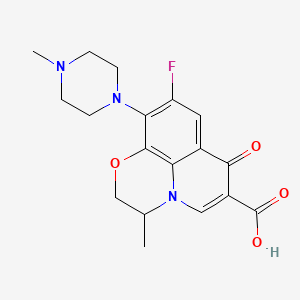
| Formula | C18H20FN3O4 |
|---|---|
| Molecular weight | 361.37 g/mol |
| IUPAC name | 7-fluoro-2-methyl-6-(4-methylpiperazin-1-yl)-10-oxo-4-oxa-1-azatricyclo[7.3.1.05,13]trideca-5(13),6,8,11-tetraene-11-carboxylic acid |
| CAS | 82419-36-1 |
| PubChem CID | 4583 |
| InChIKey | GSDSWSVVBLHKDQ-UHFFFAOYSA-N |
| logP | 1.54 (XLogP -0.4) |
| Polar surface area | 75.01 Ų |
| H-bond acceptors / donors | 6 / 1 |
| Drug-likeness (QED) | 0.87 |
| Lipinski violations | 0 |
SMILES
CC1COc2c(N3CCN(C)CC3)c(F)cc3c(=O)c(C(=O)O)cn1c23Biology & Pharmacokinetics
Pharmacokinetics
| BBB penetrant | Yes (logBB -0.76) |
|---|
Transporters
BCRP (Inhibitor)BCRP (Inhibitor)BSEP (Inhibitor)BSEP (Inhibitor)MATE1 (Inhibitor)MCT1 (Inhibitor)MCT4 (Inhibitor)MRP (Inhibitor)MRP1 (Inhibitor)MRP1 (Inhibitor)MRP2 (Inhibitor)MRP3 (Inhibitor)MRP4 (Inhibitor)OAT1 (Inhibitor)OAT3 (Inhibitor)OATP1B1 (Inhibitor)OATP1B1 (Inhibitor)OATP1B3 (Inhibitor)OATP1B3 (Inhibitor)OATP2B1 (Inhibitor)OCT1 (Inhibitor)OCTN1 (Inhibitor)OCTN2 (Inhibitor)P-gp (Inhibitor)BCRP (Substrate)MDR1 (Substrate)MRP1 (Substrate)P-gp (Substrate)
Drug–drug interactions (100+, DDInter)
| Interacting drug | Severity | Management |
|---|---|---|
| Acetohexamide | major | |
| Aminolevulinic acid | major | |
| Anagrelide | major | |
| Arsenic trioxide | major | |
| Betamethasone | major | |
| Bupropion | major | |
| Cabozantinib | major | |
| Ceritinib | major | |
| Chloroquine | major | |
| Chlorpropamide | major | |
| Cisapride | major | |
| Crizotinib | major | |
| Deflazacort | major | |
| Dexamethasone | major | |
| Dicoumarol | major | |
| Dolasetron | major | |
| Fingolimod | major | |
| Fludrocortisone | major | |
| Glimepiride | major | |
| Glipizide | major | |
| Glyburide | major | |
| Halofantrine | major | |
| Hydrocortisone | major | |
| Hydroxychloroquine | major | |
| Insulin aspart (aspart protamine) | major | |
| Insulin aspart (aspart) | major | |
| Insulin degludec | major | |
| Insulin detemir | major | |
| Insulin glargine | major | |
| Insulin glulisine | major | |
| Insulin human | major | |
| Insulin human (inhalation, rapid acting) | major | |
| Insulin human (isophane) | major | |
| Insulin human (regular) | major | |
| Insulin human (zinc extended) | major | |
| Insulin human (zinc) | major | |
| Insulin lispro | major | |
| Insulin lispro (protamine) | major | |
| Iohexol | major | |
| Iopamidol | major |
Showing 40 of 100+.
Registered Products (9)
| Brand | Form / strength | Pack | Agent | Citizen (JOD) |
|---|---|---|---|---|
| Oflocol | Solution 0.3 % | 5 ml | Land Of Medicine Drug Store | 1.850 |
| OFLOX E/D | Ophthalmic Solution 3 mg/ml | 5 ml | Arab Company for Medical & Agricultural Products | 2.310 |
| Optiflox eye drops | Ophthalmic Solution 0.3 % | 10 ml | Amman Pharmaceutical Indusries | 2.500 |
| Novecin Tablets | Tablet 200 mg | 10 tab pack varies | UNITED PHARM.MFG.CO.LTD(UPM)/JORDAN | 8.000 |
| Oflacin-200mg F.C Tablets | Film-Coated Tablet 200 mg | 10 tab pack varies | AL-RAM PHARMA.INDUS.CO.LTD/JORDAN | 8.000 |
| Novecin Tablet | Tablet 400 mg | 10 tab pack varies | UNITED PHARM.MFG.CO.LTD(UPM)/JORDAN | 11.900 |
| Novecin Tablet | Tablet 400 mg | 500 tab pack varies | UNITED PHARM.MFG.CO.LTD(UPM)/JORDAN | 535.280 |
| Novecin Tablets | Tablet 200 mg | 1000 tab pack varies | UNITED PHARM.MFG.CO.LTD(UPM)/JORDAN | 608.000 |
| Oflacin-200mg F.C Tablets | Film-Coated Tablet 200 mg | 1000 tab pack varies | AL-RAM PHARMA.INDUS.CO.LTD/JORDAN | 680.000 |