Sertraline
JFDA label: Setral 50mg Tab
- Suicidality and antidepressant drugs:
Mechanism of Action
Antidepressant with selective inhibitory effects on presynaptic serotonin (5-HT) reuptake and only very weak effects on norepinephrine and dopamine neuronal uptake. In vitro studies demonstrate no significant affinity for adrenergic, cholinergic, GABA, dopaminergic, histaminergic, serotonergic, or benzodiazepine receptors.
Indications
Approved
- Major depressive disorder
- Obsessive-compulsive disorder
- Panic disorder
- Post-traumatic stress disorder
- Premenstrual dysphoric disorder
- Social anxiety disorder
Off-label
- Binge-eating disorder
- Bulimia nervosa
- Cholestatic pruritus
- Generalized anxiety disorder
Contraindications
Source: Lexicomp
- Use of MAOIs including linezolid or methylene blue (concurrently or within 14 days of stopping an MAOI or sertraline) Absolute
- concurrent use with disulfiram (oral solution only). Documentation of allergenic cross-reactivity for SSRIs is limited. However, because of similarities in chemical structure and/or pharmacologic actions, the possibility of cross-sensitivity cannot be ruled out with certainty Absolute
- concurrent use with pimozide Absolute
- hypersensitivity (eg, anaphylaxis, angioedema) to sertraline or any component of the formulation Absolute
Adverse Reactions
Cardiac disorders (2)
Common edema, malaise, anxiety, abnormal gait, alopecia, weight loss, diabetes mellitus, decreased appetite, constipation, abdominal pain, vomiting, bruxism, erectile dysfunction, ejaculatory disorder, urina · Palpitations
Nervous system disorders (8)
Very Common dizziness · drowsiness · fatigue · Headache · Insomnia
Common Aggressive behavior · Tremor
Rare Serotonin syndrome
Blood and lymphatic system disorders (1)
Common Purpura
Metabolism and nutrition disorders (2)
Common Weight gain (long-term)
Rare Hyponatraemia (SIADH)
Gastrointestinal disorders (6)
Very Common diarrhea · Diarrhoea · Nausea · Nausea · xerostomia
Common Dry mouth
Skin and subcutaneous tissue disorders (1)
Common Hyperhidrosis
Musculoskeletal and connective tissue disorders (2)
Common Arthralgia · muscle twitching
Psychiatric disorders (2)
Very Common Insomnia
Not Known Suicidal ideation (under 25 years)
Reproductive system and breast disorders (1)
Very Common Sexual dysfunction (males and females)
General disorders and administration site conditions (1)
Common Fever
Respiratory, thoracic and mediastinal disorders (1)
Common Epistaxis
Dosing
Source: Lexicomp
Warnings & Precautions
Source: Lexicomp
[US Boxed Warning]
Antidepressants increased the risk of suicidal thoughts and behavior in pediatric and young adult patients in short-term studies; consider risk prior to prescribing. Short-term studies did not show an increased risk in patients >24 years and showed a decreased risk in patients ≥65 years. Closely monitor patients for clinical worsening, suicidality, or unusual changes in behavior, particularly during the initial 1 to 2 months of therapy or during periods of dosage adjustments (increases or decreases); the patient's family or caregiver should be instructed to closely observe the patient and communicate condition with healthcare provider. A medication guide concerning the use of antidepressants should be dispensed with each prescription.
Bleeding risk
May impair platelet aggregation resulting in increased risk of bleeding events, particularly if used concomitantly with aspirin, NSAIDs, warfarin or other anticoagulants. Bleeding related to SSRI use has been reported to range from relatively minor bruising and epistaxis to life-threatening hemorrhage.
CNS depression
Has a low potential to impair cognitive or motor performance; caution operating hazardous machinery or driving.
Fractures
Bone fractures have been associated with antidepressant treatment. Consider the possibility of a fragility fracture if an antidepressant-treated patient presents with unexplained bone pain, point tenderness, swelling, or bruising (Rabenda 2013; Rizzoli 2012).
Ocular effects
May cause mild pupillary dilation which in susceptible individuals can lead to an episode of narrow-angle glaucoma. Consider evaluating patients who have not had an iridectomy for narrow-angle glaucoma risk factors. Avoid use in patients with untreated anatomically narrow angles.
QT prolongation
QTc prolongation and torsades de pointes have been reported with sertraline use. Most reports involved other risk factors; use with caution in patients with risk factors for QTc prolongation. Studies have shown correlations with serum sertraline concentrations.
Serotonin syndrome
Potentially life-threatening serotonin syndrome (SS) has occurred with serotonergic agents (eg, SSRIs, SNRIs), particularly when used in combination with other serotonergic agents (eg, triptans, TCAs, fentanyl, lithium, tramadol, buspirone, St John's wort, tryptophan) or agents that impair metabolism of serotonin (eg, MAO inhibitors intended to treat psychiatric disorders, other MAO inhibitors [ie, linezolid and intravenous methylene blue]). Monitor patients closely for signs of SS such as mental status changes (eg, agitation, hallucinations, delirium, coma); autonomic instability (eg, tachycardia, labile blood pressure, diaphoresis); neuromuscular changes (eg, tremor, rigidity, myoclonus); GI symptoms (eg, nausea, vomiting, diarrhea); and/or seizures. Discontinue treatment (and any concomitant serotonergic agent) immediately if signs/symptoms arise.
Sexual dysfunction
May cause or exacerbate sexual dysfunction.
SIADH and hyponatremia
SSRIs and SNRIs have been associated with the development of SIADH; hyponatremia has been reported rarely (including severe cases with serum sodium Disease-related concerns:
Hepatic impairment
Use with caution in patients with hepatic impairment; clearance is decreased and plasma concentrations are increased; use reduced dose in mild impairment; use is not recommended in moderate or severe impairment.
Mania/hypomania
May precipitate a mixed/manic episode in patients at risk for bipolar disorder. Use with caution in patients with a family history of bipolar disorder, mania, or hypomania. Patients presenting with depressive symptoms should be screened for bipolar disorder. Sertraline is not FDA approved for the treatment of bipolar depression.
Seizure disorder
Use with caution in patients with a previous seizure disorder or condition predisposing to seizures such as brain damage or alcoholism. Concurrent drug therapy issues:
Drug-drug interactions
Potentially significant interactions may exist, requiring dose or frequency adjustment, additional monitoring, and/or selection of alternative therapy. Consult drug interactions database for more detailed information. Special populations:
Pediatric
Monitor growth in pediatric patients. Given their lower body weight, lower doses are advisable in pediatric patients in order to avoid excessive plasma levels, despite slightly greater metabolism efficiency than adults. Dosage form specific issues:
Latex sensitivity
Use oral solution formulation with caution in patients with latex sensitivity; dropper dispenser contains dry, natural rubber.
Polysorbate 80
Some dosage forms may contain polysorbate 80 (also known as Tweens). Hypersensitivity reactions, usually a delayed reaction, have been reported following exposure to pharmaceutical products containing polysorbate 80 in certain individuals (Isaksson 2002; Lucente 2000; Shelley 1995). Thrombocytopenia, ascites, pulmonary deterioration, and renal and hepatic failure have been reported in premature neonates after receiving parenteral products containing polysorbate 80 (Alade 1986; CDC 1984). See manufacturer's labeling. Other warnings/precautions:
Discontinuation syndrome
Abrupt discontinuation or interruption of antidepressant therapy has been associated with a discontinuation syndrome. Symptoms arising may vary with antidepressant however commonly include nausea, vomiting, diarrhea, headaches, lightheadedness, dizziness, diminished appetite, sweating, chills, tremors, paresthesias, fatigue, somnolence, and sleep disturbances (eg, vivid dreams, insomnia). Less common symptoms include electric shock-like sensations, cardiac arrhythmias (more common with tricyclic antidepressants), myalgias, parkinsonism, arthralgias, and balance difficulties. Psychological symptoms may also emerge such as agitation, anxiety, akathisia, panic attacks, irritability, aggressiveness, worsening of mood, dysphoria, mood lability, hyperactivity, mania/hypomania, depersonalization, decreased concentration, slowed thinking, confusion, and memory or concentration difficulties. Greater risks for developing a discontinuation syndrome have been associated with antidepressants with shorter half-lives, longer durations of treatment, and abrupt discontinuation. For antidepressants of short or intermediate half-lives, symptoms may emerge within 2 to 5 days after treatment discontinuation and last 7 to 14 days (APA 2010; Fava 2006; Haddad 2001; Shelton 2001; Warner 2006).
Pregnancy & Lactation
Pregnancy
Caution
Preferred SSRI in pregnancy (most data). Untreated maternal depression has significant risks. If mother has been stable, tapering before delivery to avoid NAS is controversial — risk of relapse may outweigh NAS risk
Lactation
Sertraline and the active metabolite desmethylsertraline are present in breast milk. Using pooled data, the relative infant dose (RID) of sertraline was calculated to be 0.5% to 3.0% of the weight-adjusted maternal dose (Berle 2011); a RID of 3.7% was noted in one review (Orsolini 2015). In general, breastfeeding is considered acceptable when the RID is 25% breastfeeding should generally be avoided (Anderson 2016; Ito 2000). When evaluated, desmethylsertraline milk concentrations were higher t
Monitoring
| Clinical pearl | Weight, height, BMI (longitudinal monitoring); mental status for depression, suicide ideation (especially at the beginning of therapy or when doses are increased or decreased), anxiety, social functioning, mania, panic attacks, or other unusual changes in behavior; signs/symptoms of serotonin syndrome; serum sodium in at-risk populations. |
|---|
Chemistry & Properties
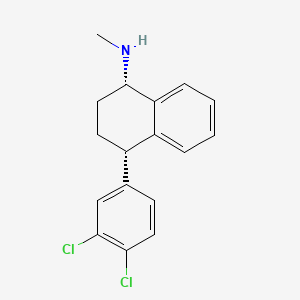
| Formula | C17H17Cl2N |
|---|---|
| Molecular weight | 306.24 g/mol |
| IUPAC name | (1S,4S)-4-(3,4-dichlorophenyl)-N-methyl-1,2,3,4-tetrahydronaphthalen-1-amine |
| CAS | 79617-96-2 |
| PubChem CID | 68617 |
| InChIKey | VGKDLMBJGBXTGI-SJCJKPOMSA-N |
| logP | 5.18 (XLogP 4.8) |
| Polar surface area | 12.03 Ų |
| H-bond acceptors / donors | 1 / 1 |
| Drug-likeness (QED) | 0.81 |
| Lipinski violations | 1 |
SMILES
CN[C@H]1CC[C@@H](c2ccc(Cl)c(Cl)c2)c2ccccc21Biology & Pharmacokinetics
Pharmacokinetics
| BBB penetrant | Yes (logBB 1.6) |
|---|
Enzyme interactions
| Enzyme | Role | Detail |
|---|---|---|
| CYP1A2 | Inhibitor | IC₅₀ 29.699999999999996 µM |
| CYP1A2 | Substrate | — |
| CYP2B6 | Inhibitor | IC₅₀ 12.499999999999995 µM |
| CYP2B6 | Substrate | — |
| CYP2C19 | Inhibitor | IC₅₀ 1.9106511672830615 µM |
| CYP2C19 | Substrate | — |
| CYP2C8 | Inhibitor | — |
| CYP2C9 | Substrate | — |
| CYP2D6 | Inhibitor | IC₅₀ 2.007984063681783 µM |
| CYP2D6 | Substrate | — |
| CYP3A4 | Inhibitor | IC₅₀ 3.2984845004941303 µM |
| CYP3A4 | Substrate | — |
Receptor binding (top 16)
| Target | Action | Affinity |
|---|---|---|
| 5-HT Transporter (SLC6A4) | Binding | pKi 9.2 |
| SERT (SLC6A4) | Inhibitor | pKi 9.1 |
| Dopamine Transporter (SLC6A3) | Binding | pKi 7.3 |
| adrenergic Alpha1 | Binding | pKi 6.9 |
| adrenergic Alpha1A (ADRA1A) | Binding | pKi 6.5 |
| Cholinergic, muscarinic | Binding | pKi 6.2 |
| Cholinergic, muscarinic M1 (CHRM1) | Binding | pKi 6.1 |
| Norepinephrine transporter | Binding | pKi 6.1 |
| 5-HT2C (HTR2C) | Binding | pKi 6.0 |
| Cholinergic, muscarinic M3 (CHRM3) | Binding | pKi 5.9 |
| adrenergic Alpha2 | Binding | pKi 5.9 |
| Cholinergic, muscarinic M4 (CHRM4) | Binding | pKi 5.9 |
| Cholinergic, muscarinic M5 (CHRM5) | Binding | pKi 5.7 |
| Cholinergic, muscarinic M2 (CHRM2) | Binding | pKi 5.7 |
| HISTAMINE H1 (HRH1) | Binding | pKi 5.3 |
Transporters
BCRP (Inhibitor)BSEP (Inhibitor)BSEP (Inhibitor)MDR1 (Inhibitor)MRP1 (Inhibitor)OATP1B1 (Inhibitor)OATP1B3 (Inhibitor)OATP1B3 (Inhibitor)P-gp (Inhibitor)MDR1 (Substrate)P-gp (Substrate)
Drug–drug interactions (100+, DDInter)
| Interacting drug | Severity | Management |
|---|---|---|
| Anagrelide | major | |
| Arsenic trioxide | major | |
| Astemizole | major | |
| Bupropion | major | |
| Cabozantinib | major | |
| Ceritinib | major | |
| Chloroquine | major | |
| Cisapride | major | |
| Crizotinib | major | |
| Dexfenfluramine | major | |
| Dextromethorphan | major | |
| Diethylpropion | major | |
| Disulfiram | major | |
| Dolasetron | major | |
| Doxepin | major | |
| Doxepin (topical) | major | |
| Eliglustat | major | |
| Fenfluramine | major | |
| Fingolimod | major | |
| Granisetron | major | |
| Halofantrine | major | |
| Hydroxychloroquine | major | |
| Iohexol | major | |
| Iopamidol | major | |
| Ivosidenib | major | |
| Lorcaserin | major | |
| Lumefantrine | major | |
| Macimorelin | major | |
| Mazindol | major | |
| Methylene blue | major | |
| Nilotinib | major | |
| Ondansetron | major | |
| Osimertinib | major | |
| Palonosetron | major | |
| Panobinostat | major | |
| Papaverine | major | |
| Pasireotide | major | |
| Phentermine | major | |
| Phenylpropanolamine | major | |
| Procarbazine | major |
Showing 40 of 100+.
Registered Products (14)
| Brand | Form / strength | Pack | Agent | Citizen (JOD) |
|---|---|---|---|---|
| Setral | Tablet (as Hcl) 50 mg | 10 tab pack varies | THE JORDANIAN PHARMACEUTICAL MANUFACTURING COMPANY/JORDAN | 2.050 |
| Solotik Tablets | Tablet (as Hcl)50 mg | 15 tab pack varies | Hikma Pharmaceuticals Co.Ltd/Jordan | 3.050 |
| Setral | Tablet 100 mg | 10 tab pack varies | THE JORDANIAN PHARMACEUTICAL MANUFACTURING COMPANY/JORDAN | 3.360 |
| Solotik Tablets | Tablet (as Hcl)100 mg | 15 tab pack varies | Hikma Pharmaceuticals Co.Ltd/Jordan | 5.000 |
| Seralin | Tablet 50 mg | 30 tab | Pharma International Company/ Jordan | 5.040 |
| Setral | Tablet (as Hcl) 50 mg | 30 tab pack varies | THE JORDANIAN PHARMACEUTICAL MANUFACTURING COMPANY/JORDAN | 5.810 |
| Solotik Tablets | Tablet (as Hcl)50 mg | 30 tab pack varies | Hikma Pharmaceuticals Co.Ltd/Jordan | 5.810 |
| Seralin | Tablet 100 mg | 20 tab pack varies | Pharma International Company/ Jordan | 6.350 |
| ZOLOFT TABS | Tablet 50 mg | 30 tab | Sabbagh Drug Store | 6.460 |
| Seralin | Tablet 100 mg | 30 tab pack varies | Pharma International Company/ Jordan | 9.530 |
| Setral | Tablet 100 mg | 30 tab pack varies | THE JORDANIAN PHARMACEUTICAL MANUFACTURING COMPANY/JORDAN | 9.530 |
| Solotik Tablets | Tablet (as Hcl)100 mg | 30 tab pack varies | Hikma Pharmaceuticals Co.Ltd/Jordan | 9.530 |
| Setral | Tablet (as Hcl) 50 mg | 1000 tab pack varies | THE JORDANIAN PHARMACEUTICAL MANUFACTURING COMPANY/JORDAN | 164.620 |
| Setral | Tablet 100 mg | 1000 tab pack varies | THE JORDANIAN PHARMACEUTICAL MANUFACTURING COMPANY/JORDAN | 269.980 |