Diazepam
JFDA label: VALIUM Amp
- Risks from concomitant use with opioids
Mechanism of Action
Positive Allosteric Modulator of GABA-A receptor; anion channel — GABA-A receptor; anion channel positive allosteric modulator
| Target | Action | Gene / class |
|---|---|---|
| GABA-A receptor; anion channel efficacy | POSITIVE ALLOSTERIC MODULATOR |
Indications
Approved
- Acute ethanol withdrawal (oral and injection)
- Anxiety (oral and injection)
- Muscle spasm (oral and injection)
- Preoperative (injection)
- Seizures
- Status epilepticus (injection)
Off-label
- Sedation in the intensive care unit
- Spasticity with cerebral palsy (children) (short-term treatment)
- Status epilepticus (rectal)
Contraindications
Source: Curated · Lexicomp
- Acute angle-closure glaucoma Absolute
- Hypersensitivity to diazepam or any component of the formulation Absolute
- Myasthenia gravis Absolute
- Severe hepatic insufficiency Absolute
- acute narrow-angle glaucoma Absolute
- infants Documentation of allergenic cross-reactivity for benzodiazepines is limited. However, because of similarities in chemical structure and/or pharmacologic actions, the possibility of cross-sensitivity cannot be ruled out with certainty Absolute
- untreated open-angle glaucoma Absolute
Adverse Reactions
Cardiac disorders (3)
Not Known Hypotension · localized phlebitis · vasodilatation
Nervous system disorders (14)
Very Common Sedation / drowsiness
Common Anterograde amnesia · Ataxia · Cognitive impairment
Not Known Amnesia · ataxia · confusion · depression · drowsiness · dysarthria · fatigue · headache · slurred speech · vertigo
Hepatobiliary disorders (1)
Not Known Jaundice
Renal and urinary disorders (2)
Not Known Urinary incontinence · urinary retention
Metabolism and nutrition disorders (1)
Not Known Change in libido
Gastrointestinal disorders (4)
Not Known Altered salivation (dry mouth or hypersalivation) · constipation · diarrhea · nausea
Skin and subcutaneous tissue disorders (1)
Not Known Skin rash
Musculoskeletal and connective tissue disorders (2)
Not Known Tremor · weakness
Psychiatric disorders (3)
Very Common Physical dependence
Common Withdrawal syndrome (on abrupt stop)
Uncommon Paradoxical agitation (elderly)
Eye disorders (2)
Not Known Blurred vision · diplopia
General disorders and administration site conditions (2)
Not Known Pain at injection site · Paradoxical reaction (eg, aggressiveness, agitation, anxiety, delusions, hallucinations, inappropriate behavior, increased muscle spasms, insomnia, irritability, psychoses, rage, restlessness, sleep d
Respiratory, thoracic and mediastinal disorders (4)
Uncommon Respiratory depression (high dose / IV)
Not Known Apnea · asthma · bradypnea
Dosing
Source: Lexicomp
Warnings & Precautions
Source: Lexicomp
Anterograde amnesia
Benzodiazepines have been associated with anterograde amnesia.
CNS depression
May cause CNS depression, which may impair physical or mental abilities; patients must be cautioned about performing tasks that require mental alertness (eg, operating machinery, driving).
Paradoxical reactions
Paradoxical reactions, including hyperactive or aggressive behavior, hallucinations, and psychoses, have been reported with benzodiazepines, particularly in pediatric or elderly patients. Discontinue if such reactions occur. Disease-related concerns:
Convulsive disorders
When used as an adjunct in treating convulsive disorders, an increase in frequency/severity of tonic-clonic seizures may occur and require dose adjustment of anticonvulsant. Abrupt withdrawal may result in a temporary increase in the frequency and/or severity of seizures.
Depression
Use caution in patients with depression or anxiety associated with depression, particularly if suicidal risk may be present.
Drug abuse
Use with extreme caution in patients with a history of drug abuse or acute alcoholism; potential for drug dependency exists. Tolerance and psychological and physical dependence may occur with prolonged use (generally >10 days).
Glaucoma
May be used in patients with open-angle glaucoma who are receiving appropriate therapy; contraindicated in acute narrow-angle glaucoma and untreated open-angle glaucoma.
Hepatic impairment
Use with caution in patients with hepatic impairment. Oral tablet is contraindicated in patients with severe hepatic impairment.
Impaired gag reflex
Use benzodiazepines with caution in patients with an impaired gag reflex.
Renal impairment
Use with caution in patients with renal impairment.
Respiratory disease
Use with caution in patients with respiratory disease; a lower dose is recommended for chronic respiratory insufficiency. Oral tablet is contraindicated in patients with severe respiratory impairment or sleep apnea syndrome. Concurrent drug therapy issues:
Drug-drug interactions
Potentially significant interactions may exist, requiring dose or frequency adjustment, additional monitoring, and/or selection of alternative therapy. Consult drug interactions database for more detailed information.
Concomitant use with opioids
Concomitant use of benzodiazepines and opioids may result in profound sedation, respiratory depression, coma, and death; reserve concomitant prescribing of these drugs for use in patients for whom alternative treatment options are inadequate, and limit dosages and durations to the minimum required. Follow patients for signs and symptoms of respiratory depression and sedation. Special populations:
Debilitated/Elderly patients
Use with caution; active metabolites with extended half-lives may lead to delayed accumulation and adverse effects; limit dose to smallest effective amount and increase gradually and as tolerated to avoid adverse reactions.
Fall risk
Use with extreme caution in patients who are at risk of falls; benzodiazepines have been associated with falls and traumatic injury.
Obese patients
Use benzodiazepines with caution in obese patients; may have prolonged action when discontinued.
Psychotic patients
Use of diazepam is not recommended in place of appropriate therapy. Dosage form specific issues:
Benzyl alcohol and derivatives
Some dosage forms may contain benzyl alcohol and/or sodium benzoate/benzoic acid; benzoic acid (benzoate) is a metabolite of benzyl alcohol; large amounts of benzyl alcohol (≥99 mg/kg/day) have been associated with a potentially fatal toxicity ("gasping syndrome") in neonates; the "gasping syndrome" consists of metabolic acidosis, respiratory distress, gasping respirations, CNS dysfunction (including convulsions, intracranial hemorrhage), hypotension, and cardiovascular collapse (AAP ["Inactive" 1997]; CDC 1982); some data suggest that benzoate displaces bilirubin from protein binding sites (Ahlfors 2001); avoid or use dosage forms containing benzyl alcohol and/or benzyl alcohol derivative with caution in neonates. See manufacturer’s labeling.
Parenteral
Vesicant; ensure proper needle or catheter placement prior to and during administration; avoid extravasation. Acute hypotension, muscle weakness, apnea, and/or cardiac arrest have occurred with parenteral administration. Acute effects may be more prevalent in patients receiving concurrent barbiturates, opioids, or ethanol. Appropriate resuscitative equipment and qualified personnel should be available during administration and monitoring. Avoid use of the injection in patients in shock, coma, or in acute ethanol intoxication with depression of vital signs. Intra-arterial injection should be avoided. Tonic status epilepticus has been precipitated in patients treated with diazepam IV for absence status or absence variant status.
Propylene glycol
Some dosage forms may contain propylene glycol; large amounts are potentially toxic and have been associated with hyperosmolality, lactic acidosis, seizures, and respiratory depression; use caution (AAP ["Inactive" 1997]; Wilson 2000; Wilson 2005; Zar 2007).
Rectal gel
Administration of rectal gel should only be performed by individuals trained to recognize characteristic seizure activity for which the product is indicated, and capable of monitoring response to determine need for additional medical intervention. Not recommended for chronic, daily use. Use with caution in patients with neurologic damage. Other warnings/precautions:
Appropriate use
Does not have analgesic, antidepressant, or antipsychotic properties.
Tolerance
Diazepam is a long half-life benzodiazepine. Duration of action after a single dose is determined by redistribution rather than metabolism. Tolerance develops to the sedative, hypnotic, and anticonvulsant effects. It does not develop to the anxiolytic or skeletal muscle relaxing effects (Vinkers 2012). Chronic use of this agent may increase the perioperative benzodiazepine dose needed to achieve desired effect.
Withdrawal
Rebound or withdrawal symptoms may occur following abrupt discontinuation or large decreases in dose. Use caution when reducing dose or withdrawing therapy; decrease slowly and monitor for withdrawal symptoms. The benzodiazepine receptor antagonist flumazenil may cause withdrawal in patients receiving long-term benzodiazepine therapy.
Pregnancy & Lactation
Pregnancy
Caution
Avoid chronic use. Short courses for acute anxiety/seizures appear safe. Avoid near term. If chronic use, taper slowly before delivery to minimise NAS
Lactation
Diazepam and its metabolites are present in breast milk. Using data from one study, the relative infant dose (RID) of diazepam is 8.9% when compared to a weight-adjusted maternal dose of 10 mg/day. In general, breastfeeding is considered acceptable when the RID of a medication is The RID of diazepam was calculated using a milk concentration of 85 ng/mL, providing an estimated daily infant dose via breast milk of 0.01275 mg/kg/day. This was the highest milk concentration obtained in one study
LactMed: monitor the infant.
Monitoring
| Clinical pearl | Heart rate, respiratory rate, blood pressure, and mental status; liver enzymes and CBC with long-term therapy; clinical signs of propylene glycol toxicity (for continuous high-dose and/or long duration intravenous use) including serum creatinine, BUN, serum lactate, osmol gap. Note: An osmol gap of ≥10 was predictive of elevated propylene glycol concentrations; values of ≥12 suggest propylene glycol toxicity (Barnes 2006; Yahwak 2008) Critically-ill mechanically-ventilated patients: Monitor depth of sedation with either the Richmond Agitation-Sedation Scale (RASS) or Sedation-Agitation Scale (SAS) (Barr 2013) |
|---|
Chemistry & Properties
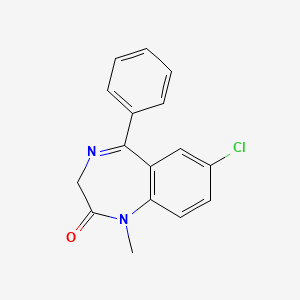
| Formula | C16H13ClN2O |
|---|---|
| Molecular weight | 284.75 g/mol |
| IUPAC name | 7-chloro-1-methyl-5-phenyl-3H-1,4-benzodiazepin-2-one |
| CAS | 439-14-5 |
| PubChem CID | 3016 |
| InChIKey | AAOVKJBEBIDNHE-UHFFFAOYSA-N |
| logP | 3.15 (XLogP 3.0) |
| Polar surface area | 32.67 Ų |
| H-bond acceptors / donors | 2 / 0 |
| Drug-likeness (QED) | 0.79 |
| Lipinski violations | 0 |
SMILES
CN1C(=O)CN=C(c2ccccc2)c2cc(Cl)ccc21Biology & Pharmacokinetics
Pharmacokinetics
| BBB penetrant | Yes (logBB 0.5) |
|---|
Enzyme interactions
| Enzyme | Role | Detail |
|---|---|---|
| CYP1A2 | Inhibitor | — |
| CYP1A2 | Substrate | — |
| CYP2B6 | Inhibitor | — |
| CYP2B6 | Substrate | — |
| CYP2C19 | Substrate | — |
| CYP2C9 | Substrate | — |
| CYP3A4 | Inhibitor | — |
| CYP3A4 | Substrate | — |
Receptor binding (top 17)
| Target | Action | Affinity |
|---|---|---|
| GABA A Alpha5Beta3Gamma2 | Binding | pKi 8.0 |
| alpha5beta3gamma2 | Binding | pKi 8.0 |
| GABA A alpha1 | Binding | pKi 7.9 |
| alpha1beta3gamma2 | Binding | pKi 7.9 |
| GABA A Alpha1Beta3Gamma2 | Binding | pKi 7.8 |
| GABA A alpha3 | Binding | pKi 7.8 |
| alpha3beta3gamma2 | Binding | pKi 7.8 |
| GABAA receptor α1 subunit (GABRA1) | Allosteric modulator | pKi 7.8 |
| GABA A Alpha1Beta1Gamma2 | Binding | pKi 7.8 |
| GABA A Alpha2Beta1Gamma2 | Binding | pKi 7.8 |
| GABAA receptor α2 subunit (GABRA2) | Allosteric modulator | pKi 7.8 |
| GABAA receptor α3 subunit (GABRA3) | Allosteric modulator | pKi 7.8 |
| GABA A Alpha3Beta1Gamma2 | Binding | pKi 7.8 |
| GABA A alpha2 | Binding | pKi 7.7 |
| GABA A Alpha2Beta3Gamma2 | Binding | pKi 7.7 |
Transporters
BCRP (Inhibitor)BSEP (Inhibitor)BSEP (Inhibitor)MDR1 (Inhibitor)MRP1 (Inhibitor)MRP3 (Inhibitor)MRP4 (Inhibitor)OATP1B1 (Inhibitor)OATP1B1 (Inhibitor)OATP1B3 (Inhibitor)OATP1B3 (Inhibitor)OATP2B1 (Inhibitor)OCT1 (Inhibitor)OCT2 (Inhibitor)P-gp (Inhibitor)MDR1 (Substrate)P-gp (Substrate)
Drug–drug interactions (100+, DDInter)
| Interacting drug | Severity | Management |
|---|---|---|
| Codeine | major | |
| Hydrocodone | major | |
| Morphine | major | |
| Morphine (liposomal) | major | |
| Adalimumab | moderate | |
| Aldesleukin | moderate | |
| Alefacept | moderate | |
| Alimemazine | moderate | |
| Alpelisib | moderate | |
| Amyl Nitrite | moderate | |
| Anagrelide | moderate | |
| Anakinra | moderate | |
| Apalutamide | moderate | |
| Aprepitant | moderate | |
| Azatadine | moderate | |
| Azelastine (nasal) | moderate | |
| Binimetinib | moderate | |
| Brigatinib | moderate | |
| Brimonidine (ophthalmic) | moderate | |
| Brimonidine (topical) | moderate | |
| Brompheniramine | moderate | |
| Bupropion | moderate | |
| Canakinumab | moderate | |
| Carbinoxamine | moderate | |
| Certolizumab pegol | moderate | |
| Cetirizine | moderate | |
| Chlorphenesin | moderate | |
| Chlorpheniramine | moderate | |
| Cimetidine | moderate | |
| Cisapride | moderate | |
| Clarithromycin | moderate | |
| Clemastine | moderate | |
| Clofedanol | moderate | |
| Clotrimazole | moderate | |
| Cobicistat | moderate | |
| Crizotinib | moderate | |
| Cyproheptadine | moderate | |
| Dabrafenib | moderate | |
| Dasatinib | moderate | |
| Deferasirox | moderate |
Showing 40 of 100+.
Registered Products (17)
| Brand | Form / strength | Pack | Agent | Citizen (JOD) |
|---|---|---|---|---|
| Distedon Tab. | Tablet 2 mg, 2.5 mg | 30 tab | Trust Drug Store | 0.780 |
| Stedon Tab. | Tablet 2 mg | 30 tab | Trust Drug Store | 1.020 |
| Stedon Tab. | Tablet 5 mg | 30 tab | Trust Drug Store | 1.050 |
| Diazepam APM | Ampoule 10 mg/2 ml | 5 amp pack varies | The Arab Pharmaceutical Manufactruing Co. | 1.160 |
| Stedon Tab.10 mg | Tablet 10 mg | 30 tab | Trust Drug Store | 1.170 |
| Stesolid Amp | Ampoule 10 mg | 2 ml | Reda Jardaneh Drug Store | 1.950 |
| depam | Vial 10 mg/2 ml | 10 vial | MS-pharma jordan | 3.110 |
| Diazi | Ampoule 10 mg/2 ml | 10 amp | ٠ستÙدع أدÙÙØ© اÙÙÙÙÙÙÙ | 3.180 |
| Stedon Inj./ Amp | Injection 10 mg/2 ml | 6 amp | Trust Drug Store | 3.180 |
| VALIUM Amp | Ampoule 10 mg/2 ml | 10 | Shawi & Rushedat Drug Store | 3.830 |
| Fanin | Ampoule 10 mg/2 ml | 10 amp | AL Rahma Drug Store | 3.860 |
| VALIUM TAB | Tablet 5 mg | 25 tab | Shawi & Rushedat Drug Store | 3.950 |
| Stesolid 5Rect. | Cream 5 mg | 4 Tubes | Reda Jardaneh Drug Store | 4.860 |
| VALIUM TAB | Tablet 10 mg | 25 tab | Shawi & Rushedat Drug Store | 5.660 |
| Stesolid Rectal Tube | Cream 10 mg | 4 Tub | Reda Jardaneh Drug Store | 5.980 |
| Diazepam APM | Ampoule 10 mg/2 ml | 100 amp pack varies | The Arab Pharmaceutical Manufactruing Co. | — |
| Diazepam APM | Tablet 10 mg/2 ml | 5x10's pack varies | The Arab Pharmaceutical Manufactruing Co. | — |