Baclofen
JFDA label: Lioresal Tab
- Abrupt withdrawal (injection):
Mechanism of Action
Agonist of GABA-B receptor — GABA-B receptor agonist
| Target | Action | Gene / class |
|---|---|---|
| GABA-B receptor efficacy | AGONIST |
Indications
Approved
- Intrathecal
- Oral
- Spasticity
Off-label
- Alcoholic liver disease (alcohol abstinence)
- Gastroesophageal reflux disease (adults)
- Hiccups (singultus)
- Nystagmus
- Spasticity in cerebral palsy (children/adolescents) (short-term treatment)
- Trigeminal neuralgia
Contraindications
Source: Lexicomp
- Hypersensitivity to baclofen or any component of the formulation Intrathecal: IV, IM, SubQ, or epidural administration Absolute
Adverse Reactions
Cardiac disorders (2)
Common Hypotension · peripheral edema
Nervous system disorders (16)
Very Common confusion · drowsiness · headache · Hypotonia
Common abnormality in thinking · agitation · chills · coma · depression · dizziness · hypertonia · insomnia · pain · paresthesia · Seizure · speech disturbance
Renal and urinary disorders (5)
Common difficulty in micturition · impotence · urinary frequency · urinary incontinence · Urinary retention
Gastrointestinal disorders (6)
Very Common Nausea · vomiting
Common Constipation · diarrhea · sialorrhea · xerostomia
Skin and subcutaneous tissue disorders (2)
Common Pruritus · urticaria
Musculoskeletal and connective tissue disorders (3)
Common Back pain · tremor · weakness
Eye disorders (1)
Common Ambylopia
General disorders and administration site conditions (1)
Common Accidental injury
Respiratory, thoracic and mediastinal disorders (3)
Common dyspnea · Hypoventilation · pneumonia
Dosing
Source: Lexicomp
Warnings & Precautions
Source: Lexicomp
CNS depression
May cause CNS depression, which may impair physical or mental abilities; patients must be cautioned about performing tasks which require mental alertness (eg, operating machinery or driving).
Intrathecal mass
Cases (most from pharmacy compounded preparations) of intrathecal mass formation at the implanted catheter tip have been reported; patients may experience worsening or return of spasticity, pain, inadequate response to dose adjustments, and/or neurological deficit/dysfunction. Neurosurgical evaluation and/or an appropriate imaging study should be considered if a mass is suspected.
Urinary retention
May cause acute urinary retention (may be related to underlying disease); use with caution in patients with urinary obstruction. Disease-related concerns:
Autonomic dysreflexia
Use intrathecal baclofen with caution in patients with a history of autonomic dysreflexia; presence of nociceptive stimuli or abrupt baclofen withdrawal may cause an autonomic dysreflexic episode.
Gastrointestinal disorders
Use with caution in patients with peptic ulcer disease, decreased GI motility, and/or gastrointestinal obstructive disorders.
Psychiatric disease
Use with caution in patients with psychotic disorders, schizophrenia, or confusional states; may cause exacerbation of condition.
Renal impairment
Use with caution in patients with renal impairment; baclofen is eliminated primarily unchanged via the kidneys. Multiple cases describing neurotoxicity due to oral baclofen accumulation in adult patients with varying levels of renal impairment have been reported in the literature. In patients with renal impairment, initiation of oral baclofen at lower doses and/or extended intervals has been suggested (Aisen 1994; Chen 1997; Chou 2006; El-Husseini 2011; Peces 1998; Su 2009; Vlavonu 2014).
Respiratory disease
Use with caution in patients with respiratory disease.
Seizure disorder
Use with caution in patients with a history of seizure disorder; monitor regularly for loss of seizure control. Seizures have been reported with withdrawal from intrathecal baclofen as well as in patients maintained on therapeutic doses of intrathecal baclofen. Special populations:
Elderly
Use with caution in elderly patients; may be more sensitive to adverse CNS effects, especially at higher doses.
Pediatric
Intrathecal: Children should be of sufficient body mass to accommodate the implantable pump for chronic infusion. Concurrent drug therapy issues:
Drug-drug interactions
Potentially significant interactions may exist, requiring dose or frequency adjustment, additional monitoring, and/or selection of alternative therapy. Consult drug interactions database for more detailed information. Other warnings/precautions:
Abrupt withdrawal
Abrupt withdrawal of intrathecal baclofen, regardless of the cause, has resulted in sequelae (hyperpyrexia, altered mental status, exaggerated rebound spasticity, and muscle rigidity, which, in rare cases, has advanced to rhabdomyolysis), multiple organ-system failure, and death. Prevention of abrupt discontinuation requires careful attention to programming and monitoring of infusion system, refill scheduling and procedures, and pump alarms. Advise patients and caregivers of the importance of keeping scheduled refill visits and educate them on the early symptoms of baclofen withdrawal. Give special attention to patients at apparent risk (eg, spinal cord injuries at T-6 or above, communication difficulties, history of withdrawal symptoms from oral or intrathecal baclofen). Consult the technical manual of the implantable infusion system for additional postimplant clinician and patient information. In most cases, symptoms of withdrawal (eg, return of baseline spasticity, hypotension, paresthesia, pruritus) appear within hours to a few days following interruption of therapy. Priapism may develop or recur if treatment with intrathecal baclofen is interrupted. Clinically, the advanced intrathecal baclofen withdrawal syndrome may resemble autonomic dysreflexia, infection (sepsis), malignant hyperthermia, neuroleptic-malignant syndrome, or other conditions associated with a hypermetabolic state or widespread rhabdomyolysis. Suggested treatment for intrathecal baclofen withdrawal is r
Appropriate use
Intrathecal: For use only in an FDA-approved implantable pump for intrathecal baclofen administration; health care providers should be experienced with chronic intrathecal infusion therapy and resuscitative equipment should be readily available. Ensure patient is infection-free and then evaluate patient’s response to bolus intrathecal injection (screening phase) prior to implanting pump. Monitor closely during the initial phase of pump use and when adjusting the dosing rate and/or the concentration in the reservoir. Educate patients and caregivers on proper home care of the pump and insertion site. Use extreme caution when filling an implantable pump; pumps should only be refilled through the reservoir refill septum. Inadvertent injection into the subcutaneous tissue can occur if the reservoir refill septum is not properly accessed. Some pumps are equipped with a catheter access port that allows direct access to the intrathecal catheter; direct injection into this catheter access port or inadvertent injection into the subcutaneous tissue may cause a life-threatening overdose. Except in overdose related emergencies, intrathecal baclofen should be reduced slowly if discontinuation is necessary.
Appropriate use
Oral: Efficacy of oral baclofen has not been established in patients with stroke, Parkinson disease, or cerebral palsy; therefore, use is not recommended. Not indicated for spasticity associated with rheumatic disorders. Use with caution when spasticity is utilized to sustain upright posture and balance in locomotion, or when spasticity is necessary to obtain increased function.
Overdose
Intrathecal use: Monitor closely for signs and symptoms of overdose which may appear suddenly or insidiously, especially during the initial screening and dose-titration phase of treatment, and during reintroduction of therapy after a period of interruption. Signs/symptoms of overdose may include drowsiness, dizziness, somnolence, hypothermia, respiratory depression, seizures, rostral progression of hypotonia and loss of consciousness progressing to coma. If overdose is suspected, patient should be evaluated immediately in a hospital setting and the pump reservoir emptied.
Pregnancy & Lactation
Pregnancy
Adverse events have been observed in animal reproduction studies. Withdrawal symptoms in the neonate were noted in a case report following the maternal use of oral baclofen 20 mg 4 times/day throughout pregnancy (Ratnayaka 2001). Plasma concentrations following administration of intrathecal baclofen are significantly less than those with oral doses; exposure to the fetus is expected to be limited (Morton 2009).
Lactation
Baclofen is excreted in breast milk. Very small amounts were found in the breast milk of a woman 14 days postpartum after oral use. Following a single oral dose of baclofen 20 mg, the total amount of baclofen excreted in breast milk within 26 hours was 22 mcg (Eriksson 1981). Adverse events were not observed in a nursing infant following maternal use of intrathecal baclofen 200 mcg/day throughout pregnancy and while nursing (Morton 2009). Due to the potential for adverse events in the nursing in
Monitoring
| Clinical pearl | Regular electroencephalogram (EEG) in patients with epilepsy (loss of seizure control has been reported). |
|---|
Chemistry & Properties
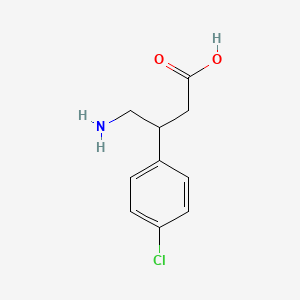
| Formula | C10H12ClNO2 |
|---|---|
| Molecular weight | 213.66 g/mol |
| IUPAC name | 4-amino-3-(4-chlorophenyl)butanoic acid |
| CAS | 1134-47-0 |
| PubChem CID | 2284 |
| InChIKey | KPYSYYIEGFHWSV-UHFFFAOYSA-N |
| logP | 1.86 (XLogP -1.0) |
| Polar surface area | 63.32 Ų |
| H-bond acceptors / donors | 2 / 2 |
| Drug-likeness (QED) | 0.80 |
| Lipinski violations | 0 |
SMILES
NCC(CC(=O)O)c1ccc(Cl)cc1Biology & Pharmacokinetics
Pharmacokinetics
| BBB penetrant | No (logBB -1.52) |
|---|
Enzyme interactions
| Enzyme | Role | Detail |
|---|---|---|
| CYP1A2 | Substrate | — |
| CYP2C19 | Substrate | — |
| CYP2C9 | Substrate | — |
Transporters
BCRP (Inhibitor)BSEP (Inhibitor)MCT1 (Inhibitor)MRP1 (Inhibitor)MRP2 (Inhibitor)MRP3 (Inhibitor)OAT3 (Inhibitor)OATP1B1 (Inhibitor)OATP1B1 (Inhibitor)OATP1B3 (Inhibitor)OATP1B3 (Inhibitor)OCT1 (Inhibitor)P-gp (Inhibitor)P-gp (Substrate)
Drug–drug interactions (52, DDInter)
| Interacting drug | Severity | Management |
|---|---|---|
| Codeine | major | |
| Hydrocodone | major | |
| Morphine | major | |
| Morphine (liposomal) | major | |
| Aldesleukin | moderate | |
| Alimemazine | moderate | |
| Amyl Nitrite | moderate | |
| Azatadine | moderate | |
| Azelastine (nasal) | moderate | |
| Brimonidine (ophthalmic) | moderate | |
| Brimonidine (topical) | moderate | |
| Brompheniramine | moderate | |
| Carbinoxamine | moderate | |
| Cetirizine | moderate | |
| Chlorphenesin | moderate | |
| Chlorpheniramine | moderate | |
| Clemastine | moderate | |
| Clofedanol | moderate | |
| Cyclizine | moderate | |
| Cyproheptadine | moderate | |
| Dexbrompheniramine | moderate | |
| Dextromethorphan | moderate | |
| Diazoxide | moderate | |
| Difenoxin | moderate | |
| Diphenhydramine | moderate | |
| Diphenoxylate | moderate | |
| Doxepin | moderate | |
| Doxepin (topical) | moderate | |
| Doxylamine | moderate | |
| Dronabinol | moderate | |
| Ethanol | moderate | |
| Ifosfamide | moderate | |
| Levocetirizine | moderate | |
| Meclizine | moderate | |
| Mepyramine | moderate | |
| Methdilazine | moderate | |
| Metoclopramide | moderate | |
| Minoxidil | moderate | |
| Nabilone | moderate | |
| Olopatadine (nasal) | moderate |
Showing 40 of 52.
Registered Products (3)
| Brand | Form / strength | Pack | Agent | Citizen (JOD) |
|---|---|---|---|---|
| Baclocalm | Tablet 10 mg/1 mg | 50 tab | ORIENT DRUG STORE CO | 3.110 |
| Lioresal Tab | Tablet 10 mg | 50 tab | The Jordan Drugstore Co | 4.880 |
| Baclocalm | Tablet 25 mg/1 mg | 50 tab | ORIENT DRUG STORE CO | 6.380 |