Gabapentin
JFDA label: Nurona
Mechanism of Action
Modulator of Voltage-gated calcium channel — Voltage-gated calcium channel modulator
| Target | Action | Gene / class |
|---|---|---|
| Voltage-gated calcium channel efficacy | MODULATOR |
Indications
Approved
- Postherpetic neuralgia
- Seizures, partial onset (immediate release only)
Off-label
- Alcohol dependence
- Alcohol withdrawal
- Brachioradial pruritus
- Cough, chronic (refractory)
- Diabetic neuropathy
- Fibromyalgia syndrome
- Hiccups (singultus)
- Hot flashes
- Neuropathic pain
- Post-operative pain (adjunct)
- Restless legs syndrome
- Social anxiety disorder
- Uremic pruritus
Contraindications
Source: Lexicomp
- Hypersensitivity to gabapentin or any component of the formulation Absolute
Adverse Reactions
Cardiac disorders (2)
Common Peripheral edema · vasodilatation
Nervous system disorders (23)
Very Common ataxia · Dizziness · Dizziness · drowsiness · fatigue · Somnolence
Common abnormal gait · abnormality in thinking · amnesia · Ataxia · Cognitive impairment · depression · emotional lability · headache · Hostility · hyperesthesia · hyperkinesia · lethargy · nervousness · pain · tremor · twitching · vertigo
Renal and urinary disorders (2)
Common Impotence · urinary tract infection
Blood and lymphatic system disorders (2)
Common Decreased white blood cell count · leukopenia
Metabolism and nutrition disorders (3)
Common hyperglycemia · Weight gain · Weight gain
Gastrointestinal disorders (10)
Common abdominal pain · constipation · dental disease · Diarrhea · dry throat · dyspepsia · flatulence · increased appetite · nausea and vomiting · xerostomia
Skin and subcutaneous tissue disorders (2)
Common Pruritus · skin rash
Musculoskeletal and connective tissue disorders (6)
Common back pain · bone fracture · dysarthria · limb pain · myalgia · Weakness
Eye disorders (6)
Common amblyopia · blurred vision · conjunctivitis · diplopia · Nystagmus · Nystagmus
Ear and labyrinth disorders (1)
Common Otitis media
Infections and infestations (2)
Very Common Viral infection
Common Infection
General disorders and administration site conditions (3)
Common Fatigue · Fever · Peripheral oedema
Respiratory, thoracic and mediastinal disorders (7)
Common bronchitis · cough · nasopharyngitis · pharyngitis · respiratory tract infection · Rhinitis
Rare Respiratory depression (overdose, opioid combination)
Other (106)
Not Known Abnormal hepatic function · acute renal failure · agitation · altered serum glucose · anaphylaxis · anemia · angina pectoris · angioedema · aphasia · aspiration pneumonia · blindness · blood coagulation disorder · bradycardia · brain disease · breast hypertrophy · bronchospasm · cardiac arrhythmia (various) · cerebrovascular accident · change in libido · cholestatic hepatitis · CNS neoplasm · colitis · confusion · Cushingoid appearance · DRESS syndrome · drug abuse · drug dependence · dyspnea · ejaculatory disorder · erythema multiforme · facial paralysis · falling · fecal incontinence · fulminant hepatitis · gastroenteritis · glaucoma · glycosuria · gynecomastia · hearing loss · heart block · hematemesis · hematuria · hemiplegia · hemorrhage · hepatitis · hepatomegaly · herpes zoster · hyperlipidemia · hypersensitivity reaction · hypertension · hyperthyroidism · hyperventilation · hypoglycemia · hyponatremia · hypotension · hypothyroidism · hypoventilation · increased creatine phosphokinase · increased liver enzymes · increased serum creatinine · jaundice · joint swelling · leukocytosis · loss of consciousness · lymphadenopathy · lymphocytosis · memory impairment · meningism · migraine · movement disorder · myocardial infarction · myoclonus (local) · nephrolithiasis · nephrosis · nerve palsy · non-Hodgkin lymphoma · ovarian failure · palpitations · pancreatitis · paresthesia · peptic ulcer · pericardial effusion · pericardial rub · pericarditis · peripheral vascular disease · pneumonia · psychosis · pulmonary edema · pulmonary thromboembolism · purpura · retinopathy · rhabdomyolysis · seasonal allergy · sexual disorder · skin necrosis · status epilepticus · Stevens-Johnson syndrome · subdural hematoma · suicidal ideation · suicidal tendencies · syncope · tachycardia · thrombocytopenia · thrombophlebitis · tumor growth · withdrawal syndrome
Dosing
Source: Lexicomp
Warnings & Precautions
Source: Lexicomp
Anaphylaxis/angioedema
May occur after the first dose or at any time during treatment. Discontinue therapy and seek immediate medical care if signs or symptoms of anaphylaxis or angioedema occur.
CNS depression
May cause CNS depression including somnolence and dizziness, which may impair physical or mental abilities; patients must be cautioned about performing tasks which require mental alertness (eg, operating machinery or driving).
Multiorgan hypersensitivity
Potentially serious, sometimes fatal multiorgan hypersensitivity (also known as drug reaction with eosinophilia and systemic symptoms [DRESS]) has been reported with some antiepileptic drugs, including gabapentin. Monitor for signs and symptoms of possible disparate manifestations associated with lymphatic, hepatic, renal, cardiac, and/or hematologic systems; fever, rash, and eosinophilia may also be present. Discontinue immediately if suspected.
Neuropsychiatric effects
Use in pediatric patients with epilepsy has been associated with the occurrence of CNS adverse effects of mild to moderate intensity. The most significant include emotional lability, hostility (eg, aggressive behaviors), changes in behavior and thinking (eg, concentration problems and changes in school performance), and hyperkinesia (primarily restlessness and hyperactivity).
Suicidal ideation
Pooled analysis of trials involving various antiepileptics (regardless of indication) showed an increased risk of suicidal thoughts/behavior (incidence rate: 0.43% treated patients compared to 0.24% of patients receiving placebo); risk observed as early as 1 week after initiation and continued through duration of trials (most trials ≤24 weeks). Monitor all patients for notable changes in behavior that might indicate suicidal thoughts or depression; notify healthcare provider immediately if symptoms occur. Disease-related concerns:
Renal impairment
Use with caution in patients with severe renal impairment; dose adjustment required.
Seizure disorder
The safety and efficacy of the extended release formulation has not been studied in patients with epilepsy. Concurrent drug therapy issues:
Drug-drug interactions
Potentially significant interactions may exist, requiring dose or frequency adjustment, additional monitoring, and/or selection of alternative therapy. Consult drug interactions database for more detailed information. Dosage form specific issues:
Product interchangeability
Immediate release and extended release products are not interchangeable with each other or with gabapentin enacarbil due to differences in formulations, indications, and pharmacokinetics. Other warnings/precautions:
Tumorigenic potential
Male rat studies demonstrated an association with pancreatic adenocarcinoma (clinical implication in humans is unknown).
Withdrawal
Anticonvulsants should not be discontinued abruptly because of the possibility of increasing seizure frequency; therapy should be withdrawn gradually to minimize the potential of increased seizure frequency, unless safety concerns require a more rapid withdrawal. The extended release formulation should be withdrawn over ≥1 week.
Pregnancy & Lactation
Pregnancy
Adverse events have been observed in animal reproduction studies. Gabapentin crosses the placenta. In a small study (n=6), the umbilical/maternal plasma concentration ratio was ~1.74. Neonatal concentrations declined quickly after delivery and at 24 hours of life were ~27% of the cord blood concentrations at birth (gabapentin neonatal half-life ~14 hours) (Ohman 2005). Pregnancy registry outcome data following maternal use of gabapentin during pregnancy is limited (Holmes 2012). Folic acid supplementation is recommended prior to and during pregnancy in women using gabapentin (Borgelt 2016; Picchietti 2015). Gabapentin is used for the treatment of restless leg syndrome; however, current guidelines note there is insufficient evidence to recommend its use in pregnant women for this indication (Picchietti 2015). Patients exposed to gabapentin during pregnancy are encouraged to enroll in the North American Antiepileptic Drug (NAAED) Pregnancy Registry by calling 1-888-233-2334. Additional
Lactation
Gabapentin is present in breast milk. The relative infant dose (RID) of gabapentin is 8.7% to 13% when calculated using the highest breast milk concentration located and compared to an infant therapeutic dose of 10 to 15 mg/kg/day. In general, breastfeeding is considered acceptable when the RID is 25% breastfeeding should generally be avoided (Anderson 2016; Ito 2000). The RID of gabapentin was calculated using a milk concentration of 8.7 mcg/mL, providing an estimated daily infant dose via
LactMed: monitor the infant.
Monitoring
| Clinical pearl | Periodic renal function, suicidality (eg, suicidal thoughts, depression, behavioral changes) |
|---|
Chemistry & Properties
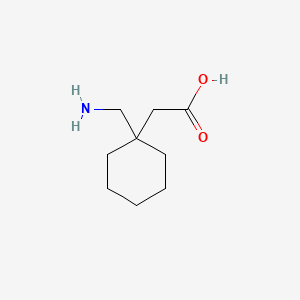
| Formula | C9H17NO2 |
|---|---|
| Molecular weight | 171.24 g/mol |
| IUPAC name | 2-[1-(aminomethyl)cyclohexyl]acetic acid |
| CAS | 60142-96-3 |
| PubChem CID | 3446 |
| InChIKey | UGJMXCAKCUNAIE-UHFFFAOYSA-N |
| logP | 1.37 (XLogP -1.1) |
| Polar surface area | 63.32 Ų |
| H-bond acceptors / donors | 2 / 2 |
| Drug-likeness (QED) | 0.67 |
| Lipinski violations | 0 |
SMILES
NCC1(CC(=O)O)CCCCC1Biology & Pharmacokinetics
Pharmacokinetics
| BBB penetrant | Yes (logBB -0.19) |
|---|
Receptor binding (top 2)
| Target | Action | Affinity |
|---|---|---|
| Kv7.5 (KCNQ5) | Activator | pEC50 8.7 |
| Kv7.3 (KCNQ3) | Activator | pEC50 8.3 |
Transporters
BCRP (Inhibitor)BSEP (Inhibitor)MRP1 (Inhibitor)OAT3 (Inhibitor)OATP1B1 (Inhibitor)OATP1B3 (Inhibitor)OCT1 (Inhibitor)OCTN2 (Inhibitor)P-gp (Inhibitor)B0+ amino acid transporter (Substrate)LAT (Substrate)MDR1 (Substrate)OATP1A2 (Substrate)P-gp (Substrate)Transporter(unspecified) (Substrate)
Drug–drug interactions (46, DDInter)
| Interacting drug | Severity | Management |
|---|---|---|
| Codeine | major | |
| Hydrocodone | major | |
| Morphine | major | |
| Morphine (liposomal) | major | |
| Alimemazine | moderate | |
| Azatadine | moderate | |
| Brimonidine (ophthalmic) | moderate | |
| Brimonidine (topical) | moderate | |
| Brompheniramine | moderate | |
| Carbinoxamine | moderate | |
| Cetirizine | moderate | |
| Chloroquine | moderate | |
| Chlorphenesin | moderate | |
| Chlorpheniramine | moderate | |
| Clemastine | moderate | |
| Clofedanol | moderate | |
| Cyproheptadine | moderate | |
| Dexbrompheniramine | moderate | |
| Dextromethorphan | moderate | |
| Diphenhydramine | moderate | |
| Doxepin | moderate | |
| Doxepin (topical) | moderate | |
| Doxylamine | moderate | |
| Dronabinol | moderate | |
| Ethanol | moderate | |
| Hydroxychloroquine | moderate | |
| Levocetirizine | moderate | |
| Mefloquine | moderate | |
| Mepyramine | moderate | |
| Metoclopramide | moderate | |
| Nabilone | moderate | |
| Olopatadine (nasal) | moderate | |
| Opium | moderate | |
| Pentoxyverine | moderate | |
| Promethazine | moderate | |
| Sibutramine | moderate | |
| Thalidomide | moderate | |
| Trimethobenzamide | moderate | |
| Tripelennamine | moderate | |
| Triprolidine | moderate |
Showing 40 of 46.
Registered Products (32)
| Brand | Form / strength | Pack | Agent | Citizen (JOD) |
|---|---|---|---|---|
| Gabatrex | Tablet 100 mg | 20 tab | Hikma Pharmaceuticals Co.Ltd/Jordan | 1.890 |
| Gabatrex Capsules | Capsule 300 mg | 10 cap pack varies | Hikma Pharmaceuticals Co.Ltd/Jordan | 2.090 |
| Gabatrex Capsules | Capsule 400 mg | 10 cap pack varies | Hikma Pharmaceuticals Co.Ltd/Jordan | 2.580 |
| Nurona | Capsule 100 mg | 20 cap pack varies | Pharma International Company/ Jordan | 3.170 |
| NERVATIN 300 | Capsule 300.00 mg | (3x10âs CAP) pack varies | Omicron Pharma | 4.190 |
| NERVATIN 400 | Capsule 400.00 CAP/1 mg | 3x10âs Caps CAP/1 BOX pack varies | Omicron Pharma | 4.780 |
| Gabatrex Capsules | Capsule 300 mg | 30 cap pack varies | Hikma Pharmaceuticals Co.Ltd/Jordan | 5.810 |
| Nurona | Tablet 300 mg | 30 tab pack varies | Pharma International Company/ Jordan | 5.810 |
| Volar | Capsule 300 mg | 30 cap pack varies | Dar Al Dawa Development and Investment Co Ltd/Jordan | 5.810 |
| NERVATIN 300 | Capsule 300.00 mg | (5 x 10âs CAP) pack varies | Omicron Pharma | 6.990 |
| Gabatrex Capsules | Capsule 400 mg | 30 cap pack varies | Hikma Pharmaceuticals Co.Ltd/Jordan | 7.160 |
| Neuroplex | Capsule 300 mg | 50 cap | Sukhtian Group | 7.530 |
| NERVATIN 400 | Capsule 400.00 CAP/1 mg | 5 x 10âs CAP/1 BOX pack varies | Omicron Pharma | 7.960 |
| Nurona | Capsule 400 mg | 30 cap pack varies | Pharma International Company/ Jordan | 7.960 |
| Volar | Capsule 400 mg | 30 cap | Dar Al Dawa Development and Investment Co Ltd/Jordan | 7.960 |
| Gabanet | Capsule 100 mg | 48 cap | THE JORDANIAN PHARMACEUTICAL MANUFACTURING COMPANY/JORDAN | 8.170 |
| Gabanet 300 Cap | Capsule 300 mg | 48 cap | THE JORDANIAN PHARMACEUTICAL MANUFACTURING COMPANY/JORDAN | 9.290 |
| Gabatrex Capsules | Capsule 300 mg | 50 cap pack varies | Hikma Pharmaceuticals Co.Ltd/Jordan | 9.680 |
| Nurona | Tablet 300 mg | 50 tab pack varies | Pharma International Company/ Jordan | 9.680 |
| Remebentin | Capsule 400 mg | 50 cap | JAWEDA INT. DRUD STORE | 10.450 |
| Neuroplex | Tablet 400 mg | 50 tab | Sukhtian Group | 10.610 |
| Neurontin (GABAPENTIN) | Tablet 300 mg | 50 tab | Khoury Drug Store | 10.750 |
| Nurona | Tablet 100 mg | 50 tab pack varies | Pharma International Company/ Jordan | 11.090 |
| Nurona | Tablet 300 mg | 300 tab pack varies | Pharma International Company/ Jordan | 11.390 |
| Gabatrex 400 Capsules | Capsule 400 mg | 50 cap pack varies | Hikma Pharmaceuticals Co.Ltd/Jordan | 11.930 |
| Gabanet 400 Cap | Capsule 400 mg | 48 cap | THE JORDANIAN PHARMACEUTICAL MANUFACTURING COMPANY/JORDAN | 12.730 |
| Neurontin (GABAPENTIN) | Tablet 400 mg | 50 tab | Khoury Drug Store | 13.260 |
| Nurona | Tablet 400 mg | 50 tab pack varies | Pharma International Company/ Jordan | 13.260 |
| Gabatrex | Tablet 600 mg | 30 tab | Hikma Pharmaceuticals Co.Ltd/Jordan | 20.030 |
| Gabatrex | Tablet 800 mg | 30 tab | Hikma Pharmaceuticals Co.Ltd/Jordan | 23.070 |
| Volar | Capsule 300 mg | 500 cap pack varies | Dar Al Dawa Development and Investment Co Ltd/Jordan | 84.250 |
| Nurona | Tablet 300 mg | 500 tab pack varies | Pharma International Company/ Jordan | 87.080 |