Liraglutide
JFDA label: Saxenda 6mg/ml Solution For Injection in PFP
- Thyroid C-cell tumor risk:
Mechanism of Action
Agonist of Glucagon-like peptide 1 receptor — Glucagon-like peptide 1 receptor agonist
| Target | Action | Gene / class |
|---|---|---|
| Glucagon-like peptide 1 receptor efficacy | AGONIST | GLP1R |
Indications
Approved
- Chronic weight management (Saxenda)
- Diabetes mellitus, type 2 (Victoza)
Class profile
| mechanismClass | GLP-1 receptor agonist (long-acting, daily) |
|---|---|
| insulinSecretagogue | 0 |
| weightEffect | Loss |
| hypoglycemiaRisk | None (when used alone) |
| renalContraindicated | 0 |
| cardioProtective | 1 |
| renalProtective | 0 |
| source | ADA-EASD2023/Maruthur2016 |
Contraindications
Source: Lexicomp
- Additional contraindications (not in US labeling): Pregnancy (Saxenda, Victoza) Absolute
- Prior serious hypersensitivity to liraglutide or any component of the formulation Absolute
- breastfeeding Absolute
- history of or family history of MTC Absolute
- patients with multiple endocrine neoplasia syndrome type 2 (MEN2) Absolute
- pregnancy (Saxenda) Absolute
Adverse Reactions
Cardiac disorders (2)
Very Common Increased heart rate
Common Tachycardia
Nervous system disorders (3)
Very Common Headache
Common dizziness · Fatigue
Hepatobiliary disorders (1)
Common Hyperbilirubinemia
Renal and urinary disorders (1)
Common Urinary tract infection
Immune system disorders (1)
Common Antibody development
Metabolism and nutrition disorders (1)
Very Common Hypoglycemia
Gastrointestinal disorders (20)
Very Common constipation · diarrhea · Gastrointestinal disease · Nausea · vomiting
Common abdominal distension · abdominal pain · cholecystitis · cholelithiasis · Decreased appetite · dyspepsia · eructation · flatulence · gastroenteritis · gastroesophageal reflux disease · increased amylase · increased serum lipase · upper abdominal pain · viral gastroenteritis · xerostomia
Musculoskeletal and connective tissue disorders (2)
Common Back pain · Weakness
Infections and infestations (1)
Very Common Infection
General disorders and administration site conditions (1)
Common Injection site reactions
Other (1)
Common Incidence reported in monotherapy trials unless otherwise specified
Respiratory, thoracic and mediastinal disorders (2)
Very Common Upper respiratory tract infection
Common Nasopharyngitis
Dosing
Source: Lexicomp
Warnings & Precautions
Source: Lexicomp
Antibody formation
Use may be associated with the development of anti-liraglutide antibodies. Antibody formation was not associated with a loss of efficacy; however, patients with the highest titers of anti-liraglutide antibodies had no reduction in HbA1C.
Cardiovascular effects
Increased resting heart rate has been observed in placebo controlled trials; monitoring is recommended. Discontinue use in patients who experience a sustained increase in resting heart rates.
Gallbladder disease
Use of GLP-1 agonists may increase risk of gallbladder and bile duct disease (Faillie 2016). Cholelithiasis and cholecystitis have been reported in patients treated with liraglutide with the majority of patients requiring requiring hospitalization or cholecystectomy; gallbladder studies and further clinical assessment are indicated if cholelithiasis is suspected.
GI symptoms
Most common reactions are gastrointestinal related; these symptoms may be dose-related and may decrease in frequency/severity with gradual titration and continued use.
Hypersensitivity reactions
Serious hypersensitivity reactions, including anaphylactic reactions and angioedema, have been reported with use; permanently discontinue therapy in the event of a hypersensitivity reaction. Use with caution in patients with a history of anaphylaxis or angioedema to other GLP-1 receptor agonists; potential for cross-sensitivity is unknown.
Pancreatitis
Cases of acute and chronic pancreatitis (including fatal and nonfatal, hemorrhagic or necrotizing pancreatitis) have been reported; monitor for signs and symptoms of pancreatitis (eg, persistent severe abdominal pain which may radiate to the back and which may or may not be accompanied by vomiting). If pancreatitis is suspected, discontinue use. Do not resume unless an alternative etiology of pancreatitis is confirmed. It is not known if liraglutide increases risk for development of pancreatitis in patients with a history of pancreatitis.
Psychiatric effects
Suicidal behavior, with one case of attempted suicide, has been reported in patients treated for obesity; monitor for new or worsening depression, suicidal thoughts or behavior, or unusual changes in mood or behavior. Discontinue use if suicidal thoughts or behaviors occur. Avoid use in patients with history of suicidal attempts or active suicidal ideation.
Renal effects
Acute renal failure and chronic renal failure exacerbation (including severe cases requiring hemodialysis) have been reported; some cases have been reported in patients with no known preexisting renal disease. Reports primarily occurred in patients with nausea, vomiting, diarrhea, or dehydration. Renal dysfunction was usually reversible with appropriate corrective measures, including discontinuation of liraglutide. Risk may be increased in patients receiving concomitant medications affecting renal function and/or hydration status.
Thyroid tumors
[US Boxed Warning] Dose-dependent and treatment duration-dependent thyroid C-cell tumors have developed in animal studies with liraglutide therapy; it is unknown whether liraglutide will cause thyroid C-cell tumors, including MTC, in humans, as the human relevance of liraglutide-induced rodent thyroid C-cell tumors has not been determined. Patients should be counseled on the potential risk of MTC with the use of liraglutide and informed of symptoms of thyroid tumors (eg, neck mass, dysphagia, dyspnea, persistent hoarseness). Use is contraindicated in patients with a personal or a family history of MTC and in patients with multiple endocrine neoplasia syndrome type 2 (MEN2). Cases of MTC in humans have been reported in patients treated with liraglutide. Consultation with an endocrinologist is recommended in patients who develop elevated calcitonin concentrations or have thyroid nodules detected during imaging studies or physical exam. Routine monitoring of serum calcitonin or using thyroid ultrasound monitoring is of uncertain value for early detection of MTC in patients treated with liraglutide. Disease-related concerns:
Gastroparesis
Slows gastric emptying; has not been studied in patients with preexisting gastroparesis.
Hepatic impairment
Use with caution in patients with hepatic impairment; limited experience.
Renal impairment
Use with caution in patients with renal impairment, particularly during initiation of therapy and dose escalation. Concurrent drug therapy issues:
Drug-drug interactions
Potentially significant interactions may exist, requiring dose or frequency adjustment, additional monitoring, and/or selection of alternative therapy. Consult drug interactions database for more detailed information. Dosage form specific issues:
Multiple dose injection pens
According to the Centers for Disease Control and Prevention (CDC), pen-shaped injection devices should never be used for more than one person (even when the needle is changed) because of the risk of infection. The injection device should be clearly labeled with individual patient information to ensure that the correct pen is used (CDC 2012). Other warnings/precautions:
Appropriate use
Diabetes mellitus: Victoza is not recommended for first-line therapy in patients inadequately controlled on diet and exercise alone. Do not use in patients with type 1 diabetes mellitus or for the treatment of diabetic ketoacidosis; not a substitute for insulin. Saxenda is not indicated for the treatment of type 2 diabetes; concomitant use with insulin is not recommended.
Patient education
Diabetes self-management education (DSME) is essential to maximize the effectiveness of therapy.
Pregnancy & Lactation
Pregnancy
Use of liraglutide for chronic weight management is contraindicated in pregnant women (lack of potential benefit and possible fetal harm). An increased risk of adverse maternal and fetal outcomes is associated with obesity; however, medications for weight loss therapy are not recommended at conception or during pregnancy (ACOG 156 2015). In women with diabetes, maternal hyperglycemia can be associated with congenital malformations as well as adverse effects in the fetus, neonate, and the mother (ACOG 2005; ADA 2018c; Kitzmiller 2008; Metzger 2007). To prevent adverse outcomes, prior to conception and throughout pregnancy maternal blood glucose and HbA1c should be kept as close to target goals as possible but without causing significant hypoglycemia (ACOG 137 2013; ADA 2018c; Blumer 2013; Kitzmiller 2008). Agents other than liraglutide are currently recommended to treat diabetes in pregnant women (ACOG 137 2013; ADA 2018c; Blumer 2013).
Lactation
It is not known if liraglutide is present in breast milk. According to the manufacturer, the decision to continue or discontinue breastfeeding during therapy should take into account the risk of infant exposure, the benefits of breastfeeding to the infant, and benefits of treatment to the mother.
Monitoring
| Efficacy | HbA1c every 3 months initially, then every 6–12 months when stable; fasting and post-prandial blood glucose; patient-reported hypoglycaemia episodes |
|---|---|
| Toxicity | Hypoglycaemia symptoms; eGFR for renally-cleared agents; weight; blood pressure |
| Clinical pearl | Individualise HbA1c targets based on patient age, comorbidities, and hypoglycaemia risk. Targets of < 7% are appropriate for most patients but < 8% may be safer in frail elderly. |
| Counseling | Monitor blood glucose regularly. Know how to recognise and treat hypoglycaemia. Keep carbohydrate snacks available. |
Chemistry & Properties
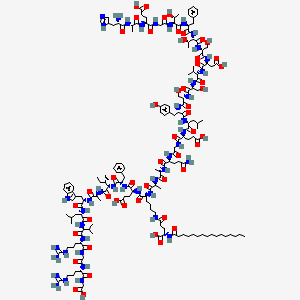
| Formula | C172H265N43O51 |
|---|---|
| Molecular weight | 3751.26 g/mol |
| IUPAC name | (2S)-5-[[(5S)-5-[[(2S)-2-[[(2S)-2-[[(2S)-5-amino-2-[[2-[[(2S)-2-[[(2S)-2-[[(2S)-2-[[(2S)-2-[[(2S)-2-[[(2S)-2-[[(2S)-2-[[(2S)-2-[[(2S,3R)-2-[[(2S)-2-[[(2S,3R)-2-[[2-[[(2S)-2-[[(2S)-2-[[(2S)-2-amino-3-(1H-imidazol-5-yl)propanoyl]amino]propanoyl]amino]-4-carboxybutanoyl]amino]acetyl]amino]-3-hydroxybutanoyl]amino]-3-phenylpropanoyl]amino]-3-hydroxybutanoyl]amino]-3-hydroxypropanoyl]amino]-3-carboxypropanoyl]amino]-3-methylbutanoyl]amino]-3-hydroxypropanoyl]amino]-3-hydroxypropanoyl]amino]-3-(4-hydroxyphenyl)propanoyl]amino]-4-methylpentanoyl]amino]-4-carboxybutanoyl]amino]acetyl]amino]-5-oxopentanoyl]amino]propanoyl]amino]propanoyl]amino]-6-[[(2S)-1-[[(2S)-1-[[(2S,3S)-1-[[(2S)-1-[[(2S)-1-[[(2S)-1-[[(2S)-1-[[(2S)-5-carbamimidamido-1-[[2-[[(2S)-5-carbamimidamido-1-(carboxymethylamino)-1-oxopentan-2-yl]amino]-2-oxoethyl]amino]-1-oxopentan-2-yl]amino]-3-methyl-1-oxobutan-2-yl]amino]-4-methyl-1-oxopentan-2-yl]amino]-3-(1H-indol-3-yl)-1-oxopropan-2-yl]amino]-1-oxopropan-2-yl]amino]-3-methyl-1-oxopentan-2-yl]amino]-1-oxo-3-phenylpropan-2-yl]amino]-4-carboxy-1-oxobutan-2-yl]amino]-6-oxohexyl]amino]-2-(hexadecanoylamino)-5-oxopentanoic acid |
| CAS | 204656-20-2 |
| PubChem CID | 16134956 |
| InChIKey | YSDQQAXHVYUZIW-QCIJIYAXSA-N |
SMILES
CCCCCCCCCCCCCCCC(=O)N[C@@H](CCC(=O)NCCCC[C@H](NC(=O)[C@H](C)NC(=O)[C@H](C)NC(=O)[C@H](CCC(N)=O)NC(=O)CNC(=O)[C@H](CCC(=O)O)NC(=O)[C@H](CC(C)C)NC(=O)[C@H](Cc1ccc(O)cc1)NC(=O)[C@H](CO)NC(=O)[C@H](CO)NC(=O)[C@@H](NC(=O)[C@H](CC(=O)O)NC(=O)[C@H](CO)NC(=O)[C@@H](NC(=O)[C@H](Cc1ccccc1)NC(=O)[C@@H](NC(=O)CNC(=O)[C@H](CCC(=O)O)NC(=O)[C@H](C)NC(=O)[C@@H](N)Cc1cnc[nH]1)[C@@H](C)O)[C@@H](C)O)C(C)C)C(=O)N[C@@H](CCC(=O)O)C(=O)N[C@@H](Cc1ccccc1)C(=O)N[C@H](C(=O)N[C@@H](C)C(=O)N[C@@H](Cc1c[nH]c2ccccc12)C(=O)N[C@@H](CC(C)C)C(=O)N[C@H](C(=O)N[C@@H](CCCNC(=N)N)C(=O)NCC(=O)N[C@@H](CCCNC(=N)N)C(=O)NCC(=O)O)C(C)C)[C@@H](C)CC)C(=O)OBiology & Pharmacokinetics
Pharmacokinetics predicted
| Bioavailability | 70.0% |
|---|---|
| Half-life | 3.421 h |
| Volume of distribution | 0.24 L/kg |
| Protein binding | 40.7% |
| BBB penetrant | No |
Receptor binding (top 1)
| Target | Action | Affinity |
|---|---|---|
| GLP-1 receptor (GLP1R) | Agonist | pEC50 10.5 |
Transporters
BCRP (Inhibitor)BSEP (Inhibitor)MRP1 (Inhibitor)OATP1B1 (Inhibitor)OATP1B3 (Inhibitor)P-gp (Inhibitor)P-gp (Substrate)
Drug–drug interactions (100+, DDInter)
| Interacting drug | Severity | Management |
|---|---|---|
| Bexarotene | major | |
| Gatifloxacin | major | |
| Acetazolamide | moderate | |
| Acetohexamide | moderate | |
| Alimemazine | moderate | |
| Aloe Vera Leaf | moderate | |
| Alpelisib | moderate | |
| Amprenavir | moderate | |
| Aripiprazole | moderate | |
| Asenapine | moderate | |
| Asparaginase Erwinia chrysanthemi | moderate | |
| Asparaginase Escherichia coli | moderate | |
| Atazanavir | moderate | |
| Bendroflumethiazide | moderate | |
| Benzphetamine | moderate | |
| Benzthiazide | moderate | |
| Betamethasone | moderate | |
| Bortezomib | moderate | |
| Brentuximab vedotin | moderate | |
| Brexpiprazole | moderate | |
| Brigatinib | moderate | |
| Bumetanide | moderate | |
| Calaspargase pegol | moderate | |
| Cariprazine | moderate | |
| Ceritinib | moderate | |
| Chlorothiazide | moderate | |
| Chlorpromazine | moderate | |
| Chlorpropamide | moderate | |
| Chlorthalidone | moderate | |
| Chromic chloride | moderate | |
| Chromium picolinate | moderate | |
| Cinoxacin | moderate | |
| Ciprofloxacin | moderate | |
| Clarithromycin | moderate | |
| Clozapine | moderate | |
| Conjugated estrogens | moderate | |
| Conjugated estrogens (topical) | moderate | |
| Copanlisib | moderate | |
| Corticotropin | moderate | |
| Dabrafenib | moderate |
Showing 40 of 100+.
Registered Products (4)
| Brand | Form / strength | Pack | Agent | Citizen (JOD) |
|---|---|---|---|---|
| Victoza | Pre-filled Pen 6 mg/1 ml | 3 ml | Khoury Drug Store | 96.680 |
| Xultophy | Pre-filled Pen 3.6 mg/1 ml, 100 IU/1 ml | 3 ml | Khoury Drug Store | 119.950 |
| Saxenda 6mg/ml Solution For Injection in PFP | Injection 6 mg/ml | 3 ml pack varies | Khoury Drug Store | 129.670 |
| Saxenda 6mg/ml Solution For Injection in PFP | Injection 6 mg/ml | 3 ml pack varies | Khoury Drug Store | 216.100 |