Mercaptopurine
JFDA label: Purinethol Tablets
Mechanism of Action
Inhibitor of Amidophosphoribosyltransferase — Amidophosphoribosyltransferase inhibitor; Inhibitor of DNA — DNA inhibitor
| Target | Action | Gene / class |
|---|---|---|
| Amidophosphoribosyltransferase efficacy | INHIBITOR | PPAT |
| DNA efficacy | INHIBITOR |
Indications
Approved
- Acute lymphoblastic leukemia
Off-label
- Acute promyelocytic leukemia, maintenance
- Autoimmune hepatitis (children)
- Crohn disease (adults)
- Crohn disease (children/adolescents)
- Lymphoblastic lymphoma
- Ulcerative colitis (children)
- Ulcerative colitis (initial management) (adults)
- Ulcerative colitis (maintenance therapy) (adults)
Class profile
| mechanismClass | Antimetabolite (thiopurine, purine analogue) |
|---|---|
| targetMolecule | HPRT + IMP dehydrogenase |
| targetPathway | Purine synthesis/DNA/RNA |
| generation | Classic |
| primaryTumors | ALL maintenance,CML (historic) |
| resistanceMechanisms | TPMT rapid metabolizer phenotype,HPRT mutation/deletion,Allopurinol interaction (xanthine oxidase) |
| source | NCCN/OncoKB/Goodman&Gilman13ed |
Contraindications
Source: Lexicomp
- Hypersensitivity to mercaptopurine or any component of the formulation Absolute
- patients whose disease showed prior resistance to mercaptopurine Absolute
Adverse Reactions
Nervous system disorders (2)
Not Known drug fever · Malaise
Hepatobiliary disorders (1)
Not Known Hyperbilirubinemia (Immunologic: Immunosuppression
Blood and lymphatic system disorders (10)
Not Known anemia · Bone marrow depression · granulocytopenia · hemorrhage · hepatosplenic T-cell lymphomas · leukopenia · lymphocytopenia · metastases · neutropenia · thrombocytopenia
Skin and subcutaneous tissue disorders (2)
Not Known hyperpigmentation, diarrhea, nausea, vomiting, oral lesion (Genitourinary: Oligospermia, renal toxicity, uricosuria · Skin rash
Infections and infestations (1)
Not Known Infection
Respiratory, thoracic and mediastinal disorders (1)
Not Known Pulmonary fibrosis
Dosing
Source: Lexicomp
Warnings & Precautions
Source: Lexicomp
Bone marrow suppression
Dose-related leukopenia, thrombocytopenia, and anemia are common; however, may be indicative of disease progression. Hematologic toxicity may be delayed. Bone marrow may appear hypoplastic (could also appear normal). Monitor blood counts; dose may require adjusting for severe neutropenia or thrombocytopenia. Monitor for bleeding (due to thrombocytopenia) or infection (due to neutropenia). Profound severe or repeated hematologic toxicity may be indicative of thiopurine methyltransferase (TPMT) deficiency (see “Thiopurine methyltransferase deficiency” below).
Hepatotoxicity
Hepatotoxicity has been reported, including jaundice, ascites, hepatic necrosis (may be fatal), intrahepatic cholestasis, parenchymal cell necrosis, and/or hepatic encephalopathy; may be due to direct hepatic cell damage or hypersensitivity. While hepatotoxicity or hepatic injury may occur at any dose, dosages exceeding the recommended dose are associated with a higher incidence. Signs of jaundice generally appear early in treatment, after ~1 to 2 months (range: 1 week to 8 years) and may resolve following discontinuation; recurrence with rechallenge has been noted. Monitor liver function tests, including transaminases, alkaline phosphatase, and bilirubin weekly with treatment initiation, then monthly thereafter (monitor more frequently if used in combination with other hepatotoxic drugs or in patients with preexisting hepatic impairment). Consider a reduced dose in patients with baseline hepatic impairment; monitor closely for toxicity. Withhold treatment for clinical signs of jaundice (hepatomegaly, anorexia, tenderness), deterioration in liver function tests, toxic hepatitis, or biliary stasis until hepatotoxicity is ruled out.
Immunosuppression
Mercaptopurine is immunosuppressive; immune responses to infections may be impaired and the risk for infection is increased. Common signs of infection, such as fever and leukocytosis may not occur; lethargy and confusion may be more prominent signs of infection.
Macrophage activation syndrome
Macrophage activation syndrome (MAS), also known as hemophagocytic lymphohistiocytosis, is a life-threatening disorder which may develop in patients with autoimmune disorders (particularly inflammatory bowel disease); mercaptopurine use for the treatment of autoimmune conditions (off-label use) may cause increased susceptibility to MAS. Discontinue mercaptopurine if MAS develops or is suspected. Monitor; promptly treat infections such as Epstein-Barr virus (EBV) and cytomegalovirus (which are known triggers for MAS).
Photosensitivity
Minimize sun exposure due to possible photosensitivity.
Secondary malignancy
Immunosuppressive agents, including mercaptopurine, are associated with the development of lymphoproliferative disorders and other malignancies. In an analysis of T-cell lymphomas associated with TNF blockers (with or without thiopurines) for the treatment of rheumatoid arthritis, Crohn disease, ulcerative colitis, or ankylosing spondylitis (off-label uses for thiopurines), an increase in the incidence of T-cell lymphomas, most commonly mycosis fungoides/Sézary syndrome and hepatosplenic T-cell lymphoma (HSTCL) was reported (Deepak 2013). HSTCL is a rare white blood cell cancer that is usually fatal. Most HSTCL cases occurred in patients treated with a combination of TNF blockers and thiopurines, although cases of HSTCL also occurred in patients receiving azathioprine or mercaptopurine monotherapy. Skin cancers (melanoma and non-melanoma), Kaposi and non-Kaposi sarcomas, and uterine cervical cancer in situ have been reported in patients receiving immunosuppressive treatment (including mercaptopurine); risk of development may be related to the degree and duration of immunosuppression. Partial regression of lymphoproliferative disorders may occur upon therapy discontinuation. Regimens containing multiple immunosuppressants increase the risk of EBV-associated lymphoproliferative disorders; use with caution. Disease-related concerns:
Renal impairment
Consider dosage modification in patients with renal impairment. Some renal adverse effects may be minimized with hydration and prophylactic antihyperuricemic therapy.
NUDT15 genetic variation
A germline variant in nucleoside diphophate-linked moiety X-type motif 15 (NUDT15) is strongly correlated with mercaptopurine intolerance in children receiving treatment for acute lymphoblastic leukemia (ALL). A genome-wide association study was performed in two prospective clinical childhood ALL trials, and showed that patients homozygous for the TT genotype were extremely sensitive to mercaptopurine, and achieved an average dose intensity of only 8.3%. The NUDT15 genetic variant is most common in East Asian and Hispanic patients. In patients homozygous for either TPMT or NUDT15 (or heterozygous for both), mercaptopurine dose reductions of ≥50% were required in 100% of patients (Yang 2015).
Thiopurine methyltransferase deficiency
Patients with homozygous genetic defect of TPMT are more sensitive to myelosuppressive effects; generally associated with rapid myelosuppression. Significant mercaptopurine dose reductions will be necessary (possibly with continued concomitant chemotherapy at normal doses). Patients who are heterozygous for TPMT defects will have intermediate activity; may have increased toxicity (primarily myelosuppression) although will generally tolerate normal mercaptopurine doses. Consider TPMT testing for severe toxicities/excessive myelosuppression. Concurrent drug therapy issues:
Drug-drug interactions
Potentially significant interactions may exist, requiring dose or frequency adjustment, additional monitoring, and/or selection of alternative therapy. Consult drug interactions database for more detailed information. Because azathioprine is metabolized to mercaptopurine, concomitant use with azathioprine may result in a significant increase in hematologic toxicity and profound myelosuppression; avoid concurrent use. Hematologic toxicity may be exacerbated by other medications which inhibit TPMT (eg, mesalamine, olsalazine, sulfasalazine) or by other myelosuppressive drugs. Special populations:
Pediatric
Cases of symptomatic hypoglycemia have been reported in children receiving mercaptopurine for the treatment of ALL; cases were reported in children less than 6 years of age or with a low body mass index. Other warnings/precautions:
Error-prone terms
To avoid potentially serious dosage errors, the terms “6-mercaptopurine” or “6-MP” should be avoided; use of these terms has been associated with six-fold overdosages.
Vaccines
Immune response to vaccines may be diminished. Live virus vaccines impose a risk for infection.
Pregnancy & Lactation
Pregnancy
May cause fetal harm if administered during pregnancy. Case reports of fetal loss have been noted with mercaptopurine administration during the first trimester; adverse effects have also been noted with second and third trimester use. Women of child bearing potential should avoid becoming pregnant during treatment.
Lactation
Mercaptopurine is the active metabolite of azathioprine. Following administration of azathioprine, mercaptopurine can be detected in breast milk (Gardiner 2006). It is not known if/how much mercaptopurine is found in breast milk following oral administration. According to the manufacturer, the decision to discontinue mercaptopurine or discontinue breast-feeding during therapy should take into account the benefits of treatment to the mother.
Monitoring
| Efficacy | Tumour response (RECIST criteria, tumour markers, imaging); progression-free survival; performance status (ECOG/Karnofsky) |
|---|---|
| Toxicity | CBC with differential (nadir timing depends on agent); LFTs; renal function; ECG (QT for relevant agents); echocardiogram for cardiotoxic agents (anthracyclines, trastuzumab); cumulative dose tracking for dose-limited toxicities |
| Clinical pearl | Treatment response is assessed after 2–3 cycles. Grade 3–4 toxicities typically require dose reduction or interruption per protocol-defined criteria. |
| Counseling | Attend all scheduled blood tests and imaging appointments. Report fever > 38°C (risk of neutropaenic sepsis — medical emergency), unusual bleeding, or new pain immediately. |
Chemistry & Properties
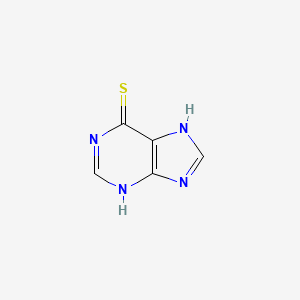
| Formula | C5H6N4OS |
|---|---|
| Molecular weight | 170.2 g/mol |
| IUPAC name | 3,7-dihydropurine-6-thione |
| CAS | 50-44-2 |
| PubChem CID | 667490 |
| InChIKey | WFFQYWAAEWLHJC-UHFFFAOYSA-N |
| logP | 0.64 (XLogP 0.0) |
| Polar surface area | 54.46 Ų |
| H-bond acceptors / donors | 4 / 2 |
| Drug-likeness (QED) | 0.43 |
| Lipinski violations | 0 |
SMILES
O.S=c1[nH]cnc2nc[nH]c12Biology & Pharmacokinetics
Pharmacokinetics
| BBB penetrant | Yes (logBB -0.71) |
|---|
Transporters
BCRP (Inhibitor)BSEP (Inhibitor)MRP1 (Inhibitor)MRP4 (Inhibitor)OAT3 (Inhibitor)OATP1B1 (Inhibitor)OATP1B1 (Inhibitor)OATP1B3 (Inhibitor)OATP1B3 (Inhibitor)P-gp (Inhibitor)ENBT1 (Substrate)ENT1 (Substrate)MRP4 (Substrate)OAT3 (Substrate)P-gp (Substrate)SLC(unspecified) (Substrate)
Drug–drug interactions (100+, DDInter)
| Interacting drug | Severity | Management |
|---|---|---|
| Adalimumab | major | |
| Allopurinol | major | |
| Azathioprine | major | |
| Bacillus calmette-guerin substrain tice live antigen | major | |
| Baricitinib | major | |
| Certolizumab pegol | major | |
| Cladribine | major | |
| Clozapine | major | |
| Deferiprone | major | |
| Etanercept | major | |
| Febuxostat | major | |
| Fingolimod | major | |
| Golimumab | major | |
| Infliximab | major | |
| Leflunomide | major | |
| Lomitapide | major | |
| Measles virus vaccine live attenuated | major | |
| Mipomersen | major | |
| Mumps virus strain B level jeryl lynn live antigen | major | |
| Natalizumab | major | |
| Ozanimod | major | |
| Pexidartinib | major | |
| Ribavirin | major | |
| Rotavirus vaccine | major | |
| Rubella virus vaccine | major | |
| Samarium (153Sm) lexidronam | major | |
| Siponimod | major | |
| Smallpox (Vaccinia) Vaccine, Live | major | |
| Talimogene laherparepvec | major | |
| Teriflunomide | major | |
| Thalidomide | major | |
| Tofacitinib | major | |
| Typhoid vaccine (live) | major | |
| Upadacitinib | major | |
| Varicella Zoster Vaccine (Recombinant) | major | |
| Yellow Fever Vaccine | major | |
| Aldesleukin | moderate | |
| Alefacept | moderate | |
| Alemtuzumab | moderate | |
| Anakinra | moderate |
Showing 40 of 100+.
Registered Products (1)
| Brand | Form / strength | Pack | Agent | Citizen (JOD) |
|---|---|---|---|---|
| Purinethol Tablets | Tablet 50 mg | 25 tab | Suleiman Tannous & Sons Co. Ltd | 14.230 |