Paclitaxel
JFDA label: Taxol Vial
- Experienced physician:
- Hypersensitivity reactions:
- Bone marrow suppression:
Mechanism of Action
Inhibitor of Tubulin — Tubulin inhibitor
| Target | Action | Gene / class |
|---|---|---|
| Tubulin efficacy | INHIBITOR |
Indications
Approved
- Breast cancer
- Kaposi sarcoma (AIDS-related)
- Non-small cell lung cancer
- Ovarian cancer
Off-label
- Bladder cancer, advanced or metastatic
- Cervical cancer, advanced
- Endometrial carcinoma
- Esophageal cancer (metastatic/unresectable)
- Esophageal/gastric cancer, preoperative chemoradiation
- Gastric cancer (metastatic/unresectable)
- Head and neck cancers, advanced
- Melanoma
- Ovarian cancer, intraperitoneal (off-label route)
- Penile cancer, metastatic
- Small cell lung cancer, relapsed/refractory
- Soft tissue sarcoma (angiosarcoma), advanced/unresectable
- Testicular germ cell tumors, relapsed/refractory
- Thymoma/thymic carcinoma, advanced
- Thyroid cancer (anaplastic)
- Unknown primary adenocarcinoma
Class profile
| mechanismClass | Plant alkaloid (taxane) |
|---|---|
| targetMolecule | Beta-tubulin (stabilizes polymerization) |
| targetPathway | Mitotic spindle (G2/M arrest) |
| generation | 1st generation taxane |
| primaryTumors | Ovarian,Breast,NSCLC,Gastric,Head and neck,Kaposi sarcoma |
| resistanceMechanisms | MDR1/P-gp efflux (CYP3A4 metabolism),Tubulin mutations (TUBB3 class III),Reduced taxane uptake |
| source | NCCN/OncoKB/Goodman&Gilman13ed |
Contraindications
Source: Lexicomp
- Hypersensitivity to paclitaxel, polyoxyl 35/polyoxyethylated castor oil (Cremophor EL), or any component of the formulation Absolute
- treatment of Kaposi sarcoma in patients with baseline neutrophil counts 3 Absolute
- treatment of solid tumors in patients with baseline neutrophil counts 3 Absolute
Adverse Reactions
Cardiac disorders (10)
Very Common ECG abnormality · edema · Flushing · hypotension
Common Bradycardia · cardiac arrhythmia · hypertension · syncope · tachycardia · venous thrombosis
Nervous system disorders (1)
Very Common Peripheral neuropathy
Hepatobiliary disorders (3)
Very Common Increased serum alkaline phosphatase · increased serum AST
Common Increased serum bilirubin
Renal and urinary disorders (1)
Very Common Increased serum creatinine
Blood and lymphatic system disorders (6)
Very Common anemia · hemorrhage · leukopenia · Neutropenia · thrombocytopenia
Common Febrile neutropenia
Immune system disorders (1)
Very Common Hypersensitivity reaction
Gastrointestinal disorders (6)
Very Common abdominal pain (with intraperitoneal administration) · diarrhea · mucositis · Nausea · stomatitis · vomiting
Skin and subcutaneous tissue disorders (3)
Very Common Alopecia · skin rash
Common Changes in nails
Musculoskeletal and connective tissue disorders (3)
Very Common Arthralgia · myalgia · weakness
Infections and infestations (1)
Very Common Infection
General disorders and administration site conditions (1)
Very Common Injection site reaction
Respiratory, thoracic and mediastinal disorders (1)
Common Dyspnea
Dosing
Source: Lexicomp
Warnings & Precautions
Source: Lexicomp
Bone marrow suppression
Bone marrow suppression (primarily neutropenia; may be severe or result in infection) may occur. Monitor blood counts frequently. Do not administer if baseline neutrophil count is 3 (for solid tumors) or 3 (for patients with AIDS-related Kaposi sarcoma). Bone marrow suppression (usually neutropenia) is dose-dependent and is the dose-limiting toxicity; neutrophil nadir is usually at a median of 11 days. Subsequent cycles should not be administered until neutrophils are >1,500/mm3 (for solid tumors) and 1,000/mm3 (for Kaposi sarcoma); platelets should recover to 100,000/mm3. Reduce future doses by 20% for severe neutropenia (3 for 7 days or more) and consider the use of supportive therapy, including growth factor treatment.
Cardiovascular effects
Infusion-related hypotension, bradycardia, and/or hypertension may occur; frequent monitoring of vital signs is recommended, especially during the first hour of the infusion. Rare but severe conduction abnormalities have been reported; conduct continuous cardiac monitoring during subsequent infusions for these patients. In a scientific statement from the American Heart Association, conventional paclitaxel has been determined to be an agent that may either cause direct myocardial toxicity or exacerbate underlying myocardial dysfunction (magnitude: moderate) (AHA [Page 2016])
Extravasation
Paclitaxel is an irritant with vesicant-like properties; ensure proper needle or catheter placement prior to and during infusion; avoid extravasation. Injection-site reactions are generally mild (skin discoloration, tenderness, erythema, or swelling) and occur more commonly with an extended infusion duration (eg, 24 hours); injection-site reactions may be delayed (7 to 10 days). More severe reactions (phlebitis, cellulitis, skin exfoliation, necrosis, fibrosis, and induration) have also been reported. Recall skin reactions may occur despite administering through a different IV site.
Hypersensitivity reactions
Anaphylaxis and severe hypersensitivity reactions (dyspnea requiring bronchodilators, hypotension requiring treatment, angioedema, and/or generalized urticaria) have occurred in 2% to 4% of patients in clinical studies. Premedicate with corticosteroids, diphenhydramine, and H2 antagonists prior to infusion. Some reactions have been fatal despite premedication. If severe hypersensitivity occurs, stop infusion and do not rechallenge. Minor hypersensitivity reactions (flushing, skin reactions, dyspnea, hypotension, or tachycardia) do not require interruption of treatment.
Peripheral neuropathy
Peripheral neuropathy may commonly occur; patients with preexisting neuropathies from prior chemotherapy or coexisting conditions (eg, diabetes mellitus) may be at a higher risk; reduce dose by 20% for severe neuropathy. Disease-related concerns:
Hepatic impairment
Use with extreme caution in patients with hepatic dysfunction (myelotoxicity may be worsened in patients with total bilirubin >2 times ULN); dose reductions are recommended. Concurrent drug therapy issues:
Drug-drug interactions
Potentially significant interactions may exist, requiring dose or frequency adjustment, additional monitoring, and/or selection of alternative therapy. Consult drug interactions database for more detailed information. Special populations:
Elderly
Use with caution in the elderly; increased risk of toxicity (severe neutropenia, neuropathy, and cardiovascular events). Other warnings/precautions:
Excipients
Conventional paclitaxel formulations contain polyoxyl 35/polyoxyethylated castor oil (Cremophor EL), which is associated with hypersensitivity reactions. Formulations also contain dehydrated alcohol which may cause adverse CNS effects.
Experienced physician
Should be administered under the supervision of an experienced cancer chemotherapy physician. Administer in a facility sufficient to appropriately diagnose and manage complications.
Intraperitoneal administration
Intraperitoneal administration of paclitaxel is associated with a higher incidence of chemotherapy- related toxicity (Armstrong 2006).
Pregnancy & Lactation
Pregnancy
Adverse events (embryotoxicity, fetal toxicity, and maternal toxicity) have been observed in animal reproduction studies at doses less than the recommended human dose. An ex vivo human placenta perfusion model illustrated that paclitaxel crossed the placenta at term. Placental transfer was low and affected by the presence of albumin; higher albumin concentrations resulted in lower paclitaxel placental transfer (Berveiller, 2012). Some pharmacokinetic properties of paclitaxel may be altered in pregnant women (van Hasselt, 2014). Women of childbearing potential should be advised to avoid becoming pregnant. A pregnancy registry is available for all cancers diagnosed during pregnancy at Cooper Health (877-635-4499).
Lactation
Paclitaxel is excreted in breast milk (case report). The mother (3 months postpartum) was treated with paclitaxel 30 mg/m2 (56.1 mg) and carboplatin once weekly for papillary thyroid cancer. Milk samples were obtained 4-316 hours after the infusion given at the sixth and final week of therapy. The average paclitaxel milk concentration over the testing interval was 0.78 mg/L. Although maternal serum concentrations were not noted in the report, the relative infant dose to a nursing infant was calc
Monitoring
| Efficacy | Tumour response (RECIST criteria, tumour markers, imaging); progression-free survival; performance status (ECOG/Karnofsky) |
|---|---|
| Toxicity | CBC with differential (nadir timing depends on agent); LFTs; renal function; ECG (QT for relevant agents); echocardiogram for cardiotoxic agents (anthracyclines, trastuzumab); cumulative dose tracking for dose-limited toxicities |
| Clinical pearl | Treatment response is assessed after 2–3 cycles. Grade 3–4 toxicities typically require dose reduction or interruption per protocol-defined criteria. |
| Counseling | Attend all scheduled blood tests and imaging appointments. Report fever > 38°C (risk of neutropaenic sepsis — medical emergency), unusual bleeding, or new pain immediately. |
Chemistry & Properties
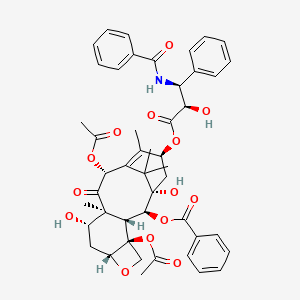
| Formula | C47H51NO14 |
|---|---|
| Molecular weight | 853.92 g/mol |
| IUPAC name | [(1S,2S,3R,4S,7R,9S,10S,12R,15S)-4,12-diacetyloxy-15-[(2R,3S)-3-benzamido-2-hydroxy-3-phenylpropanoyl]oxy-1,9-dihydroxy-10,14,17,17-tetramethyl-11-oxo-6-oxatetracyclo[11.3.1.03,10.04,7]heptadec-13-en-2-yl] benzoate |
| CAS | 33069-62-4 |
| PubChem CID | 36314 |
| InChIKey | RCINICONZNJXQF-MZXODVADSA-N |
| logP | 3.74 (XLogP 2.5) |
| Polar surface area | 221.29 Ų |
| H-bond acceptors / donors | 14 / 4 |
| Drug-likeness (QED) | 0.13 |
| Lipinski violations | 2 |
SMILES
CC(=O)O[C@H]1C(=O)[C@@]2(C)[C@H]([C@H](OC(=O)c3ccccc3)[C@]3(O)C[C@H](OC(=O)[C@H](O)[C@@H](NC(=O)c4ccccc4)c4ccccc4)C(C)=C1C3(C)C)[C@]1(OC(C)=O)CO[C@@H]1C[C@@H]2OBiology & Pharmacokinetics
Pharmacokinetics predicted
| Bioavailability | 70.0% |
|---|---|
| Half-life | 2.485 h |
| Volume of distribution | 1.025 L/kg |
| Protein binding | 92.6% |
| BBB penetrant | No |
Enzyme interactions
| Enzyme | Role | Detail |
|---|---|---|
| CYP2B6 | Inhibitor | — |
| CYP2C8 | Inhibitor | — |
| CYP2C8 | Substrate | — |
| CYP3A4 | Substrate | — |
Receptor binding (top 2)
| Target | Action | Affinity |
|---|---|---|
| tubulin beta class I (TUBB) | Inhibitor | pEC50 8.1 |
| Pregnane X receptor (NR1I2) | Agonist | pEC50 5.3 |
Transporters
BCRP (Inhibitor)BSEP (Inhibitor)BSEP (Inhibitor)MATE1 (Inhibitor)MDR1 (Inhibitor)MRP (Inhibitor)MRP1 (Inhibitor)MRP1 (Inhibitor)MRP2 (Inhibitor)MRP3 (Inhibitor)MRP4 (Inhibitor)MRP7 (Inhibitor)OATP1B1 (Inhibitor)OATP1B1 (Inhibitor)OATP1B3 (Inhibitor)OATP1B3 (Inhibitor)OATP2B1 (Inhibitor)OCT1 (Inhibitor)P-gp (Inhibitor)Transporter(unspecified) (Inhibitor)BCRP (Substrate)BSEP (Substrate)MDR1 (Substrate)MRP (Substrate)MRP2 (Substrate)MRP3 (Substrate)OAT2 (Substrate)OATP (Substrate)OATP1A2 (Substrate)OATP1B1 (Substrate)OATP1B3 (Substrate)P-gp (Substrate)Transporter(unspecified) (Substrate)
Drug–drug interactions (100+, DDInter)
| Interacting drug | Severity | Management |
|---|---|---|
| Adalimumab | major | |
| Amprenavir | major | |
| Atazanavir | major | |
| Bacillus calmette-guerin substrain tice live antigen | major | |
| Baricitinib | major | |
| Boceprevir | major | |
| Certolizumab pegol | major | |
| Cladribine | major | |
| Clozapine | major | |
| Deferiprone | major | |
| Delavirdine | major | |
| Etanercept | major | |
| Fingolimod | major | |
| Fosamprenavir | major | |
| Golimumab | major | |
| Indinavir | major | |
| Infliximab | major | |
| Leflunomide | major | |
| Measles virus vaccine live attenuated | major | |
| Mumps virus strain B level jeryl lynn live antigen | major | |
| Natalizumab | major | |
| Nelfinavir | major | |
| Ozanimod | major | |
| Ritonavir | major | |
| Rotavirus vaccine | major | |
| Rubella virus vaccine | major | |
| Samarium (153Sm) lexidronam | major | |
| Saquinavir | major | |
| Siponimod | major | |
| Smallpox (Vaccinia) Vaccine, Live | major | |
| Talimogene laherparepvec | major | |
| Telaprevir | major | |
| Teriflunomide | major | |
| Thalidomide | major | |
| Tofacitinib | major | |
| Typhoid vaccine (live) | major | |
| Upadacitinib | major | |
| Varicella Zoster Vaccine (Recombinant) | major | |
| Yellow Fever Vaccine | major | |
| Abametapir (topical) | moderate |
Showing 40 of 100+.
Registered Products (16)
| Brand | Form / strength | Pack | Agent | Citizen (JOD) |
|---|---|---|---|---|
| Anzatax Vial | Vial 150 mg/25 ml | 1 vial | Petra Drug Store | — |
| Anzatax Vial | Vial 30 mg/5 ml | 1 vial | Petra Drug Store | — |
| Intaxel | Vial 260 mg/43.4 ml | 1 vial | Sun Set Drug Store | — |
| Intaxel 100mg/16.7 ml Solution for injection IV | Injection 100 mg/16.7 ml | 20 ml | Sun Set Drug Store | — |
| Intaxel Vial | Vial 30 mg/5 ml | 1 vial | Sun Set Drug Store | — |
| Paclitaxel Ebewe | Injection 6 mg/ml | 25 ml pack varies | Sabbagh Drug Store | — |
| Paclitaxel Ebewe | Vial 6 mg/ml | 1 vial pack varies | Sabbagh Drug Store | — |
| Paclitaxel Ebewe | Vial 100 mg | 1 vial | Sabbagh Drug Store | — |
| Paclitaxel Ebewe | Solution 600 mg | 100 ml | Sabbagh Drug Store | — |
| Paclitaxel Vial | Vial 300 mg/50 ml | 1 vial | Petra Drug Store | — |
| Pataxel 30mg/5ml (Mono Dose) | Suspension 30 mg/5 ml | 1 vial | Manar Drug Store | — |
| Pataxel 100mg/16.7 ml (Multi Dose) | Vial 100 mg/16.7 ml | 1 vial | Manar Drug Store | — |
| Pataxel 300mg/50ml(Multi Dose) | Vial 300 mg/50 ml | 1 vial | Manar Drug Store | — |
| Taxol Vial | Vial 6 mg/ml | 16.7 ml | Suleiman Tannous & Sons Co. Ltd | — |
| Taxol Vial | Vial 300 mg/50 ml | 50 ml | Suleiman Tannous & Sons Co. Ltd | — |
| Taxol Vial | Vial 30 mg | 1 | Suleiman Tannous & Sons Co. Ltd | — |