Pramipexole
JFDA label: Xoliram 0.375 Mg ER Tab
Mechanism of Action
Pramipexole is a nonergot dopamine agonist with specificity for the D2 subfamily dopamine receptor, and has also been shown to bind to D3 and D4 receptors. By binding to these receptors, it is thought that pramipexole can stimulate dopamine activity on the nerves of the striatum and substantia nigra.
Indications
Approved
- Parkinson disease
- Restless legs syndrome (immediate release only)
Off-label
- Bipolar depression
- Fibromyalgia
Contraindications
Source: Lexicomp
- Hypersensitivity to pramipexole or any component of the formulation Absolute
- There are no contraindications listed in the manufacturer's labeling Absolute
Adverse Reactions
Cardiac disorders (4)
Very Common Orthostatic hypotension
Common chest pain · edema · Peripheral edema
Nervous system disorders (29)
Very Common abnormal dreams · dizziness · Drowsiness · extrapyramidal reaction · hallucination · headache · insomnia · worsening of restless leg syndrome
Common abnormal gait · abnormality in thinking · akathisia · amnesia · confusion · delusions · depression · dystonia · equilibrium disturbance · falling · fatigue · hypertonia · hypoesthesia · impulse control disorder · malaise · myasthenia · myoclonus · narcolepsy · paranoia · sleep disorder · vertigo
Renal and urinary disorders (4)
Common impotence · Urinary frequency · urinary incontinence · urinary tract infection
Metabolism and nutrition disorders (2)
Common decreased libido · Weight loss
Gastrointestinal disorders (12)
Very Common constipation · Nausea
Common abdominal distress · anorexia · diarrhea · dyspepsia · dysphagia · increased appetite · sialorrhea · upper abdominal pain · vomiting · Xerostomia
Skin and subcutaneous tissue disorders (1)
Common Dermatological disease
Musculoskeletal and connective tissue disorders (10)
Very Common Dyskinesia · weakness
Common arthritis · back pain · bursitis · elevated creatine phosphokinase · Limb pain · muscle spasm · muscle twitching · tremor
Eye disorders (3)
Common Accommodation disturbance · diplopia · visual disturbance
Infections and infestations (1)
Common Influenza
General disorders and administration site conditions (2)
Very Common Accidental injury
Common Fever
Respiratory, thoracic and mediastinal disorders (5)
Common cough · dyspnea · Nasal congestion · pneumonia · rhinitis
Dosing
Source: Lexicomp
Warnings & Precautions
Source: Lexicomp
Dyskinesias
May cause or exacerbate dyskinesias. Use with caution in patients with preexisting dyskinesias.
Impulse control disorders
Has been associated with compulsive behaviors and/or loss of impulse control, which has manifested as pathological gambling, compulsive buying, libido increases (hypersexuality), binge eating, and/or other intense urges. Dose reduction or discontinuation of therapy has been reported to reverse these behaviors in some, but not all cases.
Melanoma
Risk for melanoma development is increased in Parkinson disease patients; drug causation or factors contributing to risk have not been established. Patients should be monitored closely and periodic skin examinations should be performed.
Neuroleptic malignant syndrome
Dopaminergic therapy has been reported to cause symptoms resembling neuroleptic malignant syndrome (altered consciousness, autonomic instability, elevated temperature, and muscular rigidity) associated with rapid dose reduction, discontinuation, or changes in therapy; taper dose to decrease risk of hyperpyrexia and confusion.
Orthostatic hypotension
May cause orthostatic hypotension; Parkinson disease patients appear to have an impaired capacity to respond to a postural challenge. Use with caution in patients at risk of hypotension (such as those receiving antihypertensive drugs) or where transient hypotensive episodes would be poorly tolerated (cardiovascular disease or cerebrovascular disease). Parkinson patients being treated with dopaminergic agonists ordinarily require careful monitoring for signs and symptoms of postural hypotension, especially during dose escalation, and should be informed of this risk.
Pleural/retroperitoneal fibrosis
Ergot-derived dopamine agonists have been associated with fibrotic complications (eg, retroperitoneal fibrosis, pleural effusion, pleural thickening, pulmonary infiltrates, cardiac valvulopathy). Although pramipexole is not an ergot, there have been postmarketing reports of possible fibrotic complications (peritoneal, pleural, pulmonary) with pramipexole; monitor closely for signs and symptoms of fibrosis. Discontinuation of therapy may resolve complications, but not in all cases.
Psychotic effects
May cause or exacerbate mental status and behavioral changes, which may be severe, including psychotic-like behavior during treatment or after starting or increasing the dose; manifestations may include paranoid ideation, delusions, hallucinations, confusion, psychotic-like behavior, disorientation, aggressive behavior, agitation, and delirium. Avoid use in patients with a major psychotic disorder. Older adults may be at a higher risk for hallucinations.
Retinal changes
Pathologic degenerative changes were observed in the retinas of albino rats during studies with this agent, but were not observed in the retinas of albino mice or in other species. The significance of these data for humans remains uncertain.
Somnolence
Patients have reported falling asleep while engaging in activities of daily living; this has been reported to occur without significant warning signs; some of these events had been reported one year after the initiation of therapy. Before initiating treatment, advise patients of the potential to develop drowsiness, and inquire about factors that may increase the risk (eg, concomitant sedating medications and/or alcohol, presence of sleep disorders, concomitant medications that increase pramipexole plasma levels). Patients must be cautioned about performing tasks which require mental alertness (eg, operating machinery or driving). Monitor for daytime somnolence or preexisting sleep disorder; discontinue if significant daytime sleepiness or episodes of falling asleep occur; if a decision is made to continue therapy, advise patients not to drive and to avoid other potentially dangerous activities. Pramipexole has been associated with somnolence. Disease-related concerns:
Heart failure (HF)
A pooled analysis of randomized, placebo-controlled phase 2 and 3 clinical trials demonstrated a more frequent incidence of newly diagnosed HF (not statistically significant) in patients receiving pramipexole compared with patients receiving placebo (0.28% [12/4,157] vs 0.14% [4/2,820], respectively) (FDA Drug Safety Communication 2012) . Two epidemiologic studies have also suggested an increased incidence of HF. The first epidemiologic study, a case-control study in a United Kingdom cohort of patients receiving anti-Parkinson agents (eg, dopamine agonists), revealed a statistically significant increased risk for HF in patients exposed to any dopamine agonist compared with no exposure (RR: 1.58; 95% CI: 1.26 to 1.96) with pramipexole being associated with a statistically significant increased risk of HF versus no exposure (RR: 1.86; 95% CI: 1.21 to 2.85) (Renoux 2012). In the second epidemiologic study, a case-control study in a cohort of Parkinson disease patients newly initiated on a dopamine agonist or levodopa, found that among the individual non-ergot dopamine agonists studied, only current use of pramipexole was associated with an increased risk of HF compared with levodopa use (OR: 1.61; 95% CI: 1.09 to 2.38). This increased risk occurred in the first 3 months of treatment (OR: 3.06; 95% CI: 1.74 to 5.39) and in patients ≥80 years of age (OR: 3.30; 95% CI: 1.62 to 7.13). Of note, the increased risk was not significant with pramipexole use >3 months (Mokhles 2012). The
Renal impairment
Use with caution in patients with renal impairment; dose adjustment may be necessary. Extended-release tablets are not recommended for use in patients with CrCl • Restless legs syndrome: Augmentation (earlier onset of symptoms in the evening/afternoon, increase and/or spread of symptoms to other extremities) may occur in some restless leg syndrome (RLS) patients. Risk factors for dopaminergic-induced augmentation include higher doses of dopaminergic agents, use of shorter-acting dopamine agonists (ie, pramipexole, ropinirole) or levodopa, low iron stores, and increased severity of symptoms prior to treatment initiation. To minimize risk of augmentation, treatment should only be initiated when symptoms significantly impact quality of life; intermittent treatment should also be considered. If dopaminergic agents are used as initial treatment, use the lowest effective dose and avoid exceeding recommended doses. If augmentation occurs, dose earlier in the day, divide into multiple daily doses, or consider switching to alternative therapy. End-of-dose rebound (reappearance of symptoms in the early morning hours that are worse than baseline) may also occur (Garcia-Borreguero 2016). Consider dosage adjustment or discontinuation of treatment if rebound symptoms occur. Concurrent drug therapy issues:
Drug-drug interactions
Potentially significant interactions may exist, requiring dose or frequency adjustment, additional monitoring, and/or selection of alternative therapy. Consult drug interactions database for more detailed information. Special populations:
Elderly
May be prone to an increased risk of adverse drug reactions. Dosage form specific issues:
Extended-release tablet
Tablet residue resembling a swollen whole or partial tablet may be visible in the stool after taking the extended-release formulation. Some patients reported a worsening of their Parkinson disease symptoms when tablet residue was observed. Other warnings/precautions:
Discontinuation of therapy
Taper gradually when discontinuing therapy in patients with Parkinson disease; dopaminergic agents have been associated with a syndrome resembling neuroleptic malignant syndrome on abrupt withdrawal or significant dosage reduction after long-term use.
Pregnancy & Lactation
Pregnancy
Adverse events were observed in animal reproduction studies. Information related to the use of pramipexole for the treatment of Parkinson disease (Benbir 2013, Mucchiut 2004) or restless legs syndrome (RLS) (Dostal 2013) in pregnant women is limited. Current guidelines note that the available information is insufficient to make a recommendation for the treatment of RLS in pregnant women (Aurora 2012).
Lactation
It is not known if pramipexole is present in breast milk; however, pramipexole inhibits prolactin secretion in humans and may potentially inhibit lactation. According to the manufacturer, the decision to continue or discontinue breastfeeding during therapy should take into account the risk of infant exposure, the benefits of breastfeeding to the infant, and the benefits of treatment to the mother.
Monitoring
| Clinical pearl | Blood pressure, heart rate (especially during dose escalation); body weight changes; CNS depression, fall risk, behavior changes (eg, compulsive behaviors); periodic skin examinations. |
|---|
Chemistry & Properties
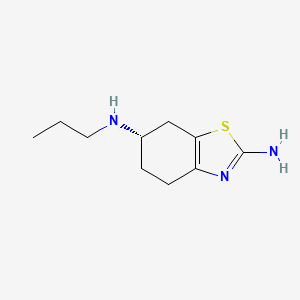
| Formula | C10H17N3S |
|---|---|
| Molecular weight | 211.33 g/mol |
| IUPAC name | (6S)-6-N-propyl-4,5,6,7-tetrahydro-1,3-benzothiazole-2,6-diamine |
| CAS | 104632-26-0 |
| PubChem CID | 119570 |
| InChIKey | FASDKYOPVNHBLU-ZETCQYMHSA-N |
| logP | 1.58 (XLogP 1.9) |
| Polar surface area | 50.94 Ų |
| H-bond acceptors / donors | 4 / 2 |
| Drug-likeness (QED) | 0.80 |
| Lipinski violations | 0 |
SMILES
CCCN[C@H]1CCc2nc(N)sc2C1Biology & Pharmacokinetics
Pharmacokinetics
| BBB penetrant | Yes |
|---|
Enzyme interactions
| Enzyme | Role | Detail |
|---|---|---|
| CYP2D6 | Inhibitor | — |
Receptor binding (top 13)
| Target | Action | Affinity |
|---|---|---|
| DOPAMINE D3 (DRD3) | Binding | pKi 8.7 |
| adrenergic Alpha2C (ADRA2C) | Binding | pKi 7.3 |
| DOPAMINE D4 (DRD4) | Binding | pKi 7.2 |
| DOPAMINE D2 (DRD2) | Binding | pKi 6.9 |
| adrenergic Alpha2B (ADRA2B) | Binding | pKi 6.7 |
| adrenergic Alpha2A (ADRA2A) | Binding | pKi 6.4 |
| DOPAMINE D2 Short (DRD2) | Binding | pKi 6.0 |
| 5-HT7 (HTR7) | Binding | pKi 5.9 |
| 5-HT1D (HTR1D) | Binding | pKi 5.8 |
| DOPAMINE D2 Long (DRD2) | Binding | pKi 5.8 |
| 5-HT1A (HTR1A) | Binding | pKi 5.7 |
| HISTAMINE H2 (HRH2) | Binding | pKi 5.6 |
| 5-HT1B (HTR1B) | Binding | pKi 5.3 |
Transporters
BCRP (Inhibitor)BSEP (Inhibitor)BSEP (Inhibitor)MATE1 (Inhibitor)MATE2 (Inhibitor)MRP1 (Inhibitor)MRP2 (Inhibitor)MRP3 (Inhibitor)MRP4 (Inhibitor)OATP1B1 (Inhibitor)OATP1B3 (Inhibitor)P-gp (Inhibitor)P-gp (Substrate)
Drug–drug interactions (43, DDInter)
| Interacting drug | Severity | Management |
|---|---|---|
| Alimemazine | moderate | |
| Brimonidine (ophthalmic) | moderate | |
| Brimonidine (topical) | moderate | |
| Brompheniramine | moderate | |
| Carbinoxamine | moderate | |
| Cetirizine | moderate | |
| Chlorphenesin | moderate | |
| Chlorpheniramine | moderate | |
| Cimetidine | moderate | |
| Clemastine | moderate | |
| Clofedanol | moderate | |
| Codeine | moderate | |
| Cyclizine | moderate | |
| Cyproheptadine | moderate | |
| Dexbrompheniramine | moderate | |
| Dextromethorphan | moderate | |
| Diphenhydramine | moderate | |
| Doxepin | moderate | |
| Doxepin (topical) | moderate | |
| Doxylamine | moderate | |
| Dronabinol | moderate | |
| Ethanol | moderate | |
| Hydrocodone | moderate | |
| Ioflupane I-123 | moderate | |
| Levocetirizine | moderate | |
| Mepyramine | moderate | |
| Methdilazine | moderate | |
| Metoclopramide | moderate | |
| Morphine | moderate | |
| Morphine (liposomal) | moderate | |
| Nabilone | moderate | |
| Olopatadine (nasal) | moderate | |
| Opium | moderate | |
| Pentoxyverine | moderate | |
| Promethazine | moderate | |
| Thalidomide | moderate | |
| Thiethylperazine | moderate | |
| Trimethobenzamide | moderate | |
| Tripelennamine | moderate | |
| Triprolidine | moderate |
Showing 40 of 43.
Registered Products (16)
| Brand | Form / strength | Pack | Agent | Citizen (JOD) |
|---|---|---|---|---|
| Parkinzo | Tablet 0.125 mg | 30 tab | United Pharmaceutical | 3.040 |
| Parkinzo | Tablet 0.25 mg | 30 tab | UNITED PHARM.MFG.CO.LTD(UPM)/JORDAN | 4.990 |
| Parkinzo ER | Tablet 0.375 mg | 30 tab | UNITED PHARM.MFG.CO.LTD(UPM)/JORDAN | 4.990 |
| Sifrol Tab | Tablet 0.18 mg | 30 tab | The Jordan Drugstore Co | 6.940 |
| Parkinzo | Tablet 0.50 mg | 30 tab | UNITED PHARM.MFG.CO.LTD(UPM)/JORDAN | 8.180 |
| Parkinzo 0.75mg ER Tablets | Tablet 0.75 mg | 30 tab | UNITED PHARM.MFG.CO.LTD(UPM)/JORDAN | 8.180 |
| Xoliram 0.375 Mg ER Tab | Tablet 0.375 mg | 30 tab | Hikma Pharmaceuticals Co.Ltd/Jordan | 11.230 |
| Sifrol ER | Tablet 0.52 mg | 30 tab | The Jordan Drugstore Co | 11.780 |
| Parkinzo | Tablet 1.5 mg | 30 tab pack varies | UNITED PHARM.MFG.CO.LTD(UPM)/JORDAN | 13.970 |
| Parkinzo 1.5mg ER Tablets | Tablet 1.5 mg | 30 tab pack varies | UNITED PHARM.MFG.CO.LTD(UPM)/JORDAN | 13.970 |
| Parkinzo | Tablet 1.0 mg | 30 tab | UNITED PHARM.MFG.CO.LTD(UPM)/JORDAN | 14.560 |
| Parkinzo 2.25mg ER Tablets | Tablet 2.25 mg | 30 tab | UNITED PHARM.MFG.CO.LTD(UPM)/JORDAN | 20.960 |
| Parkinzo 3.0mg ER Tablets | Tablet 3.0 mg | 30 tab | UNITED PHARM.MFG.CO.LTD(UPM)/JORDAN | 27.940 |
| Parkinzo 3.75mg ER Tablets | Tablet 3.75 mg | 30 tab | UNITED PHARM.MFG.CO.LTD(UPM)/JORDAN | 34.930 |
| Xoliram 1.5 mg ER Tab | Tablet 1.5 mg | 30 tab | Hikma Pharmaceuticals Co.Ltd/Jordan | 41.380 |
| Parkinzo ER | Tablet 4.5 mg | 30 tab | UNITED PHARM.MFG.CO.LTD(UPM)/JORDAN | 41.950 |