Levothyroxine
JFDA label: Euthyrox 50mcg tab
- Weight reduction:
Mechanism of Action
Levothyroxine (T4) is a synthetic form of thyroxine, an endogenous hormone secreted by the thyroid gland. T4 is converted to its active metabolite, L-triiodothyronine (T3). Thyroid hormones (T4 and T3) then bind to thyroid receptor proteins in the cell nucleus and exert metabolic effects through control of DNA transcription and protein synthesis; involved in normal metabolism, growth, and development; promotes gluconeogenesis, increases utilization and mobilization of glycogen stores, and stimulates protein synthesis, increases basal metabolic rate
Indications
Approved
- Hypothyroidism
- Injectable
- Oral
- Pituitary thyrotropin-stimulating hormone suppression
Off-label
- Cadaveric organ recovery (hormonal resuscitation)
- Subclinical hypothyroidism
Contraindications
Source: Lexicomp
- Injection: There are no contraindications listed in the manufacturer's labeling when used for labeled indication (treatment of myxedema coma) Absolute
- Note: Product labels may vary Absolute
- also consult product labels. Reported hypersensitivity to levothyroxine or any component of the formulation is not considered an absolute contraindication (Jonklass 2014) Absolute
- consider contraindications for oral therapy if using as a temporary substitute for oral treatment (off-label use) in patients with chronic hypothyroidism. Oral: Uncorrected adrenal insufficiency Absolute
- refer to Warnings/Precautions Absolute
Adverse Reactions
Cardiac disorders (13)
Common Palpitations (dose-related) · Tachycardia (dose-related)
Uncommon Atrial fibrillation (over-replacement)
Not Known Angina pectoris · cardiac arrest · cardiac arrhythmia · cardiac failure · flushing · hypertension · increased pulse · myocardial infarction · palpitations · tachycardia
Nervous system disorders (14)
Common Headache
Not Known Anxiety · choking sensation (Levoxyl) · emotional lability · fatigue · headache · heat intolerance · hyperactivity · insomnia · irritability · myasthenia · nervousness · pseudotumor cerebri (children) · seizure (rare)
Hepatobiliary disorders (1)
Not Known Increased liver enzymes
Renal and urinary disorders (1)
Not Known Infertility
Immune system disorders (1)
Not Known Hypersensitivity (to inactive ingredients; symptoms include urticaria, pruritus, rash, flushing, angioedema, GI symptoms, fever, arthralgia, serum sickness, wheezing)
Metabolism and nutrition disorders (3)
Common Weight loss (dose-related)
Not Known Menstrual disease · weight loss
Gastrointestinal disorders (6)
Not Known Abdominal cramps · diarrhea · dysphagia (Levoxyl) · gag reflex (Levoxyl) · increased appetite · vomiting
Skin and subcutaneous tissue disorders (3)
Rare Allergic skin reactions
Not Known Alopecia · diaphoresis
Musculoskeletal and connective tissue disorders (4)
Uncommon Osteoporosis (long-term over-replacement)
Not Known Decreased bone mineral density · slipped capital femoral epiphysis (children) · tremor
Psychiatric disorders (1)
Common Insomnia (dose-related)
General disorders and administration site conditions (2)
Common Heat intolerance
Not Known Fever
Respiratory, thoracic and mediastinal disorders (1)
Not Known Dyspnea
Dosing
Source: Lexicomp
Warnings & Precautions
Source: Lexicomp
Adrenal insufficiency
Use with caution in patients with adrenal insufficiency; symptoms may be exaggerated or aggravated. Treatment with glucocorticoids should precede levothyroxine therapy in patients with adrenal insufficiency. Use is contraindicated in patients with uncorrected adrenal insufficiency.
Benign thyroid nodules
Appropriate use: Routine use of T4 for thyroid stimulating hormone (TSH) suppression is not recommended in patients with benign thyroid nodules. Treatment should never be fully suppressive (TSH - Use of T4 may be considered in association with iodine supplementation only in young patients residing in iodine-deficient areas with small thyroid nodules and no evidence of functional autonomy (AACE/ACE/AME [Gharib 2016]). - Use should be avoided in postmenopausal women, elderly patients, patients with cardiovascular disease, osteoporosis, large thyroid nodules or long-standing goiters, or low-normal TSH levels (AACE/ACE/AME [Gharib 2016]).
Cardiovascular disease
Use with caution and reduce dosage in patients with cardiovascular disease; patients with developing or worsening cardiac symptoms should have their dose reduced or therapy withheld for 7 days and then resumed at a reduced dose. Chronic hypothyroidism predisposes patients to coronary artery disease; monitor patients closely for development of cardiac ischemia. Similarly, patients with heart failure and hypothyroidism should be closely followed.
Diabetes
Use with caution in patients with diabetes mellitus (may worsen glycemic control) and diabetes insipidus (thyroid hormone increases glomerular filtration rate and downregulates aquaporin channels in the renal tubules, which could affect urinary output) (Mariani 2012).
Osteoporosis
Long-term therapy can decrease bone mineral density. Postmenopausal women and women using suppressive doses should receive the lowest dose necessary for clinical response. Concurrent drug therapy issues:
Drug-drug interactions
Potentially significant interactions may exist, requiring dose or frequency adjustment, additional monitoring, and/or selection of alternative therapy. Consult drug interactions database for more detailed information. Special populations:
Elderly
Use with caution; suppressed TSH levels may increase risk of atrial fibrillation and mortality secondary to cardiovascular disease (Gharib 2016; Parle 2001). Increase dose slowly and monitor for signs/symptoms of angina. Dosage form specific issues:
Levoxyl
Product may rapidly swell and disintegrate, causing choking or gagging (should be administered with a full glass of water); use caution in patients with dysphagia or other swallowing disorders.
Product interchangeability
Switching between different levothyroxine products may result in variations in the administered dose and altered TSH values and is not generally recommended; if formulations are changed, close monitoring of TSH is recommended (ATA [Jonklaas 2014]). Pediatric patients with congenital hypothyroidism may be more sensitive to changes in formulation (Carswell 2013). Other warnings/precautions:
Hypersensitivity
Patients with reported hypersensitivity to levothyroxine may be managed with dose reductions and slow titration, by switching formulations or products, or referral to an allergist (Jonklaas 2014).
Weight reduction (off-label use)
Thyroid supplements are ineffective and potentially toxic when used for the treatment of obesity or for weight reduction, especially in euthyroid patients. High doses may produce serious or even life-threatening toxic effects, particularly when used with some anorectic drugs (eg, sympathomimetic amines). Levothyroxine, either alone or with other concomitant therapeutic agents, should not be used for the treatment of obesity or for weight loss.
Pregnancy & Lactation
Pregnancy
Safe
Inadequately treated hypothyroidism more dangerous than drug itself. Monitor TSH every 4–6 weeks; increase dose proactively on pregnancy confirmation (many women need 25–30% dose increase)
Lactation
Endogenous thyroid hormones are minimally found in breast milk. The manufacturer recommends that caution be used if administered to a nursing woman. The amount of endogenous thyroxine found in breast milk does not influence infant plasma thyroid values (van Wassenaer 2002). Levothyroxine was not found to cause adverse events to the infant or mother during breastfeeding (Ito 1993). Adequate thyroid hormone concentrations are required to maintain normal lactation. Appropriate levothyroxine doses
Monitoring
| Efficacy | TSH (every 6–12 weeks after dose change, then annually); free T4; clinical symptoms (fatigue, weight, heart rate) |
|---|---|
| Toxicity | Symptoms of over-replacement (palpitations, weight loss, heat intolerance, osteoporosis risk); TSH < 0.1 mIU/L sustained → atrial fibrillation and osteoporosis risk |
| Clinical pearl | TSH is the most sensitive marker of thyroid hormone adequacy. However, some patients feel better with TSH in the lower half of normal range. Annual monitoring is sufficient when stable. |
| Counseling | Take on an empty stomach 30–60 min before breakfast. Many drugs reduce absorption (calcium, iron, antacids, proton pump inhibitors) — separate by 4 h. Do not change brands without discussion. |
Chemistry & Properties
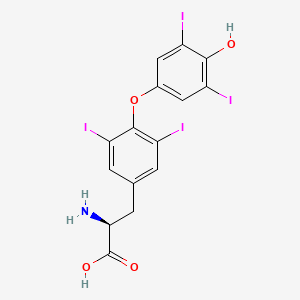
| Formula | C15H11I4NO4 |
|---|---|
| Molecular weight | 776.87 g/mol |
| IUPAC name | (2S)-2-amino-3-[4-(4-hydroxy-3,5-diiodophenoxy)-3,5-diiodophenyl]propanoic acid |
| CAS | 51-48-9 |
| PubChem CID | 5819 |
| InChIKey | XUIIKFGFIJCVMT-LBPRGKRZSA-N |
| logP | 4.56 (XLogP 2.4) |
| Polar surface area | 92.78 Ų |
| H-bond acceptors / donors | 4 / 3 |
| Drug-likeness (QED) | 0.39 |
| Lipinski violations | 1 |
SMILES
N[C@@H](Cc1cc(I)c(Oc2cc(I)c(O)c(I)c2)c(I)c1)C(=O)OBiology & Pharmacokinetics
Pharmacokinetics
| BBB penetrant | No |
|---|
Enzyme interactions
| Enzyme | Role | Detail |
|---|---|---|
| CYP2B6 | Inhibitor | — |
| CYP2C19 | Substrate | — |
| CYP2C8 | Inhibitor | — |
| CYP2C9 | Inhibitor | — |
| CYP2C9 | Substrate | — |
| CYP2D6 | Substrate | — |
| CYP3A4 | Substrate | — |
Receptor binding (top 1)
| Target | Action | Affinity |
|---|---|---|
| Thyroid hormone receptor-β (THRB) | Agonist | pIC50 8.5 |
Transporters
BCRP (Inhibitor)BCRP (Inhibitor)BSEP (Inhibitor)MCT1 (Inhibitor)MRP1 (Inhibitor)OATP1B1 (Inhibitor)OATP1B1 (Inhibitor)OATP1B3 (Inhibitor)OATP1B3 (Inhibitor)OATP2B1 (Inhibitor)OATP4A1 (Inhibitor)OCT1 (Inhibitor)P-gp (Inhibitor)LAT1 (Substrate)OATP (Substrate)OATP1A2 (Substrate)OATP1B1 (Substrate)OATP1B3 (Substrate)OATP1C1 (Substrate)OATP2B1 (Substrate)OATP3A1 (Substrate)P-gp (Substrate)
Drug–drug interactions (100+, DDInter)
| Interacting drug | Severity | Management |
|---|---|---|
| Acarbose | moderate | |
| Acetohexamide | moderate | |
| Albiglutide | moderate | |
| Alogliptin | moderate | |
| Aluminum hydroxide | moderate | |
| Aminophylline | moderate | |
| Amiodarone | moderate | |
| Amitriptyline | moderate | |
| Amobarbital | moderate | |
| Amoxapine | moderate | |
| Amphetamine | moderate | |
| Anisindione | moderate | |
| Apalutamide | moderate | |
| Benzphetamine | moderate | |
| Butabarbital | moderate | |
| Butalbital | moderate | |
| Calcium Phosphate | moderate | |
| Calcium acetate | moderate | |
| Calcium carbonate | moderate | |
| Calcium citrate | moderate | |
| Calcium glubionate anhydrous | moderate | |
| Calcium gluconate | moderate | |
| Calcium lactate | moderate | |
| Canagliflozin | moderate | |
| Carbamazepine | moderate | |
| Chlorpropamide | moderate | |
| Cholestyramine | moderate | |
| Ciprofloxacin | moderate | |
| Clomipramine | moderate | |
| Colesevelam | moderate | |
| Colestipol | moderate | |
| Conjugated estrogens | moderate | |
| Conjugated estrogens (topical) | moderate | |
| Danazol | moderate | |
| Dapagliflozin | moderate | |
| Desipramine | moderate | |
| Dexlansoprazole | moderate | |
| Dextroamphetamine | moderate | |
| Dicoumarol | moderate | |
| Didanosine | moderate |
Showing 40 of 100+.
Registered Products (23)
| Brand | Form / strength | Pack | Agent | Citizen (JOD) |
|---|---|---|---|---|
| Levotiron | Tablet 0.025 mcg mcg | 100 tab | Sun Set Drug Store | 1.040 |
| Levotiron | Tablet 0.0525 mg | 100 tab | Sun Set Drug Store | 1.510 |
| Levotiron | Tablet 0.07875 mg | 100 tab | Sun Set Drug Store | 1.580 |
| Euthyrox | Tablet 25 mcg | 100 tab | Nabulsi Drug Store | 1.950 |
| Eltroxin Tablets | Tablet 50 mcg | 100 tab | Suleiman Tannous & Sons Co. Ltd | 2.050 |
| Levotiron | Tablet 100 mcg | 100 tab | Sun Set Drug Store | 2.300 |
| Levothyroxine Tablet | Tablet 50 mcg | 100 tab | Burqan Drug Store | 2.320 |
| Levothyroxine Tablet | Tablet 100 mcg | 100 tab | Burqan Drug Store | 2.320 |
| Euthyrox | Tablet 50 mcg | 100 tab | Nabulsi Drug Store | 2.990 |
| Eltroxin Tablets | Tablet 100 mcg | 100 tab | Suleiman Tannous & Sons Co. Ltd | 3.480 |
| Euthyrox | Tablet 100 mcg | 100 tab | Nabulsi Drug Store | 3.930 |
| Euthyrox | Tablet 150 mcg | 100 tab | Nabulsi Drug Store | 5.340 |
| TIROSINT | Capsule 75 mcg | 100 cap | Kindi Drug Store | 27.050 |
| TIROSINT | Capsule 112 mcg | 100 cap | Kindi Drug Store | 27.050 |
| TIROSINT | Capsule 88 mcg | 100 cap | Kindi Drug Store | 27.050 |
| TIROSINT | Capsule 125 mcg | 100 cap | Kindi Drug Store | 27.050 |
| TIROSINT | Capsule 200 mcg | 100 cap | Kindi Drug Store | 27.050 |
| TIROSINT | Capsule 175 mcg | 100 cap | Kindi Drug Store | 27.050 |
| TIROSINT | Capsule 137 mcg | 100 cap | Kindi Drug Store | 27.050 |
| Tirosint | Capsule 100 mcg | 100 cap | Kindi Drug Store | 27.050 |
| Tirosint | Capsule 150 mcg | 100 cap | Kindi Drug Store | 27.050 |
| Tirosint | Capsule 50 mcg | 100 cap | Kindi Drug Store | 27.050 |
| Tirosint | Capsule 25 mcg | 100 cap | Kindi Drug Store | 27.050 |